• About WordPress
    • WordPress.org
    • Documentation
    • Learn WordPress
    • Support
    • Feedback
  • Log In
  • Register

AnonymousMedia.org

  • Home
  • Headline News
  • Videos
  • History
  • File Manager
  • Activity
  • Forums
  • Survivors and lawmakers voice frustration over Jeffery Epstein file release

    Survivors and lawmakers voice frustration over Jeffery Epstein file release


    Watch: Images, cassettes and high-profile figures – What’s in the latest Epstein files?

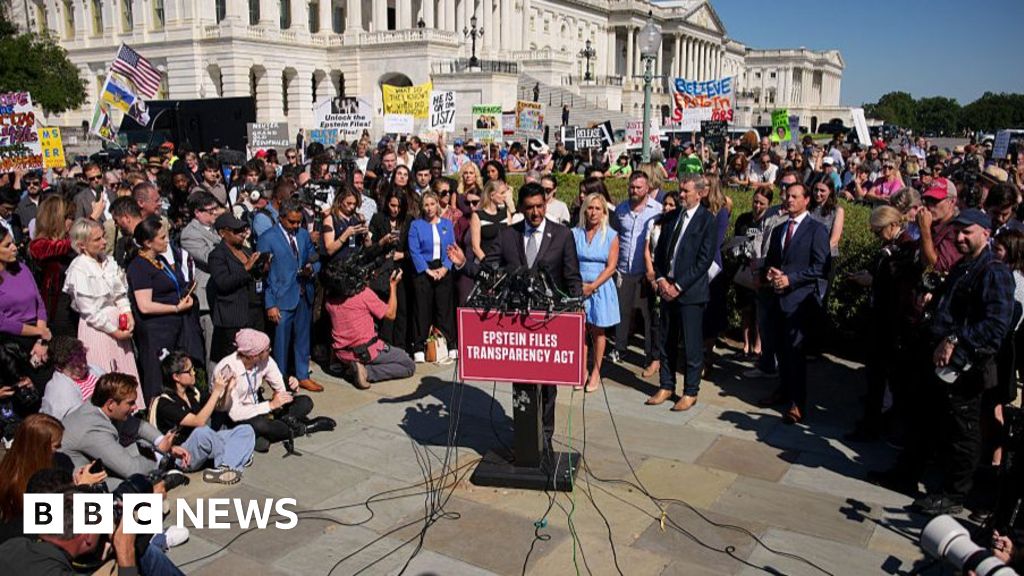
    The release of thousands of pages of documents related to the late sex offender Jeffrey Epstein’s abuse has left some who were anxiously awaiting the files disappointed.

    The documents’ release was prompted by an act of Congress that directed the US Justice Department (DOJ) to make materials related to Epstein’s crimes public. But some documents have numerous redactions, and others have not been shared publicly at all.

    The lawmakers who pushed for these documents to see the light of day have said the release is incomplete and described the Justice Department’s efforts as insincere.

    Some legal experts also warned that the breadth of redaction may only fuel ongoing conspiracy theories.

    But Deputy US Attorney Todd Blanche said on Friday – the day the materials were released – that the department identified more than 1,200 Epstein victims or their relatives, and withheld material that could identify them.

    Among the latest released information is a photo of Epstein confidante Ghislane Maxwell outside Downing Street, a document that claims Epstein introduced a 14-year-old girl to US President Donald Trump at Mar-a-Lago, and multiple images of former President Bill Clinton.

    Trump has consistently denied any wrongdoing in relation to Epstein and has not been accused of any crimes by Epstein’s victims. Clinton has never been accused of wrongdoing by survivors of Epstein’s abuse, and has denied knowledge of his sex offending.

    Other released photos show the interiors of Epstein’s homes, his overseas travels, as well as celebrities, including Andrew Mountbatten-Windsor, Mick Jagger, Michael Jackson, Diana Ross and Peter Mandelson.

    Being named or pictured in the files is not an indication of wrongdoing. Many of those identified in the files or in previous releases related to Epstein have denied any wrongdoing.

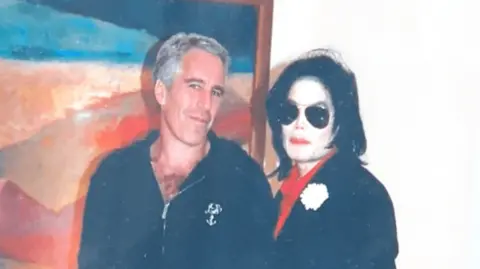
    US Department of Justice Epstein poses with Michael Jackson US Department of Justice

    Epstein poses with Michael Jackson

    But many of the documents are also heavily redacted.

    The Justice Department said it would comply with the congressional request to release documents, with some stipulations.

    It redacted personally identifiable information about Epstein’s victims, materials depicting child sexual abuse, materials depicting physical abuse, any records that “would jeopardize an active federal investigation” or any classified documents that must stay secret to protect “national defense or foreign policy”.

    In a post on X, the DOJ said it was “not redacting the names of any politicians”, and added a quote they attributed to Blanche, saying: “The only redactions being applied to the documents are those required by law – full stop.

    “Consistent with the statute and applicable laws, we are not redacting the names of individuals or politicians unless they are a victim.”

    John Day, a criminal defence attorney, told the BBC he was surprised by the amount of information that was redacted.

    “This is just going to feed the fire if you are a conspiracy theorist,” he said. “I don’t think anyone anticipated there would be this many redactions. It certainly raises questions about how faithfully the DOJ is following the law.”

    Mr Day also noted that the justice department is required to provide a log of what was being redacted to Congress within 15 days of the files’ release.

    “Until you know what’s being redacted you don’t know what’s being withheld,” he said.

    In a letter to the judges overseeing the Epstein and Maxwell cases, US attorney for the Southern District of New York Jay Clayton, said: “Victim privacy interests counsel in favour of redacting the faces of women in photographs with Epstein even where not all the women are known to be victims because it is not practicable for the department to identify every person in a photo.”

    Clayton added that “this approach to photographs could be viewed by some as an over-redaction” – but that “the department believes it should, in the compressed time frame, err on the side of redacting to protect victims.”
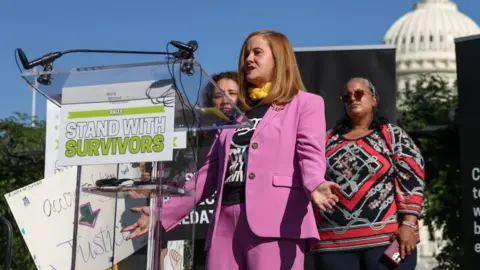
    Reuters Liz Stein, who was a victim of late financier Jeffrey Epstein, speaks on the day of a rally in support of Epstein's victims, on Capitol Hill in Washington, DC, in September 2025. Liz is wearing a pink suir and standing in front of a podium with the word stand with survivors on a sign. Reuters

    Epstein survivor Liz Stein has called for all of the files to be released

    Survivors of Epstein’s abuses, are among those most frustrated by the release.

    Epstein survivor Liz Stein told BBC Radio 4’s Today programme that she thinks the Justice Department is “really brazenly going against the Epstein Files Transparency Act”, which is the law that requires all the documents to be released.

    Survivors are really worried about the possibility of a “slow roll-out of incomplete information without any context”, she noted.

    “We just want all of the evidence of these crimes out there.”

    Baroness Helena Kennedy, a human rights lawyer and Labour peer in the House of Lords in the UK, said she was told the redactions in the documents were there to protect the victims.

    “Authorities always have a worry” about “exposing people to yet further denigration in the public mind”, she told the BBC’s Today programme.

    Many Epstein survivors seem “very keen” to have the material exposed, she said, but added that they “might not be so keen if they knew exactly what was in there”.

    Democrat Congressman Ro Khanna, who led the charge along with Republican CongressmanThomas Massie to release the files, said the release was “incomplete” and added that he is looking at options like impeachment, contempt or referral to prosecution.

    “Our law requires them to explain redactions,” Khanna said. “There is not a single explanation.”

    Massie seconded Khanna’s statement and posted on social media that Attorney General Pam Bondi and other justice department officials could be prosecuted by future justice departments for not complying with the document requirements.

    He said the document release “grossly fails to comply with both the spirit and the letter of the law” of the Epstein Files Transparency Act.

    After the release, the White House called the Trump Administration the most “transparent in history”, adding that it has “done more for the victims than Democrats ever have”.

    Blanche was asked in an interview with ABC News whether all documents mentioning Trump in the so-called Epstein files will be released in the coming weeks.

    “Assuming it’s consistent with the law, yes,” Blanche said. “So there’s no effort to hold anything back because there’s the name Donald J Trump or anybody else’s name, Bill Clinton’s name, Reid Hoffman’s name.

    “There’s no effort to hold back or not hold back because of that.”

    “We’re not redacting the names of famous men and women that are associated with Epstein,” he added.

    Source link

    12/20/2025
  • ISC Stormcast For Thursday, December 18th, 2025 https://isc.sans.edu/podcastdetail/9744

    ISC Stormcast For Thursday, December 18th, 2025 https://isc.sans.edu/podcastdetail/9744


    (c) SANS Internet Storm Center. https://isc.sans.edu Creative Commons Attribution-Noncommercial 3.0 United States License.


    Source link

    12/20/2025
  • ‘We are not from Bangladesh, we are Indian. Why did they do this to us?’

    ‘We are not from Bangladesh, we are Indian. Why did they do this to us?’


    Ilma HasanBBC Hindi, West Bengal

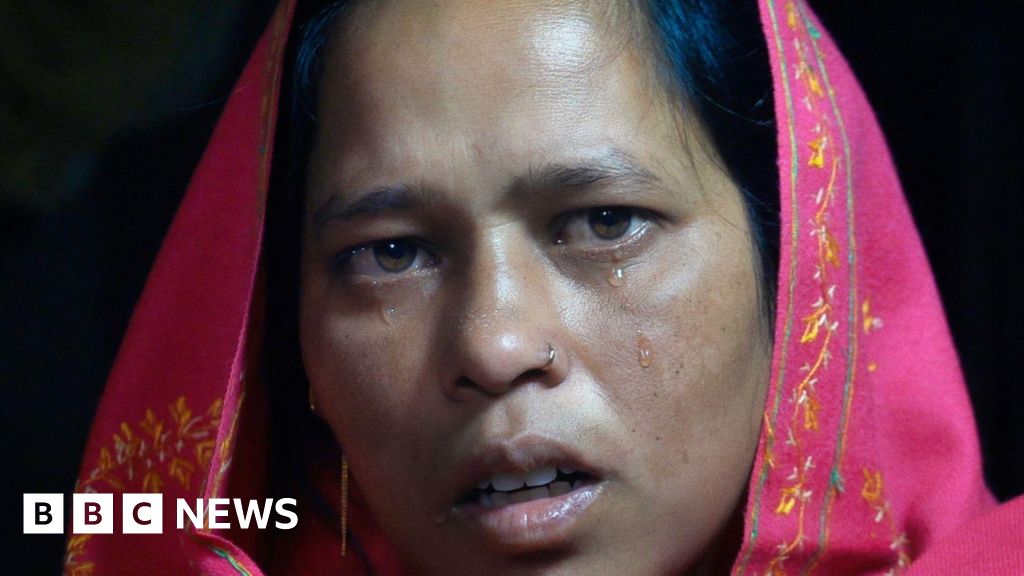
    Rubaiyat Biswas/BBC Sunali Khatun looks at the camera as tears run down her cheek.Rubaiyat Biswas/BBC

    Sunali Khatun says the deportation tore her family apart

    “I was scared that my child’s nationality would change if he was born in Bangladesh,” says a heavily pregnant Sunali Khatun, 25, who returned to India earlier this month after being deported to the neighbouring country in June.

    Ms Khatun, a domestic worker from India’s eastern state of West Bengal, was detained in Delhi with her husband, Danish Sheikh, and their eight-year-old son, and deported to Bangladesh on suspicion of being illegal immigrants. Bangladeshi authorities later jailed the family for entering the country unlawfully.

    Her deportation made national headlines and was stridently criticised by the West Bengal government, who accused the Bharatiya Janata Party-led federal government of deporting her without cause. She is among hundreds of people who have been detained and deported to Bangladesh in the past couple of months on suspicion of being illegal immigrants.

    Delhi has not provided official data about these deportations, but top sources in the Bangladesh government had earlier told the BBC that in May alone, more than 1,200 people were “illegally pushed in”. The same month, the government-run All India Radio reported that about 700 people had been sent back from Delhi.

    Crackdowns on alleged Bangladeshi immigrants are not new in India. The two countries share close cultural ties and a porous 4,096km (2,545-mile) border spanning five states. West Bengal, like others along the frontier, has long seen waves of migration as people sought work or fled religious persecution.

    But rights activists say the recent deportations target Muslims who speak Bengali – the language spoken in both West Bengal and Bangladesh – and the exercise is being conducted without due process.

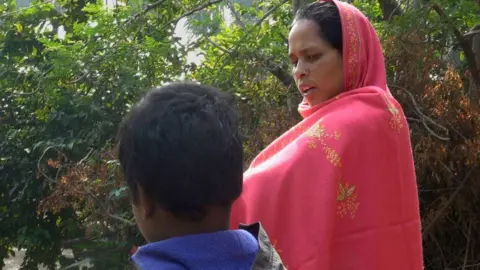
    Rubaiyat Biswas/BBC Sonali Khatun looks at her son who is walking beside her.Rubaiyat Biswas/BBC

    Ms Khatun and her son spent more than 100 days in a jail in Bangladesh

    Ms Khatun and her family, along with three neighbours – all Bengali-speaking Muslims – were deported after Delhi’s Foreign Regional Registration Office said they lacked documents proving their legal entry or stay in India. Her seven-year-old daughter was left behind, as she was staying with relatives when the family was detained.

    Under protocol, authorities must verify a suspected illegal migrant’s claim with the home state. West Bengal Migrant Workers Welfare Board chairman Samirul Islam told the BBC this was not done in Ms Khatun’s case.

    The BBC has written to Delhi’s home department that monitors deportations.

    In December, India’s Supreme Court asked the federal government to allow Ms Khatun and her son to return on “humanitarian grounds” while her citizenship was investigated. She has since been living with her parents in West Bengal. Her husband, released on bail, remains in Bangladesh with a relative.

    Ms Khatun, says she has mixed feelings about being allowed back in India.

    She is relieved that her baby, due in January, will be an Indian citizen by birthright, but is anxious about her husband, whom she has not seen for more than three months since they were held in separate prison cells in Bangladesh.

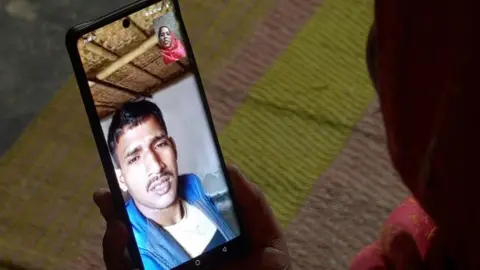
    On video calls, she says, he breaks down often, saying that he wants to come home.

    “We are not from Bangladesh, we are Indian. Why did they do this to us?” Ms Khatun asks.

    Rubaiyat Biswas/BBC Sunali is looking at her husband, Danish, as she speaks to him on a video call.Rubaiyat Biswas/BBC

    Sunali’s husband Danish remains in Bangladesh and speaks to her via video calls

    She alleges that about a week after being detained by the Delhi police, her family and their neighbours were flown to the India-Bangladesh border and “pushed” across by paramilitary personnel from the Border Security Force (BSF).

    “They left us in a dense forest [in Bangladesh] with lots of rivers and streams,” she alleges and adds that when they tried to enter India by a route shown to them by locals, BSF guards beat up some in the group, including her husband, and then led them back into the forest they had initially been brought to.

    The BBC has sent questions to the BSF seeking a response to Ms Khatun’s allegations.

    With help from locals, the group travelled to Dhaka, where they wandered for days with little food or water before being arrested and jailed. She says the prison food was inadequate for a pregnant woman and that her cell had no toilet.

    “I was scared because it was just my son and me. All we did was cry,” she says.

    The BBC has written to Bangladesh’s home and prisons departments for a response to Sunali’s allegations.

    Back in India, her family was making desperate trips to courts to prove her citizenship so that she could be brought back. Her case is being heard by the Supreme Court.

    “My family has been torn apart,” Ms Khatun says, as she sits in her parent’s one-room shanty in West Bengal. With two young children and another one on the way, she says she doesn’t know how she’s going to feed all of them.

    But she is sure about one thing.

    “We may not make enough money to eat three square meals if we live here, but I will never go back to Delhi,” she says.

    Follow BBC News India on Instagram, YouTube, X and Facebook.


    Source link

    12/20/2025
←Previous Page
1 … 356 357 358 359 360 … 407
Next Page→