The Australian government has announced a gun buyback scheme in the wake of the Bondi Beach attack – its deadliest mass shooting in decades.
The scheme is the largest since the Port Arthur massacre in 1996, which left 35 people dead and prompted Australia to introduce world-leading gun control measures.
Fifteen people were killed and dozens injured on Sunday when two gunmen, believed to have been motivated by “Islamic State ideology”, opened fire on a Jewish festival at the country’s most iconic beach.
On Friday, police also said there was no ongoing reason to detain a group of men who were arrested in Sydney over their “extremist Islamic ideology”.
Police allege Sunday’s attack, which they have declared a terrorist incident, was committed by a father-son duo. Naveed Akram, 24, has been charged with 59 offences, including 15 counts of murder and one of committing a terrorist act. His father Sajid was killed during the attack.
The day after the shooting, national cabinet – which includes representatives from the federal government and leaders from all states and territories – agreed to tighten gun controls.
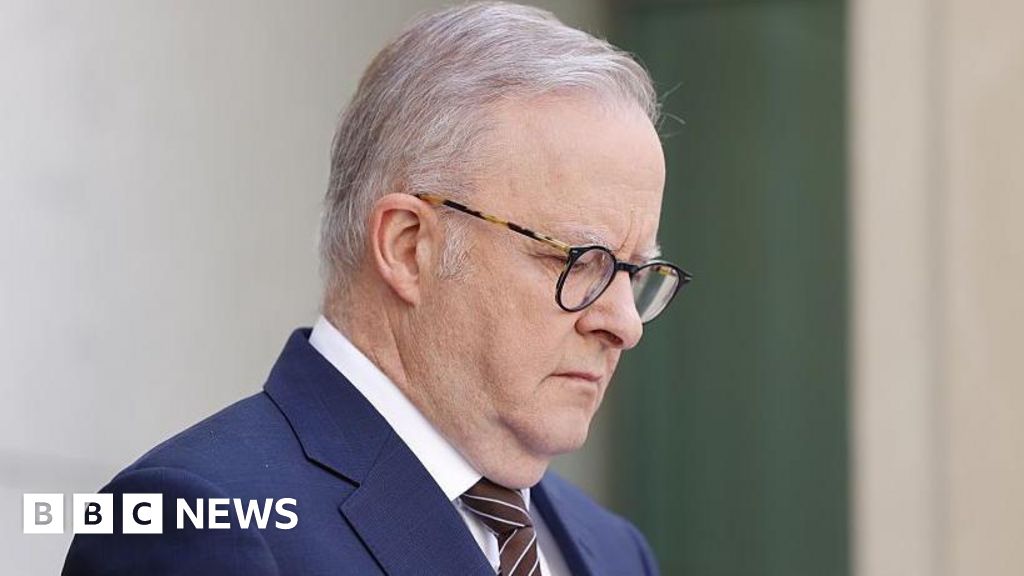
Speaking to media on Friday, Prime Minister Anthony Albanese said there are now more than 4 million firearms in Australia – more than at the time of the Port Arthur massacre.
“We know that one of these terrorists held a firearm licence and had six guns, in spite of living in the middle of Sydney’s suburbs… There’s no reason why someone in that situation needed that many guns.
“We need to get more guns off our streets.”
The new scheme will purchase surplus, newly banned and illegal firearms, he said, and will be funded on a 50-50 basis with the states and territories. They estimate hundreds of thousands of firearms will be collected and destroyed.
National cabinet has also agreed to impose limits on the number of firearms held by any one individual, restrict open-ended firearms licensing and the types of guns that are legal and make Australian citizenship a condition of holding a firearm licence.
Work on a national firearms register will be accelerated and firearm regulators will have better access to criminal intelligence.
On Friday, New South Wales Police said they were preparing to release seven men with extremist ideology, but that they would continue to be monitored.
Tactical officers swarmed on the group, who had travelled from Victoria and were known to police there, in dramatic scenes in the suburb of Liverpool on Thursday. Officers found a knife, but no guns or other weapons.
NSW Police Commissioner Mal Lanyon told a press conference there is “no confirmed link” between the alleged terrorists and the detained group, but that Bondi Beach was one of several locations the latter was intending to visit.
“Whilst this specific threat posed by the males is unknown, I can say that the potential [for] a violent offence being committed was such that we were not prepared to tolerate the risk,” Commissioner Lanyon said.
There is no official data of how many Ukrainian soldiers have died by suicide
This article contains distressing details and references to suicide. Some of the names have been changed to protect identities.
Kateryna cannot talk about her son, Orest, without tears. Her voice trembles with anger as she explains how she found out the news that he had died on the front line in the eastern Donetsk region of Ukraine in 2023.
According to the official investigation by the army, he died by a “self-inflicted wound”, something Katernya finds hard to believe.
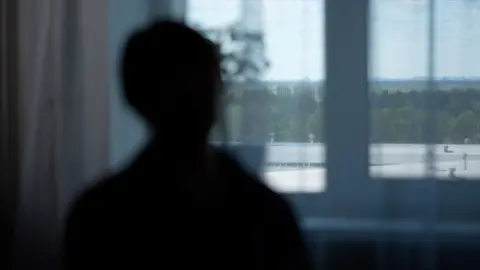
Kateryna has asked for her and her late son to remain anonymous due to the stigma that surrounds suicide and mental health in Ukraine.
Orest was a quiet 25-year-old who loved books and dreamed of an academic career. His poor eyesight had made him initially unfit for service at the start of the war, his mother says.
But in 2023, a recruitment patrol stopped him in the street. His eyesight was re-evaluated and he was deemed fit to fight. Not long after, he was sent to the front as a communications specialist.
EPA
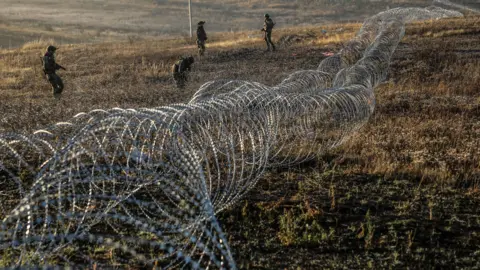
The Ukrainian army along the frontline near Chasiv Yar in Donetsk
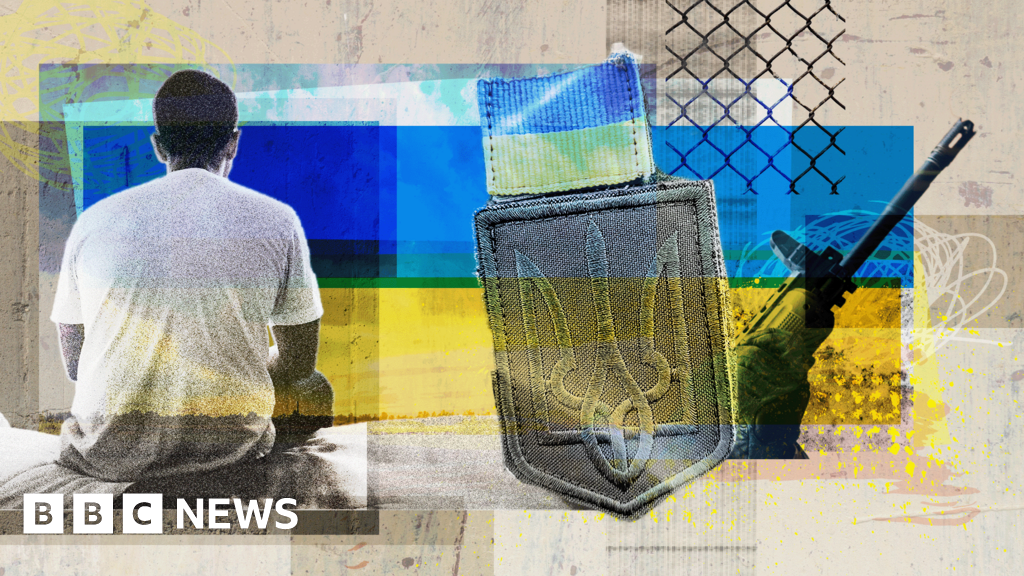
While Ukraine collectively mourns the loss of more than 45,000 soldiers who have died since Russia’s full-scale invasion in 2022, a quieter tragedy unfolds in the shadows.
There are no official statistics surrounding suicide among soldiers. Officials describe them as isolated incidents. Yet human rights advocates and bereaved families believe they may be in the hundreds.
“Orest was caught, not summoned,” Kateryna says bitterly.
The local recruitment centre denied wrongdoing to the BBC, saying impaired vision made Orest “partially fit” during wartime.
Once deployed near Chasiv Yar in Donetsk, Orest became increasingly withdrawn and depressed, Kateryna recalls.
She still writes letters to her son every day – 650 and counting – her grief made worse by how Ukraine classifies suicide as a non-combat loss. Families of those who take their own lives receive no compensation, no military honours and no public recognition.
“In Ukraine, it’s as if we’ve been divided,” says Kateryna. “Some died the right way, and others died the wrong way.”
“The state took my son, sent him to war, and brought me back a body in a bag. That’s it. No help, no truth, nothing.”
Reuters
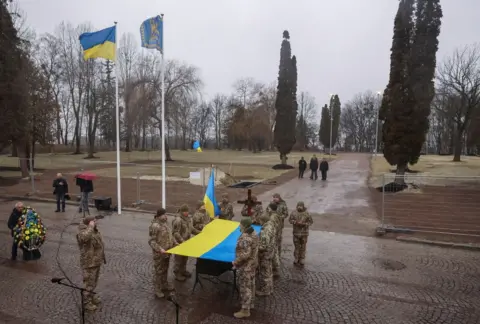
A funeral with military honours held in Lviv for a soldier killed in combat
For Mariyana from Kyiv, the story is heartbreakingly similar. She too wishes to keep her identity and her late husband’s hidden.
Her husband Anatoliy volunteered to fight in 2022. He was initially refused because of his lack of military experience but he “kept coming back until they took him”, she says with a faint smile.
Anatoliy was deployed as a machine-gunner near Bakhmut, one of the bloodiest battles of the war.
“He said that, after one mission, about 50 guys were killed,” Maryana recalls. “He came back different; quiet; distant.”
After losing part of his arm, Anatoliy was sent to hospital. One evening, after a phone call with his wife, he took his own life in the hospital yard.
“The war broke him,” she says through tears. “He couldn’t live with what he’d seen.”
Because Anatoliy died by suicide, officials denied him a military burial.
“When he stood on the front line, he was useful. But now he’s not a hero?”
Mariyana feels betrayed: “The state threw me to the roadside. I gave them my husband, and they left me alone with nothing.”
She has also felt stigma from other widows.
Mariyana’s husband was denied an official burial and she feels a sense of betrayal
Her only source of support is an online community of women like her – widows of soldiers who took their own lives.
They want the government to change the law, so that their bereaved families have the same rights and recognition.
Viktoria, who we met in Lviv, still cannot talk about her husband’s death publicly for fear of condemnation.
Her husband Andriy had a congenital heart condition, but insisted on joining the army. He became a driver in a reconnaissance unit and witnessed some of the most intense battles, including the liberation of Kherson.
In June 2023, Viktoria received a phone call telling her Andriy had taken his own life.
“It was like the world had collapsed,” she says.
His body arrived 10 days later, but she was told she could not see it.
An attorney she later hired found inconsistencies in the investigation into his death. The photos from the scene made her doubt the official version of her husband’s death. The Ukrainian military has since agreed to reopen the investigation, recognising failures.
Now she is fighting to re-open the case: “I’m fighting for his name. He can’t defend himself anymore. My war isn’t over.”
Oksana Borkun runs a support community for military widows.
Her organisation now includes about 200 families bereaved by suicide.
“If it’s suicide, then he’s not a hero – that’s what people think,” she says. “Some churches refuse to hold funerals. Some towns won’t put up their photos on memorial walls.”
Many of these families doubt the official explanations of death. “Some cases are simply written off too quickly,” she adds. “And some mothers open the coffin and find bodies covered in bruises.”
Military chaplain Father Borys Kutovyi says he has seen at least three suicides in his command since the full-scale invasion began. But to him even one is too many.
“Every suicide means we failed somewhere.”
He believes that many recruited soldiers, unlike career servicemen, are especially psychologically vulnerable.
Both Osksana and Father Borys say those who died by suicide should be considered heroes.
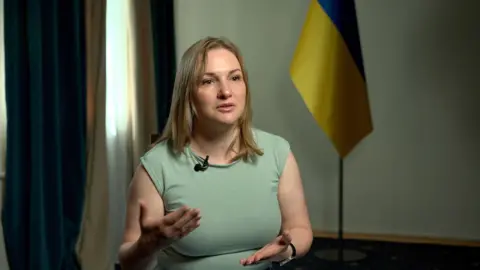
Ukraine’s Commissioner for Veterans’ Rights Olha Reshetylova wants reforms to the current system
Olha Reshetylova, Ukraine’s Commissioner for Veterans’ Rights, says she receives reports of up to four military suicides each month and admits not enough is being done: “They’ve seen hell. Even the strongest minds can break.”
She says her office is pushing for systemic reform but it can take years to set up a good military psychology unit.
“Families have a right to the truth,” she says. “They don’t trust investigators. In some cases, suicides may cover up murders.”
When it comes to honouring theses soldiers as military heroes, she prefers to look to the future.
“These people were your neighbours, your colleagues,” says Ms Reshetylova. “They’ve walked through hell. The warmer we welcome them, there will be fewer tragedies”
Hewlett Packard Enterprise (HPE) has resolved a maximum-severity security flaw in OneView Software that, if successfully exploited, could result in remote code execution.
The critical vulnerability, assigned the CVE identifier CVE-2025-37164, carries a CVSS score of 10.0. HPE OneView is an IT infrastructure management software that streamlines IT operations and controls all systems via a centralized dashboard interface.
“A potential security vulnerability has been identified in Hewlett Packard Enterprise OneView Software. This vulnerability could be exploited, allowing a remote unauthenticated user to perform remote code execution,” HPE said in an advisory issued this week.
It affects all versions of the software prior to version 11.00, which addresses the flaw. The company has also made available a hotfix that can be applied to OneView versions 5.20 through 10.20.
It’s worth noting that the hotfix must be reapplied after upgrading from version 6.60 or later to version 7.00.00, or after any HPE Synergy Composer reimaging operations. Separate hotfixes are available for the OneView virtual appliance and Synergy Composer2.
Although HPE makes no mention of the flaw being exploited in the wild, it’s essential that users apply the patches as soon as possible for optimal protection.
Earlier this June, the company also released updates to fix eight vulnerabilities in its StoreOnce data backup and deduplication solution that could result in an authentication bypass and remote code execution. It also shipped OneView version 10.00 to remediate a number of known flaws in third-party components, such as Apache Tomcat and Apache HTTP Server.