A 34-year-old man was arrested Tuesday evening in connection with the killings of four people who were found dead earlier in the day at a Bowdoin, Maine, home, authorities said.
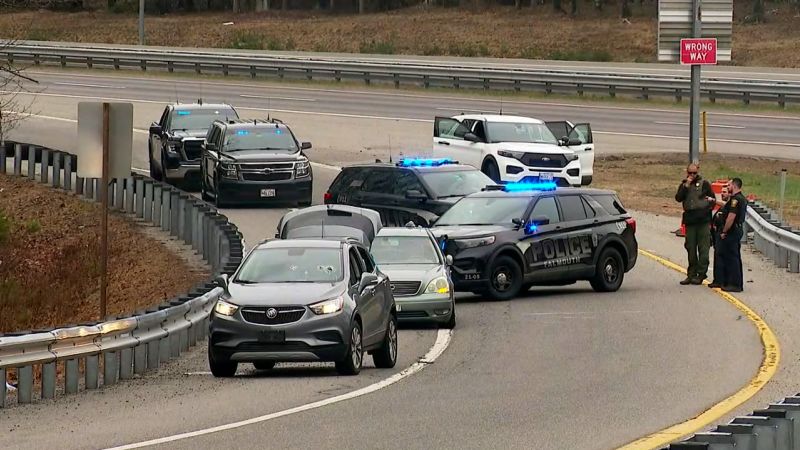
The killings appeared to be connected to a series of nearby highway shootings that left three drivers injured – including one critically – shortly after the four bodies were discovered, state police have said.
The man arrested was identified by Maine State Police as Joseph Eaton.
Eaton was taken to Two Bridges Regional Jail and will make an initial court appearance later in the week, state police said in a Tuesday evening news release. State police did not say as of late Tuesday night that he was being held in connection with the highway shootings.
CNN has not yet been able to identify an attorney for Eaton.
“Investigators will be working throughout the night processing multiple scenes and continuing to interview people involved with this incident,” state police said in the news release.
Police have not shared details about a possible motive in the two incidents and did not share details about the four people found dead in the home.
In a statement on Twitter, Maine Gov. Janet Mills said, “Like people across Maine, I am shocked and deeply saddened – acts of violence like we experienced today shake our state and our communities to the core.”
Maine State Police responded Tuesday morning to the Bowdoin home, where they found the four deceased victims inside, state police Lt. Randall Keaten said in a news conference earlier Tuesday.
Shortly after, authorities received reports of several vehicles getting hit by gunfire on I-295 in the area of Yarmouth, which is about 40 minutes from Bowdoin.
Three people were shot while driving and were taken to the hospital, state police said. At least one of those three was in critical condition Tuesday, authorities added.
“We’ve got vehicles that have been hit by straight gunfire all across that we’re getting reports on, so if anybody has holes in their vehicles, please contact us so that we can follow up with that,” Keaten said.
The victims found in the Bowdoin home and the highway shootings are connected, Keaten said, adding there is no threat to the public.
The four bodies were taken to the Office of the Chief Medical Examiner in Augusta where autopsies will determine the manner and cause of death state police said.
Authorities have asked anyone who may have witnessed something or has any information about the Tuesday morning incidents to reach out.
“A lot happened this morning between those two scenes and those are the people that we want to talk to, those people that were impacted by this,” Keaten said, adding authorities were continuing to work on several impacted scenes and gather more information.
High speed trains have proved their worth across the world over the past 50 years.
It’s not just in reducing journey times, but more importantly, it’s in driving economic growth, creating jobs and bringing communities closer together. China, Japan and Europe lead the way.
So why doesn’t the United States have a high-speed rail network like those?
For the richest and most economically successful nation on the planet, with an increasingly urbanized population of more than 300 million, it’s a position that is becoming more difficult to justify.
Although Japan started the trend with its Shinkansen “Bullet Trains” in 1964, it was the advent of France’s TGV in the early 1980s that really kick-started a global high-speed train revolution that continues to gather pace.
But it’s a revolution that has so far bypassed the United States. Americans are still almost entirely reliant on congested highways or the headache-inducing stress of an airport and airline network prone to meltdowns.
China has built around 26,000 miles (42,000 kilometers) of dedicated high-speed railways since 2008 and plans to top 43,000 miles (70,000 kilometers) by 2035.
“Many Americans have no concept of high-speed rail and fail to see its value. They are hopelessly stuck with a highway and airline mindset,” says William C. Vantuono, editor-in-chief of Railway Age, North America’s oldest railroad industry publication.
Cars and airliners have dominated long-distance travel in the United States since the 1950s, rapidly usurping a network of luxurious passenger trains with evocative names such as “The Empire Builder,” “Super Chief” and “Silver Comet.”
Deserted by Hollywood movie stars and business travelers, famous railroads such as the New York Central were largely bankrupt by the early 1970s, handing over their loss-making trains to Amtrak, the national passenger train operator founded in 1971.
In the decades since that traumatic retrenchment, US freight railroads have largely flourished. Passenger rail seems to have been a very low priority for US lawmakers.
Powerful airline, oil and auto industry lobbies in Washington have spent millions maintaining that superiority, but their position is weakening in the face of environmental concerns and worsening congestion.
Some of this will be invested in repairing Amtrak’s crumbling Northeast Corridor (NEC) linking Boston, New York and Washington.
There are also big plans to bring passenger trains back to many more cities across the nation – providing fast, sustainable travel to cities and regions that have not seen a passenger train for decades.
Add to this the success of the privately funded Brightline operation in Florida, which has been given the green light to build a $10 billion high-speed rail link between Los Angeles and Las Vegas by 2027, plus schemes in California, Texas and the proposed Cascadia route linking Portland, Oregon, with Seattle and Vancouver, and the United States at last appears to be on the cusp of a passenger rail revolution.
“Every president since Ronald Reagan has talked about the pressing need to improve infrastructure across the USA, but they’ve always had other, bigger priorities to deal with,” says Scott Sherin, chief commercial officer of train builder Alstom’s US division.
“But now there’s a huge impetus to get things moving – it’s a time of optimism. If we build it, they will come. As an industry, we’re maturing, and we’re ready to take the next step. It’s time to focus on passenger rail.”
Sherin points out that other public services such as highways and airports are “massively subsidized,” so there shouldn’t be an issue with doing the same for rail.
“We need to do a better job of articulating the benefits of high-speed rail – high-quality jobs, economic stimulus, better connectivity than airlines – and that will help us to build bipartisan support,” he adds. “High-speed rail is not the solution for everything, but it has its place.”
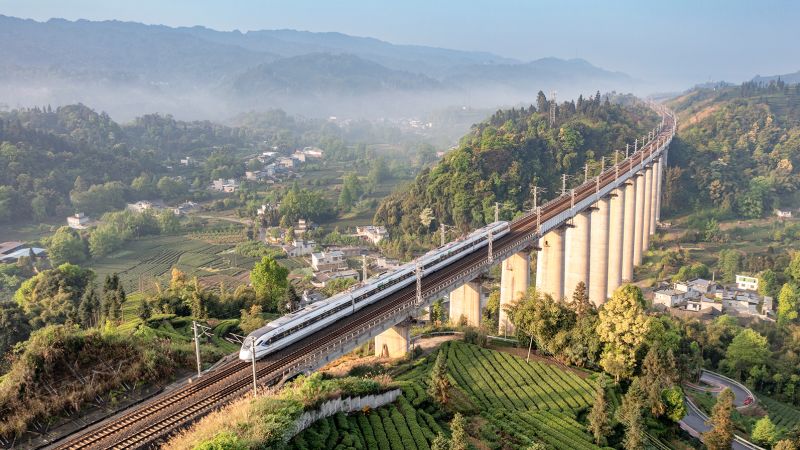
Only Amtrak’s Northeast Corridor has trains that can travel at speeds approaching those of the 300 kilometers per hour (186 mph) TGV and Shinkansen.
Even here, Amtrak Acela trains currently max out at 150 mph – and only in short bursts. Maximum speeds elsewhere are closer to 100 mph on congested tracks shared with commuter and freight trains.
This year, Amtrak plans to introduce its new generation Avelia Liberty trains to replace the life-expired Acelas on the NEC.
Capable of reaching 220 mph (although they’ll be limited to 160 mph on the NEC), the trains will bring Alstom’s latest high-speed rail technology to North America.
The locomotives at each end – known as power cars – are close relatives of the next generation TGV-M trains, scheduled to debut in France in 2024.
Sitting between the power cars are the passenger vehicles, which use Alstom’s Tiltronix technology to run faster through curves by tilting their bodies, much like a MotoGP rider does. And it’s not just travelers who will benefit.
“When Amtrak awarded the contract to Alstom in 2015 to 2016, the company had around 200 employees in Hornell,” says Shawn D. Hogan, former mayor of the city of Hornell in New York state.
“That figure is now nearer 900, with hiring continuing at a fast pace. I calculate that there has been a total public/private investment of more than $269 million in our city since 2016, including a new hotel, a state-of-the-art hospital and housing developments.
“It is a transformative economic development project that is basically unheard of in rural America and if it can happen here, it can happen throughout the United States.”
Alstom has spent almost $600 million on building a US supply chain for its high-speed trains – more than 80% of the train is made in the United States, with 170 suppliers across 27 states.
“High-speed rail is already here. Avelia Liberty was designed jointly with our European colleagues, so we have what we need for ‘TGV-USA’,” adds Sherin.
“It’s all proven tech from existing trains. We’re ready to go when the infrastructure arrives.”
And those new lines could arrive sooner than you might think.
In March, Brightline confirmed plans to begin construction on a 218-mile (351-kilometer) high-speed line between Rancho Cucamonga, near Los Angeles, and Las Vegas, carving a path through the San Bernardino Mountains and across the desert, following the Interstate 15 corridor.
The 200 mph line will slash times to little more than one hour – a massive advantage over the four-hour average by car or five to seven hours by bus – when it opens in 2027.
Mike Reininger, CEO of Brightline Holdings, says: “As the most shovel-ready high-speed rail project in the United States, we are one step closer to leveling the playing field against transit and infrastructure projects around the world, and we are proud to be using America’s most skilled workers to get there.”
Brightline West expects to inject around $10 billion worth of benefits into the region’s economy, creating about 35,000 construction jobs, as well as 1,000 permanent jobs in maintenance, operations and customer service in Southern California and Nevada.
It will also mark the return of passenger trains to Las Vegas after a 30-year hiatus – Amtrak canceled its “Desert Wind” route in 1997.
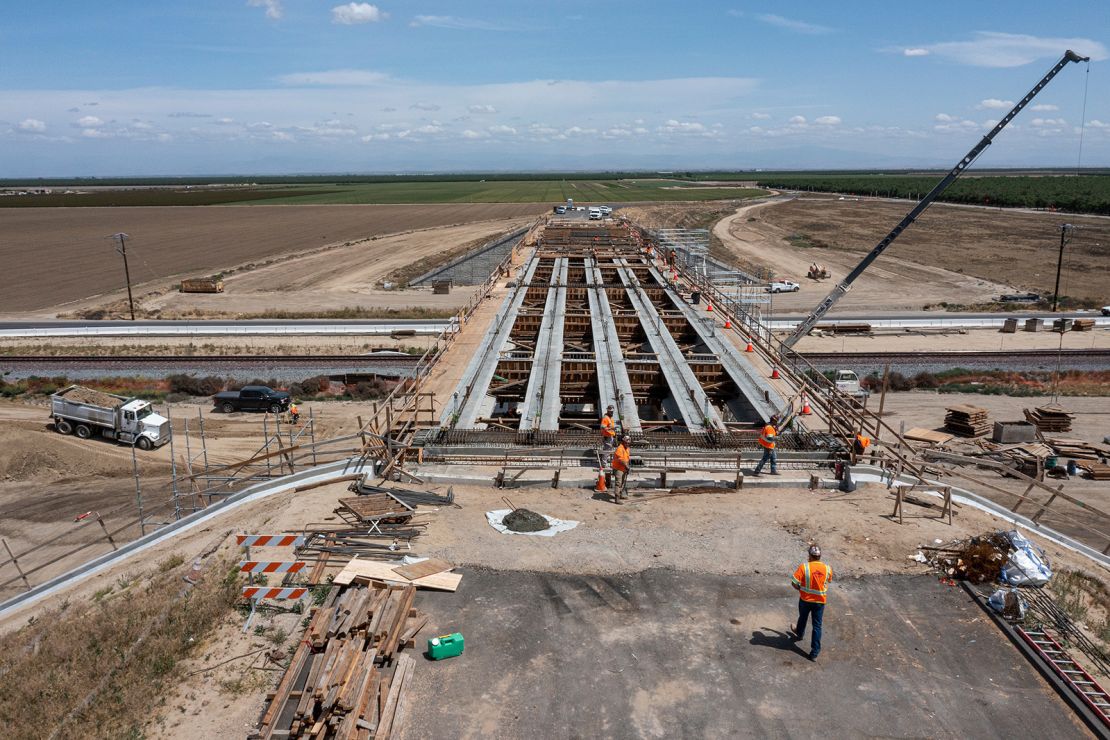
Meanwhile, construction is progressing on another high-speed line through the San Joaquin Valley.
Set to open around 2030, California High Speed Rail (CHSR) will run from Merced to Bakersfield (171 miles) at speeds of up to 220 mph.
Coupled with proposed upgrades to commuter rail lines at either end, this project could eventually allow high-speed trains to run the 350 miles (560 kilometers) between Los Angeles to San Francisco metropolitan areas in just two hours and 40 minutes.
CHSR has been on the table as far back as 1996, but its implementation has been controversial.
Disagreements over the route, management issues, delays in land acquisition and construction, cost over-runs and inadequate funding for completing the entire system have plagued the project – despite the economic benefits it will deliver as well as reducing pollution and congestion. Around 10,000 people are already employed on the project.
Costing $63 billion to $98 billion, depending on the final extent of the scheme, CHSR is to connect six of the 10 largest cities in the state and provide the same capacity as 4,200 miles of new highway lanes, 91 additional airport gates and two new airport runways costing between $122 billion and $199 billion.
With California’s population expected to grow to more than 45 million by 2050, high-speed rail offers the best value solution to keep the state from grinding to a smoggy halt.
Brightline West and CHSR offer templates for the future expansion of high-speed rail in North America.
By focusing on pairs of cities or regions that are too close for air travel and too far apart for car drivers, transportation planners can predict which corridors offer the greatest potential.
“It’s logical that the US hasn’t yet developed a nationwide high-speed network,” says Sherin. “For decades, traveling by car wasn’t a hardship, but as highway congestion gets worse, we’ve reached a stage where we should start looking more seriously at the alternatives.
“The magic numbers are centers of population with around three million people that are 200 to 500 miles apart, giving a trip time of less than three hours – preferably two hours.
“Where those conditions apply in Europe and Asia, high-speed rail reduces air’s share of the market from 100% to near zero. The model would work just as well in the USA as it does globally.”
Sherin points to the success of the original generation of Acela trains as evidence of this.
“When the first generation Acela trains started running between New York City and Washington in 2000, Amtrak attracted so many travelers that the airlines stopped running their frequent ‘shuttles’ between the two cities,” he adds.
However, industry observer Vantuono is more pessimistic.
“A US high-speed rail network is a pipe dream,” he says. “A lack of political support and federal financial support combined with the kind of fierce landowner opposition that CHSR has faced in California means that the challenges for new high-speed projects are enormous.”
According to the International Energy Agency (IEA), urban and high-speed rail hold “major promise to unlock substantial benefits” in reducing global transport emissions.
Dr. Fatih Birol, the IEA’s executive director, argues that rail transport is “often neglected” in public debates about future transport systems – and this is especially true in North America.
“Despite the advent of cars and airplanes, rail of all types has continued to evolve and thrive,” adds Birol.
Globally, around three-quarters of rail passenger movements are made on electric-powered vehicles, putting the mode in a unique position to take advantage of the rise in renewable energy over the coming decades.
Here, too, the United States lags far behind the rest of the world, with electrification almost unheard of away from the NEC.
Rail networks in SouthKorea, Japan, Europe, China and Russia are more than 60% electrified, according to IEA figures, the highest share of track electrification being South Korea at around 85%.
In North America, on the other hand, less than 5% of rail routes are electrified.
The enormous size of the United States and its widely dispersed population mitigates against the creation of a single, unified network of the type being built in China and proposed for Europe.
Air travel is likely to remain the preferred option for transcontinental journeys that can be more than 3,000 miles (around 4,828 kilometers).
But there are many shorter inter-city travel corridors where high-speed rail, or a combination of new infrastructure and upgraded railroad tracks or tilting trains, could eventually provide an unbeatable alternative to air travel and highways.
The 84-year-old White man accused of shooting a Black teenager who rang his doorbell in Kansas City turned himself in Tuesday and was later released on bail, authorities said.
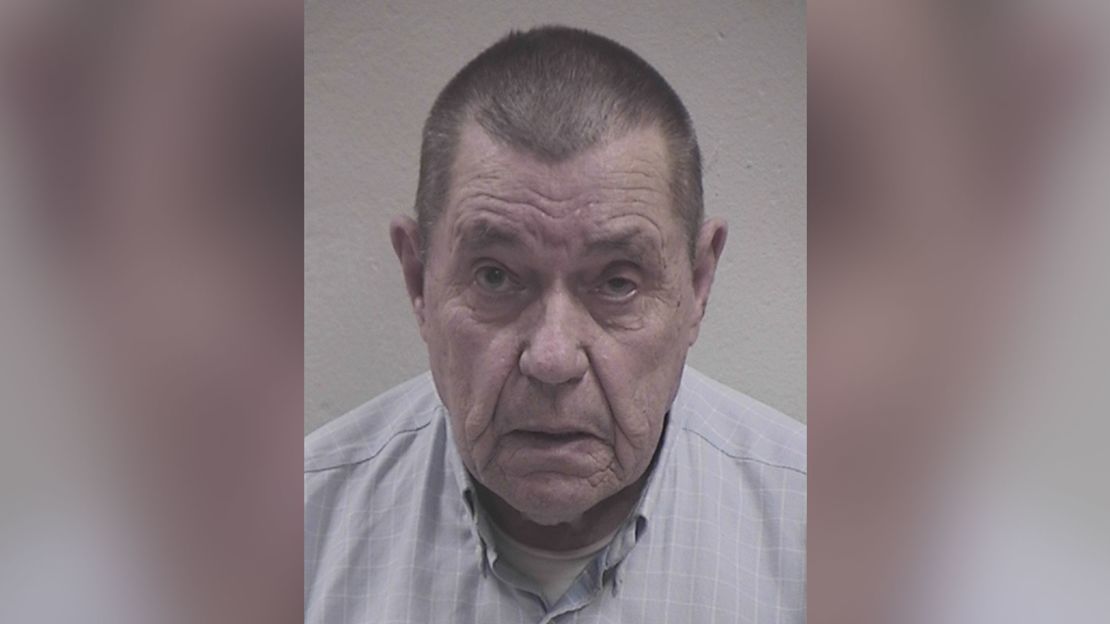
Andrew Lester, who faces two felony charges – assault in the first degree and armed criminal action – in the April 13 shooting of Ralph Yarl, will be arraigned Wednesday afternoon, according to Yarl family attorney Lee Merritt. CNN has reached out to prosecutors to confirm the information.
Lester turned himself in at a detention center Tuesday then hours later was released on bail. The conditions of his $200,000 bond prohibit him from having any type of weapon and cannot have direct or indirect contact with Yarl or his family, according to Clay County Sheriff’s Office spokesperson Sarah Boyd.
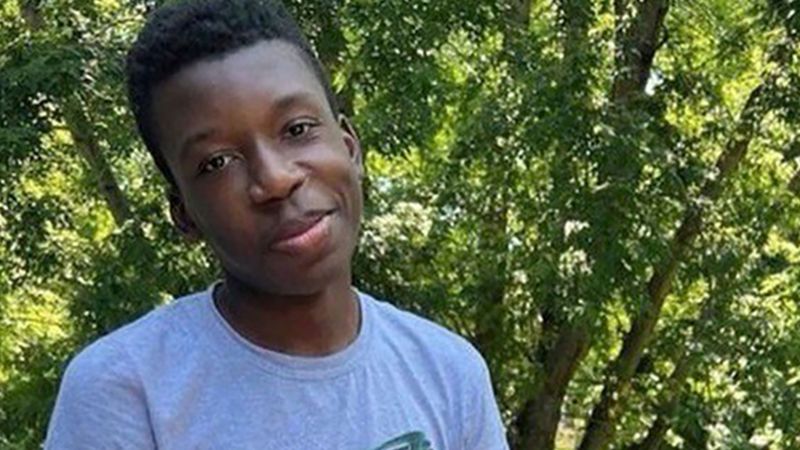
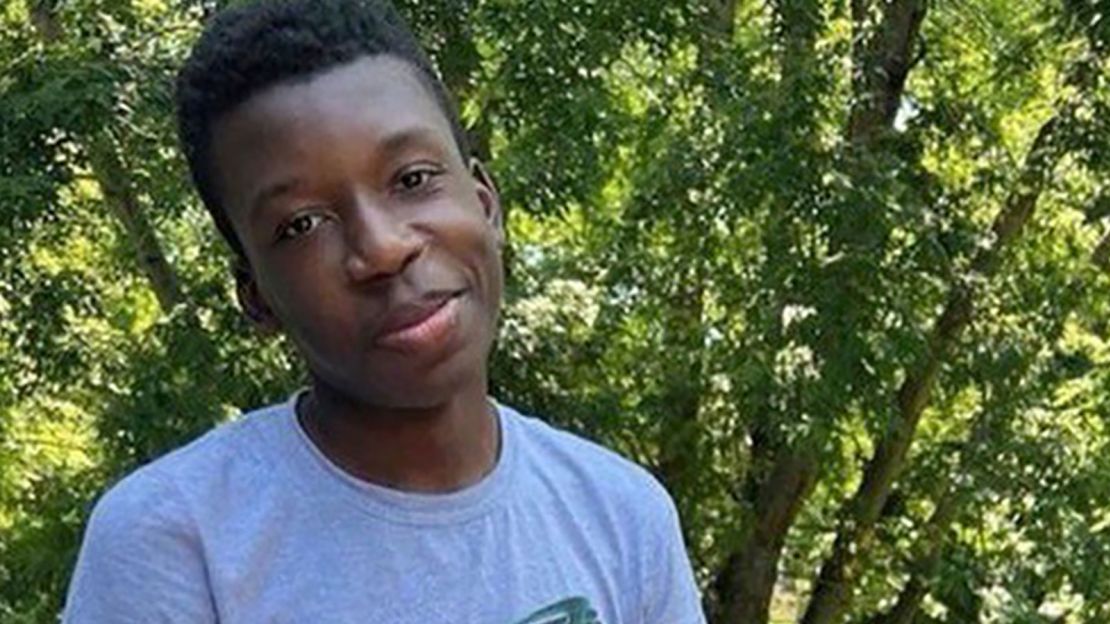
Ralph, 16, was shot in the head and arm after he went to the wrong address to pick up his siblings. He has been released from a hospital but faces an arduous road to recovery, his family said.
Lester has told police he and the teen did not exchange words before he fired at him through a locked glass door.
CNN has not been able to reach the homeowner. CNN has yet to determine whether Lester has an attorney.
The criminal charges have brought a bit of comfort to Ralph’s family – but long roads lie ahead, both with Ralph’s recovery and the quest for justice, his aunt Faith Spoonmore told CNN.
“It’s not as simple as turning a page,” Spoonmore said Tuesday. “It’s a little better that he is – hopefully – going to get part of what of he deserves.”
But questions remain over why Lester was initially detained but released a few hours after the April 13 shooting.
“I share the outrage and concern of many in asking why,” Kansas City Mayor Quinton Lucas told CNN.
“In Missouri, you can have a 24-hour hold. It is clear here that this was two or three hours, where they questioned the suspect. He was able to go back home that evening.”
Lester told police he fired immediately after answering the doorbell when he saw Ralph pulling on an exterior door handle, according to the probable cause document obtained by CNN.
Lester thought Ralph was trying to break in to the home and was “scared to death” due to the boy’s size, according to the document.
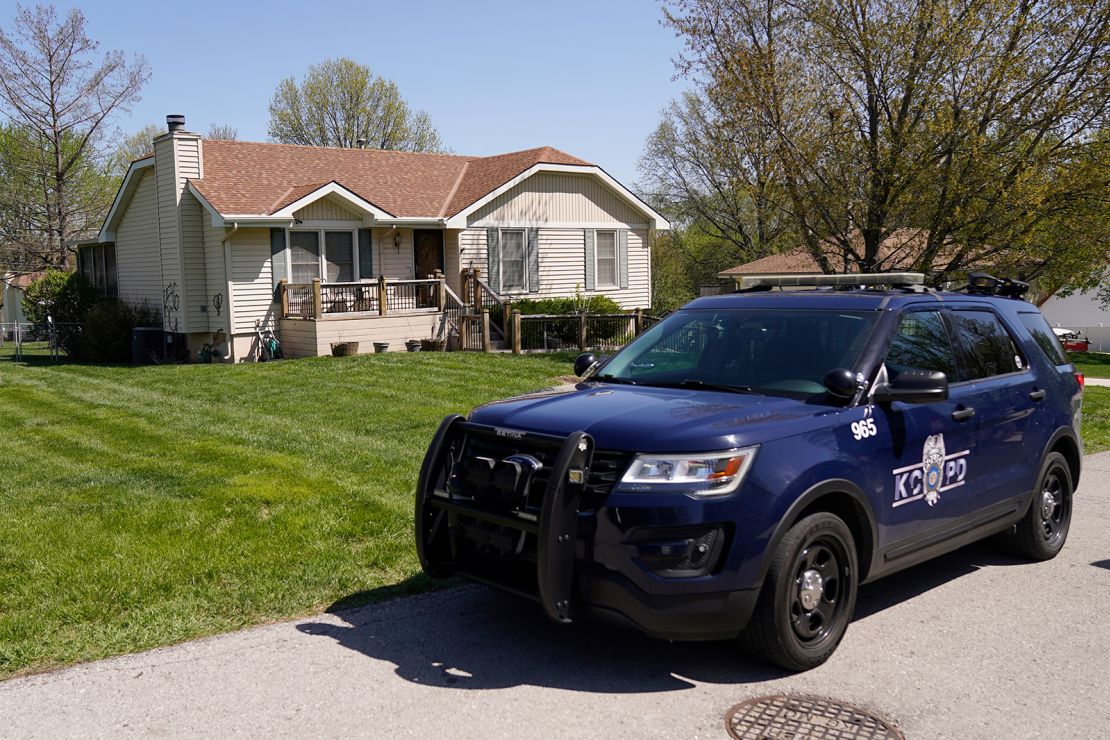
Officers responded just before 10 p.m. that night after receiving reports of a shooting. When they arrived, they found Ralph wounded in the street.
The shooting left Ralph, who plays bass clarinet and is a band leader in school, with gunshot wounds to his head and arm. While he was hospitalized, Ralph told police he did not pull on the door, according to the document.
It was “nothing short of a miracle” that Ralph was discharged from the hospital, his attorney Ben Crump told CNN on Monday. But “he’s not out of the woods yet.”
The shooting fueled protests in Kansas City and stirred memories of Trayvon Martin and Ahmaud Arbery – young Black males who were shot and killed by men who later claimed self-defense.
Demonstrators have marched through Kansas City chanting, “Justice for Ralph,” and calling for the shooter’s arrest.
The shooting also came days before a 20-year-old woman was shot and killed in upstate New York after she and three others accidentally turned into the wrong driveway.
While Ralph’s attorneys say the teen never posed a threat to his shooter, it remains unclear whether Missouri’s “stand your ground” law will be cited in Lester’s defense case.
“Stand your ground” laws allow people to respond to threats or force without fear of criminal prosecution in any place where a person has the right to be.
Ralph’s aunt challenged the notion that her nephew’s “size” could be a threat.
“I really don’t understand how,” Spoonmore said. “I doubt Ralph is even 170 pounds. Ralph is not even 6 feet (tall).”
She said she’s on a mission to help get justice for her nephew.
“I want justice to look the same across the board,” Spoonmore said. “I want justice to look the same.”
The mayor said he believes Ralph was racially profiled by the shooter.
“This boy was shot because he was existing while Black,” Lucas said.
Clay County Prosecuting Attorney Zachary Thompson has said, “There was a racial component to this case,” but did not elaborate.
On the night of the shooting, Lester was taken into custody and was released less than two hours later, two representatives at the Kansas City Police Department detention unit previously told CNN.
Lester was released because police recognized that more investigative work needed to be done, Thompson said.
Attorney Crump questioned why Lester was not detained longer.
“Nobody can tell us if the roles were reversed, and you had a Black man shoot a White 16-year-old teenager for merely ringing his doorbell that he would not be arrested. I mean, this citizen went home and slept in his bed at night after shooting that young Black kid in the head,” Crump told CNN.
“He merely rang the doorbell. That was it,” the teen’s attorney said. “And the owner of the home shoots through the door, hitting him in the head and then shoots him a second time.”
The mayor said he didn’t even know the details of the case until several days after the shooting. And while he believes race played a role in the shooting, he acknowledged the work by police – including White officers – who helped prosecutors file charges against Lester.
“We did have officers, White officers for what it’s worth, who did a lot of hard work to get this case file to the prosecutor having charges filed shortly thereafter,” Lucas said.
“That being said, to pretend that race is not a part of this whole situation would be to have your head in the sand.”
Before the shooting, Lester was lying down in bed when he heard the doorbell ring and picked up his .32 caliber revolver, he told police, according to a probable cause statement.
He then went to his home’s front entrance, which includes an interior door and a glass exterior door – both of which were locked.
Lester opened the interior door and “saw a black male approximately 6 feet tall pulling on the exterior storm door handle,” Lester told police.
“He stated he believed someone was attempting to break into the house, and shot twice within a few seconds of opening the door,” the probable cause statement reads.
“He believed he was protecting himself from a physical confrontation and could not take the chance of the male coming in,” the document reads.
Lester said he immediately called 911 after the shooting, according to the document.
Police spoke with Ralph while he was being treated at a hospital, where he told them his mother asked him to pick up his brothers at 1100 NE 115th Street, according to the document, which notes the actual address they were staying at was 1100 NE 115th Terrace.
When he arrived at the house on 115th Street, Ralph said he rang the doorbell and waited a while before a man eventually opened the door and immediately shot him in the head, causing him to fall, the document says.
While the teenager was still on the ground, the man then fired again, shooting him in the arm, Ralph told police.
Ralph said he got up and ran to keep from being shot, and he heard the man say, “Don’t come around here,” the document says. He then went to multiple nearby homes asking for help and telling people to call police.
The boy told police he did not pull on the door, according to the probable cause document.
Responding officers also found the front storm door glass at Lester’s home broken, with blood on the front porch and the driveway, according to the document.
The teen “had to run to 3 different homes before someone finally agreed to help him after he was told to lie on the ground with his hands up,” a GoFundMe page started by Ralph’s aunt states.
A neighbor, who asked not to be identified, told CNN she called 911 after Ralph came to her door, bleeding.
Since the shooter’s location was unknown at the time, she was directed to stay inside her home by the emergency operator for her safety. She said she complied initially, then went outside with towels to help suppress the bleeding.
“This is somebody’s child. I had to clean blood off of my door, off of my railing. That was someone’s child’s blood,” she said. “I’m a mom … this is not OK.”
‘You can’t profile and shoot our children’
Ralph is still traumatized from the ordeal, but the family hopes for a full recovery because Ralph is young and strong, Crump said.
“He and his family are just happy that he’s alive after being shot in the head,” Crump told CNN.
Merritt said Tuesday the first bullet traveled less than five feet into Yarl’s upper temple and penetrated his skull.
“They scraped bullet fragments off his frontal lobe on Thursday. On Saturday he was home playing with his dog,” Merritt said.
He said God was telling the community and its leaders they cannot go on as business usual.
“That was in fact a miracle. What are we supposed to learn from that miracle, is the question we need to answer.”
Ralph, a section leader in a marching band who could often be found with an instrument in hand, had been looking forward to graduating from high school and visiting West Africa before starting college, according to the GoFundMe page.
“Life looks a lot different right now. Even though he is doing well physically, he has a long road ahead mentally and emotionally. The trauma that he has to endure and survive is unimaginable,” the aunt wrote in the fundraiser.
The GoFundMe page, started to help the family with medical expenses, had garnered more than $2 million in donations by Monday night.
Crump likened Ralph’s shooting to the shootings of 17-year-old Martin in Florida and 25-year-old Arbery in Georgia.
“We continue to fight to say you can’t profile and shoot our children, just because you have this ‘stand your ground’ law,” Crump said. “Unacceptable.”
Merritt told CNN Monday that the “stand your ground” action would not apply to Ralph’s case.
“The stand your ground action, under the laws of Missouri, are completely inapplicable to this case, because there has been no conversation, not from the suspect, not from the victim and not from law enforcement, that Ralph Yarl, at 16 years old, ever posed a threat to this shooter,” Merritt said.
President chats with teen and mother
President Joe Biden spoke with Ralph and his mother, Cleo Nagbe, by phone on Monday evening, a White House official told CNN.
Biden also noted how “fortunate” Ralph is that his mother is not just a nurse, but also a physical therapist.
The conversation also covered their families, their love of music and Ralph’s dream of pursuing a chemical engineering degree at Texas A&M University – to which Biden “lightheartedly attempted to convince him that (the president’s alma mater) University of Delaware was a much better option,” the official said.
“The president also committed to keeping up his fight against gun violence,” the official said.