
• About WordPress
    • WordPress.org
    • Documentation
    • Learn WordPress
    • Support
    • Feedback
  • Log In
  • Register

AnonymousMedia.org

  • Home
  • Headline News
  • Videos
  • History
  • File Manager
  • Activity
  • Forums
  • How to Scale Phishing Detection in Your SOC: 3 Steps for CISOs

    How to Scale Phishing Detection in Your SOC: 3 Steps for CISOs


    Phishing has quietly turned into one of the hardest enterprise threats to expose early. Instead of crude lures and obvious payloads, modern campaigns rely on trusted infrastructure, legitimate-looking authentication flows, and encrypted traffic that conceals malicious behavior from traditional detection layers. For CISOs, the priority is now clear: scale phishing detection in a way that helps the SOC uncover real risk before it becomes credential theft, business interruption, and board-level fallout.

    Why Scaling Phishing Detection Has Become a Priority for Modern SOCs

    For many security teams, phishing is no longer a single alert to investigate — it is a continuous stream of suspicious links, login attempts, and user-reported messages that must be validated quickly. The problem is that most SOC workflows were never designed to handle this volume. Each investigation still requires time, context gathering, and manual validation, while attackers operate at machine speed.

    When phishing detection cannot scale, the consequences quickly reach the CISO’s desk:

    • Stolen corporate identities: Attackers capture employee credentials and gain access to email, SaaS platforms, VPNs, and internal systems.
    • Account takeover inside trusted environments: Once authenticated, attackers operate as legitimate users, bypassing many security controls.
    • Lateral movement through SaaS and cloud platforms: Compromised identities enable access to sensitive data, internal tools, and shared infrastructure.
    • Delayed incident detection: By the time the SOC confirms malicious activity, the attacker may already be active inside the environment.
    • Operational disruption and financial impact: Phishing-driven breaches can lead to fraud, data exposure, and business downtime.
    • Regulatory and compliance consequences: Identity compromise and data access incidents often trigger reporting obligations and investigations.

    For CISOs, the message is clear: phishing detection must operate at the same speed and scale as the attacks themselves, or the organization will always be reacting after the damage has begun.

    What a Scaled Phishing Defense Looks Like

    A SOC that can handle phishing at scale behaves very differently from one that cannot. Suspicious activity is validated quickly, investigation queues do not grow uncontrollably, and analysts spend less time researching indicators and more time acting on confirmed threats. Escalations are based on clear behavioral evidence rather than assumptions. Identity-driven attacks are detected before they spread across SaaS platforms and internal systems.

    • Earlier detection of credential theft and account takeover attempts
    • Faster containment before phishing turns into a broader compromise
    • Less analyst overload and fewer investigation bottlenecks
    • Higher-quality escalations backed by real behavioral evidence
    • Lower risk of disruption across email, SaaS, VPN, and cloud environments
    • Reduced financial, operational, and regulatory exposure
    • Stronger confidence in the SOC’s ability to stop attacks before business impact begins

    The Investigation Model Built for Modern Phishing: Three Changes CISOs Should Introduce

    Modern phishing attacks are built to exploit delay, limited visibility, and fragmented investigation workflows. To keep pace, SOC teams need a model that helps them validate suspicious activity faster, expose real phishing behavior safely, and uncover what traditional detection layers miss.

    The three steps below are becoming essential for CISOs who want phishing detection to scale with the threat.

    Step #1: Safe Interaction. Stepping into the Phishing Trap Without Risk

    Many modern phishing attacks do not reveal their real purpose immediately. A suspicious link may load what looks like a harmless page, while the real attack begins only after a user clicks through several redirects or enters credentials. By the time the malicious behavior becomes visible, attackers may already have captured login details or active sessions.

    This is why traditional investigation methods often struggle with modern phishing. Static analysis can surface useful indicators such as domain reputation or file metadata, but it rarely shows how the attack actually unfolds. Analysts must infer risk from fragmented signals, which slows decisions and leaves room for dangerous assumptions.

    Interactive sandbox analysis changes this dynamic. Instead of guessing what a suspicious link or attachment might do, SOC teams can execute it in a controlled environment and interact with it exactly as a user would. Analysts can click through pages, follow redirect chains, submit test credentials, and observe how the phishing infrastructure behaves in real time, all without exposing the organization to risk.

    The difference between static and interactive investigation is significant:

    Static Analysis Interactive Analysis
    How it works Checks metadata, reputation, and surface signals Runs the link or file in a safe environment
    What the SOC sees Hashes, domains, basic page content Redirects, phishing pages, network activity, dropped files
    What it often misses Behavior that appears after clicks or credential input The full phishing flow as it unfolds
    Decision quality Based on signals and assumptions Based on visible behavior
    Investigation speed Slower, with more manual checks Faster, with quicker verdicts
    Risk to the business Higher chance of delay and missed phishing Earlier detection before users are exposed
    CISO outcome More backlog, more uncertainty, more exposure Faster response, clearer escalations, lower risk

    In the interactive analysis session below, an analyst uses ANY.RUN sandbox to reveal the full behavior of a Tycoon2FA phishing attack in just 55 seconds. The login form is hosted on Microsoft Azure Blob Storage, a legitimate service that makes the page harder to catch with static checks alone. By safely interacting with the sample, the analyst uncovers the full attack chain and extracts actionable IOCs and TTPs for further detection.

    Check real phishing exposed in 55 seconds

    A malicious Tycoon2FA sample on a legitimate Microsoft Blob Storage domain, analyzed in 55 seconds inside ANY.RUN sandbox

    For CISOs, this means:

    • Earlier detection of phishing campaigns before user exposure
    • Faster decisions based on real behavioral evidence
    • Actionable IOCs and TTPs for stronger downstream detection
    • Lower risk of credential theft and account compromise

    Expose phishing attacks earlier with clear behavioral evidence and reduce the risk of identity-driven compromise across the business.

    Strengthen phishing detection

    Step #2: Automation. Scaling Phishing Investigations Without Scaling the Team

    Even with interactive analysis in place, most SOCs still face the same problem: volume. Suspicious links, attachments, QR codes, and user-reported messages arrive constantly, and manual review does not scale.

    Automation helps solve this by executing suspicious artifacts in a controlled sandbox, collecting indicators, and returning an initial verdict in seconds. But modern phishing often includes CAPTCHAs, QR codes, multi-step redirects, and other interaction gates that break traditional automation. In those cases, analysts are forced to spend time clicking through pages, solving challenges, and trying to reach the real malicious content themselves. This slows investigations and drains valuable analyst time.

    The stronger approach is automation combined with safe interactivity. In a sandbox like ANY.RUN, automated analysis can imitate real analyst behavior, interact with pages, solve challenges, and move through phishing flows automatically. Instead of stopping halfway through the attack chain or producing an inconclusive result, the sandbox continues execution until the full behavior becomes visible. 

    Phishing with a QR code analyzed inside ANY.RUN sandbox

    In 90% of cases, the verdict is available in under 60 seconds, giving SOC teams the speed they need to keep pace with phishing at scale.

    55 seconds needed to reveal full attack chain, targeting enterprises

    For CISOs, this hybrid model delivers clear operational benefits:

    • Higher investigation throughput without expanding SOC headcount
    • Less manual work for analysts, reducing fatigue and burnout
    • More accurate verdicts, even for phishing attacks designed to evade automation

    Step #3: SSL Decryption. Breaking the Illusion of Legitimate Traffic

    Modern phishing campaigns increasingly operate entirely inside encrypted HTTPS sessions. Login pages, redirect chains, credential harvesting forms, and token theft mechanisms are delivered through legitimate infrastructure and protected by valid SSL certificates. To most monitoring systems, this traffic looks completely normal.

    This creates a dangerous illusion of trust. A connection to port 443, a secure login page, and a valid certificate often appear indistinguishable from legitimate business activity, even while credentials are being stolen inside the session.

    Traditional inspection methods struggle with this challenge. Many tools can see the encrypted connection, but cannot reveal what actually happens inside it. As a result, confirming phishing often requires additional investigation steps, which slows response and increases the risk of credential compromise.

    An ordinary-looking page acts as the starting point for the phishing attack

    Automatic SSL decryption inside the sandbox removes this barrier. By extracting encryption keys directly from process memory during execution, ANY.RUN decrypts HTTPS traffic internally and exposes the full phishing behavior during analysis. Redirect chains, credential capture mechanisms, and attacker infrastructure become immediately visible.

    As phishing increasingly hides behind encryption, the ability to analyze HTTPS traffic without delay becomes important for maintaining reliable detection at scale.

    Reduce exposure to phishing attacks in your company. Integrate ANY.RUN as part of your SOC’s triage & response.

    Request access for your team

    Example: Detecting a Salty2FA Phishing Campaign Targeting Enterprises

    In this sandbox analysis session, a Salty2FA phishing attack that looks like routine HTTPS traffic is exposed inside ANY.RUN during the first run. With automatic SSL decryption, the sandbox reveals the malicious flow, triggers a Suricata rule, and produces a response-ready verdict in 40 seconds.

    See the full session here: Salty2FA Phishing Attack Analysis

    ANY.RUN sandbox provides connection details, showing HTTPS traffic

    For CISOs, this capability delivers critical security outcomes:

    • Encrypted phishing is exposed before it turns into account takeover across core business platforms
    • Stronger protection against MFA bypass, session hijacking, and identity-driven compromise hidden inside HTTPS traffic
    • Faster, evidence-based confirmation during the first investigation, reducing escalation delays and analyst time spent on unclear cases

    Build a Phishing Investigation Model That Scales

    Modern phishing campaigns move quickly, hide behind trusted infrastructure, and increasingly rely on encrypted channels that make malicious activity appear legitimate. To keep pace, SOC teams need more than isolated tools; they need an investigation model designed to expose real phishing behavior early, handle growing volumes without overwhelming analysts, and reveal threats that hide inside encrypted traffic.

    By combining safe interaction, automation, and SSL decryption, organizations can investigate suspicious activity faster, uncover hidden attack chains, and confirm malicious behavior with clear evidence during the first investigation.

    ANY.RUN’s solution improving SOC processes

    Many organizations have already adopted this approach, and CISOs report measurable operational improvements such as:

    • 3× stronger SOC efficiency, giving CISOs more detection power without proportional team growth
    • Up to 20% lower Tier 1 workload, easing analyst pressure and reducing operational strain
    • 30% fewer escalations to Tier 2, preserving senior expertise for the incidents that matter most
    • 21 minutes cut from MTTR per case, helping contain phishing threats before impact spreads
    • Earlier detection and clearer response, reducing breach exposure and business risk
    • Cloud-based analysis with no hardware burden, lowering infrastructure costs and complexity
    • Faster verdicts with less alert fatigue, improving speed and consistency across triage
    • Quicker development of junior talent, helping teams build capability faster

    Strengthen your SOC with a phishing investigation model built for speed, visibility, and scale, reducing analyst overload, improving detection coverage, and lowering the business risk of delayed response.

    Found this article interesting? This article is a contributed piece from one of our valued partners. Follow us on Google News, Twitter and LinkedIn to read more exclusive content we post.


    Source link

    03/12/2026
  • Stryker tells SEC that timeline for recovery from cyberattack unknown

    Stryker tells SEC that timeline for recovery from cyberattack unknown


    Medical device company Stryker provided a fuller assessment of its recent cyber incident in a notice to the Securities Exchange Commission (SEC) on Wednesday evening. 

    The attack came to light on Wednesday morning after employees took to social media to complain of phones, laptops and computers that had been wiped clean of all information. The company’s 5,500 employees were locked out of company systems across Ireland, the US, Australia and India

    In an 8-K filing with the SEC, Stryker confirmed that the cyberattack caused a global disruption to the company’s Microsoft environment and said external cybersecurity experts were brought in to “assess and to contain the threat.”

    “The incident has caused, and is expected to continue to cause, disruptions and limitations of access to certain of the Company’s information systems and business applications supporting aspects of the Company’s operations and corporate functions,” company officials said. 

    “While the Company is working diligently to restore affected functions and systems access, the timeline for a full restoration is not yet known. The Company has business continuity measures in place to continue to support its customers and partners.”

    Stryker said it is still unclear whether the cyberattack will have financial impacts on the company. It is one of the largest medical device makers in the U.S., reporting more than $25 billion in revenue last year. 

    The SEC filing reiterates that the incident did not involve ransomware or malware. Several cybersecurity experts said it is likely that the hackers behind the attack used the native features and tooling in Microsoft Intune to cause damage. 

    Microsoft Intune is a cloud-based unified endpoint management system that allows teams to secure and manage access to organizational resources across Windows, macOS, Linux, iOS and Android devices.

    Employees of Stryker reported that all of their devices with Microsoft Intune had been wiped clean. 

    “What makes the Stryker incident particularly concerning is the apparent use of enterprise management infrastructure — potentially weaponizing Microsoft Intune — to carry out destructive activity at scale,” said Kathryn Raines, cyber threat intelligence lead at cybersecurity firm Flashpoint.

    Microsoft declined to comment on the situation when contacted by Recorded Future News.

    Handala vs. APT34

    The incident appeared to be the first evidence of  potential cyber fallout from the war between the U.S. and Iran. Since the beginning of the conflict, experts warned that cyberattacks by both Iranian state-backed groups and hacktivists would likely come as part of the response to airstrikes launched by U.S. and Israeli forces. 

    Several alleged Iranian groups have defaced websites, conducted relatively minor espionage incursions and launched distributed denial-of-service (DDoS) attacks in recent days, but no major incidents were reported until the Handala group took credit for the attack against Stryker. 

    Handala has existed since 2023 and is known to deploy the Hatef wiper malware as well as the Rhadamanthys stealer malware during its attacks, according to cybersecurity firm Optiv.

    The group previously focused its efforts on attacking significant targets in Israel, generally opting to steal information before launching wiper malware. Optiv said Handala typically gains initial access through phishing emails or by impersonating legitimate organizations.

    Handala has made several unverified claims of attacks on organizations since the onset of the conflict with the U.S., including the targeting of government organizations in Jordan and Israel. 

    Optiv and several other cyber research firms claimed there is significant overlap between Handala and a state-backed group linked to Iran’s Islamic Revolutionary Guard Corps (IRGC) known as APT34.

    Flashpoint’s Raines said they have been tracking Handala for the last year and found that the group presents itself as a grassroots resistance movement. But its tactics and targeting are “far more consistent with activity linked to Iranian state actors than with independent hacktivism.” 

    APT34 was previously accused of increasing its attacks on government agencies in Saudi Arabia, Iraq, the Kurdistan Regional Government, the United Arab Emirates (UAE) and the broader Gulf region between 2023 and 2025.

    Get more insights with the

    Recorded Future

    Intelligence Cloud.

    Learn more.


    Source link

    03/12/2026
  • WAR ON IRAN – Consortium News

    WAR ON IRAN – Consortium News


    Trump has a choice: him or the world; wants way out of war; Security Council blames Iran; Iranian ‘sleeper cells;’ the Pope’s deep sorrow; U.S. bases damaged as reckoning begins; and ‘Nothing Will Remain of Tehran.’

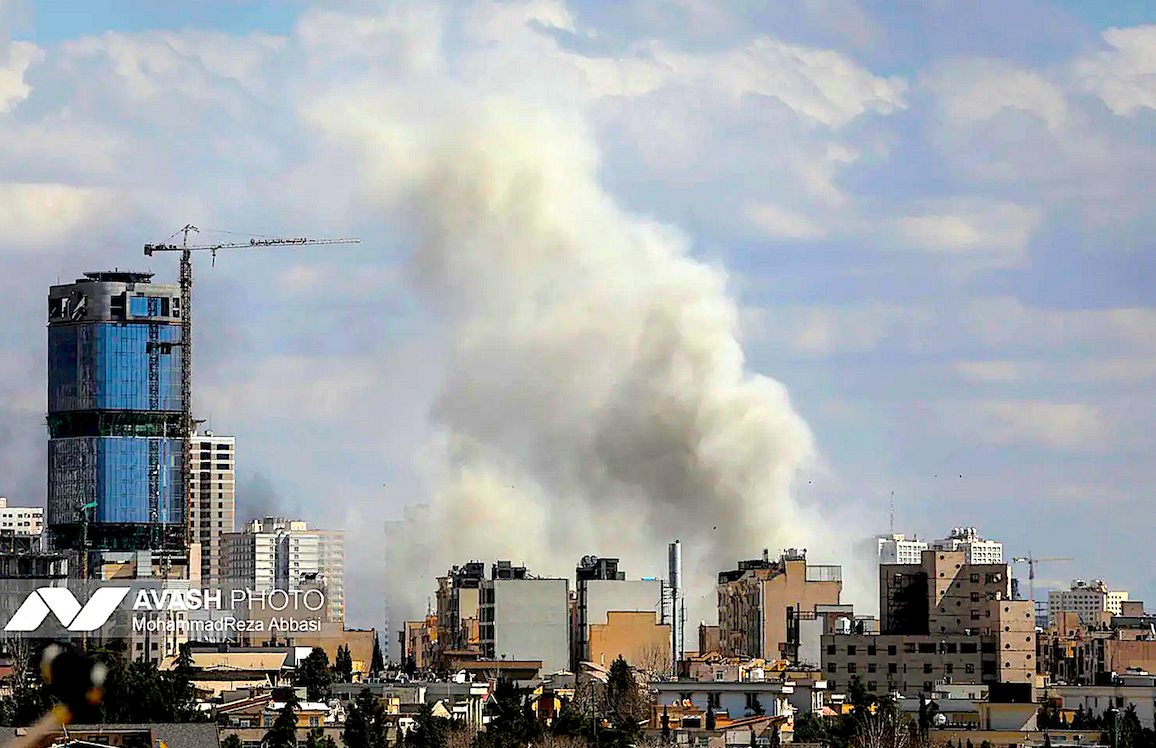
    Smoke rises above Tehran in the war against the U.S. and Israel. (Avash/Wikimedia Commons)

    WEDNESDAY

    By Joe Lauria
    Special to Consortium News

    Trump’s Choice

    Ari Ben-Menashe, a former Israeli military intelligence officer, told CN Live! that he believes Benjamin Netanyahu hinted to Donald Trump that certain Epstein files nailing Trump as a pedofile could wind up on the front page of The New York Times if he didn’t launch and continue the war against Iran. But now, after seeing how badly the war is going, Trump wants out — even possibly at his own potential expense since he realizes what a disaster he has unleashed. The moral choice is up to Trump: imperil the world or go down personally. 

    The ex-officer thinks Iran and the U.S. could make a deal at Israel’s expense, though he didn’t put it past Netanyahu to use a nuclear weapon against Iran rather than lose the war and wind up in jail. Ben-Menashe says nuclear-armed Pakistan could be brought into play, warning Israel not to nuke Iran. India, whose prime minister visited Netanyahu two days before the war on Iran began could have been enlisted by nuclear-armed India to counter threaten Pakistan to lay off Israel.  [WATCH: CN Live! — ‘The Toll on Israel’]

    Looking for a Way Out – Trump Says Nothing Left to Bomb

    Trump is clearly looking for a way out of the historic meses he has created. He told Axios “in a brief phone interview Wednesday that the war with Iran will end ‘soon’ because there is ‘practically nothing left to target,’” Axios reported. “‘Little this and that… Any time I want it to end, it will end,’ Trump said during the five-minute call.” 

    Meanwhile, the masters of the war say the war must  go on. “Israeli Defense Minister Israel Katz said Wednesday the war will continue ‘without any time limit, for as long as necessary, until we achieve all the objectives and decisively win the campaign,’” Axios said.

    This conforms with what Ben-Menashe said, namely, that Netanyahu needs the war to go on.  With Israeli and American frustration growing that their war aims of regime change is not happening, the aggressors have unleashed their fury on civilians in Tehran and other Iranian cities. 

    As early as  Monday The Wall Street Journal reported that Trump advisors were looking for a way out. The paper said that” some of his advisers privately urged him to look for an exit plan amid spiking oil prices and concerns that a lengthy conflict could spark political backlash.” But “some Trump administration officials said as long as Tehran continued to attack regional countries and Israel still wanted to strike Iranian targets, it was unlikely the U.S. could easily withdraw from the war.” 

    Israel decides.

    Unless Trump is willing to have his Epstein-related crimes revealed.

    Meanwhile, Iran Threatens to Hit Western Banks in Gulf

    Citi Bank and HSBC bank have temporarily shut their offices in the Gulf after Iran threatened to strike Israeli and Western banks in the region after an Israeli or U.S. missile struck a Tehran building housing offices of Bank Sepah, Iran’s first modern bank founded in 1922. Wall Street and the City of London probably weren’t banking on this. 

    UN Security Council

    Russia and China did not veto a scurrilous resolution in the U.N. Security Council that blame Iran as the “unprovoked” aggressor in the war. The most startling word in the resolution is “unprovoked,” which any clear-eyed observer would see as an out-and-out lie. It was sheer audacity to include that word when the whole world can see that the United States and Israel carried out an unprovoked attack and that Iran is defending itself according to the U.N. Charter.  This resolution brings further shame on the Security Council after its endorsement last November of the genocidal Trump/Kushner takeover of Gaza.

    [See CN’s full report: WATCH: UN Security Council Blames Iran]

    Trump Says ‘Full Steam Ahead’ and Tankers Get Bombed

    Trump on Wednesday urged nervous captains to go “full steam ahead” through the Strait of Hormuz. “I think they should use the strait. We took out just about all of their mine ships in one night. Just about all of their navy is at the bottom of the sea,” said Trump despite an Iranian threat to blow them out of the water. So a Thai ship tried to pass later Wednesday and they were blown out of the water. 

    Trump Speaks About Iranian ‘Sleeper Cells’

    Trump talked to reporters about “Iranian sleeper cells” inside the U.S., saying authorities are “watching every single one of them.” He said: “We’ve been very much on top of it. We’ve got very, very good intelligence into that.” Trump even claimed: “We know where Iranian sleeper cells are… We have eyes on all of them, I think.” He thinks? 

    Meanwhile, “The FBI warned police departments in California in recent days that Iran could retaliate for American attacks by launching drones at the West Coast, according to an alert reviewed by ABC News.”

    How would the U.S. react if there were to be such an attack on U.S. soil?

    NYT Show Damage to US Bases

    The so-called Paper of Record was late to put it on the record. But on Wednesday the Times analyzed satellite photos that showed the extent of the damage done to U.S. bases in the Gulf by Iran’s retaliation for being attacked without provocation. “At Least 17 U.S. Sites Damaged in War With Iran, Analysis Shows,” was the headline. Except the Times was two later than independent journalist Richard Medhurst who brilliantly exposes the U.S. losses in the region.

    Israelis no longer receiving proper warnings of Iranian strikes.

    Iran has wiped out the entire US THAAD and Patriot radar system in the Gulf using $50k drones. It will cost billions and take a decade to replace.

    I pieced together all the satellite photos of the strikes & bases. pic.twitter.com/uOBES78JdJ

    — Richard Medhurst (@richimedhurst) March 10, 2026

    TUESDAY

    US Admission of Mistakes Begins

    The NYT headline begins the reckoning of this war: “How Trump and His Advisers Miscalculated Iran’s Response to War.” 

    The Times says the U.S. dismissing the possibility of a long oil shock is

    “emblematic of how much Mr. Trump and his advisers misjudged how Iran would respond to a conflict that the government in Tehran sees as an existential threat. Iran has responded far more aggressively than it did during last June’s 12-day war, firing barrages of missiles and drones at U.S. military bases, cities in Arab nations across the Middle East, and on Israeli population centers. […]

    Inside the administration, some officials are growing pessimistic about the lack of a clear strategy to finish the war. But they have been careful not to express that directly to the president, who has repeatedly declared that the military operation is a complete success.  [..] [Defense Secretary Pete] Hegseth acknowledged on Tuesday that Iran’s ferocious response against its neighbors caught the Pentagon somewhat off guard. […]

    Some military advisers did warn before the war that Iran could launch an aggressive campaign in response, and would view the U.S.-Israeli attack as a threat to its existence. But other advisers remained confident that killing Iran’s senior leadership would lead to more pragmatic leaders taking over who might bring an end to the war.”

    Pentagon Admits 140 Wounded

    After Reuters reported 150 U.S. military personnel had been wounded so far the Pentagon owned up and said 14o were injured with eight seriously wounded. The Defense Department had previously only admitted to the eight. It is still sticking to only seven killed though independent analysts say that number must be much higher given the damage done to U.S. military installations in the Gulf region.  

    ‘Nothing Will Remain of Tehran’

    The New York Times has a report remarkably from the point of view of any ordinary Iranian living under the hell being rained down on Tehran by the Israelis and Americans. The Times reported:

    “’It seems they are striking everywhere: homes, schools, mosques, hospitals,’ said Javad, who like most people who spoke from inside Iran, asked that his full name be withheld for fear of retaliation. From 10 p.m. to past midnight, people in Tehran, the Iranian capital, could hear the sound of bombing ‘north, south, east and west,’ he said.

    ‘The air is not breathable,’ said Javad. ‘Last night they hit the high-voltage electricity lines. They will also strike gas and water. Acid rain fell and the air is polluted. They will hit all the infrastructure, and they have no hesitation about killing.’

    ‘If they keep hitting Tehran like this for another 10 days,’ he added, nothing will remain of Tehran.’”

    In the frustration of not being able to overthrow the government or end the ballistic missile and drone barrages it appears the U.S. and Israel are turning to a scorched earth policy, to turn Iranian cities into Gaza. 

    Iranian FM Blasts Israeli Censorship

    Iranian Foreign Minister Abbas Araghchi blast Israel for censoring the results of Iran’s attacks on the Zionist state. “Netanyahu doesn’t want you to see how Iran’s powerful Armed Forces are punishing Israel for its aggression,” he said on X. “Here’s what our men & women on the ground report: utter destruction caused by our missiles, panicked leader and their air defenses in disarray,” he wrote, adding “we’re just getting started.”

    NATO Poking Its Nose Into the Fight

    Nato ambassadors are to meet Gulf representatives next week to talk about the war, according to a Reuters report, citing three European diplomats told Reuters.

    Pope Feels ‘Profound Sorrow’ For Victims in Middle East

    The American Pope has expressed “profound sorrow for all the victims of the bombings” in the region, according to Vatican News. Pope Leo spoke of “many innocents, including many children”, and “those who were helping them, such as Father Pierre El-Rahi”, a Maronite priest killed by Israel Qlayaa, Lebanon. El-Rahi had told the town to defy the Israeli order to evacuate. When an Israeli bomb struck the home of an elderly resident the priest rushed to assist and was killed by the second Israeli airstrike.  The pope “prays that every hostility may cease as soon as possible.”

    Iraqi Militia Say 31 Attacks Have Killed ‘Several’ US Troops

    The Islamic Resistance of Iraq claims 31 attacks against U.S. military in Iraq in the past day. The Shia militia allied to Iran says it has killed an injured several U.S. troops in 291 attacks over 12 days. The Pentagon is admitting to only seven G.I.s killed so far.


    Source link

    03/12/2026
←Previous Page
1 … 6 7 8 9 10 … 841
Next Page→