Category: Uncategorized

  • Market analysts react to US-Israel strikes on Iran

    Market analysts react to US-Israel strikes on Iran


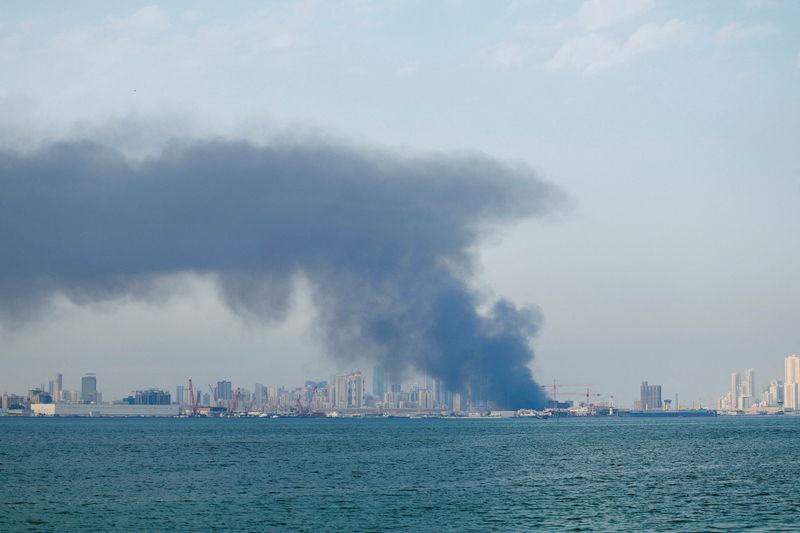
    Feb 28 (Reuters) – The United States and Israel launched strikes on Iran on Saturday, targeting its leadership and plunging the Middle East into a new conflict that President ‌Donald Trump said would end a security threat and give Iranians a chance to ‌topple their rulers.

    The strikes put nearby oil-producing Gulf Arab countries on edge as fears of escalation grew, and Tehran ​responded by launching missiles towards Israel.

    Some oil majors and top trading houses suspended crude oil and fuel shipments via the Strait of Hormuz because of the attacks, four trading sources said on Saturday.

    QUOTES:

    ENERGY ANALYSTS AT EURASIA GROUP:

    “Oil prices will rise sharply when markets open. Should the conflict continue into Sunday, ‌oil prices are likely to respond ⁠by increasing by $5-10 above the current $73 baseline, based on Iran’s claim to have closed the Strait of Hormuz and the disruption in tanker traffic.”

    ENERGY ANALYSTS ⁠AT BARCLAYS:

    “Oil markets might have to face their worst fears on Monday. As things stand right now, we think Brent could hit $100 (per barrel), as the market grapples with the threat of a potential supply ​disruption ​amid a spiralling security situation in the Middle East.”

    VISHNU VARATHAN, ​HEAD OF MACRO RESEARCH, ASIA EX-JAPAN, ‌MIZUHO, SINGAPORE:

    “A broader state of spots of regional attacks/instability may be par for the course – in line with Iran’s warning. Oil prices are likely to remain elevated as production and passage remain prone to attacks and disruptions. OPEC may be under pressure to raise production to try and offset. But a 10-25% premium on oil is not outlandish – even without a blockade of the ‌Strait of Hormuz, which is easily a 50% premium ​risk event.”

    CHRISTOPHER WONG, STRATEGIST, OCBC, SINGAPORE:

    “The strike raises geopolitical ​risk premia as markets head into Monday’s ​open. The immediate reaction function is fairly predictable: safe-haven assets such as ‌gold are likely to see an upside ​gap, while oil prices may ​also firm on supply-disruption concerns. Risk assets and high-beta currencies … could face an initial bout of volatility, particularly if headlines suggest potential retaliation or regional spillovers.”

    NICK FERRES, CIO, VANTAGE ​POINT ASSET MANAGEMENT, SINGAPORE:

    “Energy is ‌still inexpensive. That’s the obvious sector that rallies on Monday. And gold.”

    (Reporting by Scott ​Murdoch, Tom Westbrook, Rae Wee; Additional reporting by Scott DiSavino; Compiled by Vidya ​Ranganathan; Editing by Rod Nickel and Andrea Ricci)


    Source link

  • why people are injecting drugs ‘not for human consumption’

    why people are injecting drugs ‘not for human consumption’


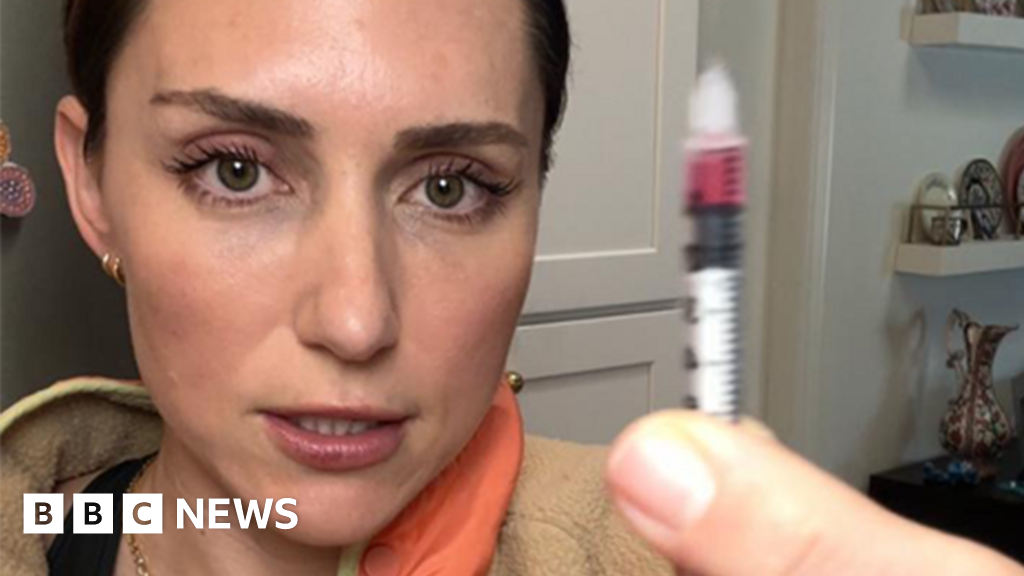
    “The people using these products are, in essence, becoming lab rats,” Adam Taylor, professor of anatomy at Lancaster University, explains. “There is some data out there, but in pre-clinical models. Essentially they’ve been tested on animals, but not on humans.”


    Source link

  • Pentagon Designates Anthropic Supply Chain Risk Over AI Military Dispute

    Pentagon Designates Anthropic Supply Chain Risk Over AI Military Dispute


    Ravie LakshmananFeb 28, 2026National Security / Artificial Intelligence

    Pentagon Designates Anthropic

    Anthropic on Friday hit back after U.S. Secretary of Defense Pete Hegseth directed the Pentagon to designate the artificial intelligence (AI) upstart as a “supply chain risk.”

    “This action follows months of negotiations that reached an impasse over two exceptions we requested to the lawful use of our AI model, Claude: the mass domestic surveillance of Americans and fully autonomous weapons,” the company said.

    “No amount of intimidation or punishment from the Department of War will change our position on mass domestic surveillance or fully autonomous weapons.”

    In a social media post on Truth Social, U.S. President Donald Trump said he was ordering all federal agencies to phase out the use of Anthropic technology within the next six months. A subsequent X post from Hegseth mandated that all contractors, suppliers, and partners doing business with the U.S. military cease any “commercial activity with Anthropic” effective immediately.

    Cybersecurity

    “In conjunction with the President’s directive for the Federal Government to cease all use of Anthropic’s technology, I am directing the Department of War to designate Anthropic a Supply Chain Risk to National Security,” Hegseth wrote.

    The designation comes after weeks of negotiations between the Pentagon and Anthropic over the use of its AI models by the U.S. military. In a post published this week, the company argued that its contracts should not facilitate mass domestic surveillance or the development of autonomous weapons, citing reasons that the technology isn’t capable enough to support them safely and reliably.

    “We support the use of AI for lawful foreign intelligence and counterintelligence missions,” Anthropic noted. “But using these systems for mass domestic surveillance is incompatible with democratic values. AI-driven mass surveillance presents serious, novel risks to our fundamental liberties.”

    The company also called out the U.S. Department of War’s (DoW) position that it will only work with AI companies that allow “any lawful use” of the technology, while removing any safeguards that may exist, as part of efforts to build an “AI-first” warfighting force and bolster national security.

    “Diversity, Equity, and Inclusion and social ideology have no place in the DoW, so we must not employ AI models which incorporate ideological ‘tuning’ that interferes with their ability to provide objectively truthful responses to user prompts,” a memorandum issued by the Pentagon last month reads.

    “The Department must also utilize models free from usage policy constraints that may limit lawful military applications.”

    Responding to the designation, Anthropic described it as “legally unsound” and said it would set a dangerous precedent for any American company that negotiates with the government. It also noted that a supply chain risk designation under 10 USC 3252 can only extend to the use of Claude as part of DoW contracts, and that it cannot affect the use of Claude to serve other customers.

    Sean Parnell, the Pentagon’s chief spokesperson, said in a Thursday X post that the department has no interest in conducting mass domestic surveillance or deploying autonomous weapons without human involvement, describing the narrative as “fake.”

    Cybersecurity

    “Here’s what we’re asking: Allow the Pentagon to use Anthropic’s model for all lawful purposes,” Parnell said. “This is a simple, common-sense request that will prevent Anthropic from jeopardizing critical military operations and potentially putting our warfighters at risk. We will not let ANY company dictate the terms regarding how we make operational decisions.”

    The ongoing stalemate has also polarized the tech industry. Hundreds of employees at Google and OpenAI have signed an open letter urging their companies to stand with Anthropic in its clash with the Pentagon over military applications for AI tools like Claude. xAI CEO Elon Musk sided with the Trump administration on Friday, saying “Anthropic hates Western Civilization.”

    The standoff between Anthropic and the U.S. government comes as OpenAI CEO Sam Altman said OpenAI reached an agreement with the U.S. Department of Defense (DoD) to deploy its models in their classified network. It also asked DoD to extend those terms to all AI companies.

    “AI safety and wide distribution of benefits are the core of our mission. Two of our most important safety principles are prohibitions on domestic mass surveillance and human responsibility for the use of force, including for autonomous weapon systems,” Altman said in a post on X. “The DoW agrees with these principles, reflects them in law and policy, and we put them into our agreement.”


    Source link