Category: Uncategorized

  • Trump says he takes higher daily dose of aspirin than doctors recommend

    Trump says he takes higher daily dose of aspirin than doctors recommend


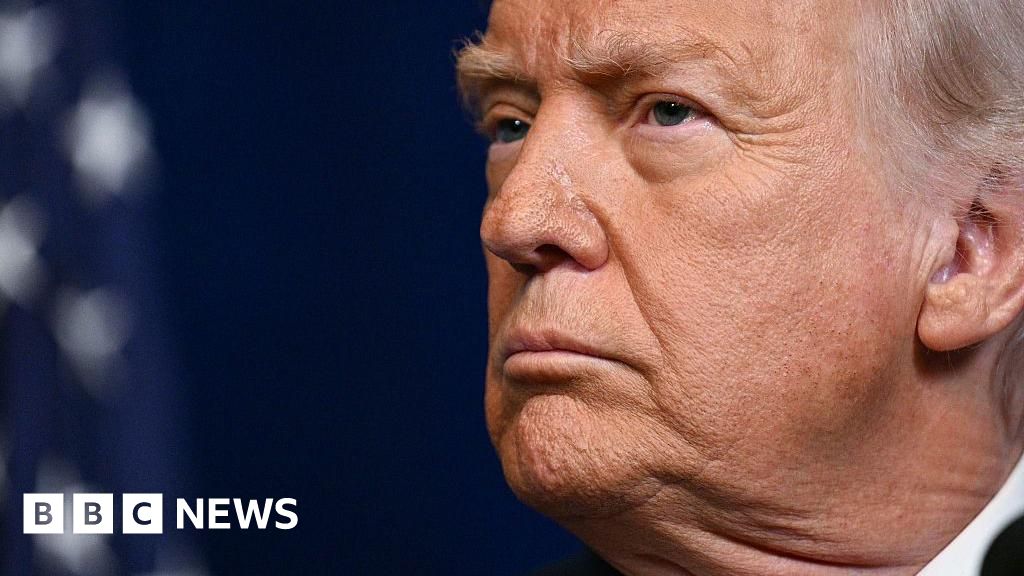
    US President Donald Trump says he is in “perfect” health, takes more aspirin than doctors recommend, uses makeup to cover bruising on his hands, and does not get regular exercise because he finds it “boring”.

    In a lengthy interview about his health, Trump also told The Wall Street Journal that he underwent a CT scan in October, after incorrectly telling reporters that he had undergone a more detailed MRI scan.

    Trump, 79, is the oldest president inaugurated in US history and his ageing has come under increased scrutiny.

    He denied to the Journal that he has struggled to hear or that he has fallen asleep at recent White House events.

    The newspaper said Trump “expressed irritation about the public debate over his health”.

    “Let’s talk about health again for the 25th time,” the president said at the start of an “impromptu phone call” as the newspaper prepared to publish a story about his health.

    Trump said he had been taking larger than recommended doses of aspirin for the last 25 years, even as he said it caused him to bruise easily.

    “They say aspirin is good for thinning out the blood, and I don’t want thick blood pouring through my heart,” Trump said.

    He takes 325mg of aspirin per day, rather than the 81mg dose sometimes recommended by doctors.

    “They’d rather have me take the smaller one,” Trump said.

    But he does not want to switch routines after so many years. “I’m a little superstitious,” he said.

    According to guidance from the Mayo Clinic, the risk of heart attack and stroke goes up as you get older and low-dose aspirin helps to prevent both by thinning the blood and preventing clots. But the clinic warns that the risk of bleeding from aspirin also goes up with age. It says the daily dose for aspirin therapy is between 75mg and 325mg.

    The president also talked about the medical scan he received at Walter Reed National Medical Center, which he previously said was an MRI scan.

    “It wasn’t an MRI,” Trump told the Journal. “It was less than that. It was a scan.”

    A doctor for Trump, Navy Capt Sean Barbabella, said in a statement provided to the Journal that Trump had undergone a CT scan, “to definitively rule out any cardiovascular issues” and that the testing revealed no abnormalities.

    After Trump was diagnosed with chronic venous insufficiency, a common condition in older people, he was advised to wear compression socks but he declined.

    “I didn’t like them,” Trump said, adding that he now gets up from his desk more regularly, which has improved swelling in his legs.

    Still, the president said he preferred not to do any form of regular exercise, other than golfing.

    “I just don’t like it. It’s boring,” Trump said. “To walk on a treadmill or run on a treadmill for hours and hours like some people do, that’s not for me.”

    The president maintained that he had not nodded off during public meetings, saying he closed his eyes at times because he finds it “relaxing”. As for the bruising seen on his hands in some photos, Trump said he now carried makeup in case his hand got “whacked”.

    “I have makeup that’s, you know, easy to put on, takes about 10 seconds,” he said.

    Trump said he did not have trouble with his hearing, and when photographers have taken photos of him when he appears to be sleeping, he said “sometimes they’ll take a picture of me blinking”.

    “And they’ll catch me with the blink.”

    Barbabella said in the statement to the Journal that Trump was in “exceptional health and perfectly suited to execute his duties as Commander in Chief”.

    Trump’s predecessor, Democratic President Joe Biden, dropped out of the 2024 election race after a stumbling debate with Trump raised questions about his age and mental sharpness.

    Source link

  • Trump warns US will intervene if Iran kills protesters

    Trump warns US will intervene if Iran kills protesters


    US President Donald Trump has warned Iran’s authorities against killing peaceful protesters, saying Washington “will come to their rescue”.

    In a brief post on social media, he wrote: “We are locked and loaded and ready to go.” He gave no further details.

    A senior adviser to Iran’s Supreme Leader, Ayatollah Ali Khamenei, responded by saying Trump should “be careful” if he intervened, warning of potential chaos across the Middle East.

    At least six people are reported to have been killed in Iran on Thursday after almost a week of mass protests sparked by worsening economic conditions.

    In Friday’s post on Truth Social, Trump wrote: “If Iran shots [sic] and violently kills peaceful protesters, which is their custom, the United States of America will come to their rescue.”

    Khamenei adviser Ali Larijani warned shortly afterwards that any US interference would destabilise the region.

    “Trump should know that US interference in this internal matter would mean destabilising the entire region and destroying America’s interests,” he wrote.

    In his post, the US president did not specify what action Washington could take against the Iranian authorities.

    In June, the US carried out strikes against Iran’s nuclear sites on Trump’s orders.

    American officials later argued that the strikes had significantly set back the prospect of Tehran building a nuclear weapon – a claim disputed by Iran.

    In retaliation, Iran launched a missile attack on a major US military base in Qatar.

    In Iran, six people were reported to have been killed on a fifth day of protests on Thursday.

    Two people died in clashes between protesters and security forces in the south-western city of Lordegan, according to the semi-official Fars news agency and the human rights group Hengaw.

    Three people were killed in Azna and another in Kouhdasht, all in the west of the country, Fars reports.

    Fars did not specify whether those killed were demonstrators or members of the security forces.

    Hengaw said the two killed in Lordegan were protesters, naming them as Ahmad Jalil and Sajjad Valamanesh.

    BBC has not been able to independently verify the deaths.

    Footage posted on social media showed cars set on fire during running battles between protesters and security forces.

    BBC Persian has verified videos showing Thursday’s protests in Lordegan, Tehran and Marvdasht in the southern Fars province.

    Iranian officials earlier said a member of the country’s securities forces had been killed on Wednesday in the western city of Kouhdasht.

    The protests began on Sunday in Tehran among shopkeepers angered by another sharp fall in the value of the Iranian currency, the rial, against the US dollar on the open market.

    By Tuesday, university students were involved and they had spread to several cities, with people chanting against the country’s clerical rulers.

    Many protesters have since been calling for the end of Khamenei’s rule. Some have said they want a return to the monarchy.

    The protests have been the most widespread since an uprising in 2022 sparked by the death in custody of Mahsa Amini, a young woman accused by morality police of not wearing her veil properly, but they have not been on the same scale.

    President Masoud Pezeshkian has said he will listen to the “legitimate demands” of the protesters.

    But the country’s Prosecutor-General, Mohammad Movahedi-Azad, warned that any attempt to create instability would be met with a “decisive response”.


    Source link

  • Cybercriminals Abuse Google Cloud Email Feature in Multi-Stage Phishing Campaign

    Cybercriminals Abuse Google Cloud Email Feature in Multi-Stage Phishing Campaign


    Jan 02, 2026Ravie LakshmananCloud Security / Email Security

    Cybersecurity researchers have disclosed details of a phishing campaign that involves the attackers impersonating legitimate Google-generated messages by abusing Google Cloud’s Application Integration service to distribute emails.

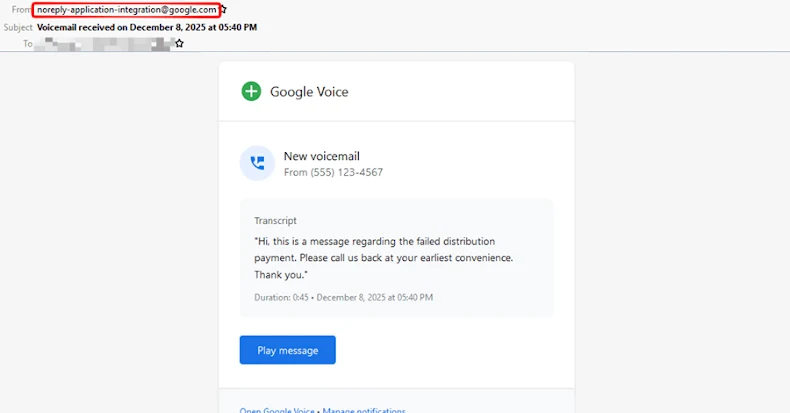
    The activity, Check Point said, takes advantage of the trust associated with Google Cloud infrastructure to send the messages from a legitimate email address (“noreply-application-integration@google[.]com”) so that they can bypass traditional email security filters and have a better chance of landing in users’ inboxes.

    “The emails mimic routine enterprise notifications such as voicemail alerts and file access or permission requests, making them appear normal and trustworthy to recipients,” the cybersecurity company said.

    Attackers have been observed sending 9,394 phishing emails targeting approximately 3,200 customers over a 14-day period observed in December 2025, with the affected organizations located in the U.S., Asia-Pacific, Europe, Canada, and Latin America.

    Cybersecurity

    At the heart of the campaign is the abuse of Application Integration’s “Send Email” task, which allows users to send custom email notifications from an integration. Google notes in its support documentation that only a maximum of 30 recipients can be added to the task.

    The fact that these emails can be configured to be sent to any arbitrary email addresses demonstrates the threat actor’s ability to misuse a legitimate automation capability to their advantage and send emails from Google-owned domains, effectively bypassing DMARC and SPF checks.

    “To further increase trust, the emails closely followed Google notification style and structure, including familiar formatting and language,” Check Point said. “The lures commonly referenced voicemail messages or claims that the recipient had been granted access to a shared file or document, such as access to a ‘Q4’ file, prompting recipients to click embedded links and take immediate action.”

    The attack chain is a multi-stage redirection flow that commences when an email recipient clicks on a link hosted on storage.cloud.google[.]com, another trusted Google Cloud service. The effort is seen as another effort to lower user suspicion and give it a veneer of legitimacy.

    The link then redirects the user to content served from googleusercontent[.]com, presenting them with a fake CAPTCHA or image-based verification that acts as a barrier by blocking automated scanners and security tools from scrutinizing the attack infrastructure, while allowing real users to pass through.

    Once the validation phase is complete, the user is taken to a fake Microsoft login page that’s hosted on a non-Microsoft domain, ultimately stealing any credentials entered by the victims.

    Cybersecurity

    In response to the findings, Google has blocked the phishing efforts that abuse the email notification feature within Google Cloud Application Integration, adding that it’s taking more steps to prevent further misuse.

    Check Point’s analysis has revealed that the campaign has primarily targeted manufacturing, technology, financial, professional services, and retail sectors, although other industry verticals, including media, education, healthcare, energy, government, travel, and transportation, have been singled out.

    “These sectors commonly rely on automated notifications, shared documents, and permission-based workflows, making Google-branded alerts especially convincing,” it added. “This campaign highlights how attackers can misuse legitimate cloud automation and workflow features to distribute phishing at scale without traditional spoofing.”


    Source link