Did you know that Truthout is a nonprofit and independently funded by readers like you? If you value what we do, please support our work with a donation.
For decades, corporate media and elected officials have shown little interest in reporting by incarcerated individuals on the unchecked inhumane treatment and deplorable conditions inside U.S. jails, detention centers, and prisons.
But as a result of the Trump administration’s escalation of anti-immigrant violence and efforts to quell all dissent, professional journalists and writers, who normally are severely restricted from entering into the U.S.’s carceral facilities, are now themselves experiencing the harsh realities that nearly 2.1 million incarcerated people are subjected to daily in this country.
Inadvertently, this inside view has reaffirmed what incarcerated journalists have long reported: rampant deprivation of basic human necessities, denial of due process, medical neglect, and an unrestrained culture of blatant cruelty. It has also prompted renewed scrutiny of U.S. law enforcement, as well as both public and private prison agencies’ treatment of those under their control.
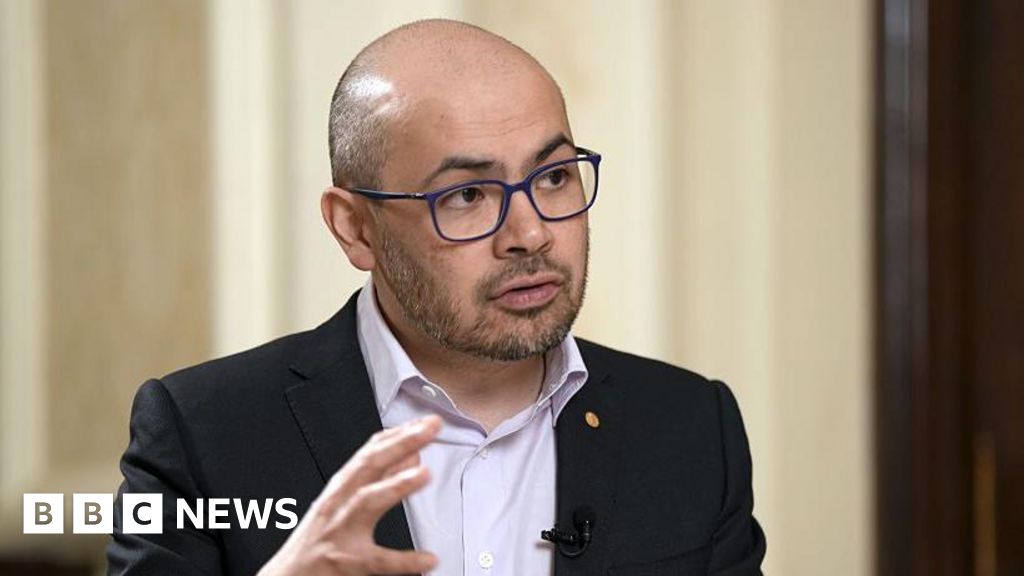
British journalist Sami Hamdi was traveling the country on a valid U.S. visa for a public speaking tour when he was abducted by Immigration and Customs Enforcement (ICE) officials at a California airport. The Trump administration revoked Hamdi’s visa in response to a campaign by far right social media influencers who didn’t like Hamdi’s criticism of Israel’s genocide in Gaza. For more than two weeks, Hamdi endured the trauma of being held in multiple ICE jails.
“It felt unreal, almost like being in a movie,” Hamdi told Truthout in a recent interview.
Hamdi described being treated like a subhuman during his detention by ICE officials. In addition to being held in painfully tight shackles for days, with his pleas to loosen them ignored, Hamdi said he and others were denied access to legal representation and medical treatment — people had to feign life-or-death emergencies to have a chance at seeing a medical professional.
Hamdi also told Truthout how he was forced to sleep in filthy, overcrowded cells, and to consume rotten food that made him violently ill. Others told him that experience was common for new detainees whose stomachs had not adjusted to their new diets. Since Hamdi’s time in ICE custody, many others, including 5-year old Liam Conejo Ramos and other young children, have reportedly suffered similar reactions to the contaminated food served in ICE facilities. Ramos’s case brought special attention to the conditions at the Dilley immigration jail, but those conditions are not unique, within ICE jails or the U.S. carceral system more broadly.
Hamdi’s story also resembles the account of Mario Guevara, a journalist originally from El Salvador who had resided in the U.S. legally for over 20 years. Arrested by local law enforcement officials in Georgia while covering a “No Kings” protest, ICE took him into their custody. He spent months in multiple immigration jails before being illegally deported back to the country from which he fled political prosecution decades earlier.
“I don’t know why ICE wants to continue treating me like a criminal,” Guevara wrote in a letter to the news outlet The Bitter Southerner during his detention. “It pains me to know that I have been denied every privilege and the right to be free when I have never committed any crime.”
Guevara wrote about how ICE officials unjustly held him in solitary confinement and denied him due process. Upon his release, Guevara stated he had to seek mental health treatment and start taking psychiatric medication to treat bouts of depression and recurring nightmares.
Then there’s the appalling abduction of Rümeysa Öztürk, a doctorate student at Tufts University. After co-authoring an op-ed for her campus newspaper, The Tufts Daily, that acknowledged the genocide in Gaza, Öztürk was grabbed off the streets by ICE agents. The deportation case against Öztürk was finally thrown out earlier this month, almost a year after her abduction, but the administration still could seek review of that decision.
For the next five months, Öztürk, a Fulbright scholar, was shackled and transferred to ICE jails as far away as Louisiana. While not a career journalist herself, Öztürk also shared alarming accounts of torturous treatment during her detention.
“I could have never imagined such an ordeal when I first came to the United States in 2018 to pursue my graduate studies, learn and grow as a scholar, and contribute to the child development field,” Öztürk wrote in an essay for Vanity Fair titled “God Cannot Hear Us Here: What I Witnessed Inside an ICE Woman’s Prison.”
These horrors aren’t exclusively reserved for non-citizens like Hamdi, Guevara, and Öztürk, who, it is important to note, had visas or work permits. U.S. citizens have suffered the same fate.
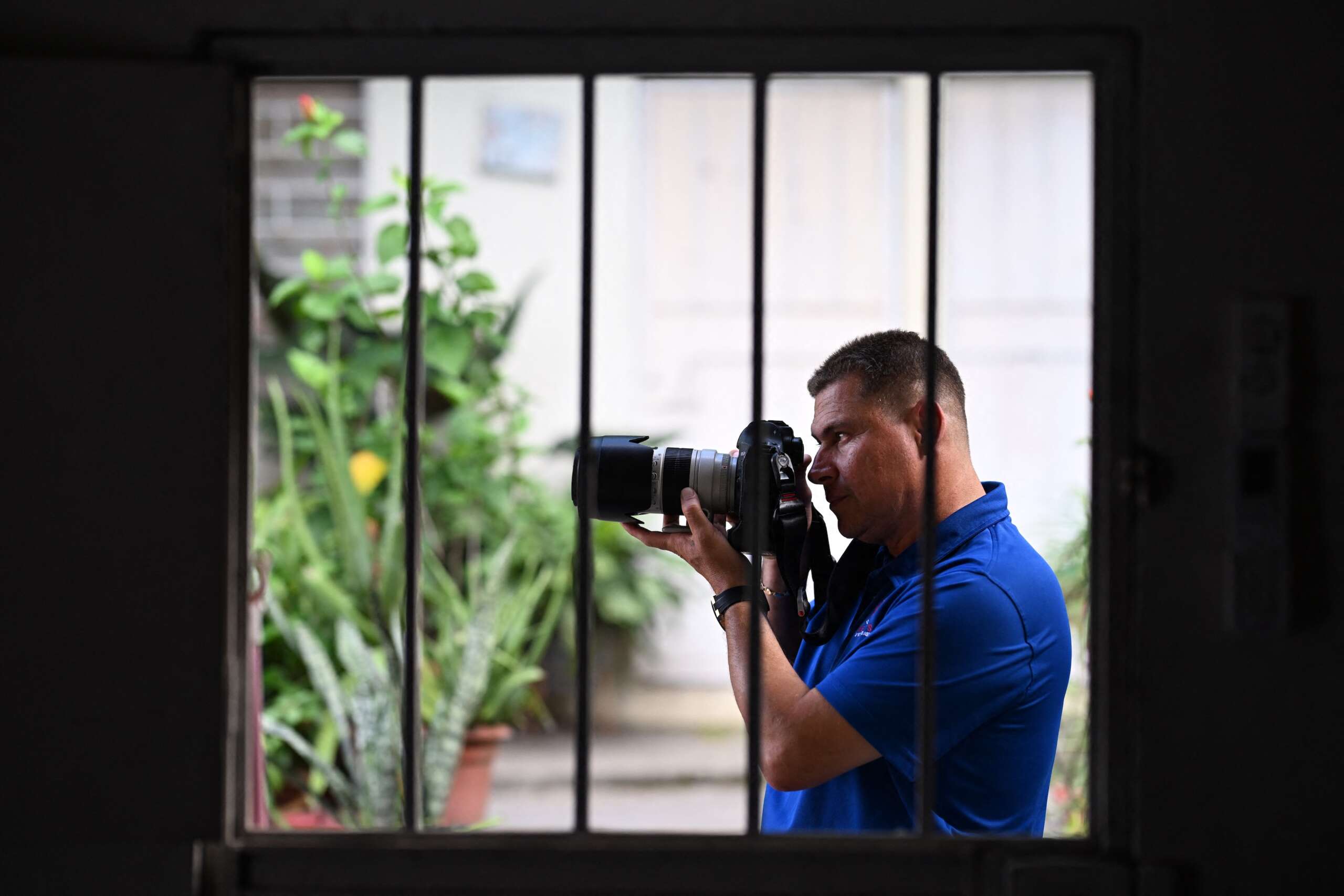
Steve Held, a Chicago-based journalist and co-founder of Unraveled Press, was detained by federal agents outside an ICE facility while reporting on a protest in September. His captors apparently realized what authorities elsewhere did not — when you lock up a journalist, they’re likely to report what they see. Their solution, however, was not to change their practices, but to tape up the windows of Held’s cell so he couldn’t see out.
Guilty Until Proven Innocent
The accounts of people being detained by ICE show how being held for months or even years before being afforded an opportunity to challenge one’s detention before a judge comes with serious personal, financial, and social costs. But their experience is not new. A significant number of U.S. citizens endure this daily all across the country.
Civil liberties organizations like the American Civil Liberties Union have condemned the practice of holding people in prolonged detention before trial. The “guilty until proven innocent” approach violates core principles of the U.S. Constitution.
Recalling his arrest, Hamdi said, “An agent grabbed me from behind, threw me against the car, handcuffed me tightly and tossed me in the vehicle. I repeatedly stated, I had not committed a crime … They would not let me call my attorneys or family. It was a very surreal experience.”
According to a report by the Prison Policy Initiative, in 2023, nearly 70 percent of the national jail population were pretrial detainees. There are now tens of thousands of people being detained by ICE without a deportation order. Like other U.S. jails, ICE jails lack programming or educational opportunities, limit people’s access to legal representation, and provide low-quality food and health care, while caging humans in substandard living conditions.
Adding insult to injury, pretrial and pre-deportation hearing detentions induce lost wages, destabilization of family structures, physical and mental health complications, and the countless other adverse effects of being treated like a criminal, like pleading guilty to a crime or agreeing to a deportation despite supposedly having the law on your side. The lack of due process combined with the inhumane treatment chips at their morale. “All of us were losing hope and parts of who we are,” Öztürk wrote.
“The burden of being stuck indoors and cut off from our everyday lives was heavy for everyone,” she added. “It took a toll on growth, career prospects, dreams, and our wellbeing.”
Hamdi described how an elderly man from Uzbekistan who had been broken by 13 months of ICE detention confided in him that he was ready to volunteer for deportation back to his impoverished country, despite knowing he would be able to win his case in court.
“You can have this country,” Hamdi said the Uzbek man confessed.
We Can’t Breathe
At the beginning of an ABC News documentary called No Way Out about the failed response to the COVID-19 pandemic by Texas prisons (where I’ve spent almost three decades), you can hear me say, “We can’t breathe!”
Those words were not mere hyperbole. They described the suffocatingly inhumane living conditions and outright cruelty inside Texas prisons.
My outcry was a product of watching healthy people die in record numbers from medical neglect after contracting the COVID-19 virus; of witnessing suicide after suicide because incarcerated individuals were being denied mental health access; of making unanswered pleas for help because we were being denied basic human necessities like toilet paper, soap, and deodorant; of consuming inedible, unhealthy food day after day.
That documentary failed to compel any meaningful change in the Texas prison system. Suicides and homicides have only increased annually. Incarcerated individuals are still dying or suffering lifelong health issues as a result of a lack of access to adequate mental health and medical services. New punitive rules have been implemented that interrupt communication with loved ones and destroy healthy family bonds. The food remains repulsive and the mentalities of the prison guards are as harsh as ever. People are dying to get out, literally.
“A decade ago, two killings, a suspected drug overdose, and a suicide at a single prison in less than two weeks would have been unthinkable,” investigative journalist Keri Blakinger wrote for the Houston Chronicle back in September about events at a prison in Livingston, Texas.
Those same conditions fueling the crisis in Texas exist at prisons and jails nationwide — including ICE facilities.
Öztürk wrote that people arrived “in relatively good health, but their conditions deteriorated day by day due to inadequate access to medical care, nutritious food, sleep, sunlight, and fresh air.”
Federal agents won’t even provide treatment for journalists they shoot, like Los Angeles TikTok reporter Carlitos Ricardo Parias. Charges that Parias rammed his vehicle into an immigration officer’s car prior to the shooting last June were later thrown out because the government’s story was not credible. But his lawyer told a judge he was denied pain medication for his wounds for hours. Adam Rose of the Freedom of the Press Foundation (who is also the press rights chair of the Los Angeles Press Club) says Parias needed morphine but was denied even ibuprofen, and the neglect continued even after a judge ordered treatment.
Hamdi described how ICE officials dehumanized people being detained to the extent that some had to take mental health medication just to survive. “Breathing inside the detention center was hard, both symbolically and physically,” Öztürk expressed in her essay.
The Big Beautiful Lie
The pesky question now is why as a nation the United States allows such models of cruelty to exist?
One theory is the phenomenon called “moral panics.” Moral panics occur when authority figures, including members of law enforcement and politicians, select a handful of true anecdotes concerning a particular kind of behavior by a particular group of people and work with the media to create a society-wide frenzy.
For example, during the Biden administration, far right media personalities and legacy media outlets focused their coverage on isolated incidents of undocumented immigrants committing horrendous crimes, curating a misleading narrative that undocumented immigrants were uniquely responsible for crime in the United States.
In spite of seemingly unlimited data to refute this notion, this false narrative became a cornerstone for Donald Trump’s presidential campaign and propelled him back into the Oval Office.
After his election, President Trump and his surrogates continue to peddle the same falsehood with the help of the media. They called undocumented immigrants murderers, rapists, violent gang members, and drug traffickers who had to be removed from the country at all costs.
That big, beautiful lie led to the creation and passage of Trump’s first legislative achievement, the Big Beautiful Bill (BBB).
Instead of allocating funds to help people who are struggling to obtain basic necessities like housing, food, and health care, the BBB appropriated a record $170 billion toward criminalizing immigrants. Forty-five billion is reserved exclusively to build more immigration jails. This legislation increased ICE’s budget by 265 percent and its bed space from 40,000 to 160,000. According to The Marshall Project, 85 percent of current and future bed spaces will be housed in private prisons, which a 2026 report from the Prison Policy Initiative revealed rake in $2.4 billion in taxpayer money annually.
These moral panics also work to generate consent for something more sinister: criminalization — the process by which populations are deemed unworthy of their rights and worthy of punishment. The state uses criminalization to redirect its responsibility for the social problems it causes — economic crisis, poverty, displacement, war — onto populations which are often the victims of state policies, and to justify the harms of policing and incarceration.
The framing of undocumented immigrants as criminals has permitted ICE agents to unleash unprecedented violent tactics on all immigrants, or mere visitors from abroad — including journalists like Hamdi.
The U.S. public should be reminded that this is the same rhetorical strategy used by the Reagan and Bush administrations’ failed “war on drugs” and the “super-predators” sham to demonize young Black males perpetuated by the Clintons.
These administrations contributed to the U.S. becoming the world’s leader in incarcerating its own citizens and resulted in the public’s general desensitization to how caged humans are treated. Now, more journalists are seeing it for themselves.
We Want to Be Seen as Humans Again
The Trump administration’s approach toward quelling dissent with brute force is uncharted territory, but the inhumane treatment of those in U.S. custody is routine.
This is why, as an incarcerated journalist who has devoted the past 20 years attempting to educate society on the culture of unchecked cruelty that exists inside these walls of the nation’s jails, detention centers, and prisons, I am encouraged by the assistance these worthy causes are receiving from my colleagues like Hamdi, Guevara, Held, and Öztürk, and for the media outlets that are providing space for these stories. As Öztürk put it, all we want is “to be seen as humans again.”
What’s happening inside these places should not just alarm society as a whole, but should mobilize us into action, especially those who want to further the cause of liberation. That includes joining and supporting civil liberties organizations, mutual aid groups led by prisoners, campaigns against jail construction and expansion, legal support groups, and journalism outlets like the nonprofit I founded to empower incarcerated journalists and highlight their work, JoinJeremy.
“They know that it is wrong,” Hamdi told Freedom of the Press Foundation during an online event in November. “They know that if the American public finds out the realities of what’s happening, ICE will be dismantled in an instant.”
Hamdi may have overestimated us. The conditions at Dilley have been widely reported lately, but so far there has been no dismantling. Instead, the administration plans to expand ICE’s capacity to warehouse people. Hopefully the talented writers who now know firsthand of the horrors that expansion will bring can help persuade the public to finally recognize the injustices currently exemplified by ICE jails but equally prevalent across all carceral institutions.
A terrifying moment. We appeal for your support.
In the last weeks, we have witnessed an authoritarian assault on communities in Minnesota and across the nation.
The need for truthful, grassroots reporting is urgent at this cataclysmic historical moment. Yet, Trump-aligned billionaires and other allies have taken over many legacy media outlets — the culmination of a decades-long campaign to place control of the narrative into the hands of the political right.
We refuse to let Trump’s blatant propaganda machine go unchecked. Untethered to corporate ownership or advertisers, Truthout remains fearless in our reporting and our determination to use journalism as a tool for justice.
But we need your help just to fund our basic expenses. Over 80 percent of Truthout’s funding comes from small individual donations from our community of readers, and over a third of our total budget is supported by recurring monthly donors.
Truthout has launched a fundraiser to add 379 new monthly donors in the next 6 days. Whether you can make a small monthly donation or a larger one-time gift, Truthout only works with your support.