Category: Uncategorized

  • Shell-shocked, haunted photo of Andrew will be part of how arrest is remembered

    Shell-shocked, haunted photo of Andrew will be part of how arrest is remembered


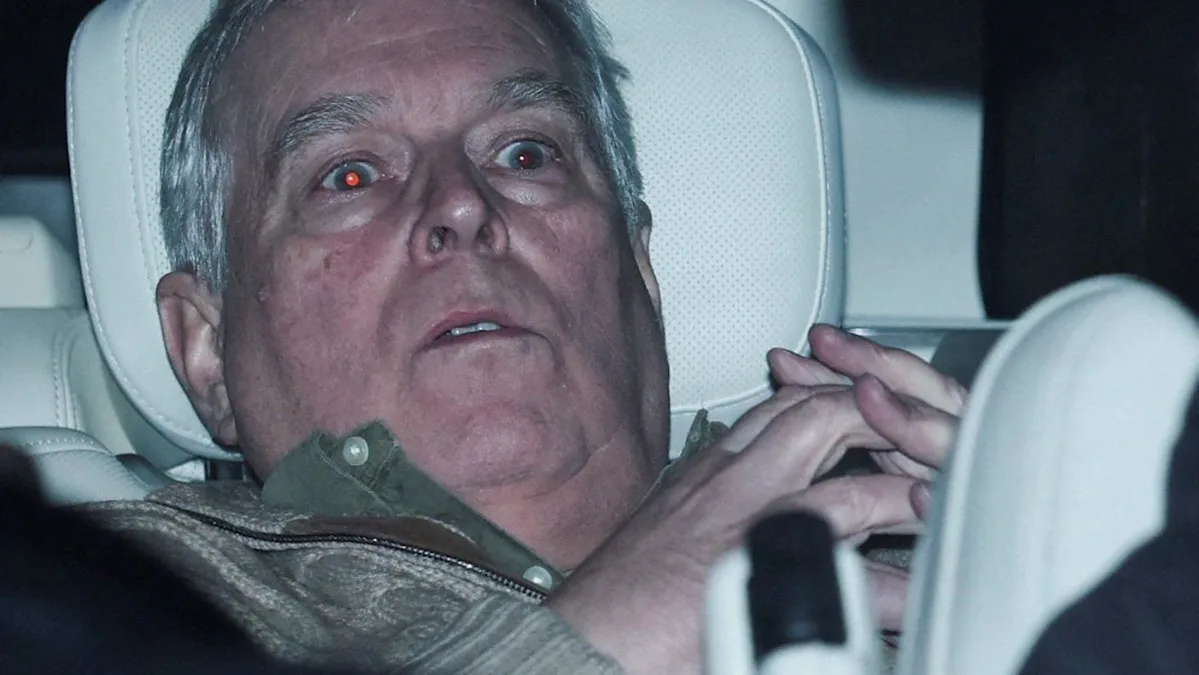
    The shell-shocked, disbelieving, haunted face of Andrew Mountbatten-Windsor will become part of how his arrest will be remembered.

    It’s not a particularly edifying sight. Andrew is slumped in the back seat of a car after his release, fingers steepled, whether in prayer or protection.

    His collar is up. For that matter, his collar has been felt. Was Andrew’s expression of shock how he looked when he had a mugshot photo taken in police custody?

    It’ll become the counterpart of that other famous Andrew picture, taken almost 25 years ago, of a smiling confident prince, beside a 17-year-old Virginia Giuffre in a London townhouse, when the capital was his playground.

    The photo of Andrew and Virginia Giuffre was taken almost 25 years ago

    The photo of Andrew and Virginia Giuffre was taken almost 25 years ago [US Department of Justice]

    Earlier, Andrew Mountbatten-Windsor had become the first senior member of the Royal Family in modern history to have been arrested. It was another catch your breath moment.

    It was followed by an unprecedented statement from his brother, King Charles. “Let me state clearly: the law must take its course,” read the unambiguous statement from the King, offering no hiding place or royal get-out clause.

    The arrest, on suspicion of misconduct in public office, relates to Andrew’s time as the UK’s trade representative between 2001 and 2011. It follows a series of allegations, prompted by the release of the Epstein files, that Andrew shared official documents.

    That included sharing reports from trade visits and a confidential briefing on investment in Afghanistan with the sex offender Jeffrey Epstein, and passing a Treasury briefing to a personal business contact.

    Being a member of the Royal Family will make no legal difference to how his case is assessed.

    Andrew Mountbatten-Windsor has consistently denied any wrongdoing in his associations with Epstein.

    The no-nonsense police statement on Thursday morning was a bluntly worded news earthquake: “The man remains in police custody at this time.”

    Whoever thought we’d read that sentence when the man in question is still in the line of succession to the throne, and in theory, if not in practice, remains a counsellor of state?

    Andrew’s explanation of his behaviour won’t be in a TV interview. The public will not have forgotten the BBC’s Newsnight interview, which remains the last time Andrew spoke publicly about his relationship with Epstein.

    This time, it will have been in the presence of a lawyer and the investigating officers, rather than under the TV lights, and the consequences of any untruths will be much more serious.

    The action by the police on a winter’s morning in Norfolk was remarkable breaking news – and also appeared to have taken the King by surprise as much as anyone else.

    But the story of Andrew’s links to Epstein has been decades in the making – and so has Andrew’s downfall, first chipping away at his reputation before turning into an avalanche of disgrace.

    The association with Epstein meant Andrew lost his trade envoy role in 2011, and after that disastrous Newsnight interview in 2019 he was removed as a working royal.

    His retreat from public life became even more complete after his 2022 settlement with his accuser Virginia Giuffre.

    And in October last year, as emails revealed that Andrew hadn’t ended his links with Epstein when he had claimed, he was stripped of his prince and duke titles, and eventually shuffled out of his Royal Lodge home at Windsor.

    They were tough sanctions, removing any vestige of royal status.

    The Palace has had some nervous moments in recent times, with questions shouted by hecklers suggesting they might be protecting Andrew.

    The statement from the King will have sought to draw a line under this and separate the Royal Family from whatever might happen to Andrew.

    Another important factor in all of this is the public mood. The Epstein files, and what they have revealed regarding a network of those apparently high in connections but low on morals, have left people feeling angry at such unaccountable power and wealth.

    It has felt abusive to the public, that the rich and influential appear to have been immune from the consequences of their behaviour, be it in terms of either sex or money. It has seemed to the public that corruption paid.

    Making the arrest even more resonant is that it happened on Andrew’s 66th birthday. Any candles would have to wait.

    There are references to Andrew’s previous birthdays in the Epstein files, such as a glitzy bash for his 50th at St James’s Palace.

    One person who had to turn down the invite for that night of “mysterious mischief” was Jeffrey Epstein, who was still under house arrest as part of a sentence for procuring a minor for prostitution.

    Andrew celebrated his birthday 12 months ago as Prince Andrew, the Duke of York, Earl of Inverness and Knight of the Garter. Who knows what will have changed by his next birthday.


    Source link

  • INTERPOL Operation Red Card 2.0 Arrests 651 in African Cybercrime Crackdown

    INTERPOL Operation Red Card 2.0 Arrests 651 in African Cybercrime Crackdown


    Ravie LakshmananFeb 19, 2026Financial Crime / Cybercrime

    An international cybercrime operation against online scams has led to 651 arrests and recovered more than $4.3 million as part of an effort led by law enforcement agencies from 16 African countries.

    The initiative, codenamed Operation Red Card 2.0, took place between December 8, 2025 and January 30, 2026, according to INTERPOL. It targeted infrastructure and actors behind high-yield investment scams, mobile money fraud, and fraudulent mobile loan applications.

    Countries that participated in the law enforcement operation included Angola, Benin, Cameroon, Côte d’Ivoire, Chad, Gabon, Gambia, Ghana, Kenya, Namibia, Nigeria, Rwanda, Senegal, Uganda, Zambia, and Zimbabwe. It was conducted under the African Joint Operation against Cybercrime (AFJOC).

    Cybersecurity

    “During the eight-week operation, investigations exposed scams linked to over USD 45 million in financial losses and identified 1,247 victims, predominantly from the African continent but also from other regions of the world,” INTERPOL said in a press release.

    The operation also saw authorities confiscating 2,341 devices and taking down 1,442 malicious IPs, domains, and servers, as well as other related infrastructure. Some of the notable cases are listed below –

    • Nigerian authorities dismantled a high-yield investment fraud ring that recruited young individuals to carry out cyber-enabled crimes using phishing, identity theft, social engineering, and fake digital asset investment schemes. More than 1,000 fraudulent social media accounts were taken down.
    • Six members of a sophisticated cybercrime syndicate were arrested by Nigerian authorities for breaching the internal platform of a major telecommunications provider through compromised staff login credentials. The scheme involved stealing “significant volumes of airtime and data for illegal resale.”
    • Kenyan authorities arrested 27 individuals in connection with a fraud scheme that used messaging apps, social media, and fictitious testimonials to deceive victims into making fake investments by promising them huge returns. Victims were shown bogus account statements or dashboards to keep up the ruse, but were blocked from making any withdrawals.
    • Côte d’Ivoire authorities arrested 58 individuals and seized 240 mobile phones, 25 laptops and over 300 SIM cards to disrupt a predatory mobile loan fraud scheme that primarily targeted vulnerable populations through fake mobile applications and messaging services, enticing them with promises of unsecured loans and then trapping them extra fees, abusive debt-collection practices, and theft of sensitive personal and financial data.
    Cybersecurity

    “These organized cybercriminal syndicates inflict devastating financial and psychological harm on individuals, businesses, and entire communities with their false promises,” Neal Jetton, INTERPOL’s director of the Cybercrime Directorate, said.

    “Operation Red Card highlights the importance of collaboration when combating transnational cybercrime. I encourage all victims of cybercrime to reach out to law enforcement for help.”

    The second phase of Red Card comes almost a year after INTERPOL announced the arrest of 306 suspects and seizure of 1,842 devices as part of the first wave of the operation that transpired between November 2024 and February 2025.


    Source link

  • ‘He lost his use of his arms and shoulders’

    ‘He lost his use of his arms and shoulders’


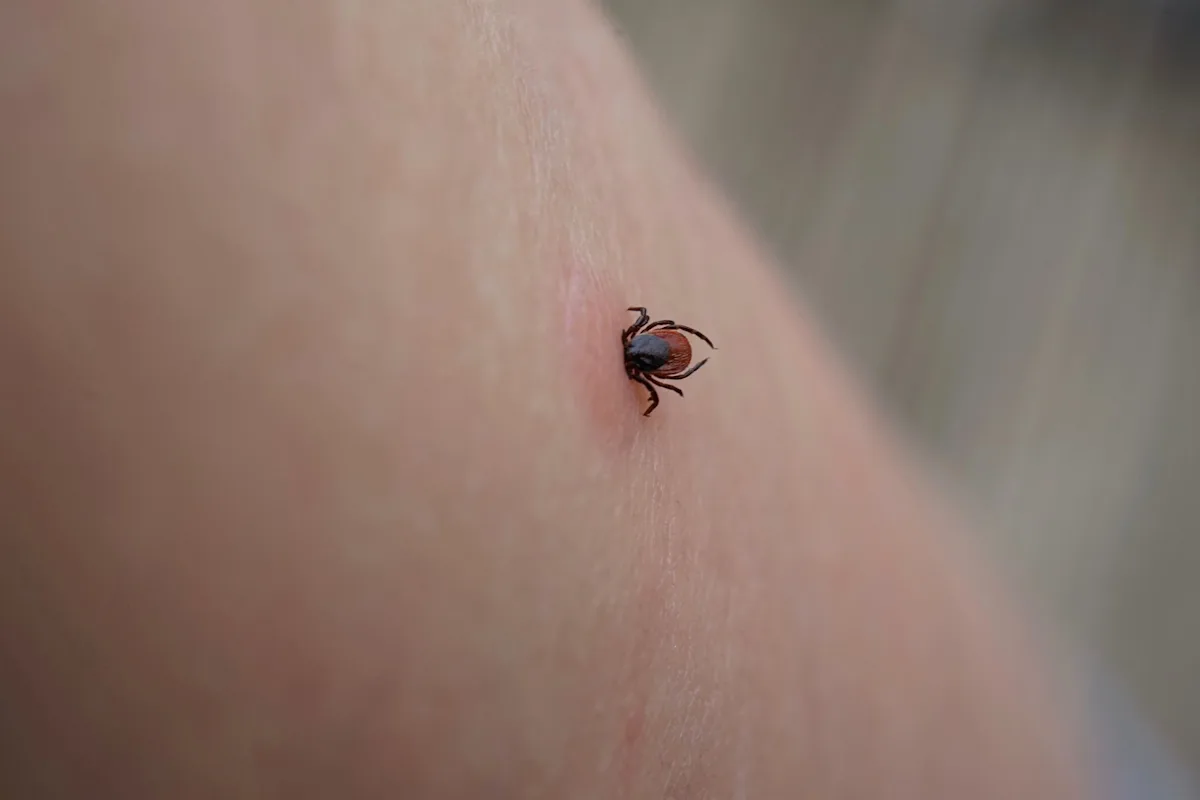
    A New Jersey family is raising awareness about the dangers of tick-borne illnesses, which are becoming more common as the climate in the Northeastern United States increasingly favors breeding and activity among the insects.

    What’s happening?

    A New Jersey man who contracted Lyme disease says he has been battling lingering neurological symptoms for years. In late January, Mike Gallagher’s community hosted a benefit concert to help fund his continued treatments, the Asbury Park Press reported.

    “It’s all in his head, neck, and shoulders,” Jen Gallagher, Mike’s wife, told the outlet. “He lost his use of his arms and shoulders, and the biggest love of his life was his guitar. He can’t even hold his guitar anymore.”

    This type of story is likely to become more common as the planet continues to heat. Ticks thrive in warm, humid environments, and rising temperatures as well as shifting weather patterns in the Northeastern U.S. have enabled their populations to grow in recent years, according to experts at Boston University.

    Reported cases of Lyme disease have increased accordingly, data from the Centers for Disease Control and Prevention has suggested. Ticks are also gradually expanding their range, leading to disease spread into locations previously undisturbed by the insects.

    Why is Lyme disease concerning?

    Lyme disease is a bacterial infection spread through bites from infected ticks. It can cause a characteristic “bullseye” rash along with symptoms including fever, headache, fatigue, and joint pain, according to the CDC.

    Sometimes, and for reasons that doctors don’t fully understand, Lyme symptoms can linger even after the infection has been treated with antibiotics, occasionally leading to a diagnosis of post-treatment Lyme disease syndrome, or PTLDS.

    Tick-borne illnesses as well as illnesses spread by other vectors — including mosquitoes, which can transmit malaria, dengue, West Nile virus, chikungunya, yellow fever, and Zika — are just a few of the many public health risks that humans are set to face as temperatures rise.

    Rising global temperatures can also exacerbate the threat of heat-related deaths and catastrophic weather events. They may even decrease the effectiveness of vaccines, which are among our most potent tools for fighting disease.

    What’s being done about Lyme disease?

    Scientists are working on a vaccine that could help address Lyme disease spread — providing, of course, that weather shifts don’t impact the vaccine’s effectiveness and that equitable access is achieved.

    In the meantime, prevention is going to be the best option for most.

    Apart from working to mitigate rising temperatures through meaningful transitions to clean energy systems, experts recommend wearing long sleeves and pants to cover any exposed skin when spending time in the woods or woody areas. They also recommend using safe repellents, regularly checking skin for ticks, and removing any visible ticks with tweezers.

    Get TCD’s free newsletters for easy tips to save more, waste less, and make smarter choices — and earn up to $5,000 toward clean upgrades in TCD’s exclusive Rewards Club.


    Source link