Category: Uncategorized

  • Shocking Photos Reveal Rare Flat-Headed Cat Deemed ‘Possibly Extinct’ Has Returned After 29 Years

    Shocking Photos Reveal Rare Flat-Headed Cat Deemed ‘Possibly Extinct’ Has Returned After 29 Years


    Conservationists in Thailand are celebrating a surprising discovery.

    On Dec. 25,  Panthera, a global wild cat conservation organization, announced that the endangered flat-headed cat has returned to southern Thailand for the first time in 29 years. Flat-headed cats are some of the world’s rarest felines, with just 2,500 remaining in the wild worldwide.

    Panthera shared the exciting news alongside Thailand’s Department of National Parks, Wildlife, and Plant Conservation ahead of the country’s Wildlife Protection Day.

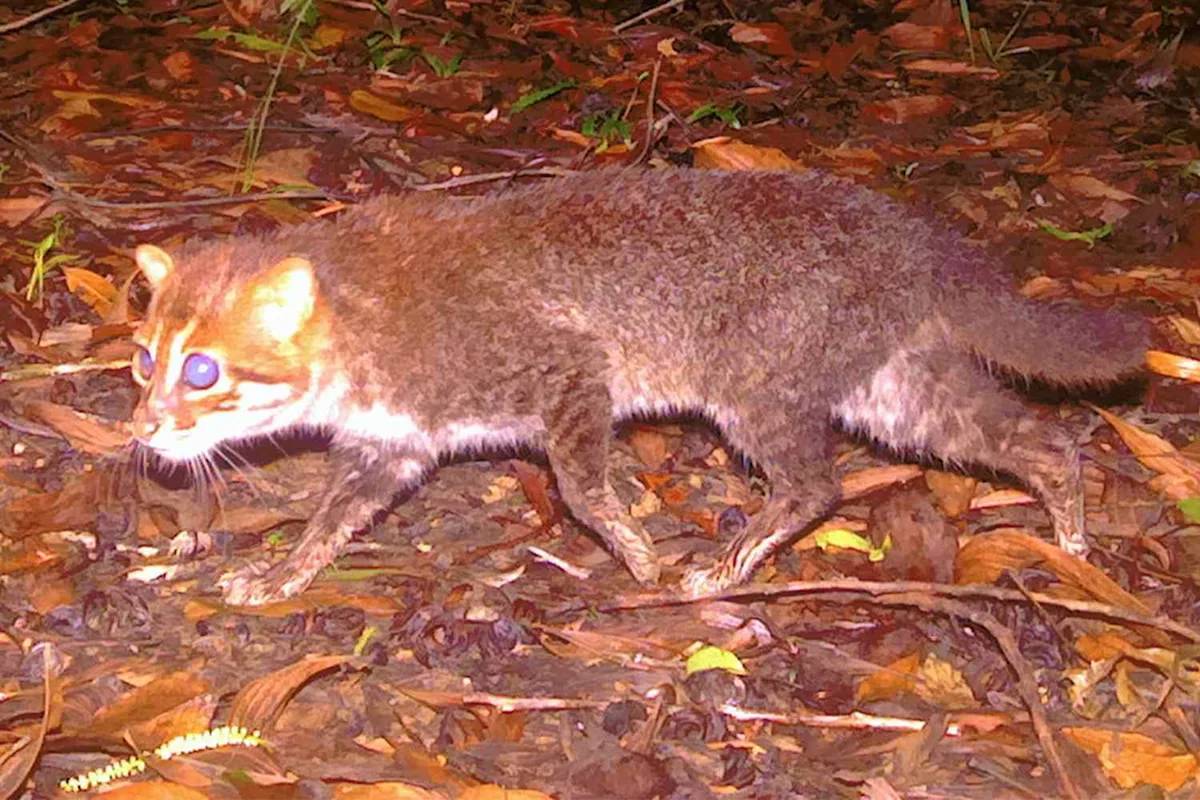
    The organizations supported the revelations with photos of flat-headed cats prowling in southern Thailand. The images were obtained from camera traps deployed in the Princess Sirindhorn Wildlife Sanctuary in southern Thailand.

    The cameras were installed in 2024; before then, the last time flat-head cats had been documented in the area was in 1995. Over two years, the camera traps in the Princess Sirindhorn Wildlife Sanctuary captured footage of flat-headed cats on numerous occasions, including 16 detections in 2025.

    DNP/Panthera Thailand New images from Thailand's DNP and Panthera prove the existence and rediscovery of one of the world's most Endangered and least known wild cats, the flat-headed cat, in Thailand's Princess Sirindhorn Wildlife Sanctuary.

    DNP/Panthera Thailand

    New images from Thailand’s DNP and Panthera prove the existence and rediscovery of one of the world’s most Endangered and least known wild cats, the flat-headed cat, in Thailand’s Princess Sirindhorn Wildlife Sanctuary.

    One of the cameras’ most thrilling detections was of a female flat-headed cat with her cub. This spotting confirms to conservationists that the elusive species is breeding successfully in southern Thailand.

    According to Panthera’s release on the sightings, experts are grateful to have fresh evidence of the animals, as information on the species is difficult to obtain because the cats are small, nocturnal, and live in hard-to-reach areas.

    DNP/Panthera Thailand A rare remote camera capture of a flat-headed cat mother and cub in The Princess Sirindhorn Wildlife Sanctuary, Thailand

    DNP/Panthera Thailand

    A rare remote camera capture of a flat-headed cat mother and cub in The Princess Sirindhorn Wildlife Sanctuary, Thailand

    Before the recent findings of flat-headed cats in Thailand, the species was classified as “possibly extinct” in the country, according to Panthera. The organization expects “new Panthera-led IUCN Red and Green List assessments on the species’ status” to be published in 2026. These assessments will include Panthera Thailand’s documentation of the flat-headed cat in southern Thailand.

    Thailand’s DNP Director General, Atthapol Charoenchansa, shared in a statement obtained by PEOPLE. “Rediscovery of the flat-headed cat in southern Thailand is a significant win for conservation in Thailand and the broader Southeast Asia region, where the species is still found. Uncovering the existence of a species once thought lost in the region highlights the dedication and effectiveness of DNP officials in protecting border forests and preserving rare wildlife populations despite challenging political and social circumstances that make conservation work difficult.”

    DNP/Panthera Thailand New images from Thailand's DNP and Panthera prove the existence and rediscovery of one of the world's most Endangered and least known wild cats, the flat-headed cat, in Thailand's Princess Sirindhorn Wildlife Sanctuary.

    DNP/Panthera Thailand

    New images from Thailand’s DNP and Panthera prove the existence and rediscovery of one of the world’s most Endangered and least known wild cats, the flat-headed cat, in Thailand’s Princess Sirindhorn Wildlife Sanctuary.

    “After nearly three decades, this rediscovery shows what’s possible when science and strong protection come together. This is the result of the DNP’s dedication to safeguarding Thailand’s wetlands and community members’ livelihoods. These habitats are among the most biodiverse and threatened in the country. Yet, they continue to surprise us with their resilience,” Panthera Thailand’s country director, Kritsana Kaewplang, added in a statement.

    Flat-headed cats are named for their flattened forehead and elongated skulls, according to Panthera. They are the smallest wild cat in Southeast Asia, often half as light as the average house cat. The species also has webbed toes, which help it function as an apex predator in wetland ecosystems.

    The species’ population has declined due to human-induced habitat loss, hunting, pollution of waterways, and the spread of disease from domestic animals.

    Never miss a story — sign up for PEOPLE’s free daily newsletter to stay up-to-date on the best of what PEOPLE has to offer​​, from celebrity news to compelling human interest stories.

    “Even species thought to be lost can be rebuilt if we invest in protecting the habitats they depend on. Flat-headed cats’ persistence in Thailand suggests that these ecosystems still hold remarkable biodiversity but also underscores how urgently we must conserve and restore them before they vanish entirely,” Dr. Wai Ming Wong, a Panthera small cat conservation science director, noted.

    Read the original article on People


    Source link

  • ‘I will be going to the news soon’

    ‘I will be going to the news soon’


    A former Goodwill employee is speaking out about alleged waste practices at the nonprofit thrift retailer, claiming the company throws away usable donations instead of giving them to people in need.

    What happened?

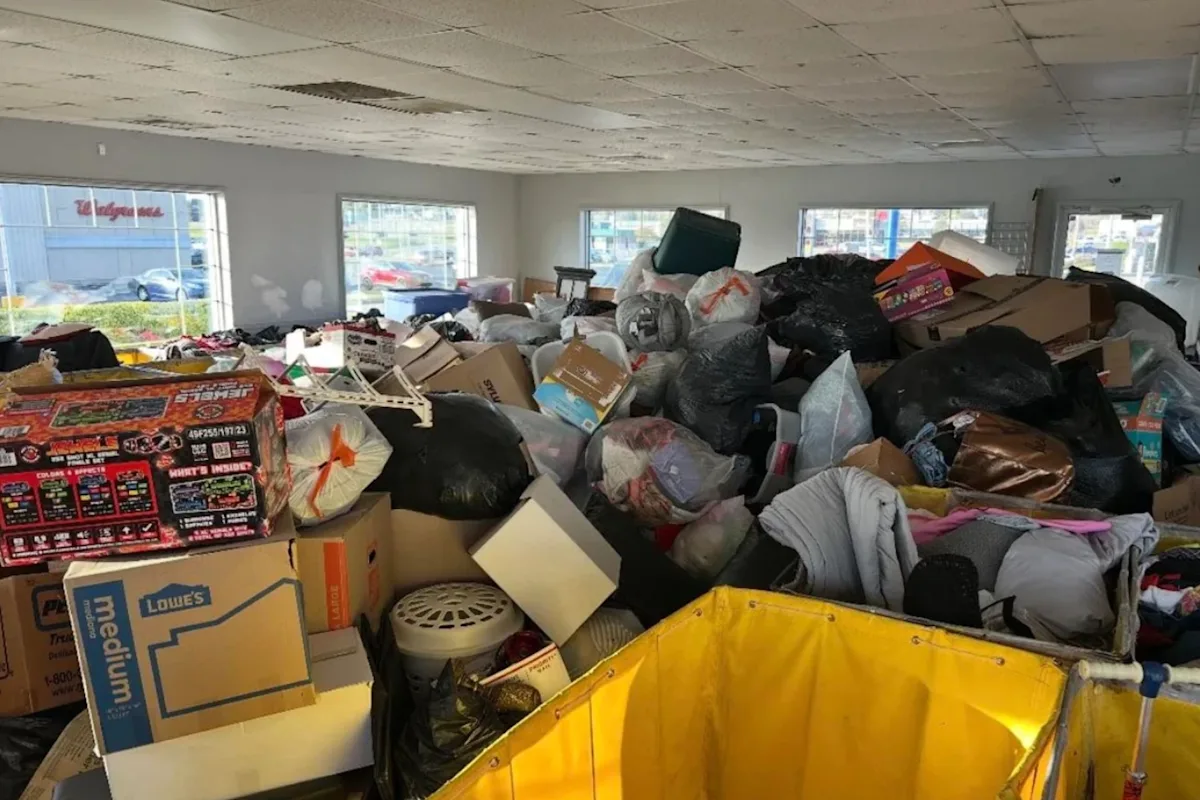
    A Reddit user shared their experience working at the retailer in the r/Goodwill subreddit, posting photos of overflowing donation centers and fire damage.

    A former Goodwill employee is speaking out about alleged waste practices at the nonprofit thrift retailer.

    Photo Credit: Reddit

    A former Goodwill employee is speaking out about alleged waste practices at the nonprofit thrift retailer.

    Photo Credit: Reddit

    “I will be going to the news soon about this all,” the poster wrote.

    The former employee alleges that blankets, linens, and unsellable clothes get thrown away at the main location rather than donated to community members. The company prohibits cameras in certain areas to prevent employees from witnessing the disposal, according to the former employee’s account.

    The former employee also said they received a verbal warning after giving a worn blanket to a homeless person during a winter storm — managers told them it violated company policy.

    One commenter responded: “Kudos to you for speaking the truth out loud. Not many people can.”

    Why is textile waste concerning?

    Textile waste creates serious environmental problems. Americans throw away upward of 11 million tons of textiles each year, with most ending up in landfills, where they release a polluting gas called methane as they break down.

    Throwing away functional blankets and clothes means more resources are extracted to make replacements. Vulnerable community members lose access to basic necessities such as warmth in winter.

    The alleged practice contradicts the circular-economy model that thrift stores support. Reusing existing items keeps them out of landfills and reduces demand for new production.

    Is Goodwill doing anything about this?

    Goodwill has not publicly responded to these allegations. The company states that items unsuitable for retail get recycled or sold to textile recyclers.

    Different Goodwill locations operate semi-independently within regional organizations, which means policies can vary by area. Some Goodwill branches have donation programs for unsold items, partnering with shelters and community organizations.

    The poster’s account suggests this may be a localized problem rather than a companywide policy. Without confirmation from Goodwill leadership or independent verification, it’s unclear how widespread these alleged practices might be.

    What’s being done about textile waste more broadly?

    Several organizations redirect usable donations away from landfills. The National Council of Textile Organizations connects donation centers with recycling facilities that process fabric into insulation, cleaning cloths, and new textiles.

    Some thrift stores have started partnering with homeless shelters and disaster-relief organizations. These programs send unsold seasonal items where they’re needed most.

    You can help reduce textile waste by researching local donation centers before dropping off items. Call ahead to ask about their redistribution policies for unsold goods.

    Look for “free stores” or mutual aid networks in your community. These grassroots organizations give away clothing and household items without selling them first.

    Buy secondhand when possible. Every thrifted item is one fewer new product that needs to be manufactured.

    Get TCD’s free newsletters for easy tips to save more, waste less, and make smarter choices — and earn up to $5,000 toward clean upgrades in TCD’s exclusive Rewards Club.


    Source link

  • South Korea vows to end foreign adoptions as UN presses Seoul to address past abuses

    South Korea vows to end foreign adoptions as UN presses Seoul to address past abuses


    SEOUL, South Korea (AP) — South Korea’s government said it plans to end its waning foreign adoptions of Korean children, while United Nations investigators voiced “serious concern” over what they described as Seoul’s failure to ensure truth-finding and reparations for widespread human rights violations tied to decades of mass overseas adoptions.

    The announcement Friday came hours after the United Nations human rights office released South Korea’s response to investigators urging Seoul to spell out concrete plans to address the grievances of adoptees sent abroad with falsified records or abused by foreign parents.

    The issue had rarely been discussed at the U.N. level, even as South Korea faces growing pressure to confront widespread fraud and abuse that plagued its adoption program, particularly during a boom in the 1970s and 1980s when it annually sent thousands of children to the West.

    The country will phase out foreign adoptions over a five-year period, aiming to reach zero by 2029 at the latest as it tightens welfare policies for children in need of care, Vice Minister of Health and Welfare Lee Seuran said during a briefing.

    South Korea approved foreign adoptions of 24 children in 2025, down from around 2,000 in 2005 and an annual average of more than 6,000 during the 1980s.

    In the health ministry’s briefing and response to the U.N., officials focused on future improvements rather than past problems.

    “Adoptions were mainly handled by private adoption agencies before, and while they presumably prioritized the best interests of the child, there may have also been other competing interests,” Lee said.

    “Now, with the adoption system being restructured into a public framework, and with the Health Ministry and the government having a larger role in the process for approving adoptions, we have an opportunity to reassess whether international adoption is truly a necessary option,” she added, citing efforts to promote domestic adoptions.

    UN urges Seoul to offer stronger remedies

    U.N. investigators, including special rapporteurs on trafficking, enforced or involuntary disappearances and child abuse, raised the adoption issue with Seoul after months of communication with Yooree Kim. The 52-year-old was sent to a French family in 1984 without her biological parents’ consent, based on documents falsely describing her as an abandoned orphan.

    Kim said she endured severe physical and sexual abuse by her adopters and petitioned the U.N. as part of a broader effort to seek accountability from governments and adoption agencies in South Korea and France.

    Citing broader systemic issues and Kim’s case, U.N. investigators criticized South Korea for failing to give adoptees effective access to remedies for serious abuses and for the “possible denial of their rights to truth, reparations, and memorialization.”

    They also voiced concern over the suspension of a government fact-finding investigation into past adoption abuses and fraud, despite reports of grave violations including cases that may amount to enforced disappearances.

    In its response, South Korea highlighted past reforms focused on abuse prevention including a 2011 law that reinstated judicial oversight of foreign adoptions, which ended decades of control by private agencies and resulted in a significant drop in international placements.

    South Korea also cited recent steps to centralize adoption authority.

    However, the government said further adoption investigations and stronger reparations for victims would hinge on future legislation. It offered no new measures to address the vast backlog of inaccurate or falsified records that have blocked many adoptees from reconnecting with birth families or learning the truth about their origins.

    Choi Jung Kyu, a human rights lawyer representing Kim, called South Korea’s response “perfunctory.” He noted promises of stronger reparations, which were meant to reduce the need for victims to litigate, are not clearly spelled out in draft bills proposing a relaunch of the Truth and Reconciliation Commission to investigate past human rights abuses.

    The government also vetoed a bill in April that would have removed the statute of limitations for state-related human rights violations, although that was before President Lee Jae Myung took office in June. Lee issued an apology in October over past adoption problems, as recommended by the truth commission.

    Choi, who represents multiple plaintiffs suing the government over human rights abuses under past dictatorships, said they often face prolonged legal battles when authorities dismiss truth commission findings as inconclusive or cite expired statutes of limitations.

    Pressure grows to address adoption problems

    Kim, who could not immediately be reached for comment, filed a rare petition for compensation against the South Korean government in August, noting that authorities at the time of her adoption falsely documented her as an orphan despite having a family.

    Following a nearly three-year investigation into complaints from 367 adoptees in Europe, the U.S. and Australia, the truth commission in March recognized Kim and 55 other adoptees as victims of human rights violations including falsified child origins, lost records and child protection failures.

    That was weeks before the commission halted its adoption investigation following internal disputes among commissioners over which cases warranted recognition as problematic. The fate of the remaining 311 cases, either deferred or incompletely reviewed, hinges on whether lawmakers establish a new truth commission through legislation.

    The commission’s findings acknowledged state responsibility for facilitating a foreign adoption program rife with fraud and abuse. The program was driven by efforts to reduce welfare costs and enabled by private agencies that often manipulated children’s backgrounds and origins. The findings largely aligned with previous reporting by The Associated Press.

    The AP investigation, in collaboration with Frontline (PBS), detailed how South Korea’s government, Western countries and adoption agencies worked in tandem to send some 200,000 Korean children overseas despite evidence that many were procured through questionable or unscrupulous means.

    Seoul’s past military governments passed special laws promoting foreign adoptions, removing judicial oversight and giving vast powers to private agencies, which bypassed proper child relinquishment procedures while shipping thousands of children overseas each year.

    Western nations largely ignored the abuses and sometimes pressured South Korea to maintain the supply to meet their high demand for babies.


    Source link