
Category: Uncategorized

  • Philippines former president fit for trial, ICC says

    Philippines former president fit for trial, ICC says


    Judges at the International Criminal Court (ICC) have ruled that former Philippine president Rodrigo Duterte is fit to attend pre-trial proceedings for alleged crimes against humanity.

    The ICC also will hold a hearing on 23 February to decide whether the prosecution’s case against Duterte is strong enough to proceed to a trial.

    Duterte’s lawyers earlier argued that the 80-year-old was unfit to participate in the ICC proceedings citing “cognitive impairment”. He has been detained at the Hague since March 2025.

    He is accused of being responsible for dozens of murders under his so-called war on drugs, during which thousands of small-time drug dealers, users and others were killed without trial.

    Duterte was president of the Philippines from 2016 to 2022. He justified his war on drugs by saying peace and order would pave the way for economic development.

    Citing opinions from a panel of medical experts, ICC judges said they were “satisfied” that Duterte is “able effectively to exercise his procedural rights and is therefore fit to take part in the pre-trial proceedings”.

    ICC judges also said in their decision on Monday that the mental capacities needed to “meaningfully exercise one’s procedural and fair trial rights” did not have to be “at their notionally highest level”.

    “This ruling tells victims that in the reckoning of Duterte at the ICC, their voices will not be sidelined by technical evasions,” said Congresswoman Leila de Lima, one of Duterte’s fiercest critics who was jailed during his presidency on drug charges that were later found to be false.

    Duterte was arrested at Manila airport in March 2025 as his family’s alliance with his successor, President Ferdinand “Bongbong” Marcos Jr crumbled.

    His arrest has divided Filipinos. While his deadly drugs crackdown has drawn sharp criticism from civil society, his populist message resonates with those who feel sidelined by Manila’s political elite.

    In May last year, Duterte was elected mayor of Davao city despite being in prison.

    His daughter, Vice-President Sara Duterte, is also widely expected to run for president in the 2028 elections, where Marcos is ineligible to seek a second term.

    Source link

  • Australia firefighters battle ’emergency level’ blazes

    Australia firefighters battle ’emergency level’ blazes


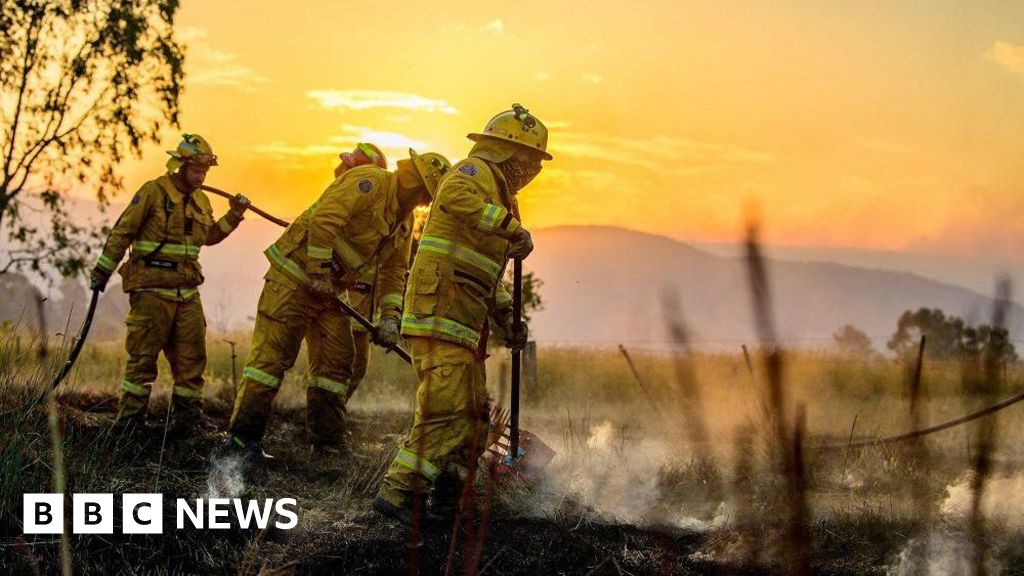
    Firefighters in the Australian state of Victoria are battling at least six major fires as a record-breaking heatwave hits the country’s south-east.

    Two fires are currently burning at “emergency level” according to local broadcaster ABC News. Several communities have been issued emergency warnings to either evacuate, watch and wait, or shelter in place.

    Fire officials warn that the situation is changing rapidly and have asked locals to stay up to date with the latest warnings.

    The Bureau of Meteorology says that parts of the state have seen all-time temperature highs – with one area hitting a high of 48.9C. Melbourne has recorded a temperature of 41C.

    Chris Hardman, the chief fire officer at Forest Fire Management Victoria, had told reporters that the state’s heat conditions were making conditions “incredibly difficult” for firefighters.

    Two fires – in Camperdown and Otways – are burning at emergency level. A new fire in the Larralea area is also causing “significant concern”.

    Country Fire Authority (CFA) chief officer Jason Hefferman told ABC Radio that there was a danger that the Otways fire could produce ember showers “which can create more fires in front of the main fire”.

    It is unclear what damage has been caused by the fires, but Australia’s Deputy Incident Controller Alistair Drayton, said he had “anecdotal evidence” that some homes had been lost.

    He also praised the “spectacular” work done by firefighters so far.

    Apart from Victoria, where there is a total fire ban, South Australia has also been placed under alert for “extreme” fire risk.

    Meanhwile health officials have warned that the prolonged heat carries significant health risks.

    The elderly, children and people with underlying health conditions are most at risk, Victoria chief health officer Caroline McElnay told reporters.

    “It can cause potentially fatal health problems such as heat exhaustion and heat stroke but it can also trigger events like heart attacks or stroke.”


    Source link

  • Some Asia airports screen passengers after outbreak in India

    Some Asia airports screen passengers after outbreak in India


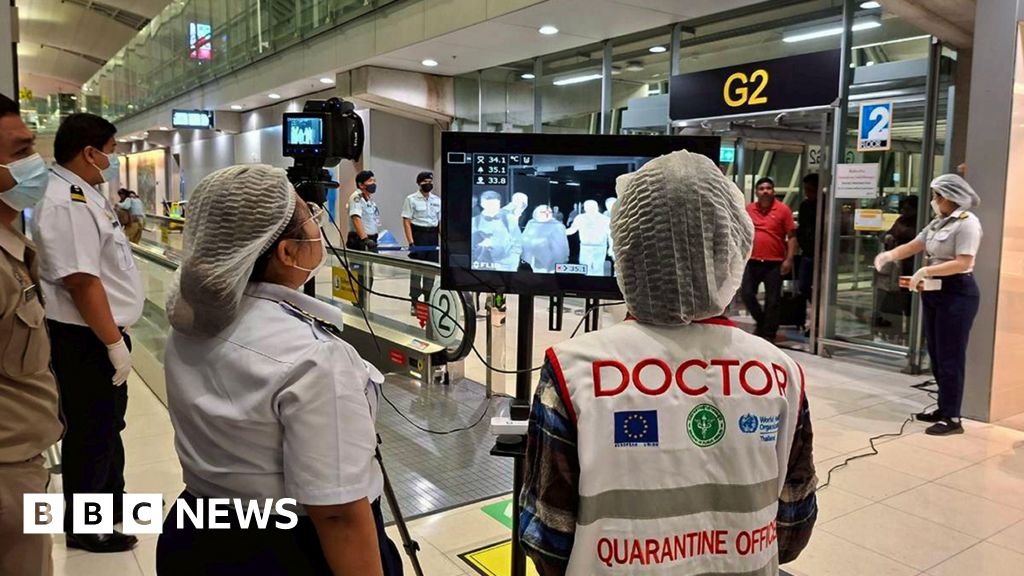
    EPA Thai health officials wearing protective masks monitoring passengers from international flights arriving at Suvarnabhumi AirportEPA

    The Nipah virus can spread from animals to humans.

    An outbreak of the deadly Nipah virus in India’s West Bengal state has sparked concern in parts of Asia, with some tightening screening measures at airports.

    Thailand has started screening passengers at three airports that receive flights from West Bengal. Nepal has also begun screening arrivals at Kathmandu airport and other land border points with India.

    Five healthcare workers in West Bengal were infected by the virus early this month, one of whom is in a critical condition. Some 110 people who were in contact with them have been quarantined.

    The virus can spread from animals to humans. It has a high death range – ranging from 40% to 75% – as there is no vaccine or medicine to treat it.

    What is the Nipah virus and what are its symptoms?

    The Nipah virus can be transmitted from animals, like pigs and fruit bats, to humans. It can also spread person-to-person through contaminated food.

    The World Health Organization has described Nipah in its top ten priority diseases, along with pathogens like Covid-19 and Zika, because of its potential to trigger an epidemic.

    The incubation period ranges from four to 14 days.

    People who contract the virus show a wide range of symptoms, or sometimes, none at all.

    Initial symptoms may include fever, headaches, muscle pain, vomiting and sore throat. In some people, these may be followed by drowsiness, altered consciousness, and pneumonia.

    Encephalitis, a sometimes-fatal condition that causes inflammation of the brain, may occur in severe cases.

    To date, no drugs of vaccines have been approved to treat the disease.

    Where were the past outbreaks?

    The first recognised Nipah outbreak was in 1998 among pig farmers in Malaysia and later spread to neighbouring Singapore. The virus got its name from the village where it was first discovered.

    More than 100 people were killed and a million pigs culled in an effort to contain the virus. It also resulted in significant economic losses for farmers and those in the livestock trade.

    Bangladesh has borne the brunt in recent years, with more than 100 people dying of Nipah since 2001.

    The virus has also been detected in India. Outbreaks were reported in West Bengal in 2001 and 2007.

    More recently, the southern state of Kerala has been a Nipah hotspot. In 2018, 19 cases were reported of which 17 were fatal; and in 2023, two out of six confirmed cases later died.

    What is happening now?

    At least five confirmed cases were reported as of last week, all of whom were linked to a private hospital in Barasat. Two nurses are being treated in an intensive coronary care unit, one of whom remains in “very critical” condition, local media reported citing the state’s health department.

    No cases have yet been reported outside India, but several countries are stepping up precautions.

    On Sunday, Thailand started screening passengers at three international airports in Bangkok and Phuket that receive flights from West Bengal. Passengers from these flights have been asked to make health declarations.

    The parks and wildlife department has also implemented stricter screenings in natural tourist attractions.

    Jurai Wongswasdi, a spokeswoman for the Department for Disease Control, told BBC Thai authorities are “fairly confident” about guarding against an outbreak in Thailand.

    Nepal, too, has begun screening people arriving through the airport in Kathmandu and other land border points with India.

    Meanwhile, health authorities in Taiwan have proposed to list the Nipah virus as a “Category 5 disease”. Under the island’s system, diseases classified as Category 5 are emerging or rare infections with major public health risks, that require immediate reporting and special control measures.

    Additional reporting by BBC Thai


    Source link