
Category: Uncategorized

  • Some Asia airports screen passengers after outbreak in India

    Some Asia airports screen passengers after outbreak in India


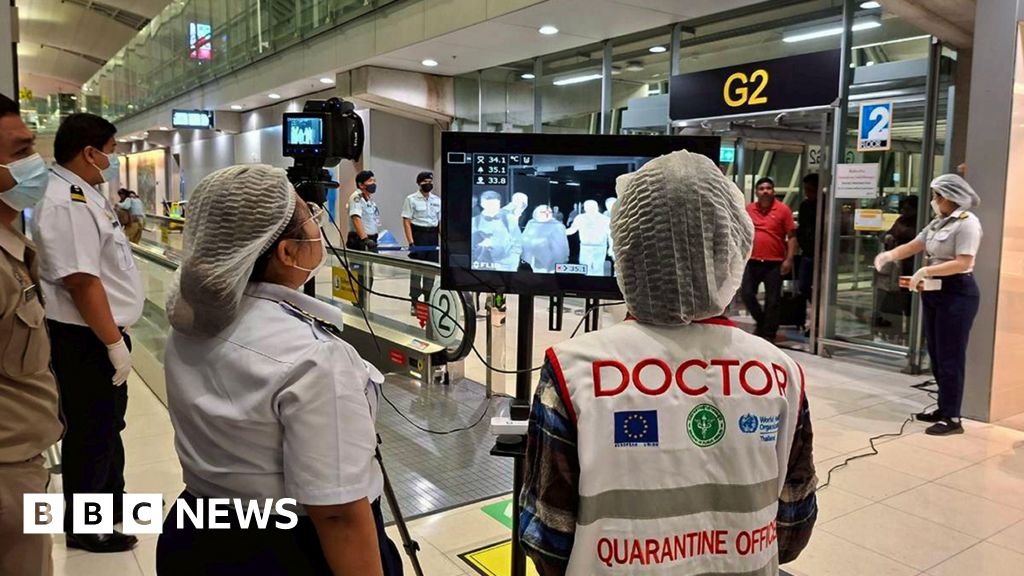
    EPA Thai health officials wearing protective masks monitoring passengers from international flights arriving at Suvarnabhumi AirportEPA

    The Nipah virus can spread from animals to humans.

    An outbreak of the deadly Nipah virus in India’s West Bengal state has sparked concern in parts of Asia, with some tightening screening measures at airports.

    Thailand has started screening passengers at three airports that receive flights from West Bengal. Nepal has also begun screening arrivals at Kathmandu airport and other land border points with India.

    Five healthcare workers in West Bengal were infected by the virus early this month, one of whom is in a critical condition. Some 110 people who were in contact with them have been quarantined.

    The virus can spread from animals to humans. It has a high death range – ranging from 40% to 75% – as there is no vaccine or medicine to treat it.

    What is the Nipah virus and what are its symptoms?

    The Nipah virus can be transmitted from animals, like pigs and fruit bats, to humans. It can also spread person-to-person through contaminated food.

    The World Health Organization has described Nipah in its top ten priority diseases, along with pathogens like Covid-19 and Zika, because of its potential to trigger an epidemic.

    The incubation period ranges from four to 14 days.

    People who contract the virus show a wide range of symptoms, or sometimes, none at all.

    Initial symptoms may include fever, headaches, muscle pain, vomiting and sore throat. In some people, these may be followed by drowsiness, altered consciousness, and pneumonia.

    Encephalitis, a sometimes-fatal condition that causes inflammation of the brain, may occur in severe cases.

    To date, no drugs of vaccines have been approved to treat the disease.

    Where were the past outbreaks?

    The first recognised Nipah outbreak was in 1998 among pig farmers in Malaysia and later spread to neighbouring Singapore. The virus got its name from the village where it was first discovered.

    More than 100 people were killed and a million pigs culled in an effort to contain the virus. It also resulted in significant economic losses for farmers and those in the livestock trade.

    Bangladesh has borne the brunt in recent years, with more than 100 people dying of Nipah since 2001.

    The virus has also been detected in India. Outbreaks were reported in West Bengal in 2001 and 2007.

    More recently, the southern state of Kerala has been a Nipah hotspot. In 2018, 19 cases were reported of which 17 were fatal; and in 2023, two out of six confirmed cases later died.

    What is happening now?

    At least five confirmed cases were reported as of last week, all of whom were linked to a private hospital in Barasat. Two nurses are being treated in an intensive coronary care unit, one of whom remains in “very critical” condition, local media reported citing the state’s health department.

    No cases have yet been reported outside India, but several countries are stepping up precautions.

    On Sunday, Thailand started screening passengers at three international airports in Bangkok and Phuket that receive flights from West Bengal. Passengers from these flights have been asked to make health declarations.

    The parks and wildlife department has also implemented stricter screenings in natural tourist attractions.

    Jurai Wongswasdi, a spokeswoman for the Department for Disease Control, told BBC Thai authorities are “fairly confident” about guarding against an outbreak in Thailand.

    Nepal, too, has begun screening people arriving through the airport in Kathmandu and other land border points with India.

    Meanwhile, health authorities in Taiwan have proposed to list the Nipah virus as a “Category 5 disease”. Under the island’s system, diseases classified as Category 5 are emerging or rare infections with major public health risks, that require immediate reporting and special control measures.

    Additional reporting by BBC Thai


    Source link

  • India and EU to announce FTA amid Trump tariff tensions

    India and EU to announce FTA amid Trump tariff tensions


    The European Union and India are set to announce a landmark trade deal after nearly two decades of on-off talks, as both sides aim to deepen ties amid tensions with the US.

    India’s Commerce Secretary Rajesh Agarwal said on Monday that negotiations had been wrapped up and the deal finalised.

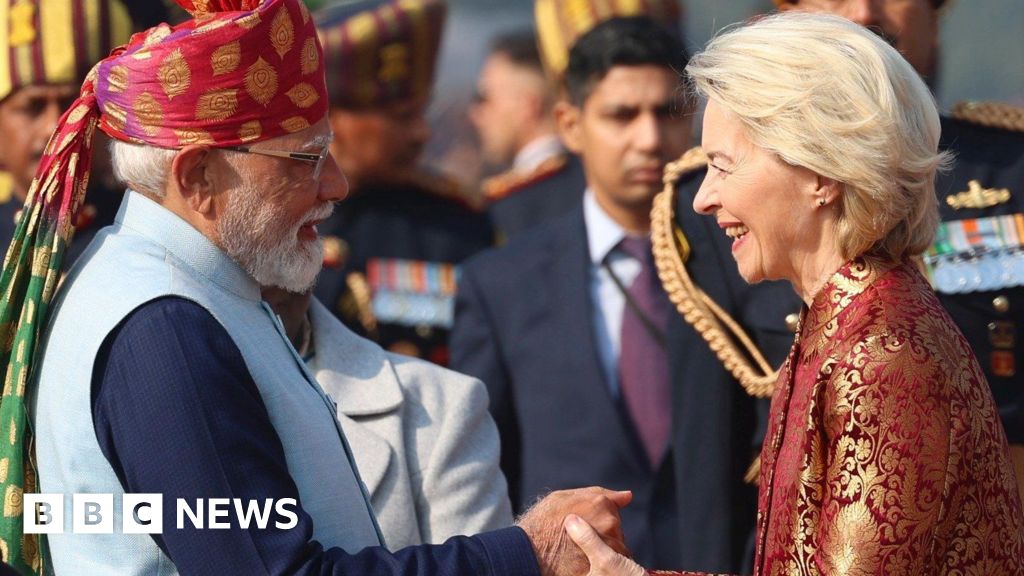
    European Commission President Ursula von der Leyen and European Council President António Luís Santos da Costa are in Delhi, where the announcement is expected.

    Both India and the EU are seeking to strengthen strategic and trade ties with the rest of the world as they contend with economic and geopolitical pressure from the US.

    Delhi is grappling with 50% tariffs imposed by President Donald Trump last year amid talks aimed at securing a trade deal between India and the US that are still dragging on.

    The EU has just emerged from a stressful week after Trump threatened to escalate his trade war with European allies for opposing a US takeover of Greenland before backing off.

    That larger geopolitical context was evident in recent statements made by leaders.

    The trade deal will send an “important political message to the world that India and the EU believe more in trade agreements than in tariffs” at a time when protectionism is on the rise and “some countries have decided to increase tariffs”, Costa said on Monday without naming the US.

    Von der Leyen said that Europe and India are “committed to working together to shape a new global order”.

    Von der Leyen and Costa arrived in Delhi over the weekend and were the chief guests at India’s colourful Republic Day celebrations on Monday.

    On Tuesday, they will meet Modi and attend a bilateral summit, after which the deal is expected to be formally announced.

    The formal signing is likely to take place only later this year, after the agreement is approved by the European Parliament and the European Council.

    The deal will expand market access for Indian exports to Europe while easing entry for European investments and goods, such as cars and beverages, into Asia’s third-largest economy.

    “This is a perfect example of a partnership between two major economies of the world… This agreement represents 25% of the global GDP and one-third of global trade,” Modi said while inaugurating the India Energy Week conference on Tuesday.

    The EU is India’s largest trading partner in goods, with bilateral merchandise trade reaching $136bn (£99.4bn) in 2024-25, nearly doubling over a decade.

    Talks for a deal between India and the EU started in 2007 but stalled in 2013 over roadblocks in market access and regulatory demands. Discussions were formally restarted in July 2022.

    The main sticking points were access to India’s automobile market, agriculture goods and carbon-linked tariffs – and analysts will be reading the fine print to see what the final agreement says on these issues.

    Officials from both sides worked hard over the past few days to finalise outstanding chapters of the agreement, aiming to wrap it up before the EU leaders’ visit.

    The agreement – von der Leyen and India’s commerce minister Piyush Goyal have described it as the “mother of all trade deals” – comes as pressure grows on Delhi and Brussels to secure alternative markets for exporters.

    In the past seven months, India signed major trade agreements with the UK, Oman and New Zealand, and a 2024 pact signed with the four-nation European Free Trade Association bloc of Switzerland, Norway, Iceland and Liechtenstein has come into effect.

    The EU, meanwhile, signed a trade deal with South Asian trade bloc Mercosur earlier this month after 25 years of negotiation.

    Follow BBC News India on Instagram, YouTube, Twitter and Facebook.


    Source link

  • Meta to trial premium subscriptions for Instagram, Facebook and WhatsApp

    Meta to trial premium subscriptions for Instagram, Facebook and WhatsApp


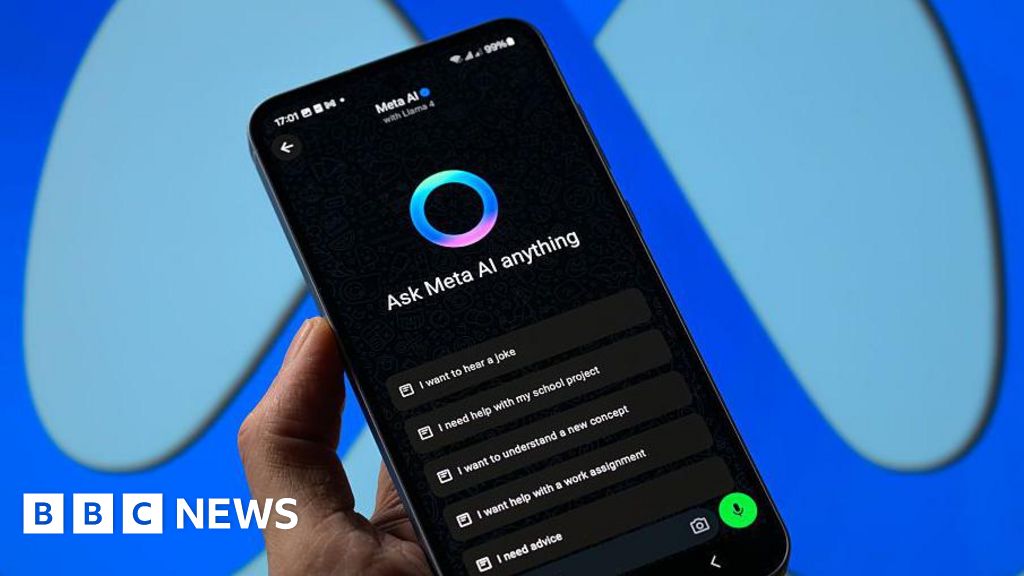
    Technology giant Meta is set to trial premium subscriptions for Instagram, Facebook and WhatsApp users in the coming months in its latest experiment with paid services.

    The new offerings would give access to features including expanded artificial intelligence (AI) capabilities.

    Under the plan, access to the platforms’ core services would remain free to use.

    The firm also plans to test subscriptions for features, such as its Vibes video generation app, which the firm says “can bring your ideas to life with new AI visual creation tools”.

    Meta announced Vibes in September as part of the latest version of the Meta AI app.

    It also aims to use Manus, a Chinese-founded AI firm it bought in December for a reported $2bn (£1.46bn), in its subscription plans, according to TechCrunch, which first reported the story.

    The company will also continue to offer standalone Manus subscriptions to businesses.

    At the time, Meta said the deal would help improve its own AI by giving people access to “agents” – tools which can do complex things with minimal user interaction such as planning trips or making presentations.

    “Manus’s exceptional talent will join Meta’s team to deliver general-purpose agents across our consumer and business products, including Meta AI,” it said in a blog post.

    Based in Singapore after relocating from China, Manus has sought to set itself apart from rival AI developers with what it claims can be a “truly autonomous” agent.

    Unlike many chatbots which need to be repeatedly asked for things before a user can get their desired response, Manus says its service can plan, execute and complete tasks independently in accordance with instructions.

    Last year, Facebook tested placing a limit on how many links some users can share when they post on the social media platform.

    Notifications seen by some users based in the UK and US said they could only share a certain number of links in Facebook posts without a subscription.

    The company described it as “a limited test to understand whether the ability to publish an increased volume of posts with links adds additional value” for subscribers.

    In 2023, Meta started to roll out a paid verification service that gives Facebook and Instagram users a blue tick for a monthly fee.


    Source link