Category: Uncategorized

  • Immigration chief departing Minneapolis as Trump sends border tsar Tom Homan to scene

    Immigration chief departing Minneapolis as Trump sends border tsar Tom Homan to scene


    A top US immigration official is expected to leave the US city of Minneapolis in what may mark a shift in the White House’s tone after the fatal shooting of a second US citizen by federal officers over the weekend.

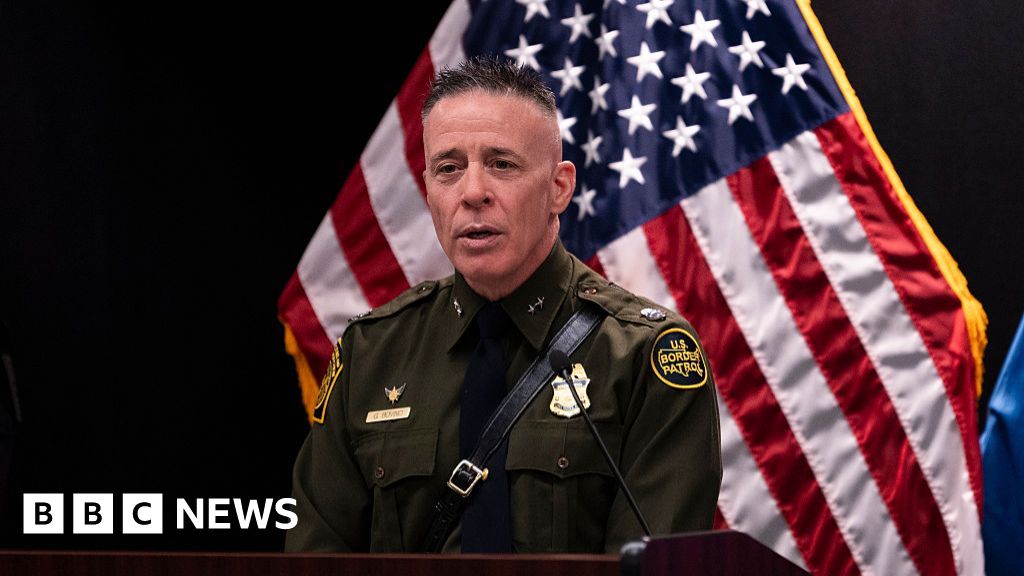
    As Border Patrol Commander Gregory Bovino and some immigration agents depart, “border tsar” Tom Homan will begin leading on-the-ground efforts in the Minnesota city after the shooting of Alex Pretti on Saturday escalated tensions.

    The decision by President Donald Trump may indicate the administration’s interest in walking back more aggressive federal action in his nationwide immigration crackdown.

    Despite the announcement, online tracking of immigration raids shows the administration’s efforts have still continued.

    Bovino was the face of the operation when Pretti – an observer seen filming agents – got into a confrontation that led to him being shot numerous times on a street in Minneapolis.

    The border control commander inflamed the situation on the ground in the aftermath of the shooting, claiming that Pretti intended to “massacre” federal agents.

    The Department of Homeland Security (DHS) said the agents fired in self-defence after Pretti, who they say had a handgun, resisted their attempts to disarm him on Saturday.

    Eyewitnesses, local officials and the victim’s family have challenged that account, pointing out Pretti had a phone in his hand, not a weapon. His parents, meanwhile, have accused the administration of spreading “sickening lies” about what happened.

    Before the shooting, Bovino was key to the Trump administration’s hard-line approach to immigration enforcement in several cities, active on social media and regularly filming raids and posting promotional videos showing his agents’ action.

    Homan, who will report directly to the president, advocates for Trump’s aggressive immigration enforcement. But he also has experience in the role – Homan worked with immigration and deportations during Democrat Barack Obama’s administration.

    In Minneapolis on Monday, tension and frustration over the presence of federal officials remained high, despite the news that Bovino and some agents would be leaving.

    “A lot of people aren’t able to work right now, they aren’t able to leave their house, they’re afraid,” said George Cordero, a resident of St Paul, Minneapolis’, sister city.

    Pretti was the second Minneapolis resident shot and killed by federal immigration officials since their arrival in the state; Renee Nicole Good, was killed by an Immigration and Customs Border Enforcement (ICE) agent on 7 January.

    Much of the anger in the city and from politicians on both sides of the aisle was directed at Bovino and border patrol agents sent to Minneapolis along with ICE agents at Trump’s directive. In total, there are more than 3,000 immigration agents in the city.

    Some media reports on Monday suggested Bovino had been let go from his role, but Homeland Security spokesperson Tricia McLaughlin refuted that, saying the border patrol chief “is a key part of the President’s team and a great American”.

    Carol Engelheart, a retired nurse from Minneapolis, said she has been deeply emotional about the events of the past few days.

    “We need to care about this country, we need to care that we have a Constitution left, and if the people organize and the people stand up, we can do this,” she said, as she chided immigration enforcement actions in the city.

    Also on Monday, Trump spoke will both Minnesota Governor Tim Walz and Minneapolis Mayor Jacob Frey – democratic leaders who have resisted the immigration efforts and demanded agents be removed from the state. Trump has criticised both in recent weeks.

    Both Trump and the local leaders characterised the talks as positive and said they discussed a pathway forward – a sign that both sides were seeking a way to end their standoff over Trump’s deportation drive.

    Trump said he and Walz are “on a similar wavelength” and said his target is “any and all criminals that they have in their possession”.

    “The President agreed to look into reducing the number of federal agents in Minnesota and to talk to DHS about ensuring the Minnesota Bureau of Criminal Apprehension is able to conduct an independent investigation, as would ordinarily be the case,” Walz said after the call.

    Ensuring an independent investigation into Pretti’s death, has been a central focus for Walz. In its immediate aftermath, local authorities obtained a judicial warrant to gain access to the crime scene to preserve evidence.

    Local officials have condemned the federal government investigation and said they were not being allowed to access the crime scene and evidence following Pretti’s death.

    That response was predicated on the aftermath of Good’s shooting, when local and state authorities said they were being kept out of the investigation by federal immigration officials.

    Demonstrations against ICE action and memorials for Pretti – a 37-year-old ICU nurse who was killed over the weekend – continued on Monday. More vigils and demonstrations are planned for the coming days.

    On Tuesday, Frey said he plans to meet with Homan to “discuss next steps” offering the first in-person meeting of federal and local officials since Bonvino’s departure was announced.


    Source link

  • Landmark social media trial to begin over addiction claims

    Landmark social media trial to begin over addiction claims


    Lily JamaliNorth America Technology correspondent, San Francisco

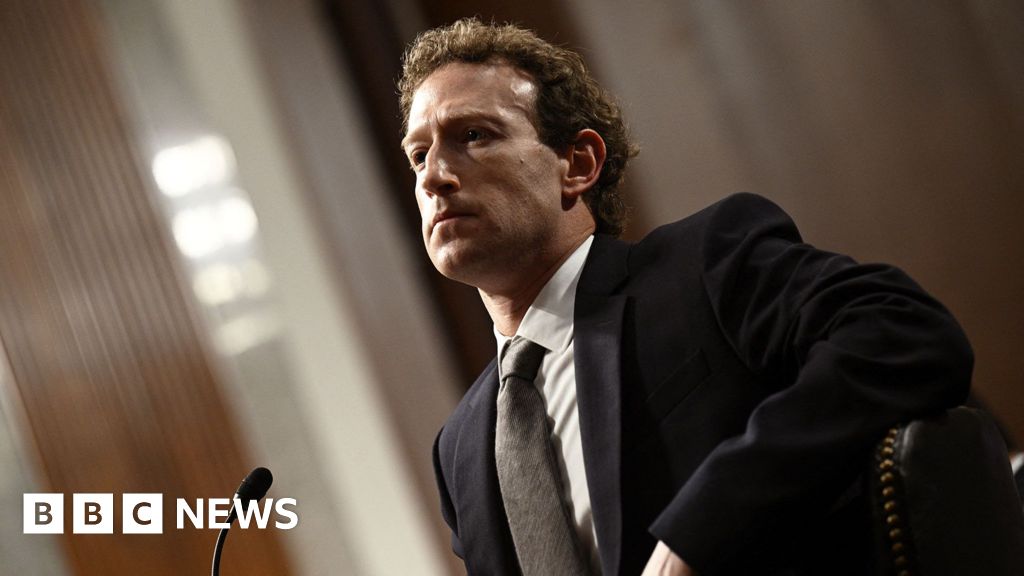
    BRENDAN SMIALOWSKI/Getty Images Meta CEO Mark Zuckerberg speaks at a hearing. He has a neutral expression on his face. BRENDAN SMIALOWSKI/Getty Images

    Meta boss Mark Zuckerberg is one of the big tech executives who will give evidence during the trial

    A landmark social media addiction trial in which top tech executives are expected to testify begins on Tuesday in California.

    The plaintiff, a 19-year-old woman identified by the initials KGM, alleges the design of the platforms’ algorithms left her addicted to social media and negatively affected her mental health.

    The defendants include Meta – which owns Instagram and Facebook – TikTok’s owner ByteDance and YouTube parent Google. Snapchat settled with the plaintiff last week.

    The closely-watched case at Los Angeles Superior Court is the first in a wave of such lawsuits, which could challenge a legal theory used by tech firms to shield themselves from culpability in the US.

    ‘Dangerous and addictive algorithms’

    The named social media companies have said the plaintiff’s evidence falls short of proving they are responsible for alleged harms such as depression and eating disorders.

    The case going to trial marks a distinct shift in how the US legal system treats tech firms, which face mounting claims that their products lead to addictive behaviours.

    The companies have long argued that Section 230 of the Communications Decency Act, passed by Congress in 1996, exempts platforms from liability for what third parties post.

    But at issue in this case are design choices about algorithms, notifications and other features that affect how people use their apps.

    KGM’s attorney, Matthew Bergman, told the BBC the case will be the first time a social media company has been held to account by a jury at trial.

    “Unfortunately, there are all too many kids in the United States, the UK, and around the world who are suffering as KGM does because of the dangerous and addictive algorithms that the social media platforms foist on unsuspecting kids,” he said.

    “These companies are going to have to explain to a jury why their profits were more important than the lives of our young people.”

    Eric Goldman, a law professor at Santa Clara University, told the BBC that losing these cases in court could pose an existential threat to the social media companies.

    But he said it may be difficult for plaintiffs to prove physical harms can be blamed on content publishers.

    “The fact that the plaintiffs have been able to sell that idea has opened the door to a whole bunch of new legal questions that the law wasn’t really designed to answer,” he said.

    ‘The tech industry has been given deferential treatment’

    At trial, jurors are expected to see an array of evidence, including excerpts from internal company documents.

    “A lot of what these companies have been trying to shield from the public is likely going to be aired in court,” said Mary Graw Leary, a law professor at Catholic University of America.

    Meta previously said it introduced dozens of tools to support a safe environment for teens online, but some researchers have disputed the effectiveness of the recent measures.

    The companies are expected to argue any asserted harms are caused by third-party users.

    One highly-anticipated witness the jury will hear from is Meta boss Mark Zuckerberg, who is due to testify early in the trial.

    In 2024, he told US senators “the existing body of scientific work has not shown any causal link between social media and young people having worse mental health outcomes”.

    During that same hearing, at the prodding of one senator, Zuckerberg apologised to victims and their loved ones who had crowded into the chamber.

    Tech executives “are often not good under pressure” said Mary Anne Franks, a law professor at George Washington University.

    She said the firms were “very much much hoping” they could avoid having top bosses testify.

    The trial comes as the companies face growing scrutiny from families, school districts, and prosecutors worldwide.

    Last year, dozens of US states sued Meta, alleging the company misled the public over risks of social media use and had contributed to a youth mental health crisis.

    Australia has enacted a social media ban on under-16s, and the UK signalled in January it may follow.

    “There is a tipping point when it comes to the harms of social media,” Franks said.

    “The tech industry has been given deferential treatment – I think we’re seeing that start to change.”

    A green promotional banner with black squares and rectangles forming pixels, moving in from the right. The text says: “Tech Decoded: The world’s biggest tech news in your inbox every Monday.”


    Source link

  • Trump raises US tariffs on South Korea imports to 25%

    Trump raises US tariffs on South Korea imports to 25%


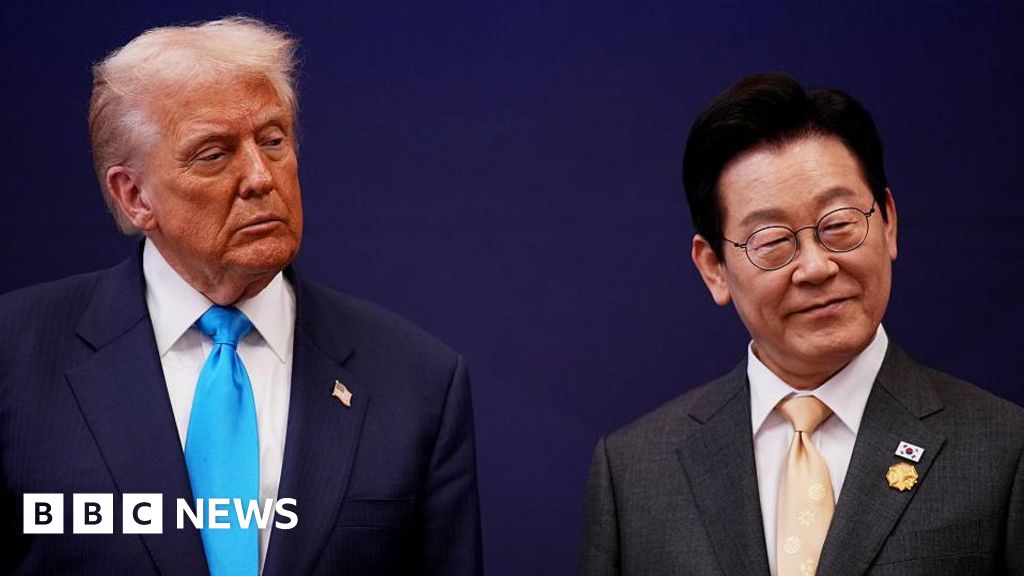
    US President Donald Trump has announced he is raising tariffs on South Korean imports to 25% after accusing Seoul of “not living up” to a trade deal reached last year.

    In a post on social media, Trump said he would increase levies on South Korea from 15% across a range of products including automobiles, lumber, pharmaceuticals and “all other Reciprocal TARIFFS”.

    Trump said South Korean lawmakers have been slow to approve the deal while “we have acted swiftly to reduce our TARIFFS in line with the Transaction agreed to”.

    South Korea says it had not been given official notice of the decision to raise tariffs on some of its goods, and wanted urgent talks with Washington over the issue.

    It added that South Korea’s Industry Minister Kim Jung-kwan, who is currently in Canada, will visit Washington as soon as possible to meet US Commerce Secretary Howard Lutnick.

    Shares in some South Korean exporters fell on Tuesday morning, with car maker Hyundai down about 2.5%. Stocks related to pharmaceuticals and timber were also lower.

    Seoul and Washington reached a deal last October, which included a pledge from South Korea to invest $350bn (£256bn) in the US, some of which would go to shipbuilding.

    The following month, the two countries agreed that the US would reduce tariffs on some products once South Korea started the process to approve the deal.

    The agreement was submitted to South Korea’s National Assembly on 26 November and is currently being reviewed. It is likely to be passed in February, according to local media.

    Tariffs are paid by companies who import products. In this case, US firms will pay a 25% tax on goods they buy from South Korea.

    Trump has frequently used tariffs as leverage to enact foreign policy during his second term in the White House.

    On Saturday, he threatened Canada with a 100% tariff if it struck a trade deal with China.

    On Monday, Chinese officials said its “strategic partnership” agreement with Canada is not meant to undercut other countries.

    Canadian Prime Minister Mark Carney has said his country was not pursuing a free trade deal with China and has “never” considered it.

    He added that Canadian officials have made their position clear to their American counterparts.

    Before that, Trump said he would impose import taxes on eight countries – including the UK – who opposed US plans to seize Greenland, an autonomous territory in the Kingdom of Denmark which is a member of Nato.

    He later backed down from the tariff threat over Greenland citing progress towards a “future deal” over the island, but the episode strained US relations with Denmark and other Nato allies.


    Source link