
Category: Uncategorized

  • Japanese ex-soldier reaches final settlements in sex abuse case

    Japanese ex-soldier reaches final settlements in sex abuse case


    Rina Gonoi, the former soldier who was sexually assaulted while serving in Japan’s Self-Defense Forces (SDF), has reached a settlement with two remaining defendants – the state and an ex-colleague.

    Her attorney said on Monday that Gonoi will receive 1.6 million yen ($10,400; £7,600) from the Japanese government, but no compensation or apology from the former colleague.

    It marks the end of Gonoi’s civil lawsuit against five ex-soldiers and the government in a case that has drawn international attention. She reached settlements with four of the five earlier.

    A 2023 ruling in a separate criminal case found three of the ex-soldiers guilty of sexual assault.

    Gonoi’s case was a landmark one in Japan, where it is rare for victims of sexual violence to speak out. She put her story on YouTube in 2022.

    But public discussions about sexual violence have increased in recent years, following high-profile cases like journalist Shiori Ito’s court battle against her alleged rapist and the expose of J-pop giant Johnny Kitagawa.

    Gonoi said at a press conference on Monday that she experienced a “very long and heavy time” since speaking out more than four years ago.

    “During these 4.5 years I came to understand first-hand just how heavy the weight of speaking up is,” she said.

    “Even so, I did not regret speaking out,” she added.

    Earlier this month, the 26-year-old wrote on X that her years-long legal battle had “come to an end” and thanked everyone who had supported her during the journey.

    Gonoi had sought 5.5 million yen ($40,000; £32,000) in damages from the men for causing her mental distress, and an additional 2 million yen from the state for its failure to prevent abuse.

    Warning: This article contains graphic descriptions of sexual assault

    In 2022, Gonoi posted a video on YouTube that garnered attention both in Japan and abroad.

    She alleged that in 2021, three of her male colleagues had pinned her down and pressed their crotches against her. She said her complaints to her superiors were dismissed.

    As Gonoi’s story went viral, more than 100,000 people signed a petition calling for the defence ministry to investigate her allegations of sexual violence during her time in service.

    The case also prompted a sweeping investigation into the ranks of the SDF, where defence ministry officials uncovered more than 1,000 other reports of sexual harassment.

    Her three attackers were convicted of sexual assault and handed two-year prison sentences in 2023. But the sentences were suspended for four years, which means they did not actually have to serve time in prison.


    Source link

  • Nigerian officers to face trial over allegations of a coup against President Bola Tinubu

    Nigerian officers to face trial over allegations of a coup against President Bola Tinubu


    A group of officers in Nigeria are set to face a military court after being accused of “plotting to overthrow the government” of President Bola Tinubu last year, an armed forces’ statement has said.

    Sixteen officers were arrested last October after what were described as “acts of indiscipline and breaches of service regulations”.

    At the time the military dismissed rumours of an attempted coup, but following an investigation, the authorities have acknowledged that some of the 16 will go before a military judicial panel.

    Nigeria has a complex history of military involvement in politics, with multiple coups between 1966 and 1993, which has made allegations of coup‑plotting highly sensitive.

    It is not clear how many of the 16 will go on trial, but the military authorities said the process would ensure accountability and uphold “the principles of fairness and due process”.

    A statement added that trying to unseat the elected government was “inconsistent with the ethics, values and professional standards” of the military.

    In recent years, concerns over instability, insecurity and public frustration have occasionally prompted rumours about dissent within the ranks – rumours the military has repeatedly dismissed.

    Nigeria has experienced a period of unbroken civilian rule since 1999. The armed forces have consistently stressed their loyalty to civilian authority, often issuing public statements reaffirming their commitment to democracy.

    This latest development comes at a time when the West African region has experienced a resurgence of coups. Mali, Burkina Faso, Niger and Guinea have all seen their governments toppled by soldiers since the beginning of the decade. However, Guinea recently returned to a democratic rule with the junta leader, Mamadi Doumbouya elected president.

    These events have created heightened vigilance among governments in the region, including Nigeria, which has traditionally positioned itself as a stabilising force within the regional grouping Ecowas.

    Within Nigeria, the military continues to face intense operational pressures – from fighting militant jihadist groups in the north-east to tackling criminals and communal violence across the north‑west and central states.

    Analysts say such pressures, combined with resource constraints and public scrutiny, have put the spotlight on discipline within the armed forces.


    Source link

  • Indian Users Targeted in Tax Phishing Campaign Delivering Blackmoon Malware

    Indian Users Targeted in Tax Phishing Campaign Delivering Blackmoon Malware


    Ravie LakshmananJan 26, 2026Cyber Espionage / Malware

    Blackmoon Malware

    Cybersecurity researchers have discovered an ongoing campaign that’s targeting Indian users with a multi-stage backdoor as part of a suspected cyber espionage campaign.

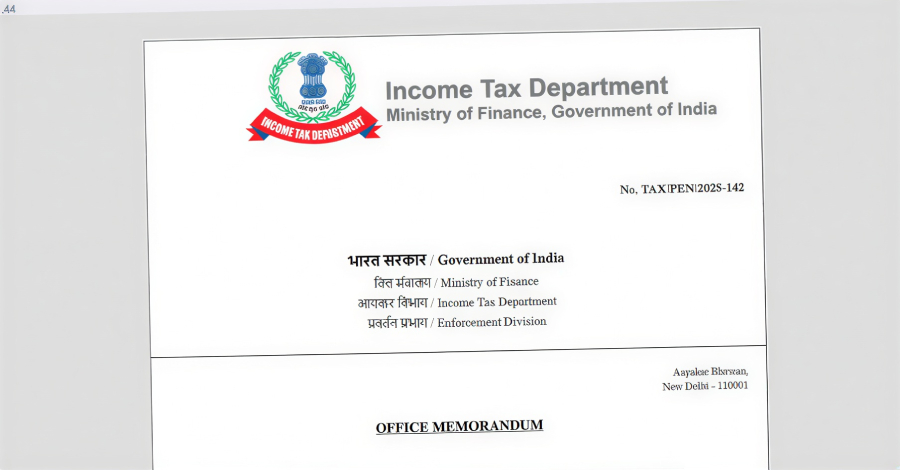
    The activity, per the eSentire Threat Response Unit (TRU), involves using phishing emails impersonating the Income Tax Department of India to trick victims into downloading a malicious archive, ultimately granting the threat actors persistent access to their machines for continuous monitoring and data exfiltration.

    The end goal of the sophisticated attack is to deploy a variant of a known banking trojan called Blackmoon (aka KRBanker) and a legitimate enterprise tool called SyncFuture TSM (Terminal Security Management) that’s developed by Nanjing Zhongke Huasai Technology Co., Ltd, a Chinese company. The campaign has not been attributed to any known threat actor or group.

    Cybersecurity

    “While marketed as a legitimate enterprise tool, it is repurposed in this campaign as a powerful, all-in-one espionage framework,” eSentire said. “By deploying this system as their final payload, the threat actors establish resilient persistence and gain a rich feature set to monitor victim activity and centrally manage the theft of sensitive information.”

    The ZIP file distributed through the fake tax penalty notices contains five different files, all of which are hidden except for an executable (“Inspection Document Review.exe”) that’s used to sideload a malicious DLL present in the archive. The DLL, for its part, implements checks to detect debugger-induced delays and contacts an external server to fetch the next-stage payload.

    The downloaded shellcode then uses a COM-based technique to bypass the User Account Control (UAC) prompt to gain administrative privileges. It also modifies its own Process Environment Block (PEB) to masquerade as the legitimate Windows “explorer.exe” process to fly under the radar.

    On top of that, it retrieves the next stage “180.exe” from the “eaxwwyr[.]cn” domain, a 32-bit Inno Setup installer that adjusts its behavior based on whether the Avast Free Antivirus process (“AvastUI.exe”) is running on the compromised host.

    If the security program is detected, the malware uses automated mouse simulation to navigate Avast’s interface and add malicious files to its exclusion list without disabling the antivirus engine to bypass detection. This is achieved by means of a DLL that’s assessed to be a variant of the Blackmoon malware family, which is known for targeting businesses in South Korea, the U.S., and Canada. It first surfaced in September 2015.

    The file added to the exclusion list is an executable named “Setup.exe,” which is a utility from SyncFutureTec Company Limited and is designed to write “mysetup.exe” to disk. The latter is assessed to be SyncFuture TSM, a commercial tool with remote monitoring and management (RMM) capabilities.

    Cybersecurity

    In abusing a legitimate offering, the threat actors behind the campaign gain the ability to remotely control infected endpoints, record user activities, and exfiltrate data of interest. Also deployed following the execution of the executable are other files –

    • Batch scripts that create custom directories and modify their Access Control Lists (ACLs) to grant permissions to all users
    • Batch scripts that manipulate user permissions on Desktop folders
    • A batch script performs cleanup and restoration operations
    • An executable called “MANC.exe” that orchestrates different services and enables extensive logging

    “It provides them with the tools to not only steal data but to maintain granular control over the compromised environment, monitor user activity in real-time, and ensure their own persistence,” eSentire said. “By blending anti‑analysis, privilege escalation, DLL sideloading, commercial‑tool repurposing, and security‑software evasion, the threat actor demonstrates both capability and intent.”


    Source link