Category: Uncategorized

  • Gold tops $5,000 for first time ever, adding to historic rally

    Gold tops $5,000 for first time ever, adding to historic rally


    Peter Hoskinsand

    Adam Hancock,Business reporters

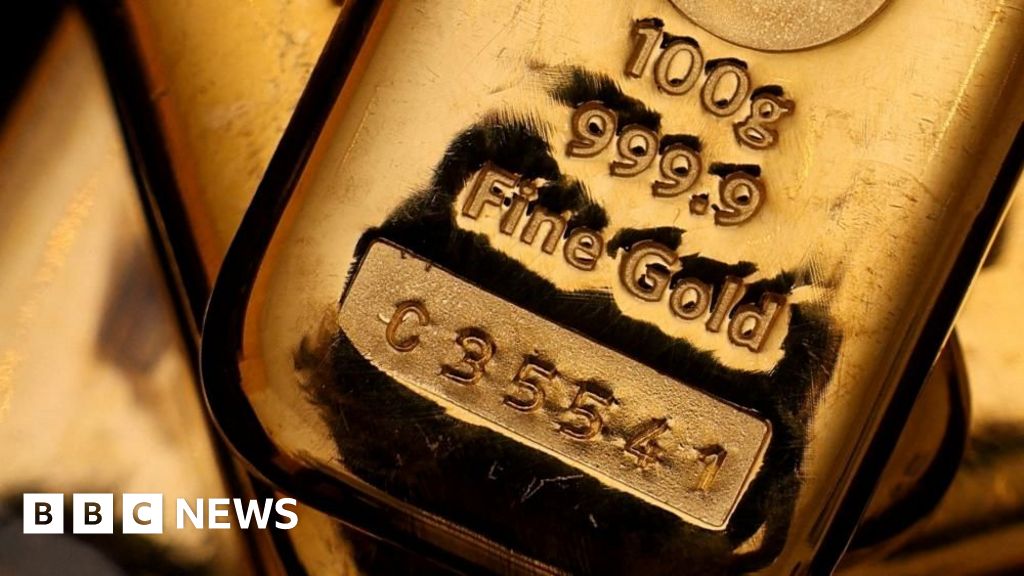
    Hiba Kola/Reuters A shining gold bar with "100g, 999.9 fine gold, C 3 5 5 4 1" stamped into it.Hiba Kola/Reuters

    The price of gold has risen above $5,000 (£3,659) an ounce for the first time ever, extending a historic rally that saw the precious metal jump by more than 60% in 2025.

    It comes as tensions between the US and NATO over Greenland have added to growing concerns about financial and geopolitical uncertainty.

    US President Donald Trump’s trade policies have also worried markets. On Saturday he threatened to impose a 100% tariff on Canada if it strikes a trade deal with China.

    Gold and other precious metals are seen as so-called safe-haven assets that investors buy in times of uncertainty. On Friday, silver topped $100 an ounce for the first time, building on its almost 150% rise last year.

    Demand for precious metals has also been driven by a range of other factors including higher-than-usual inflation, the weak US dollar, buying by central banks around the world and as the US Federal Reserve is expected to cut interest rates again this year.

    Wars in Ukraine and Gaza, as well as Washington seizing Venezuelan President Nicolás Maduro, have also helped push up the price of gold.

    One of the biggest appeals of gold is its relative scarcity. Only around 216,265 tonnes of the metal have ever been mined, according to the World Gold Council trade association.

    That’s enough to fill between three to four Olympic-sized swimming pools. The majority of that was only extracted from the earth since 1950, as mining technology advanced and new deposits were discovered.

    The US Geological Survey estimates that another 64,000 tonnes of gold can still be mined from underground reserves, although the supply of the metal is predicted to plateau in the coming years.

    “When you own gold, it’s not attached to the debt of somebody else like a bond is or an equity where the performance of a company will drive performance,” said Nicholas Frappell, global head of institutional markets at ABC Refinery.

    “It’s a really good diversifier in a very uncertain world,” he added.

    ‘People go to gold’

    Gold saw a blockbuster year in 2025, with its biggest annual gain since 1979 as investors flocked to precious metals.

    With financial markets spooked by concerns including Trump’s tariffs and fears that artificial intelligence-related stocks are overpriced, gold repeatedly hit new record highs.

    Susannah Streeter, chief investment strategist at Wealth Club, an investment platform for the wealthy, said gold “seems to know no bounds” amid ongoing political uncertainty.

    “The pile on into the gilded safe haven is continuing with the precious metal racing up higher,” she said.

    Streeter pointed to trade tension sparked by Trump’s tariff threat against Canada, saying it had “unnerved investors”.

    While economic concerns can help to push up the price of gold, it also tends to rise when investors expect interest rates to be cut.

    Lower rates typically mean smaller returns for investments such as bonds, so investors look to assets like gold and silver.

    The US Federal Reserve is widely expected to cut its main interest rate twice this year.

    “It’s inversely correlated because the opportunity cost of keeping the money in a [government bond] is really not worth it anymore, so people go to gold,” said Ahmad Assiri, Research Strategist at Pepperstone.

    Getty Images Two women looking at gold on display at a gold jewellery storeGetty Images

    In many cultures, gold is purchased during festivals or given as a gift at celebrations

    It’s not just investors who have been buying up gold.

    Last year, central banks added hundreds of tons of bullion to their reserves, according to the World Gold Council.

    “There’s a very clear shift away from the US dollar, which is benefiting gold immensely,” said Kavalis.

    The start of this year has seen gold continue to rally but Frappell warns the “news-driven” market could also result in a fall in its price.

    “There’s got to be scope for unexpected news that actually might be positive for the world and not necessarily positive for gold,” he said.

    But not everybody is buying gold for purely investment reasons.

    In many cultures, the metal is purchased during festivals or given as gifts at celebrations such as weddings.

    In India, the annual Diwali festival is believed to be an auspicious occasion to buy precious metals in order to bring on wealth and luck.

    According to the US investment bank Morgan Stanley, Indian households held $3.8tn of gold, equivalent to 88.8% of the country’s gross domestic product (GDP).

    Neighbouring China is the world’s largest single consumer market for gold, with many believing that buying it brings good fortune.

    “We often see a seasonal uptick in demand around Chinese New Year, which we are seeing at the moment to an extent,” said Kavalis, referencing the upcoming Year of the Horse, which begins in February.

    Source link

  • 18 dead after ferry carrying 300 passengers sinks

    18 dead after ferry carrying 300 passengers sinks


    At least 18 people have died after a ferry carrying more than 350 passengers and crew members onboard sank in the waters off Philippines’ southern coast.

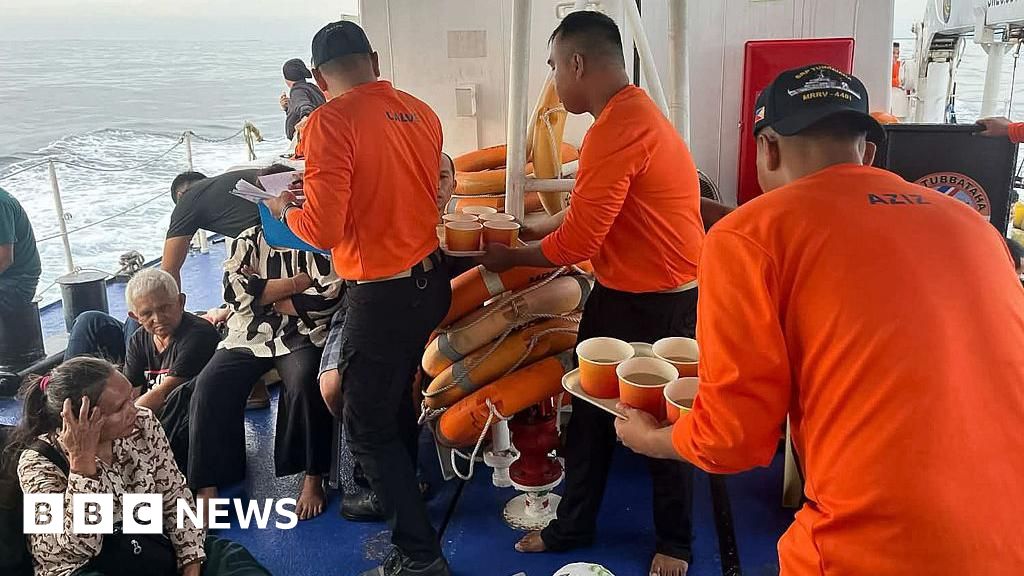
    Search crews have rescued 317 people on board the MV Trisha Kerstin 3, but at least 24 people are still missing, according to the Philippine Coast Guard.

    The ship, both a cargo and passenger ferry, was on its way from the southern island of Mindanao to Jolo island when it issued a distress call at 1:50 local time Monday (17:50 GMT Sunday).

    Authorities say they are investigating the cause of the sinking. The Philippines – an archipelago nation of 7,100 islands – has a long history of maritime disasters involving inter-island ferries.

    “Based on the account of some survivors, the waters in the area were rough at the time,” Philippine Coast Guard spokeswoman Noemie Cayabyab said in a televised interview, according to an AFP report.

    A video shared by the disaster management office in the southwestern Bongao Municipality show people wearing life vests floating in the water as they wait for rescuers.

    Another Facebook video posted by Basilan Governor Mujiv Hataman showed survivors wrapped in blankets as they disembarked from a rescue boat.

    Rescuers have been overwhelmed by the influx of survivors, Basilan emergency responder Ronalyn Perez told AFP.

    “The challenge really is the number of patients that are coming in. We are short-staffed at the moment,” Perez said.

    Another rescuer said their office had received more than 100 calls from family members, AFP reported.

    Poor maintenance and overloading have been blamed for past ferry accidents in the Philippines. Despite this, many Filipinos still travel by ferry due to its low costs.

    In May 2023, 28 people died after a passenger ferry caught fire. The fatalities included three children, among them a six-month-old baby.

    The year before that, at least seven people died after a fire in a high-speed ferry carrying 134 people.


    Source link

  • Heatwave warnings across Australia as millions celebrate national day

    Heatwave warnings across Australia as millions celebrate national day


    Australian authorities have issued heatwave warnings for most of the country as millions celebrate Australia Day.

    Temperatures are expected to peak on Tuesday, reaching the “high forties” Celsius in the southern states of Victoria and South Australia, the Bureau of Meteorology said.

    On Sunday, South Australia recorded temperatures as high as 48.5C, according to the bureau, which is warning of fire danger in parts of the country.

    Some national day celebrations on Monday have been cancelled out of safety concerns.

    In Adelaide, an Australia Day parade and light show have been cancelled due to the extreme heat forecast.

    “While this is deeply disappointing for the community, performers and partners, community safety and wellbeing must come first,” organisers said.

    Australia Day – 26 January – is the anniversary of the 1788 landing of Britain’s First Fleet, which began the era of colonisation.

    But to many Indigenous Australians the occasion is a reminder of their cultural destruction under European settlers – referring to the occasion as “Invasion Day”.

    Across the country on Monday, crowds gathered for rallies in support of Indigenous Australians.

    Aside from Victoria and South Australia, heatwave warnings have also been issued in New South Wales, Queensland, Tasmania, Northern Territory and the Australian Capital Territory.

    Many of these warnings will remain in place until Wednesday.

    “We haven’t seen heatwave conditions like this in Victoria for almost 20 years,” Tim Wiebusch, Victoria’s emergency management commissioner, told ABC.

    “It was 2009 ahead of the bushfires where we saw those prevailing conditions and so we are indicating to all Victorians that this is a very serious set of weather conditions.”

    On Monday, the Bureau of Meteorology warned of “extreme fire dangers” across parts of South Australia and much of south-western Victoria “due to very hot and dry weather combined with moderate to gusty winds”.

    Firefighters in Victoria are working to combat several fires across the state, which have prompted evacuations and threatened properties.

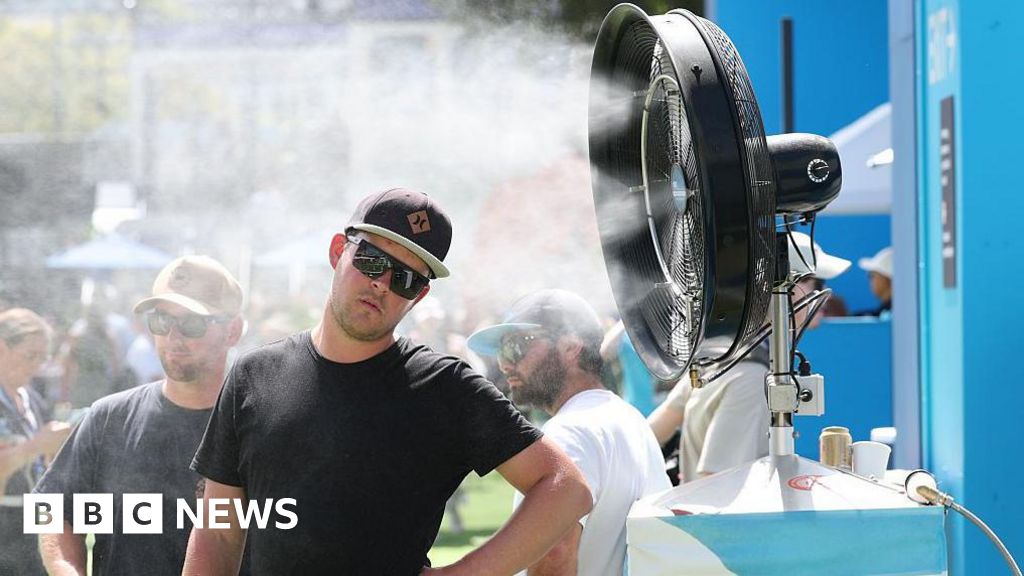
    The heat has also affected the Australian Open at Melbourne Park. Tennis player Jannik Sinner was seen suffering from cramps on the court on Saturday, before play was temporarily suspended in the rising heat. Nearly 80,000 fans were warned to take care under the scorching sun.

    Meanwhile, parts of Western Australia were pummelled by Tropical Cyclone Luana over the weekend. The storm damaged homes and a popular beach resort before weakening as it moved inland.

    The meteorological bureau has advised people to find places to keep cool, like their homes, libraries, community centres or shopping centres. It also told people to close their windows and draw the curtains to keep heat out of their homes.


    Source link