Category: Uncategorized

  • Final round of voting closes in ‘sham’ Myanmar election

    Final round of voting closes in ‘sham’ Myanmar election


    Polls in Myanmar have closed after a third and final stage of voting in what are widely viewed as sham elections.

    Many popular parties are banned from standing and voting has not been possible in large areas of the country because of a five-year-long civil war.

    The dominant party backed by the ruling military junta is expected to win a landslide victory.

    The current regime has rejected international criticism of the election, maintaining that it is free and fair.

    Around one-fifth of the country’s 330 townships, including the cities of Yangon and Mandalay, voted in the last stage.

    Six parties, including the military-backed Union Solidarity and Development Party (USDP), fielded candidates nationwide, while another 51 parties and independent candidates decided to contest state and regional levels.

    Two previous rounds were held on 28 December and 11 January – giving overwhelming victories to the USDP.

    The party won only 6% of parliamentary seats in the last free election in 2020.

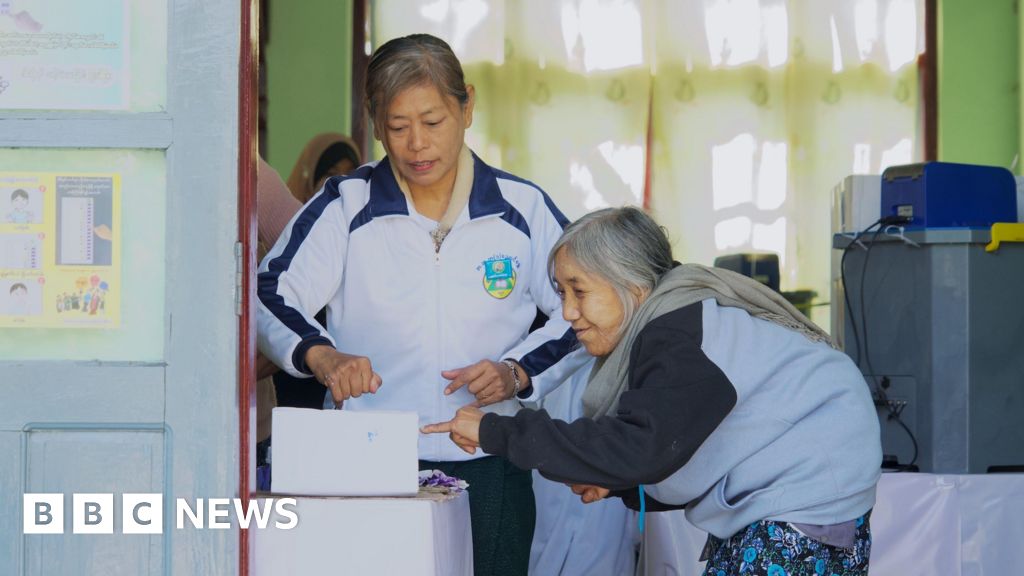
    As in previous rounds of this strange, month-long election, voting was orderly and peaceful at the polling station in Nyaungshwe, Shan State, which a BBC team observed.

    Set in a large school, shaded by huge rain trees, there were ample volunteers an officials to guide voters where to go, and how to make their choice using the new, locally-made electronic voting machines.

    You could be forgiven for believing this was a normal democratic exercise, not the sham its critics say it is.

    However polling day was preceded by a campaigning period marked by fear, intimidation and a pervasive sense that little will change after the inevitable victory by the USDP.

    Everywhere the BBC team travelled in southern Shan State, we were followed and closely monitored by dozens of police and military officials, always polite but very persistent.

    It proved nearly impossible to get people to say anything about the vote, so nervous were they of possible repercussions.

    The next steps after final results are announced are laid down in the military-drafted constitution.

    Parliament will meet within the next two months to choose a new president, and everyone expects that to be the coup leader Gen Min Aung Hlaing.

    It will be the same regime with civilian clothes.

    But he will then have to relinquish his command of the armed forces.

    His replacement is certain to be a loyalist, but his hold over the ranks of the military will inevitably be less secure, and it is no secret that many other senior officers do not believe he has made a good job of leading the country.

    With many more voices in politics, there is the possibility of wider debate inside government over which direction Myanmar should now take, and the possibility – distant for now – of the first steps towards ending the civil war.

    The military junta took control of Myanmar in a 2021 coup, ousting an elected civilian government led by Nobel Peace Prize Winner Aung San Suu Kyi.

    She remains in detention and, like many other opposition groups, her National League for Democracy has been formally dissolved.

    The military has been fighting against both armed resistance groups which oppose the coup and ethnic armies that have their own militias.

    It lost control of large parts of the country in a series of major setbacks, but clawed back territory this year enabled by support from China and Russia.

    The civil war has killed thousands of people, displaced millions more, destroyed the economy and left a humanitarian vacuum.

    A devastating earthquake in March and international funding cuts have made the situation far worse.

    Source link

  • Baghdad says it will prosecute Islamic State militants being moved from Syria to Iraq

    Baghdad says it will prosecute Islamic State militants being moved from Syria to Iraq


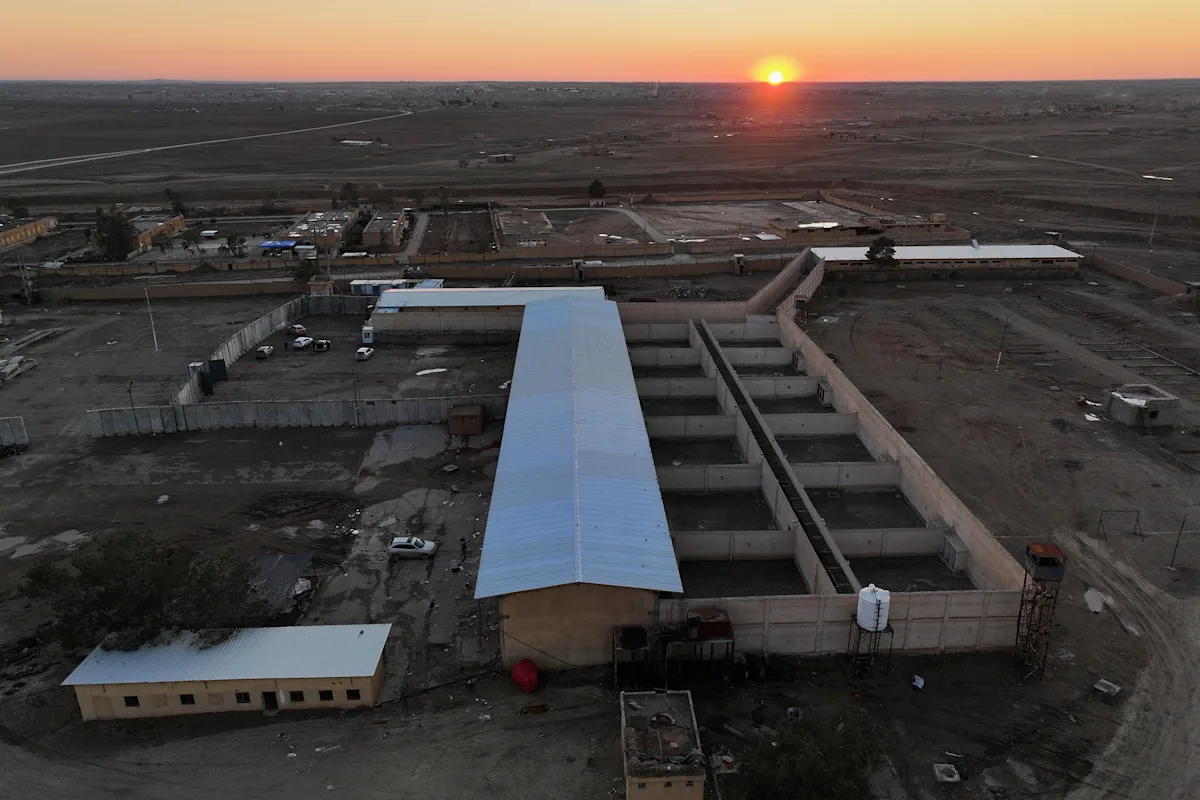
    BAGHDAD (AP) — Baghdad will prosecute and try militants from the Islamic State group who are being transferred from prisons and detention camps in neighboring Syria to Iraq under a U.S.-brokered deal, Iraq said Sunday.

    The announcement from Iraq’s highest judicial body came after a meeting of top security and political officials who discussed the ongoing transfer of some 9,000 IS detainees who have been held in Syria since the militant group’s collapse there in 2019.

    The need to move them came after Syria’s nascent government forces last month routed Syrian Kurdish-led fighters — once top U.S. allies in the fight against IS — from areas of northeastern Syria they had controlled for years and where they had been guarding camps holding IS prisoners.

    Syrian troops seized the sprawling al-Hol camp — housing thousands, mostly families of IS militants — from the Kurdish-led force, which withdrew as part of a ceasefire. Troops last Monday also took control of a prison in the northeastern town of Shaddadeh, from where some IS detainees had escaped during the fighting. Syrian state media later reported that many were recaptured.

    Now, the clashes between the Syrian military and the Kurdish-led Syrian Democratic Forces, or SDF, sparked fears of IS activating its sleeper cells in those areas and of IS detainees escaping. The Syrian government under its initial agreement with the Kurds said it would take responsibility of the IS prisoners.

    Baghdad has been particularly worried that escaped IS detainees would regroup and threaten Iraq’s security and its side of the vast Syria-Iraq border.

    Once in Iraq, IS prisoners accused of terrorism will be investigated by security forces and tried in domestic courts, Iraq’s Supreme Judicial Council said.

    The U.S. military started the transfer process on Friday with the first IS prisoners moved from Syria to Iraq. On Sunday, another 125 IS prisoners were transferred, according to two Iraqi security officials who spoke to The Associated Press on condition of anonymity in line with regulations.

    So far, 275 prisoners have made it to Iraq, a process that officials say has been slow as the U.S. military has been transporting them by air.

    Both Damascus and Washington have welcomed Baghdad’s offer to have the prisoners transferred to Iraq.

    Iraq’s parliament will meet later on Sunday to discuss the ongoing developments in Syria, where its government forces are pushing to boost their presence along the border.

    The fighting between the Syrian government and the SDF has mostly halted with a ceasefire that was recently extended. According to Syria’s Defense Ministry, the truce was extended to support the ongoing transfer operation by U.S. forces.

    The Islamic State group was defeated in Iraq in 2017, and in Syria two years later, but IS sleeper cells still carry out deadly attacks in both countries. As a key U.S. ally in the region, the SDF played a major role in defeating IS.

    During the battles against IS, thousands of extremists and tens of thousands of women and children linked to them were taken and held in prisons and at the al-Hol camp. The sprawling al-Hol camp hosts thousands of women and children.

    Last year, U.S. troops and their partner SDF fighters detained more than 300 IS militants in Syria and killed over 20. An ambush in December by IS militants killed two U.S. soldiers and one American civilian interpreter in Syria.

    ___

    Chehayeb reported from Beirut.


    Source link

  • Mark Tully, the BBC’s ‘voice of India’, dies aged 90

    Mark Tully, the BBC’s ‘voice of India’, dies aged 90


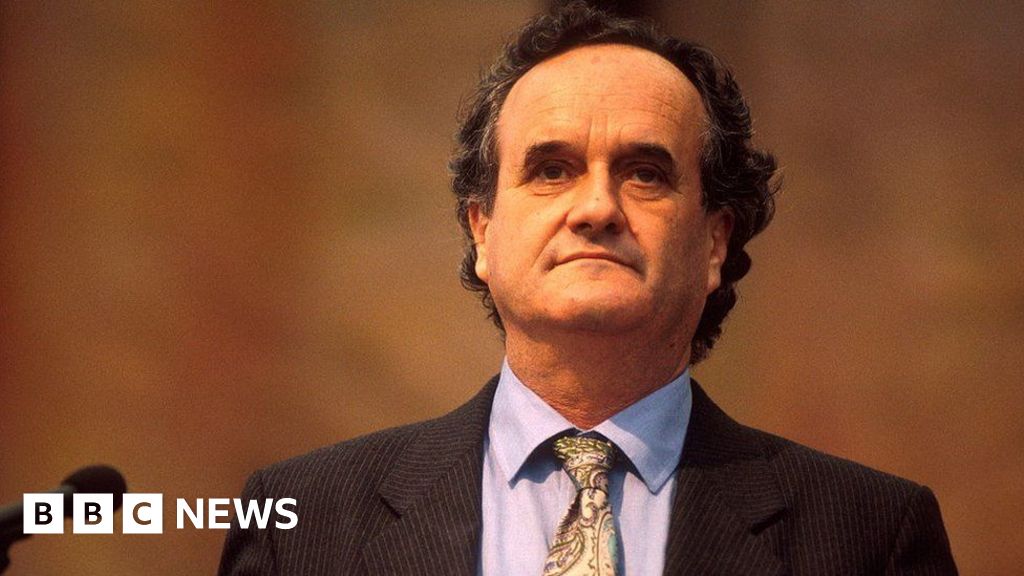
    Getty Images Sir Mark Tully in 1996Getty Images

    Tully spent much of his journalist career covering India

    The broadcaster and journalist Sir Mark Tully – for many years known as the BBC’s “voice of India” – has died at the age of 90.

    For decades, the rich, warm tones of Mark Tully were familiar to BBC audiences in Britain and around the world – a much-admired foreign correspondent and respected reporter and commentator on India. He covered war, famine, riots and assassinations, the Bhopal gas tragedy and the Indian army’s storming of the Sikh Golden Temple.

    In the small north Indian city of Ayodhya in 1992, he faced a moment of real peril. He witnessed a huge crowd of Hindu hardliners tear down an ancient mosque. Some of the mob – suspicious of the BBC – threatened him, chanting “Death to Mark Tully”. He was locked in a room for several hours before a local official and a Hindu priest came to his aid.

    How the Babri mosque destruction shaped India

    Will English kill off India’s languages?

    The demolition provoked the worst communal violence in India for many decades – it was, he said years later, the “gravest setback” to secularism since the country’s independence from Britain in 1947.

    India was where Tully was born – in what was then Calcutta in 1935. He was a child of the British Raj. His father was a businessman. His mother had been born in Bengal – her family had worked in India as traders and administrators for generations.

    He was brought up with an English nanny who once chided him for learning to count by copying the family’s driver: “that’s the servants’ language, not yours,” he was told. He eventually became fluent in Hindi, a rare achievement in Delhi’s foreign press corps and one which endeared him to many Indians for whom he was always “Tully sahib”. His good cheer and evident affection for India won him the friendship and trust of many of the top rank of the country’s politicians, editors and social activists.

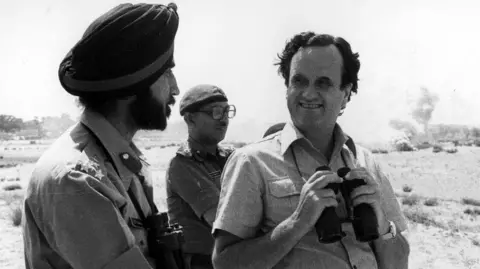
    Mark Tully with members of the Indian armed forces.

    Tully, seen here with members of India’s armed forces, arrived in India as an administrative assistant at the BBC in 1965

    Throughout his life, he performed a balancing act: English, without doubt; but not – he insisted – an expat who was passing through India. He had roots there; it was his home. It’s where he lived for three-quarters of his life.

    Immediately after World War Two, at the age of nine, Tully came to Britain for his education. He studied history and theology at Cambridge and then headed to theological college with the aim of being ordained as a clergyman before he – and the church – had second thoughts.

    He was sent to India for the BBC in 1965 – at first as an administrative assistant but in time he began to take on a reporting role. His broadcasting style was idiosyncratic, but his strength of character and his insight into India shone through.

    Some critics said he was too indulgent of India’s poverty and caste-based inequality; others admired his clearly expressed commitment to the religious tolerance upon which independent India was anchored. It’s “really important to treasure the secular culture of this country, allowing every religion to flourish,” he told an Indian newspaper in 2016. “… we must not endanger this by insisting on Hindu majoritarianism.”

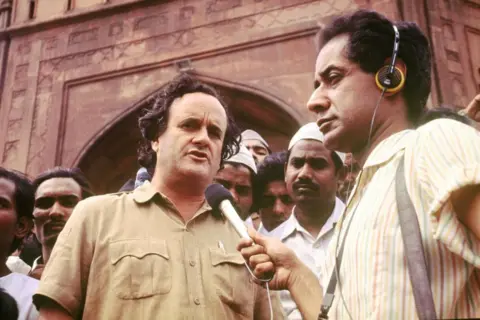
    Getty Images Bureau Chief of BBC in India Mark Tully recording a despatch from the historic Jama Masjid in Delhi, May 10, 1994.Getty Images

    Tully’s was a familiar voice for BBC listeners in the UK and around the world

    Tully was never an armchair correspondent. He travelled relentlessly across India and neighbouring countries, by train when he could. He gave voice to the hopes and fears, trials and tribulations, of ordinary Indians as well as the country’s elite. He was as comfortable wearing an Indian kurta as in a shirt and tie.

    He was expelled from India at 24 hours’ notice in 1975 after the then prime minister, Indira Gandhi, ordered a state of emergency. But he headed back 18 months later and had been based in Delhi ever since. He spent more than 20 years as the BBC’s head of bureau in Delhi, leading the reporting not simply of India but of South Asia, including the birth of Bangladesh, periods of military rule in Pakistan, the Tamil Tigers’ rebellion in Sri Lanka and the Soviet invasion of Afghanistan.

    Over time, he became increasingly out of step with the BBC’s corporate priorities, and in 1993 he made a much-publicised speech accusing the then director general, John Birt, of running the corporation by “fear”. It marked a parting of the ways. Tully resigned from the BBC the following year. But he continued to broadcast on BBC airwaves notably as presenter of Radio 4’s Something Understood, turning back to issues of faith and spirituality which had engaged him as a student.

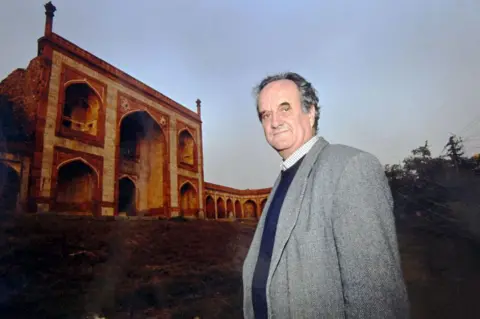
    Getty Images Sir William Mark Tully in DelhiGetty Images

    Tully stayed on in Delhi after he left the BBC

    Unusually for a foreign national, Tully was accorded two of India’s top civilian honours: the Padma Shri and the Padma Bhushan. Britain too gave him recognition. He was knighted for services to broadcasting and journalism in the 2002 New Year’s honours list. He described the award as “an honour to India”.

    He continued to write books about India – essays, analyses, short stories too, sometimes in collaboration with his partner, Gillian Wright. He lived unostentatiously in south Delhi.

    Tully never gave up his British nationality but was proud also to become late in life an Overseas Citizen of India. That made him, he said, “a citizen of the two countries I feel I belong to, India and Britain”.


    Source link