Category: Uncategorized

  • Hundreds of Minnesota businesses close to protest ICE presence

    Hundreds of Minnesota businesses close to protest ICE presence


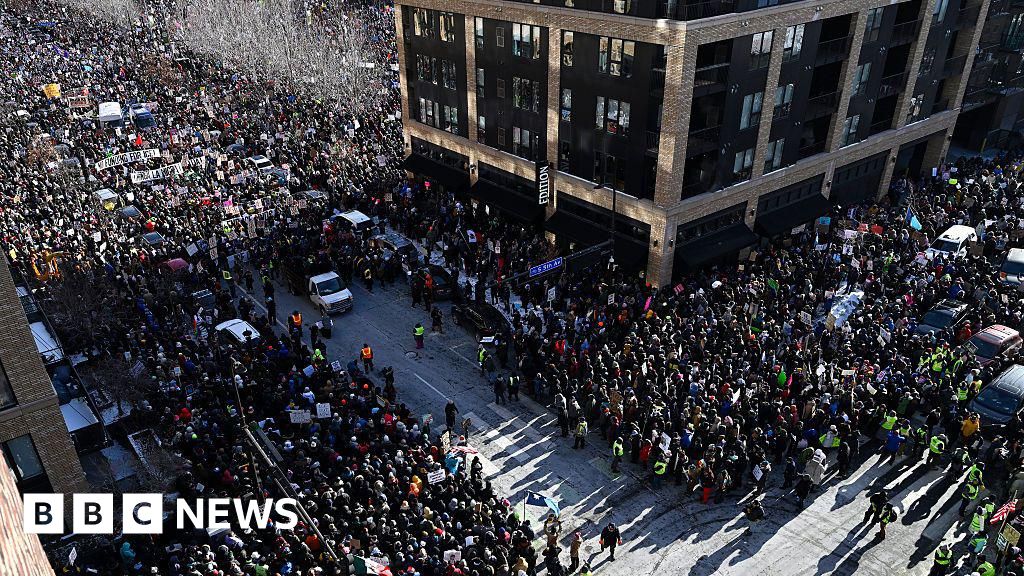
    Hundreds of businesses in Minnesota closed on Friday and thousands of protesters turned out in severely cold weather to demonstrate against the ongoing immigration crackdown in the state.

    The widespread rallies come after organisers encouraged residents to skip work or school and refrain from shopping in a show of opposition to US Immigration and Customs Enforcement (ICE).

    The ICE operation ordered by the Trump administration in Minnesota has been going on for more than six weeks.

    The administration has characterised it as a public safety operation aimed at deporting criminals illegally in the country. Critics warn migrants with no criminal record and US citizens are being detained too.

    On Friday, about 100 clergy members were arrested at the Minneapolis airport while holding a protest calling on US airlines to refuse to transport detainees arrested by ICE.

    A spokesman for the airports commission told the Minnesota Reformer that the arrests took place after the “permitted activity went beyond agreed upon terms” and was to done to protect the public safety and airport access.

    Thousands of federal officers have been deployed to Minnesota as part of “Operation Metro Surge”.

    The killing of 37-year-old Minneapolis woman Renee Good earlier this month flared tensions across the state and brought condemnation from local officials.

    “We want ICE out of Minnesota, and we want ICE out of every state, with their extreme overreach,” said Bishop Dwayne Royster, whose organisation Faith in Action is supporting local partners in Minneapolis during the strike. “We want Congress to stand up and provide oversight to ICE.”

    Friday’s marches are thought to be the largest display of opposition to date to the current immigration policy in the state, as thousands of people walked downtown through temperatures of -23C (-10F).

    As they made their way to the city’s NBA arena to hold an anti-ICE rally, taking place on the home court of the Minnesota Timberwolves, protesters chanted and played music.

    On Friday morning, Minneapolis resident Corey Lamb closed his business, Harriet Grove Botanicals, in solidarity and headed to a protest. He objected to the presence of ICE agents in his city, and was outraged by Good’s death in early January.

    He also saw the immigration raids as an economic threat to his business, and others in his community.

    “We have a lot of friends that we rely on, we have a lot of businesses that we rely on, in order to make our business work,” Lamb told the BBC.

    “When those individuals are struggling because they’re afraid of being detained or disappeared, it has an effect not only morally but economically on what’s going on here, and also in the greater Midwest.”

    Lamb’s business was joined by hundreds of others, from restaurants and tattoo parlours to toy stores.

    Kim Bartmann is the owner of six restaurants in Minneapolis, including four that remain open in the winter but that she shut on Friday.

    While she supports the cause, she said the decision to participate had been a tricky one, given the costs.

    “Everyone is in solidarity, but everyone needs to buy groceries and pay their rents,” she said, noting that staff at one of her locations had initially asked to stay open, before deciding the risk of backlash over not participating would be too great.

    “Economically, it is a severe blow to my business,” she said.

    She said sales at her restaurants, which include Barbette and Gigi’s Café, have already dropped more than 30% over the past three weeks as a result of the ICE operation, which has prompted her to limit her opening hours as customers and staff stay home.

    “We have a lot of employees who are US citizens or have paperwork to work in the US who are still terrified to leave their homes,” she said.

    ICE’s presence has outraged many of Minnesota’s residents, who have protested against their operations and other federal officers operating in their city.

    This week, school officials in the suburb of Columbia Heights announced that four of their students had been detained by ICE, ranging from ages five to 17.

    A two-year-old child was also detained on Thursday alongside her undocumented father while returning home from a grocery store in south Minneapolis, according to CBS News, the BBC’s US partner.

    In a speech on Thursday, Vice-President JD Vance called for local Minnesota law enforcement to coordinate with federal officers to carry out immigration enforcement.

    Minnesota, and some of its cities, have so-called “sanctuary” policies, which limit the ways that local government and law enforcement cooperates with ICE. The Trump administration has criticised these policies as a threat to public safety.

    Meanwhile, a Minneapolis FBI agent resigned this week over concerns about the bureau’s handling of the investigation into Good’s shooting, CBS News, the BBC’s US partner, reported. The New York Times was first to report the resignation.

    Tracee Mergen left “in part due to the pressure on her to reclassify/discontinue the investigation” over Good’s death, CBS News reported, citing sources.

    The BBC has contacted the FBI for comment.

    Earlier this month, US media reported that at least six prosecutors in the Minneapolis US Attorney’s office resigned over the administration’s handling of the federal investigation.

    Source link

  • Boy, 12, dies from injuries after Sydney shark attack

    Boy, 12, dies from injuries after Sydney shark attack


    A young boy who was bitten by a shark in Sydney Harbour last week has died in hospital.

    Twelve-year-old Nico Antic had been jumping off a rock ledge with friends on 18 January when he was attacked by what authorities suspected was a bull shark.

    “We are heartbroken to share that our son, Nico has passed away,” his parents Lorena and Juan said in a statement.

    The incident was one of four reported shark attacks along the New South Wales coast over two days.

    “Nico was a happy, friendly, and sporty young boy with the most kind and generous spirit. He was always full of life and that’s how we’ll remember him,” his family, who were originally from Argentina, added.

    Nico’s friends were praised for their bravery after jumping into the water to help him after he was attacked last Sunday afternoon.

    However he suffered serious leg injuries and was taken to Sydney Children’s Hospital in a critical condition. He was placed in an induced coma after undergoing surgery.

    An online fundraiser set up for Nico’s family has raised $240,000 (£121,308).

    There has been a spate of reported shark attacks along Australia’s east coast in the past week, three of them in Sydney.

    On Monday, a surfer on Sydney’s northern beaches escaped a lurking shark without physical injury, while hours later a 27-year-old man suffered “life-changing” injuries in a shark attack at a nearby beach.

    One day later, a man on the Mid North Coast of New South Wales was pulled from the water after surviving a shark bite.

    The man, 39, sustained a chest wound and was taken to hospital.

    The attacks followed several days of heavy rain, which experts say created a “perfect storm” of conditions for bull sharks who prefer murky water.

    They also say rain flushes nutrients into the water, which can draw sharks closer to shore.

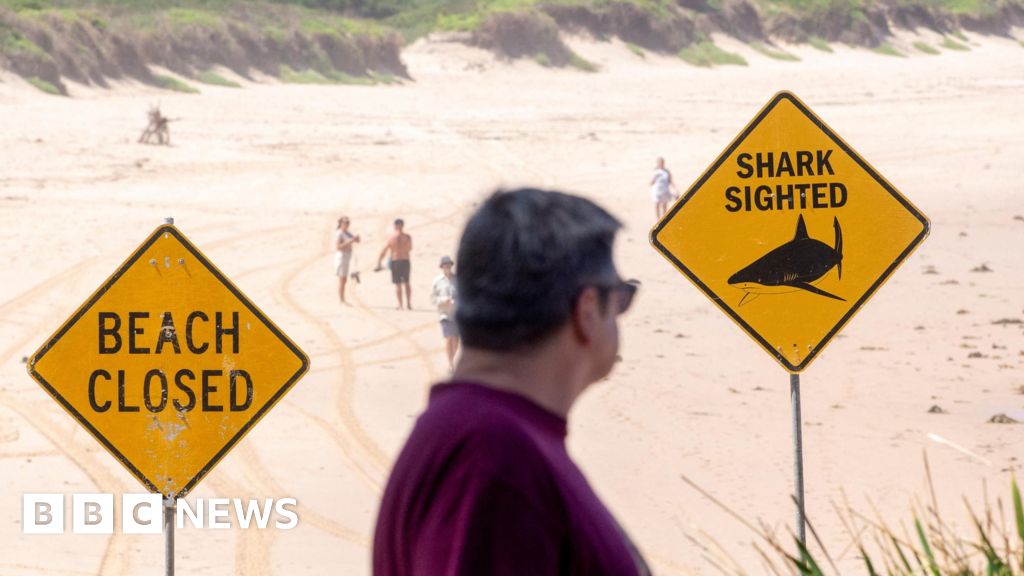
    Beaches across Sydney were closed to protect the public until weather improved, many of which have reopened for the Australia Day public holiday long weekend.


    Source link

  • China no longer Pentagon’s top security priority

    China no longer Pentagon’s top security priority


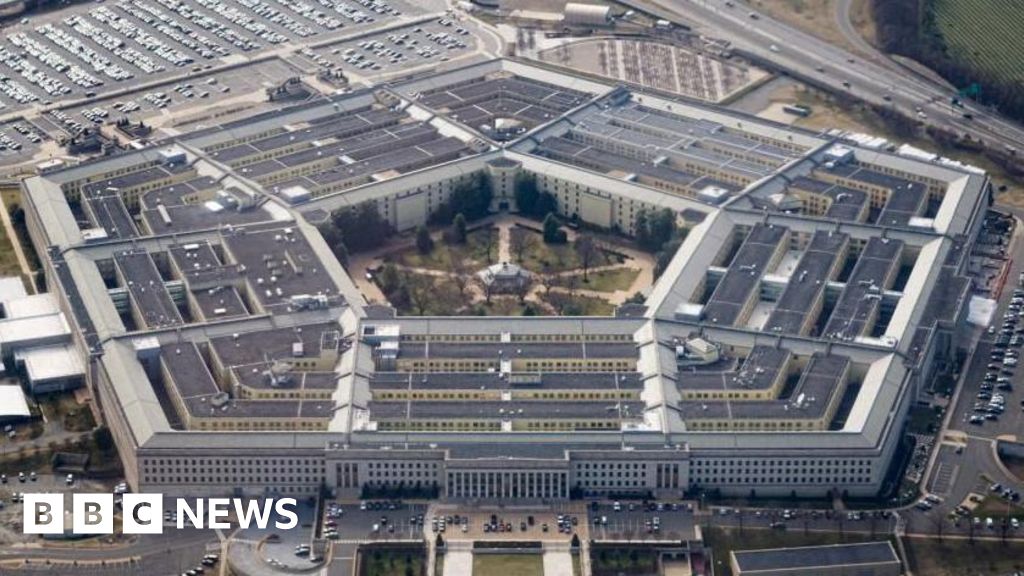
    China is no longer the top security priority for the US, according to the Pentagon’s new National Defense Strategy.

    The document, published once every four years, instead says that the security of the US homeland and Western Hemisphere is the department’s chief concern, adding that Washington has long neglected the “concrete interests” of Americans.

    The Pentagon also says it will offer “more limited” support to US allies.

    It follows the publication last year of the US National Security Strategy, which said that Europe faced “civilizational collapse” and did not cast Russia as a threat to the US. At the time, Moscow said the document was “largely consistent” with its vision.

    By comparison, the 2022 National Defense Strategy named the “multi-domain threat” posed by China as its top defence priority. In 2018, the document described “revisionist powers”, such as China and Russia, as the “central challenge” to US security.

    The 34-page document, released on Friday, largely reinforces policy positions staked out by the Trump administration over its first year back in office.

    In that time, US President Donald Trump has seized Venezuelan President Nicolás Maduro, carried out strikes against alleged drug boats in the eastern Pacific and Caribbean, and more recently, applied pressure on US allies to acquire Greenland.

    The strategy reiterated that the Pentagon “will guarantee US military and commercial access to key terrain, especially the Panama Canal, Gulf of America, and Greenland”.

    The document also says the Trump administration’s approach will be “fundamentally different from the grandiose strategies of the past post–Cold War administrations”.

    It adds: “Out with utopian idealism; in with hardnosed realism.”

    Relations with China are to be approached through “strength, not confrontation”. The goal “is not to dominate China; nor is it to strangle or humiliate them”, the document says.

    Unlike in previous versions of the strategy, Taiwan, the self-governing island claimed by China, is not mentioned. However, the document does write that the US aims to “prevent anyone, including China, from being able to dominate us or our allies”.

    Late last year, the US announced a vast arms sale to Taiwan worth $11bn (£8.2bn), leading China to hold military drills around the island in response.

    The strategy also calls for greater “burden-sharing” from US allies, saying that partners have been “content” to let Washington “subsidize their defense”.

    Though, it denies this demonstrates a move towards “isolationism”.

    “To the contrary, it means a focused and genuinely strategic approach to the threats our nation faces,” it says, adding that it does not want to conflate American interests “with those of the rest of the world – that a threat to a person halfway around the world is the same as to an American.”

    Instead, it says allies, especially Europe, “will take the lead against threats that are less severe for us but more so for them”.

    Russia, which launched a full-scale invasion of Ukraine nearly four years ago, is described as a “persistent but manageable threat to NATO’s eastern members”.

    The strategy also outlines a “more limited” role for US deterrence of North Korea. South Korea is “capable of taking primary responsibility” for the task, it adds.

    In a speech made at the World Economic Forum earlier this week, Canadian Prime Minister Mark Carney said the old world order is “not coming back” and urged fellow middle powers – like South Korea, Canada and Australia – to come together.

    “Middle powers must act together because if we’re not at the table, we’re on the menu,” Carney said at the Davos meeting.

    That came as French President Emmanuel Macron also warned of a “shift towards a world without rules”.


    Source link