

Category: Uncategorized

  • how Australian politics descended into ugliness in attack’s aftermath

    how Australian politics descended into ugliness in attack’s aftermath


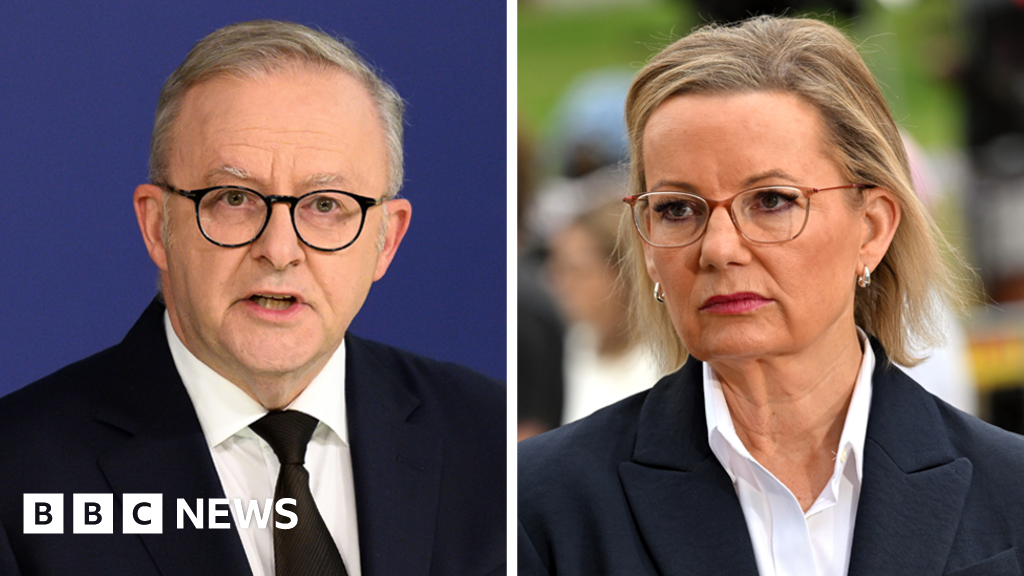
    Steven Markham/ Mick Tsikas/ EPA Anthony Albanese and Sussan LeySteven Markham/ Mick Tsikas/ EPA

    Australians have been disappointed by the politicisation of the Bondi tragedy

    Thursday had been earmarked for Australians to mourn the victims of last month’s Bondi shootings.

    Those who had lost loved ones in the antisemitic attacks wanted it to be a chance to remember the dead, and spread light and kindness in their honour.

    Instead, it was a day dominated by a political row resulting in the collapse of the opposition coalition.

    “I mean, you would have thought they could have put this off for 24 hours,” veteran political commentator Malcolm Farr told the BBC.

    “It’s at the very least unfortunate timing and shows a certain amount of self-indulgence.”

    The fight – which centred around reforms sparked by the tragedy – looks set to sink two leaders and trash their parties’ electoral chances, and caps off what many Australians say has been a disappointing month of politics.

    When two gunmen opened fire on an event marking the Jewish festival of Hanukkah at Bondi Beach, killing 15 people – including a 10-year-old child – the recriminations began almost immediately.

    “The turnaround was amazing in the way they [politicians] politicised it,” says Bondi local Kass Hill, 52. “The fingerpointing isn’t solving anything.”

    Heckles and blame
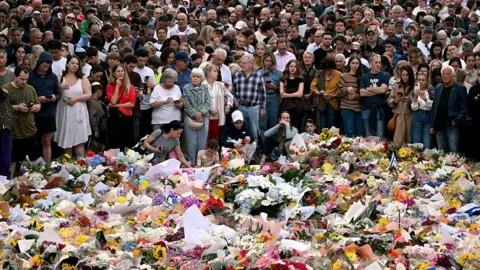
    Getty Images Mourners gather in front of a sea of floral tributes at a makeshift memorial at the Bondi Pavilion in memory of the victims of a shooting at Bondi BeachGetty Images

    Bondi was covered with a sea of floral tributes in the days after the attack

    While families were waiting to bury their loved ones, a conveyer belt of politicians – including the opposition leader – visited the scene to apportion blame. Populist leaders came to rail against immigration. Prominent businesspeople popped by to pose with flowers.

    Prime Minister Anthony Albanese, accused by many Jewish Australians of ignoring their concerns ahead of the attack, spent the weeks after it dismissing calls from many in the community for a national inquiry into antisemitism.

    He was repeatedly heckled in public, arriving at a memorial to a tidal wave of boos and cries of “You’re not welcome”. “You might as well go to a jihadist nation where you can fit in,” one person shouted. Looming over the crowd, a large screen read “a night of unity”.

    Criticised as being overly defensive and slow to listen, Albanese has in turn rebuked his parliamentary rivals for “playing politics” with tragedy.

    The 14 December Bondi attack was Australia’s worst mass shooting since the Port Arthur massacre in 1996, when 35 people were killed, but the responses to the tragedies couldn’t be more different.

    Then Prime Minister John Howard visited the scene of the shooting in Tasmania to lay wreaths together with opposition leaders, who shortly afterwards united to help him pass firearms laws that made Australia a world leader on gun control.

    “Australian society and politics is very different than it was 30 years ago and we’re just a far more divided society,” says John Warhurst, an emeritus professor of political science at the Australian National University.
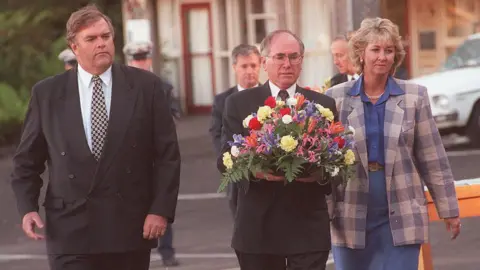
    Getty Images Federal Labor Opposition leader Kim Beazley, Prime Minister John Howard, and Democrats leader Cheryl Kernot at Port Arthur. John Howard is holding a wreathGetty Images

    Political leaders presented a united front in the wake of the Port Arthur massacre in 1996

    A society already fractured over Israel-Gaza war

    There are a number of reasons why this attack has divided people in ways Port Arthur didn’t – including the already fraught debate raging in Australia over Israel, Gaza and antisemitism, according to Mark Kenny, a political columnist and host of the Democracy Sausage podcast.

    “Then this event lobs into that, [and] I think it led to it being immediately politicised,” he told the BBC.

    Since the 7 October 2023 attack on Israel by Hamas and protests in Australia against Israel’s war on Gaza which followed, Albanese has consistently been accused of failing to do enough to stamp out antisemitism. The Executive Council of Australian Jewry says antisemitic incidents have increased from an average of 342 before the 7 October attacks in 2023 to 1,654 last year.

    Likewise, he’s been accused of not doing enough to call out Israel’s actions in Gaza, which UN experts have called genocide and Israel denies.

    Hours after the Bondi shooting, the antisemitism commissioner appointed by Albanese linked it to the pro-Palestinian protests that have regularly taken place in Sydney and which Jewish leaders have lobbied against.

    “It began on 9 October 2023 at the Sydney Opera House,” Jillian Segal said in a statement. “Now death has reached Bondi Beach.”

    Investigators have not said there is any link between the alleged gunmen and the pro-Palestinian movement, instead alleging the pair were inspired by the jihadist group Islamic State, with the younger of the father-son duo on intelligence agencies’ radars for a period in 2019.
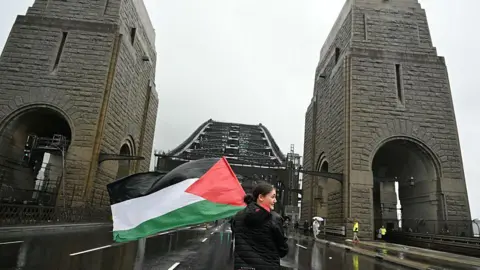
    Getty Images A protester with the Palestinian flag marches on the Sydney Harbour BridgeGetty Images

    Tens of thousands of Pro-Palestinian demonstrators marched across the Sydney Harbour Bridge in August

    No simple solutions and ‘either-or-ism’

    As it was after Port Arthur, gun reform was the first thing on the legislative agenda after the Bondi attack.

    “We know that one of these terrorists held a firearm licence and had six guns, in spite of living in the middle of Sydney’s suburbs… There’s no reason why someone in that situation needed that many guns,” Albanese said as he announced a suite of changes in the following days.

    Unlike Port Arthur, when the measures were broadly popular, Albanese’s focus on gun laws was immediately attacked by the Liberal opposition and parts of the Jewish community as a distraction from what they view as the real cause of the attack – antisemitism. Even Howard, the architect of the 1996 reforms, came out to suggest they were an “attempted diversion”.
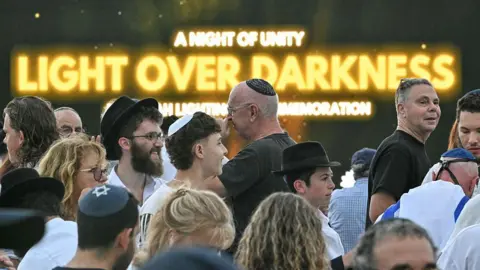
    Getty Images Mourners arrive to attend the memorial held for the victims of a shooting at Bondi Beach. A screen reading, "a night of unity", "light over darkness" can be seen in the background.Getty Images

    Tensions were on display at a memorial services a week after the attacks

    “That kind of ‘either or ism’ is a feature about politics these days probably everywhere in the West. Everything becomes supercharged and divisive,” says Kenny.

    “There’s just this fundamental lack of trust that’s almost like we’re in the grip of a toxic cynicism that means that motives of political leaders… the first instinct is to question them, to regard them as disingenuous.”

    The recent decision by a festival in Adelaide to disinvite a Palestinian-Australian author – leading ultimately to the collapse of the entire writers’ week portion of the event – due to “sensitivities” after Bondi and her “past statements” is also a sign of how tense the current circumstances are, adds Kenny.

    Demands for immediate action on antisemitism were loud in the days after the attack, and Albanese did soon announce a crackdown on hate speech, backed by the antisemitism commissioner.

    But some critics said the measures would impinge on free speech, including the right to criticise Israel, and on protest, while others argued they did not go far enough in protecting other minorities.

    “[It’s] a can of worms,” says Warhurst, noting that there has never been “an easy agreement on finding where that balance lies” between free speech and hate speech.

    “Now is the worst time, I think, to be trying to resolve those sorts of issues because you are doing it fairly quickly and you’re doing it in a heated environment.”

    The hate speech laws had the backing of the Jewish community, but many felt it was not enough – with several of the victims’ families pushing Albanese to call a royal commission, Australia’s most powerful form of independent inquiry.
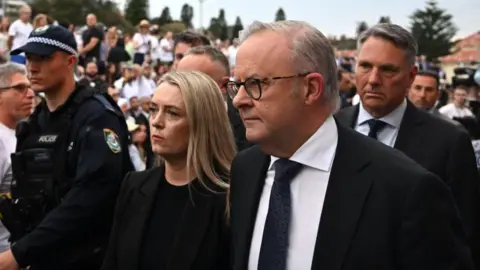
    EPA A grey-haired man in a dark suit and tie and a blond haired woman in dark clothing in a crowd of people.EPA

    Prime Minister Anthony Albanese was booed when he arrived at a memorial for the victims of the Bondi shooting

    For weeks, Albanese argued the measures already announced were enough and that a royal commission would be the wrong tool to unpick what had happened. It could give a platform to antisemites, he said.

    Royal commissions had not been launched into previous tragedies like Port Arthur, Albanese pointed out, comments which were widely dismissed. Promised reviews of intelligence agencies and law enforcement similarly did nothing to dissuade those calling for the inquiry.

    Their pleas were mirrored by a coordinated campaign of letter writing that featured on the front pages of right-wing newspapers. ”I don’t think it’s controversial to say that the News Limited and other parts of the media were certainly stirring the pot,” says Warhurst.

    Albanese’s arguments against a royal commission were “really hard to make in these circumstances”, says Kenny, and it backfired on him when he was ultimately forced to reverse course on the issue.

    Analysts have also suggested his reluctance may have been down to fears it could become complex, controversial and divisive. It could invite discussion of the war in Gaza, while potentially excluding examination of Islamophobia – which exploded after Bondi, with The Islamophobia Register Australia recording a 740% rise in incidents by early January – when many Labor MPs have large Muslim electorates.

    There was likely also a “reluctance to cave to the opposition”, Farr believes: opposition leader Sussan Ley had vociferously demanded the royal commission, asking what Albanese was “hiding”, and revelled in his backflip.

    A political opportunity

    It is fair to say that, before December’s attack, Ley had been struggling to land a punch on the government and assert authority over her own party. In the weeks before the shooting, some pundits were even predicting her imminent ousting.

    “The Bondi attacks offered her an opportunity to prosecute a very strong case against the government,” says Kenny.

    But any momentum she gained over the royal commission collapsed this week when she failed to rally her Coalition behind the very hate speech laws she had so loudly demanded Albanese quickly implement.

    By Thursday – the national day of mourning for the Bondi attacks – things had fallen apart.

    The National Party announced they were leaving the coalition, having refused to vote for the legislation despite a shadow cabinet agreement. They, despite earlier calls for haste, said they had not been given enough time to examine the proposals which they said could threaten free speech.
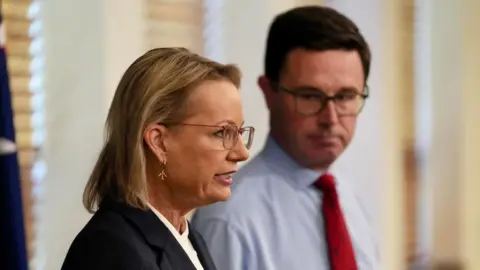
    Australian Broadcasting Corporation Sussan Ley and David LittleproudAustralian Broadcasting Corporation

    David Littleproud on Thursday said his National Party would not work with Sussan Ley

    On his way out the door, Nationals leader David Littleproud suggested the only way his party would consider returning to the fold was if Ley was dumped, leaving her already shaky leadership hanging by a thread.

    “I’m quite sure there are people… who are polishing their shoes and tightening the knot on their ties to step forward should that vacancy occur or be forced,” says Farr.

    However, Littleproud’s bold ultimatum could be an overstep which costs him his own job, with mutterings that Liberals wouldn’t accept him as a leader in any future coalition either.

    But then, it seems all of Australia’s politicians may be on shakier ground.

    The posturing of the main parties over the past month has left a bitter taste in the mouths of many Australians. In a poll released earlier this week, Albanese’s net approval rating had plunged to minus 11 from his previous score of zero in November, while Ley’s approval rating – never high – barely budged at minus 28.

    The repeated calls for unity by politicians who simultaneously fail to heed their own statements will not have gone unnoticed, and Thursday’s display of political infighting is unlikely to improve the fortunes of any party, says Farr.

    “It will reinforce the view of so many Australians who already are cynical about what politicians, no matter their party, actually represent and will reinforce the belief that politicians, MPs, just stand for themselves rather than the national good.”


    Source link

  • Kimwolf Botnet Lurking in Corporate, Govt. Networks – Krebs on Security

    Kimwolf Botnet Lurking in Corporate, Govt. Networks – Krebs on Security


    A new Internet-of-Things (IoT) botnet called Kimwolf has spread to more than 2 million devices, forcing infected systems to participate in massive distributed denial-of-service (DDoS) attacks and to relay other malicious and abusive Internet traffic. Kimwolf’s ability to scan the local networks of compromised systems for other IoT devices to infect makes it a sobering threat to organizations, and new research reveals Kimwolf is surprisingly prevalent in government and corporate networks.

    Image: Shutterstock, @Elzicon.

    Kimwolf grew rapidly in the waning months of 2025 by tricking various “residential proxy” services into relaying malicious commands to devices on the local networks of those proxy endpoints. Residential proxies are sold as a way to anonymize and localize one’s Web traffic to a specific region, and the biggest of these services allow customers to route their Internet activity through devices in virtually any country or city around the globe.

    The malware that turns one’s Internet connection into a proxy node is often quietly bundled with various mobile apps and games, and it typically forces the infected device to relay malicious and abusive traffic — including ad fraud, account takeover attempts, and mass content-scraping.

    Kimwolf mainly targeted proxies from IPIDEA, a Chinese service that has millions of proxy endpoints for rent on any given week. The Kimwolf operators discovered they could forward malicious commands to the internal networks of IPIDEA proxy endpoints, and then programmatically scan for and infect other vulnerable devices on each endpoint’s local network.

    Most of the systems compromised through Kimwolf’s local network scanning have been unofficial Android TV streaming boxes. These are typically Android Open Source Project devices — not Android TV OS devices or Play Protect certified Android devices — and they are generally marketed as a way to watch unlimited (read:pirated) video content from popular subscription streaming services for a one-time fee.

    However, a great many of these TV boxes ship to consumers with residential proxy software pre-installed. What’s more, they have no real security or authentication built-in: If you can communicate directly with the TV box, you can also easily compromise it with malware.

    While IPIDEA and other affected proxy providers recently have taken steps to block threats like Kimwolf from going upstream into their endpoints (reportedly with varying degrees of success), the Kimwolf malware remains on millions of infected devices.

    A screenshot of IPIDEA’s proxy service.

    Kimwolf’s close association with residential proxy networks and compromised Android TV boxes might suggest we’d find relatively few infections on corporate networks. However, the security firm Infoblox said a recent review of its customer traffic found nearly 25 percent of them made a query to a Kimwolf-related domain name since October 1, 2025, when the botnet first showed signs of life.

    Infoblox found the affected customers are based all over the world and in a wide range of industry verticals, from education and healthcare to government and finance.

    “To be clear, this suggests that nearly 25% of customers had at least one device that was an endpoint in a residential proxy service targeted by Kimwolf operators,” Infoblox explained. “Such a device, maybe a phone or a laptop, was essentially co-opted by the threat actor to probe the local network for vulnerable devices. A query means a scan was made, not that new devices were compromised. Lateral movement would fail if there were no vulnerable devices to be found or if the DNS resolution was blocked.”

    Synthient, a startup that tracks proxy services and was the first to disclose on January 2 the unique methods Kimwolf uses to spread, found proxy endpoints from IPIDEA were present in alarming numbers at government and academic institutions worldwide. Synthient said it spied at least 33,000 affected Internet addresses at universities and colleges, and nearly 8,000 IPIDEA proxies within various U.S. and foreign government networks.

    The top 50 domain names sought out by users of IPIDEA’s residential proxy service, according to Synthient.

    In a webinar on January 16, experts at the proxy tracking service Spur profiled Internet addresses associated with IPIDEA and 10 other proxy services that were thought to be vulnerable to Kimwolf’s tricks. Spur found residential proxies in nearly 300 government owned and operated networks, 318 utility companies, 166 healthcare companies or hospitals, and 141 companies in banking and finance.

    “I looked at the 298 [government] owned and operated [networks], and so many of them were DoD [U.S. Department of Defense], which is kind of terrifying that DoD has IPIDEA and these other proxy services located inside of it,” Spur Co-Founder Riley Kilmer said. “I don’t know how these enterprises have these networks set up. It could be that [infected devices] are segregated on the network, that even if you had local access it doesn’t really mean much. However, it’s something to be aware of. If a device goes in, anything that device has access to the proxy would have access to.”

    Kilmer said Kimwolf demonstrates how a single residential proxy infection can quickly lead to bigger problems for organizations that are harboring unsecured devices behind their firewalls, noting that proxy services present a potentially simple way for attackers to probe other devices on the local network of a targeted organization.

    “If you know you have [proxy] infections that are located in a company, you can chose that [network] to come out of and then locally pivot,” Kilmer said. “If you have an idea of where to start or look, now you have a foothold in a company or an enterprise based on just that.”

    This is the third story in our series on the Kimwolf botnet. Next week, we’ll shed light on the myriad China-based individuals and companies connected to the Badbox 2.0 botnet, the collective name given to a vast number of Android TV streaming box models that ship with no discernible security or authentication built-in, and with residential proxy malware pre-installed.

    Further reading:

    The Kimwolf Botnet is Stalking Your Local Network

    Who Benefitted from the Aisuru and Kimwolf Botnets?

    A Broken System Fueling Botnets (Synthient).


    Source link

  • Behind the scenes as Olivia Rodrigo, Pulp and Arctic Monkeys record charity album

    Behind the scenes as Olivia Rodrigo, Pulp and Arctic Monkeys record charity album


    Warchild Olivia Rodrigo sings while reading lyrics from her phoneWarchild

    Olivia Rodrigo is one of more than 30 artists appearing on the Help 2 album for Warchild

    Damon Albarn is standing in the doorway of Abbey Road’s canteen, deep in conversation with The Libertines’ Carl Barat.

    Nearby, Pulp are queueing for a fresh batch of lasagne.

    Around them, half a dozen of children are running around, filming everything on handheld cameras.

    All of them are excitedly awaiting the arrival of Olivia Rodrigo.

    These were the scenes in London last November, as some of the world’s biggest stars convened to record a new charity album in aid of Warchild.

    The tracklist, revealed yesterday, is like a who’s who of indie rock. Wet Leg, The Last Dinner Party, Wolf Alice, Fontaines DC, Nilüfer Yanya, Cameron Winter, Ezra Collective, Foals and Young Fathers all contribute.

    Over the course of one week, 23 tracks were recorded. At times, five of Abbey Road’s famed studios were in use, with collaborations springing up on the spur of the moment.

    Blur’s Graham Coxon plays guitar with Rodrigo on a cover of The Magnetic Fields’ The Book Of Love. Damon Albarn’s session saw him joined by Johnny Marr on guitar, with additional vocals by Kae Tempest and Grian Chatten.

    Later in the day, Jarvis Cocker got back from a bathroom break to find them all in his studio – so he got them to sing the intro to a new Pulp song, Begging For Change.

    “The just turned up, so I thought, ‘Why not?’” he laughs. “I’m not used to that kind of thing, but it was really good.”

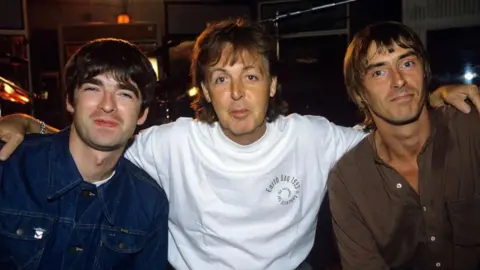
    War Child Noel Gallagher, Paul McCartney and Paul WellerWar Child

    The original 1995 Help album featured Noel Gallagher, Paul McCartney and Paul Weller playing a cover of The Beatles’ Come Together, under the name Mojo Filters

    The album is the spritual successor to 1995’s Help! – recorded at the height of Britpop, and featuring contributions from Paul Weller, Radiohead, Suede, Paul McCartney, The KLF, Portishead and The Manic Street Preachers.

    It was also, famously, the only time Oasis and Blur appeared on the same record, just months after their legendary (and acrimonious) chart battle.

    “We’ll put aside our differences for the cause,” Noel Gallagher said at the time. “And it’s the only time you’ll see us agreeing on anything.”

    The record sold 70,000 copies in its first week, raising nearly £1.25m to help children in war-stricken areas, such as Bosnia and Herzegovina.

    In 2025, the fund-raising is even more urgent. According to Warchild, 520 million children worldwide – almost one in five – are affected by war, with simultaneous crises in Ukraine, Sudan and Gaza.

    The figure is higher than any time since the Second World War, at the same time as governments across the world are cutting international aid.

    “At the moment, there really does seem to be a lot of bad things happening, and a lot of people feel powerless,” says Cocker.

    “They’re looking at the news and they don’t know what to do. So I would hope this album is something the people can enjoy, and also know that they’re trying to make a positive change.”

    Reuters Children receiving aid in SudanReuters

    More than 15 million children are in need of assistance in Sudan alone, with more than a third of the population fleeing their homes amidst a brutal civil war

    The first single, released on Thursday, is a new track by Arctic Monkeys called Opening Night.

    A sparse, sinister ballad, it finds Alex Turner singing about political sloganeering and “supercomputer crusades” before a beautifully harmonised chorus that offers a message of hope in dark times.

    The song dates back a couple of years, drummer Matt Helders tells the BBC, but had never been finished.

    Getting the call from Warchild was the prompt they needed to complete the song, with lyrics that felt like a call to arms.

    “With charity records, it’s often tempting to do a cover, or an interesting collaboration,” he says, “but we enjoy making records and being in the studio, so it was fun to work on something that we’d written.”

    Adding to the fun was that film crew of children, principally aged between eight and 10, who documented the entire recording progress.

    They were corralled by Bafta-winning director Jonathan Glazer (Sexy Beast, Under The Skin, The Zone Of Interest), who wanted to connect the music back to the young people it would help.

    “They were given free reign to just roam around, which really changed the atmosphere,” says Helders.

    “Studios can be quite a stiff, clinical environment, sometimes. But they were walking around and bumping into stuff. It made it fun.”

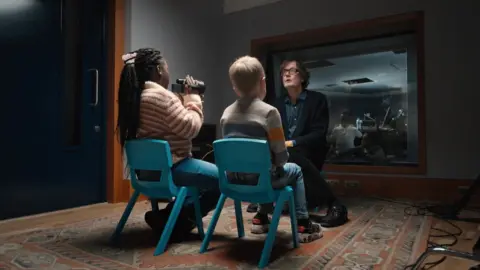
    War Child Jarvis Cocker is filmed and interviewed by two children sitting on blue plastic school chairs, in a studio at Abbey RoadWar Child

    The stars at Abbey Road were filmed and interviewed by a cast of junior documentarians

    Cocker wasn’t so sure.

    “I hate anybody watching me sing in the studio, because I’m kind of a self-conscious person and somebody pointing a camera at me doesn’t help with that,” he says.

    “And while I was singing in there, I think they were getting a bit bored, so they were just like lying on the floor and filming the ceiling.”

    Ultimately, he found the children’s presence liberating. Something about their total lack of interest allowed him to shed the idea that the studio recording has to capture “the perfect, definitive version” of a song.

    As a result, Pulp’s contribution to Help 2 – Begging For Change – has a loose, live band feeling that really exemplifies the album’s spontaneity and sense of community.

    In fact, the youthful camera crew even made it onto the record.

    “It’s an interesting thing, you know, because kids are always told, ‘Shut up, because I’m trying to think’, or, ‘Shhh, your dad’s hungover’,” he says.

    “So when they’re given the chance to make a noise, they will do that. So what we tried to do on our song was to get them to scream, and they did it very well.”

    Jarvis Cocker

    Jarvis Cocker said he hoped the album would raise both money and awareness

    You won’t get to hear that song until Help 2 is released on 6 March. Thanks to record labels and pressing plants donating their services free of charge, it will be cheaper than standard albums – with a double vinyl costing around £26 – and Warchild receiving all the profits.

    “We found that this project really lit a fire under the creative community, ” says Rich Clarke, the charity’s head of music. “Lots of people wanted to get involved.”

    He lets slip that the 23 tracks on the album weren’t the only product of the week-long recording sessions.

    “There’s a there’s a whole load of tracks, around 10 or so, that that came in when people heard about the project. So actually, there were some tough decisions for the team about what made it onto the record.”

    But Olivia Rodrigo’s song – about the purity of love – was always earmarked as the closing track.

    “It’s a really beautiful cover,” says Clarke.

    “The record really takes you through a journey, with some powerful themes around conflict, but Olivia leaves you with a track about the redemptive power of love, which is a really poignant final note”.


    Source link