Category: Uncategorized

  • woman escapes Nigeria church abduction

    woman escapes Nigeria church abduction


    Madina MaishanuBBC Africa, Kurmin Wali

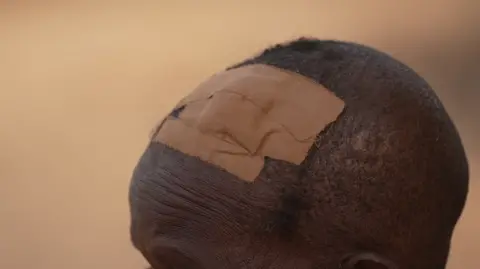
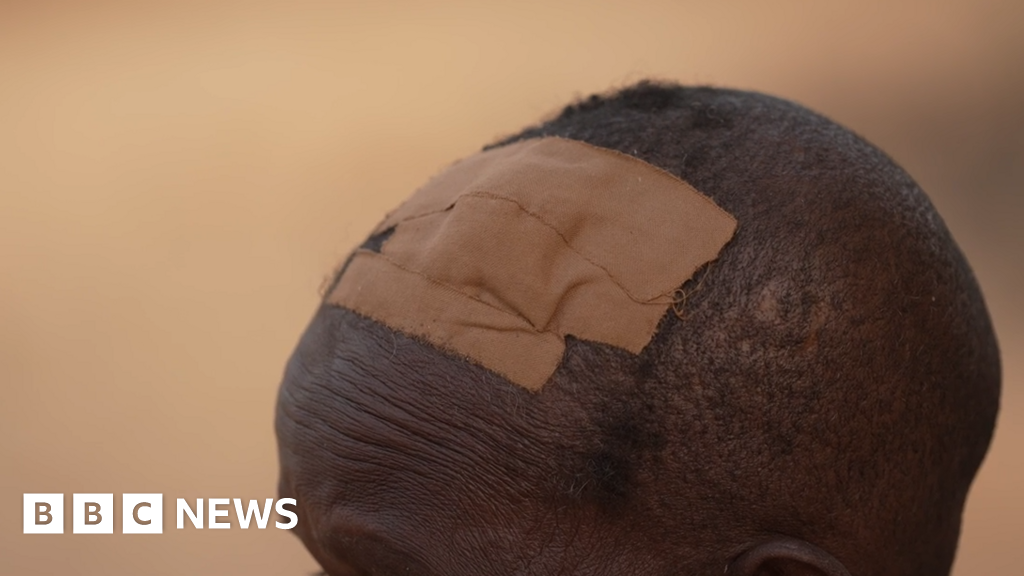
    BBC A close up of the top of someone's head with a large plaster clearly see on the top.BBC

    Sarah Peter managed to escape from the kidnappers despite being hit on the head by one of the attackers

    There was a huge plaster on Sarah Peter’s head to staunch the bleeding caused by the blow of a gunman’s weapon.

    Sarah, not her real name, was in church in a village in northern Nigeria on Sunday morning when attackers raided the compound to abduct the worshippers and take them away on foot.

    The 60-year-old was whacked on the skull with a rifle to encourage her to move.

    “Blood was all over,” she said, her fingers brushing the area where the wound was.

    “I suffered,” she added, clearly still traumatised by what happened three days earlier.

    “They kept dragging me even when I told them I couldn’t walk. Then I hid somewhere until I couldn’t see them any more. I was so weak I had to crawl back to the village.”

    Dozens of others were taken away from her branch of the Cherubim and Seraphim Movement Church and two other churches in Kurmin Wali, a village 135km (84 miles) north of the capital, Abuja.

    Although 11 people managed to escape, including Sarah, more than 160 people are still unaccounted for, according to the local branch of the Christian Association of Nigeria.

    The remaining villagers have been left devastated and fear more attacks.

    Authorities have not released any figures for those missing.
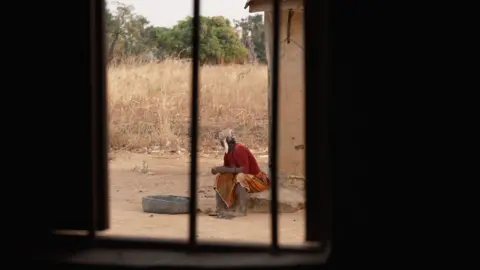
    Sarah Peter sitting on a concrete slab. She is seen in the distance and photographed through the bars on a window. She is turning away from the camera.

    Sarah Peter is still traumatised by her ordeal

    Kurmin Wali is near Kaduna state’s Rijana forest, a hideout for armed gangs, known here as “bandits”, who have been carrying out raids and abductions in the region.

    No group has said it was behind Sunday’s raid, but the attack is part of a wider security crisis in Nigeria, with kidnapping for ransom becoming more common.

    Paying kidnappers is illegal in Nigeria but it is often suspected that money has been handed over to free those who have been abducted. In this case, no ransom demand has been reported.

    There has been an increasing international focus on the issue after US President Donald Trump alleged last year that Christians were being targeted and killed in record numbers. Last month, the US military carried out air strikes on camps of suspected Islamist militants in Nigeria’s north-west.

    Nigerian officials have denied that Christians were being singled out because of their faith, and have said Muslims, Christians and those with no religion have all been affected by the insecurity.

    There is an air of tension and anger in Kurmin Wali.

    The village head said people had been living in fear for a while. Local residents have been urging authorities to improve security and have accused them of trying to suppress information in the wake of Sunday’s raid.

    Green and orange plastic chairs lying on their side with a plastic bottle in the foreground, also on its side.

    The aftermath of the raid can be seen in one of the churches

    Forty-eight hours of confusion followed the attack as officials initially denied anything had happened, despite eyewitness reports, only to finally confirm events on Tuesday evening.

    “They told us not to give out any information, they want to intimidate us but we must tell our story. They have also been stopping some journalists from coming to the town,” said a young man in his 20s, who wished to remain anonymous.

    It is not clear why the authorities may have been reluctant for news to get out, but Kaduna state governor Uba Sani told the BBC that officials wanted to confirm details first before making any statements.

    However, that does not explain why the local police chief and a state official initially denied there had been any attack, describing the reports as a “mere falsehood which is being peddled by conflict entrepreneurs who want to cause chaos”.

    The BBC also faced difficulties reaching Kurmin Wali, after a politician and security personnel attempted to block access to the village.

    But we managed to get through and once inside, we found a scene of chaos in the building of the Cherubim and Seraphim Movement Church. Colourful plastic chairs were on their sides, prayer books scattered on the floor and musical instruments broken, as if the moment after the attack had been frozen in time.

    Nearby, Christopher Yohanna was looking forlornly at his two-year-old daughter. He said he managed to escape from the attackers with his child.

    “We were in the church when we heard shouting. When we came out and tried to run, we saw that gunmen had already surrounded the village.”

    He was lucky not to be caught, but he is devastated because his two wives and other children were not so lucky.

    “If my family is not with me then my life is worthless and free of any joy,” he said.

    Governor Sani was in Kurmin Wali three days after the attack, pledging to establish a military base, a hospital and a road in the area. He also announced relief measures for affected residents, including medical support.

    “We cannot relocate them because they have to farm… but to ensure that we protect them going forward, we need to have a military base around that area between that village and Rijana forest,” he told the BBC.

    He also said efforts were under way to work with security agencies to rescue those still in captivity.

    “When we met [the villagers] I affirmed that we are with them and… we will not let any of them down.”

    As the residents of Kurmin Wali wait anxiously for the return of their family members, they are hoping the governor keeps to his word.
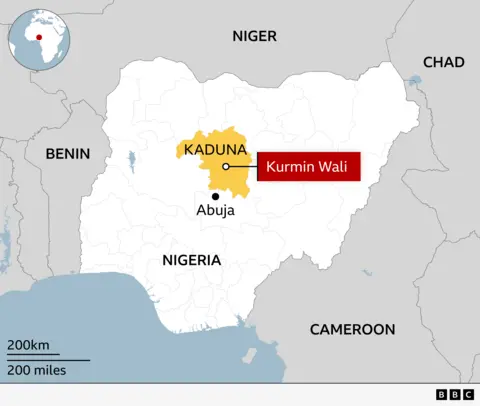

    Map showing the location of Kurmin Wali in Nigeria.
    More about Nigeria from the BBC:
    Getty Images/BBC A woman looking at her mobile phone and the graphic BBC News AfricaGetty Images/BBC


    Source link

  • Trump sparks anger with claim Nato troops avoided Afghanistan front line

    Trump sparks anger with claim Nato troops avoided Afghanistan front line


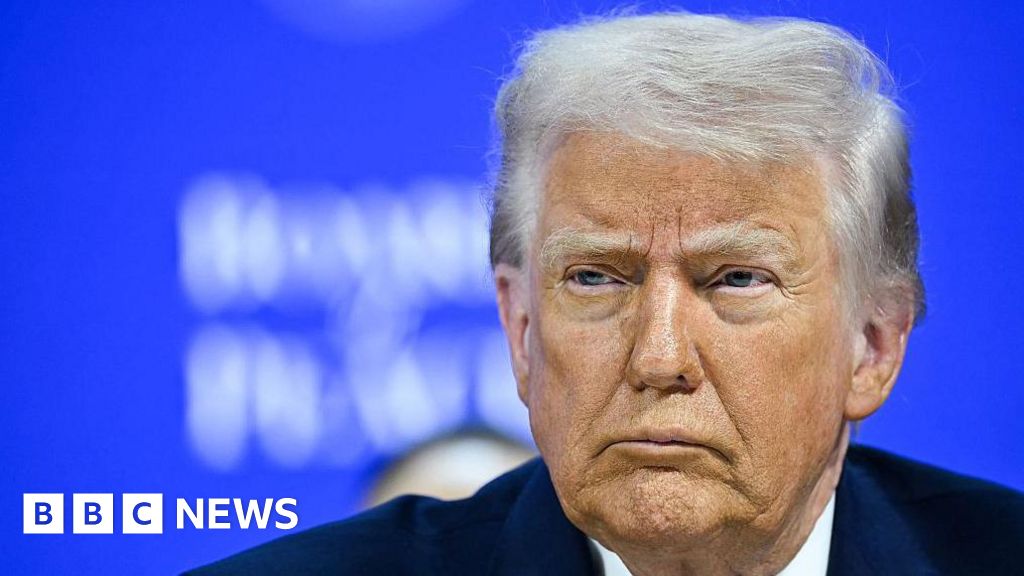
    AFP via Getty Images Donald TrumpAFP via Getty Images

    Donald Trump has sparked fresh outrage in the UK after saying Nato troops stayed “a little off the front lines” during the war in Afghanistan.

    Labour MP Emily Thornberry, the chair of the foreign affairs committee, called it an “absolute insult” to the 457 British service personnel killed in the conflict, while Liberal Democrat leader Sir Ed Davey said: “How dare he question their sacrifice?”

    Conservative MP Ben Obese-Jecty, who served in Afghanistan, said it was “sad to see our nation’s sacrifice, and that of our Nato partners, held so cheaply”.

    The UK was among several allies to join the US in Afghanistan from 2001, after it invoked Nato’s collective security clause following the 9/11 terror attacks.

    The US president told Fox News on Thursday that he was “not sure” the military alliance would be there for America “if we ever needed them”.

    “We’ve never needed them,” he said, adding: “We have never really asked anything of them.”

    “They’ll say they sent some troops to Afghanistan,” he said, “and they did, they stayed a little back, a little off the front lines”.

    He said the US had “been very good to Europe and to many other countries”, adding: “It has to be a two-way street.”

    Thornberry told the BBC’s Question Time that the remarks were “much more than a mistake”.

    “It’s an absolute insult… How dare he say we weren’t on the front line, how dare he?

    “We have always been there whenever the Americans have wanted us,” she said, calling Trump “a man who has never seen any action” but was now “commander in chief and knows nothing about how it is that America has been defended”.

    She said the US was the UK’s “friend” but its leader had “behaved in a way that is bullying, rude, that has deliberately been trying to undermine us, which has been trying to undermine Nato.”

    On the same programme, Conservative shadow cabinet member Stuart Andrew also called the comments “disgraceful” and “appalling”.

    “There are many people in this country who served both in Iraq and Afghanistan, many of whom lost their lives, but also many more who came back with life-changing injuries and we should say thank you to them.”

    He added that the UK-US special relationship was important for both defence and security, and that in recent weeks Trump had directed conversation to the security of the Arctic – where he said there was a “very serious threat”.

    Sir Ed wrote on social media that Trump had “avoided military service”, adding: “How dare he question their sacrifice?”

    Meanwhile, former British Army officer Obese-Jecty said it was “sad to see our nation’s sacrifice, and that of our Nato partners, held so cheaply by the president of the United States”.

    “I saw first hand the sacrifices made by British soldiers,” he wrote on X.

    “I don’t believe US military personnel share the view of President Trump; his words do them a disservice as our closest military allies.”

    Calvin Bailey, a Labour MP and former RAF officer who served alongside US special operations units in Afghanistan, said the president’s claim bore “no resemblance to the reality experienced by those of us who served there”.

    “As I reminded the US Forces I served with on 4 July 2008, we were there because of a shared belief, articulated at America’s founding, that free people have inalienable rights and should not live under tyranny,” he told the PA news agency.

    “That belief underpinned the response to 9/11, and it is worth reflecting on now.”

    The BBC approached the Ministry of Defence for comment.

    A spokesperson pointed to comments made by Defence Secretary John Healey while visiting Nato ally Denmark on Wednesday – before Trump’s comments.

    He said: “In Afghanistan, our forces trained together, they fought together, and on some occasions, they died together, making the ultimate sacrifice.”

    The US invaded in October 2001 to oust the Taliban, whom they said were harbouring Osama Bin Laden and other al-Qaeda figures linked to the 9/11 attacks. Nato nations contributed troops and military equipment to the US-led war.

    More than 3,500 coalition soldiers had died as of 2021, when the US withdrew from the country – about two-thirds of them Americans.

    The UK suffered the second highest number of military deaths in the conflict behind the US, which saw 2,461 deaths.

    The US is the only country to have invoked the collective security provisions of Nato’s Article 5, which states that “an armed attack against one Nato member shall be considered an attack against them all”.


    Source link

  • Slashed incomes and gamers go cold turkey: Fallout from Uganda's internet shutdown

    Slashed incomes and gamers go cold turkey: Fallout from Uganda's internet shutdown


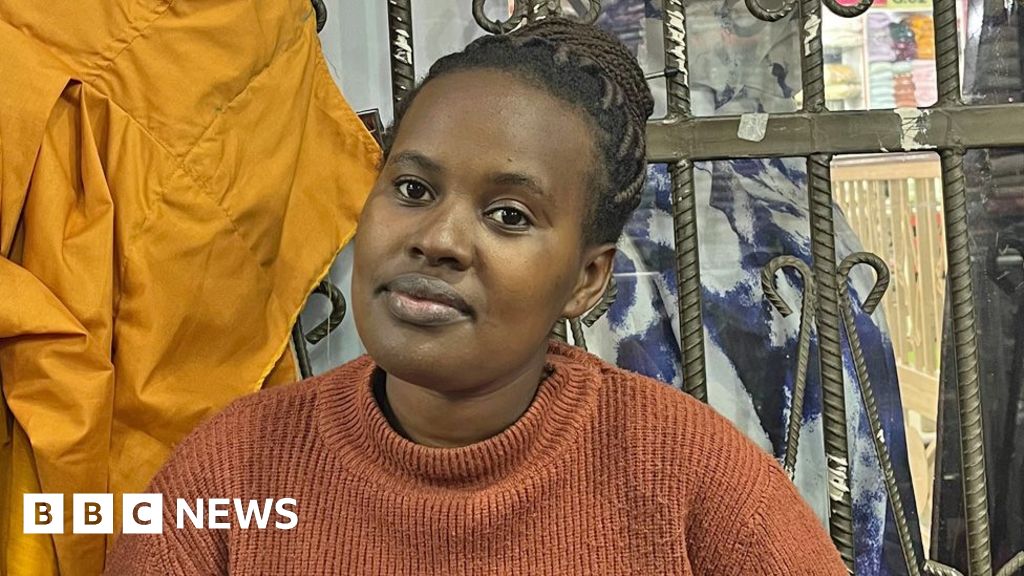
    The internet was shut during the general election, leaving many people without any income – or entertainment.


    Source link