Category: Uncategorized

  • UN to take over al-Hol camp for IS families in Syria after unrest

    UN to take over al-Hol camp for IS families in Syria after unrest


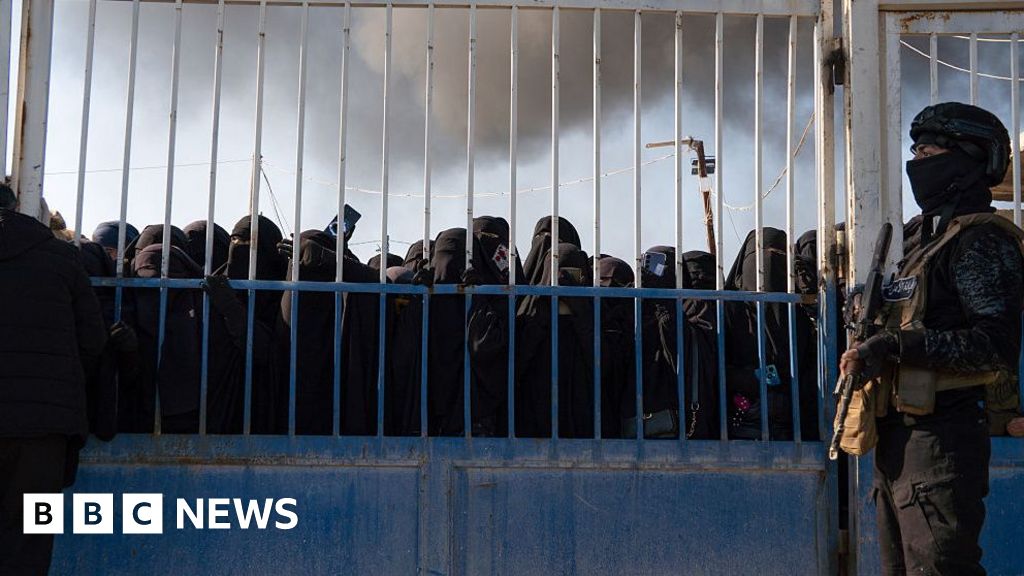
    The United Nations (UN) says it will take over management of a camp in north-eastern Syria holding holding thousands of people with alleged links to the jihadist group Islamic State (IS).

    It comes after Kurdish-led forces that had been running the camp withdrew in the face of an advance by Syrian government forces, triggering unrest that forced aid agencies to suspend operations.

    Residents were reported to have rushed camp perimeters in an apparent attempt to escape, prompting unrest and looting.

    A ceasefire agreement has brought much of Syria’s north-east under the control of Damascus, ending years of autonomous Kurdish rule.

    Briefing the UN Security Council on Thursday, UN official Edem Wosornu said the UN refugee agency UNHCR had “taken over camp management responsibilities” at al-Hol and was working with Syrian authorities to restore humanitarian access. Syrian forces, she said, had established a security perimeter around the camp.

    However, UN spokesman Stéphane Dujarric cautioned that conditions inside remained “tense and volatile”, with humanitarian operations still suspended following the violence.

    Meanwhile, the US has launched a parallel effort to remove high-risk detainees from the region altogether. US Central Command said on Wednesday that it had begun transferring up to 7,000 suspected IS fighters from prisons in northeast Syria to Iraq, confirming that 150 detainees had already been moved to a “secure location” across the border.

    Iraqi authorities said all transferred detainees would be prosecuted under Iraqi law.

    “This is a measure aimed at protecting regional and international security from an imminent threat. Nevertheless, we stress that this issue should not be left to become a long-term strategic burden on Iraq alone,” Iraq’s deputy UN ambassador, Mohammed Sahib Mejid Marzooq, said.

    Syria’s UN ambassador Ibrahim Olabi said the Syrian government welcomed the US operation to transfer IS detainees out of Syrian territory and was ready to offer support.

    Rights groups have warned that the transfers could expose detainees to serious abuses.

    The Reprieve charity said it believed up to ten British men could be among those transferred, along with juvenile detainees and urged the UK government to intervene urgently. Around 55 to 60 British nationals, most of them children, remain detained across camps and prisons in the region, it said.

    “The prisoners transferred face being tortured, sentenced to death and executed, without being granted any meaningful opportunity to contest the allegations against them”, Katherine Cornett, Reprieve’s deputy director told the BBC.

    The Kurdish-led Syrian Democratic Forces (SDF), US and UN have long called for the repatriation of foreign IS suspects and their families from north-eastern Syria, citing the political instability and dire conditions in the prisons and camps, but many countries have refused to take them.


    Source link

  • US unveils plans for development of ‘New Gaza’ with skyscrapers

    US unveils plans for development of ‘New Gaza’ with skyscrapers


    Getty Images Secretary of State Marco Rubio listens to a presentation about US plans for the "New Gaza", during the signing ceremony for President Donald Trump's new Board of Peace, at the World Economic Forum in Davos, Switzerland (22 January 2026)Getty Images

    The US plan for “New Gaza” was presented at the World Economic Forum in Davos

    The US has unveiled its plans for a “New Gaza” that would see the devastated Palestinian territory rebuilt from scratch.

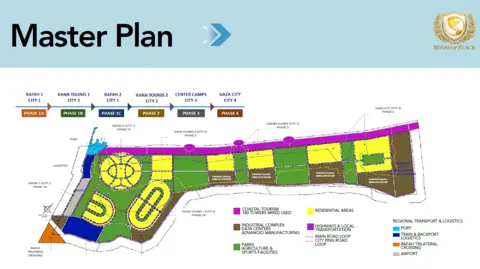
    Slides showed dozens of skyscrapers stretching along the Mediterranean coast and housing estates in the Rafah area, while a map outlining the phased development of new residential, agricultural and industrial areas for the 2.1 million population.

    They were presented during a signing ceremony at the World Economic Forum in Davos for President Donald Trump’s new Board of Peace, which is tasked with ending the two-year war between Israel and Hamas and overseeing reconstruction.

    “We’re going to be very successful in Gaza. It’s going to be a great thing to watch,” Trump declared.

    “I’m a real estate person at heart and it’s all about location. And I said: ‘Look at this location on the sea. Look at this beautiful piece of property. What it could be for so many people.’”

    Trump’s son-in-law Jared Kushner, who helped broker the ceasefire that took effect in October, said 90,000 tonnes of munitions had been dropped on Gaza and there were 60 million tonnes of rubble to clear.

    “In the beginning, we were toying with the idea of saying: ‘Let’s build a free zone, and then we have a Hamas zone.’ And then we said: ‘You know what, let’s just plan for catastrophic success’,” he told the ceremony.

    “Hamas signed a deal to demilitarise, that is what we are going to enforce. People ask us what our plan B is. We do not have a plan B.”

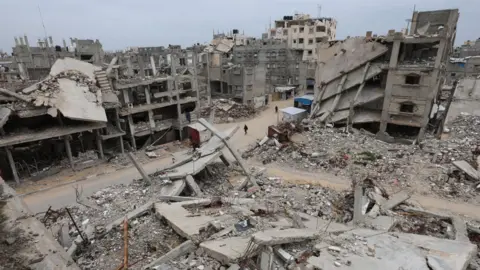
    Reuters Palestinians walk past destroyed buildings in Khan Younis, southern Gaza (22 January 2026)Reuters

    The UN estimates that 81% of all structures in Gaza are destroyed or damaged

    A map of the US “Master Plan” showed a zone reserved for “coastal tourism”, where there would be 180 tower-blocks as well a number of zones for “residential areas”, “industrial complex, data centres, advanced manufacturing” and “parks, agriculture and sports facilities”.

    A new seaport and airport would be built near the Egyptian border, and there would a “trilateral crossing” where the Egyptian and Israeli borders converge.

    Redevelopment would be divided into four phases, starting in Rafah and then gradually moving north towards Gaza City.

    The map also featured an empty strip of land running along the Egyptian and Israeli borders. It appeared to mark what Trump’s 20-point peace plan refers to as the “security perimeter” where Israeli forces will remain “until Gaza is properly secure”.

    White House Screengrab of slide showing the US "Master Plan" map for the reconstruction of Gaza, which was shown during the signing ceremony for President Donald Trump's new Board of Peace, at the World Economic Forum in Davos, Switzerland (22 January 2026)White House

    Another slide said “New Rafah” would have more than 100,000 permanent housing units, 200 education centres and 75 medical facilities.

    About 280,000 people once lived in Gaza’s southernmost city, but it has been largely levelled by Israeli strikes and controlled demolitions during the war and is currently located inside Israeli-controlled territory.

    Kushner said he believed it was “doable” to complete the construction of “New Rafah” in two to three years.

    “We’ve already started removing the rubble and doing some of the demolition. And then New Gaza. It could be a hope, it could be a destination, have a lot of industry.”

    In the coming weeks, he added, there would be a conference in Washington where contributions from countries would be announced and “amazing investment opportunities” for the private sector outlined.

    Last February, Trump sparked outrage around the world when he suggested that Gaza’s Palestinians could be permanently relocated to neighbouring countries, with the US taking over the territory to transform it into “the Riviera of the Middle East”.

    White House Screengrab of slide showing the US plan for the construction "New Rafah", which was shown during the signing ceremony for President Donald Trump's new Board of Peace, at the World Economic Forum in Davos, Switzerland (22 January 2026)White House

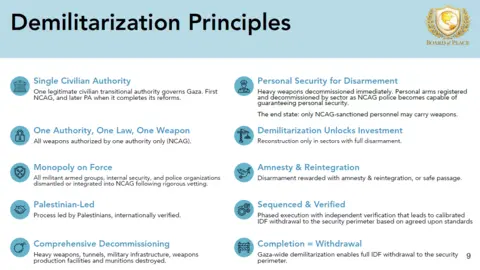
    Kushner also declared that the demilitarisation of Gaza was “starting now”, noting that “without security nobody is going to make investments”.

    He said the territory’s new technocratic Palestinian government, the National Committee for the Administration of Gaza (NCAG), would be “working with Hamas on demilitarisation to really take the principles that were agreed to in the document to the next phase”.

    Hamas has previously refused to give up its weapons without the creation of an independent Palestinian state.

    But Trump warned the group: “They have to give up their weapons and if they don’t do that, it’s going to be the end of them.”

    White House Screengrab of slide showing the US "demilitarisation principles", which was shown during the signing ceremony for President Donald Trump's new Board of Peace, at the World Economic Forum in Davos, Switzerland (22 January 2026)White House

    Trump also insisted Hamas hand over the body of the last dead Israeli hostage in Gaza, which Israel said should have happened before phase two of the peace plan began last week.

    Under phase one, Hamas and Israel agreed to the ceasefire, an exchange of all living and dead Israeli hostages in Gaza for Palestinians detained in Israeli jails, a partial Israeli withdrawal, and a surge in deliveries of humanitarian aid.

    The ceasefire has remained fragile, with at least 477 Palestinians killed in Israeli strikes over the past three months, according to Gaza’s Hamas-run health ministry. The Israeli military says three of its soldiers have been killed in attacks by Palestinian armed groups.

    Five people were reportedly killed by Israeli fire across Gaza on Thursday, four of them in an artillery strike in the eastern Zeitoun neighbourhood of Gaza City.

    Humanitarian conditions also still dire, with almost 1 million people lacking adequate shelter and 1.6 million facing high levels of acute food insecurity, according to the UN.

    Reuters Palestinian women mourn during the funeral for people reportedly killed in Israeli strikes, at al-Shifa hospital, Gaza City, northern Gaza (22 January 2026)Reuters

    Five Palestinians were reportedly killed by Israeli fire across Gaza on Thursday despite the ceasefire

    Hamas put out a statement on Thursday saying that it remained committed to the October agreement and accusing Israel of seeking to “undermine international efforts aimed at consolidating the ceasefire”.

    Speaking at Davos, Israeli President Isaac Herzog praised the “efforts of President Trump and his leadership”. But he warned: “The real test has to be Hamas leaving Gaza”.

    President Mahmoud Abbas of the Palestinian Authority (PA), which governs in parts of the occupied West Bank, called for the full implementation of the peace plan, including the withdrawal of Israeli forces, and a central role for the PA in administering Gaza.

    The head of the NCAG, Ali Shaath, meanwhile announced that the Rafah border crossing with Egypt would open next week in both directions. It has been mostly closed since May 2024, when the Palestinian side was seized by Israeli forces.

    “Opening Rafah signals that Gaza is no longer closed to the future and to the war,” he said.

    The war was triggered by the Hamas-led attack on southern Israel on 7 October 2023, in which about 1,200 people were killed and 251 others were taken hostage.

    Israel responded to the attack by launching a military campaign in Gaza, during which more than 71,560 people have been killed, according to the territory’s health ministry.


    Source link

  • New Osiris Ransomware Emerges as New Strain Using POORTRY Driver in BYOVD Attack

    New Osiris Ransomware Emerges as New Strain Using POORTRY Driver in BYOVD Attack


    Cybersecurity researchers have disclosed details of a new ransomware family called Osiris that targeted a major food service franchisee operator in Southeast Asia in November 2025.

    The attack leveraged a malicious driver called POORTRY as part of a known technique referred to as bring your own vulnerable driver (BYOVD) to disarm security software, the Symantec and Carbon Black Threat Hunter Team said.

    It’s worth noting that Osiris is assessed to be a brand-new ransomware strain, sharing no similarities with another variant of the same name that emerged in December 2016 as an iteration of the Locky ransomware. It’s currently not known who the developers of the locker are, or if it’s advertised as a ransomware-as-a-service (RaaS).

    However, the Broadcom-owned cybersecurity division said it identified clues that suggest the threat actors who deployed the ransomware may have been previously associated with INC ransomware (aka Warble).

    “A wide range of living off the land and dual-use tools were used in this attack, as was a malicious POORTRY driver, which was likely used as part of a bring your own vulnerable driver (BYOVD) attack to disable security software,” the company said in a report shared with The Hacker News.

    “The exfiltration of data by the attackers to Wasabi buckets, and the use of a version of Mimikatz that was previously used, with the same filename (kaz.exe), by attackers deploying the INC ransomware, point to potential links between this attack and some attacks involving INC.”

    Described as an “effective encryption payload” that’s likely wielded by experienced attackers, Osiris makes use of a hybrid encryption scheme and a unique encryption key for each file. It’s also flexible in that it can stop services, specify which folders and extensions need to be encrypted, terminate processes, and drop a ransom note.

    Cybersecurity

    By default, it’s designed to kill a long list of processes and services related to Microsoft Office, Exchange, Mozilla Firefox, WordPad, Notepad, Volume Shadow Copy, and Veeam, among others.

    First signs of malicious activity on the target’s network involved the exfiltration of sensitive data using Rclone to a Wasabi cloud storage bucket prior to the ransomware deployment. Also utilized in the attack were a number of dual-use tools like Netscan, Netexec, and MeshAgent, as well as a custom version of the Rustdesk remote desktop software.

    POORTRY is a little different from traditional BYOVD attacks in that it uses a bespoke driver expressly designed for elevating privileges and terminating security tools, as opposed to deploying a legitimate-but-vulnerable driver to the target network.

    “KillAV, which is a tool used to deploy vulnerable drivers for terminating security processes, was also deployed on the target’s network,” the Symantec and Carbon Black Threat Hunter Team noted. “RDP was also enabled on the network, likely to provide the attackers with remote access.”

    The development comes as ransomware remains a significant enterprise threat, with the landscape constantly shifting as some groups close their doors and others quickly rise from their ashes or move in to take their place. According to an analysis of data leak sites by Symantec and Carbon Black, ransomware actors claimed a total of 4,737 attacks during 2025, up from 4,701 in 2024, a 0.8% increase.

    The most active players during the past year were Akira (aka Darter or Howling Scorpius), Qilin (aka Stinkbug or Water Galura), Play (aka Balloonfly), INC, SafePay, RansomHub (aka Greenbottle), DragonForce (aka Hackledorb), Sinobi, Rhysida, and CACTUS. Some of the other notable developments in the space are listed below –

    • Threat actors using the Akira ransomware have leveraged a vulnerable Throttlestop driver, along with the Windows CardSpace User Interface Agent and Microsoft Media Foundation Protected Pipeline, to sideload the Bumblebee loader in attacks observed in mid-to-late 2025.
    • Akira ransomware campaigns have also exploited SonicWall SSL VPNs to breach small- to medium-sized business environments during mergers and acquisitions and ultimately obtain access to the bigger, acquiring enterprises. Another Akira attack has been found to leverage ClickFix-style CAPTCHA verification lures to drop a .NET remote access trojan called SectopRAT, which serves as a conduit for remote control and ransomware delivery.
    • LockBit (aka Syrphid), which partnered with DragonForce and Qilin in October 2025, has continued to maintain its infrastructure despite a law enforcement operation to shut down its operations in early 2024. It has also released variants of LockBit 5.0 targeting multiple operating systems and virtualization platforms. A significant update to LockBit 5.0 is the introduction of a two-stage ransomware deployment model that separates the loader from the main payload, while simultaneously maximizing evasion, modularity, and destructive impact.
    • A new RaaS operation dubbed Sicarii has claimed only one victim since it first surfaced in late 2025. While the group explicitly identifies itself as Israeli/Jewish, analysis has uncovered that underground online activity is primarily carried out in Russian and that the Hebrew content shared by the threat actor contains grammatical and semantic errors. This has raised the possibility of a false flag operation. Sicarii’s primary Sicarii operator uses the Telegram account “@Skibcum.”
    • The threat actor known as Storm-2603 (aka CL-CRI-1040 or Gold Salem) has been observed leveraging the legitimate Velociraptor digital forensics and incident response (DFIR) tool as part of precursor activity leading to the deployment of Warlock, LockBit, and Babuk ransomware. The attacks have also utilized two drivers (“rsndispot.sys” and “kl.sys”) along with “vmtools.exe” to disable security solutions using a BYOVD attack.
    • Cybersecurity
    • Entities in India, Brazil, and Germany have been targeted by Makop ransomware attacks that exploit exposed and insecure RDP systems to stage tools for network scanning, privilege escalation, disabling security software, credential dumping, and ransomware deployment. The attacks, besides using “hlpdrv.sys” and “ThrottleStop.sys” drivers for BYOVD attacks, also deploy GuLoader to deliver the ransomware payload. This is the first documented case of Makop being distributed via a loader.
    • Ransomware attacks have also obtained initial access using already-compromised RDP credentials to perform reconnaissance, privilege escalation, lateral movement via RDP, followed by exfiltrating data to temp[.]sh on day six of the intrusion and deploying Lynx ransomware three days later.
    • A security flaw in the encryption process associated with the Obscura ransomware has been found to render large files unrecoverable. “When it encrypts large files, it fails to write the encrypted temporary key to the file’s footer,” Coveware said. “For files over 1GB, that footer is never created at all — which means the key needed for decryption is lost. These files are permanently unrecoverable.”
    • A new ransomware family named 01flip has targeted a limited set of victims in the Asia-Pacific region. Written in Rust, the ransomware can target both Windows and Linux systems. Attack chains involve the exploitation of known security vulnerabilities (e.g., CVE-2019-11580) to obtain a foothold into target networks. It has been attributed to a financially motivated threat actor known as CL-CRI-1036.

    To protect against targeted attacks, organizations are advised to monitor the use of dual-use tools, restrict access to RDP services, enforce multi-factor authentication (2FA), use application allowlisting where applicable, and implement off-site storage of backup copies.

    “While attacks involving encrypting ransomware remain as prevalent as ever and still pose a threat, the advent of new types of encryptionless attacks adds another degree of risk, creating a wider extortion ecosystem of which ransomware may become just one component,” Symantec and Carbon Black said.



    Source link