Category: Uncategorized

  • Could the US Congress stop Trump from taking Greenland?

    Could the US Congress stop Trump from taking Greenland?


    Daniel BushWashington correspondent

    Watch: BBC on the mood in Davos ahead of Trump’s arrival to the economic forum

    President Donald Trump’s push to acquire Greenland has sparked a backlash from Republicans in Congress, as lawmakers voice growing concern about US military interventions overseas.

    But it remains unclear if enough Republicans are willing to join Democrats to block a takeover of the island territory – and whether Trump would bow to pressure from Congress, or act alone as he’s done several times in a second term marked by growing American entanglements abroad.

    The focus on Greenland has grown into a broader discussion over the Trump administration’s unilateral use of military force, along with diplomatic and economic coercion, to project power in Venezuela, Iran and elsewhere around the world.

    Republicans have largely backed Trump’s foreign policy agenda since he returned to the White House. But now, a growing number are siding with Democrats in Congress and Nato allies who say a takeover of Greenland would violate US and international law.

    In recent days, some Republican leaders have said there’s little interest in the US buying Greenland or seizing it through military force. Some Republican lawmakers have also joined Democrats in opposing a new plan by Trump to place tariffs on countries that don’t back his bid to acquire the territory, which is self-governed but controlled by Denmark.

    The proposed tariffs would be “bad for America, bad for American businesses, and bad for America’s allies,” Senator Thom Tillis of North Carolina wrote on social media, adding that the move would benefit China and Russia. “It’s great for [Russian President Vladimir] Putin, [Chinese President] Xi [Jinping] and other adversaries who want to see Nato divided.”

    Other Republicans said Trump’s ambition to annex Greenland was threatening to undermine the Nato alliance – to which both the US and Denmark belong – in a moment of growing tension between the US and European allies.

    “Respect for the sovereignty of the people of Greenland should be non-negotiable,” Senator Lisa Murkowski, the co-chair of the Senate Arctic Caucus, said in a statement.

    Trump has argued the US must own the territory to better compete with China and Russia in the Arctic, and has vowed to take it “one way or another”.

    On Tuesday, the US president downplayed concerns that the issue was hurting Nato when asked by the BBC if he was willing to see the decades-old security alliance collapse as a consequence of his push for the territory. Trump reiterated his view that ownership of Greenland was critical for US and global security.

    “We need [Greenland] for national security and even world security,” he said.

    Watch: BBC asks if breakup of Nato is price Trump willing to pay for Greenland

    But Trump’s insistence on obtaining the territory is increasingly unpopular on Capitol Hill.

    Congress has some options to try to rein Trump in, if Republicans and Democrats do choose to pick a fight with the president over Greenland.

    Congress has the power of the purse and in theory would have to approve funding used to buy Greenland, experts said. Denmark and Greenland have both insisted the island isn’t for sale.

    “If Trump wants to buy Greenland it would require an act of Congress to provide the funds to do so,” said Daniel Schuman, the executive director of the American Governance Institute and an expert on congressional procedure. It’s unlikely that Congress could repurpose existing funding to buy the territory, Schuman added.

    Still, the administration has expanded the use of executive power to enact Trump’s immigration and tariff agenda, among other issues. The administration might try to claim some new authority to seize Greenland that would allow it to overrule any roadblocks by Congress, Schuman said.

    Lawmakers worried about a military incursion in Greenland have signalled support for measures prohibiting any US action without congressional approval. But it’s unclear if the proposals have enough Republican support to pass in either chamber of Congress.

    Five Senate Republicans joined Democrats earlier this month to advance a bill that would have blocked the administration from taking further military action in Venezuela, following the attack in December that deposed former President Nicolás Maduro.

    The Venezuela war powers resolution ultimately failed to get through the Senate. But it signalled mounting frustration from Republican and Democratic lawmakers with Trump’s use of military force abroad, after he ran in 2024 on a promise to reduce US involvement in foreign conflicts. Last week a bipartisan congressional delegation visited Denmark in a symbolic show of support for Greenland.

    It’s also unclear how the Senate, which ratifies treaties, would respond if the US reached some sort of agreement with Denmark to take over part or all of Greenland.

    The US has an existing arrangement with Denmark established in 1951 that allows the US to expand its military presence in Greenland. Murkowski and other Republicans have argued that the US doesn’t need to take over the territory to address national security needs in the region.

    The Senate could try to thwart Trump by opposing a treaty between the US and Denmark, in the event the two nations reach an agreement. Treaties require two-thirds support in the Senate for ratification, which Republicans currently fall well short of.

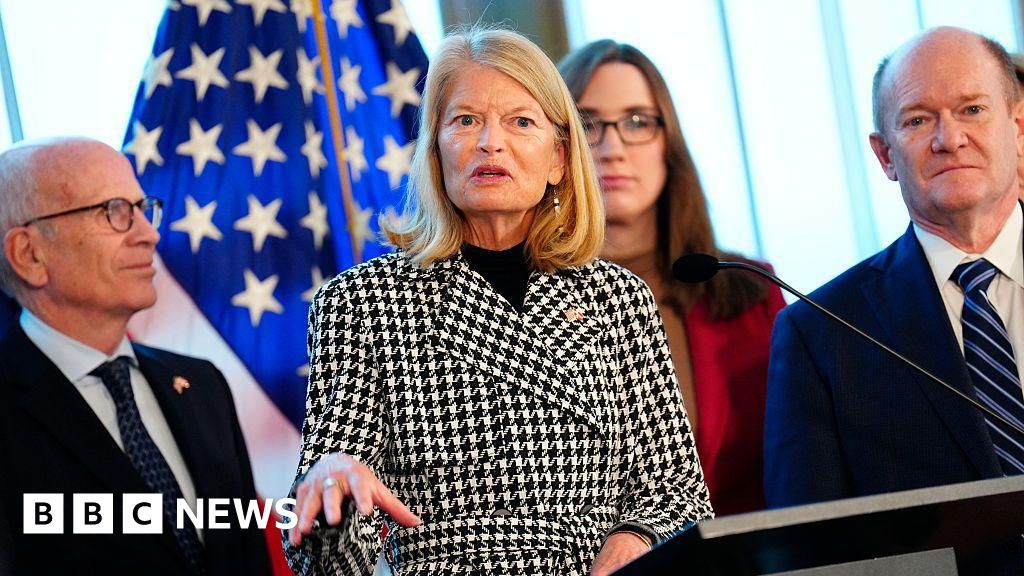
    Getty Images Senator Lisa Murkowski, flanked by other members of the US Congress, speaks at a press conference in CopenhagenGetty Images

    Last week, a US bipartisan delegation which included Senator Lisa Murkowski (C) visited Denmark in a show of solidarity with the US ally

    Some Republicans have already indicated that they’d consider breaking with Trump over Greenland. Senator Mitch McConnell of Kentucky, the former majority leader in the upper chamber of Congress, told reporters that a US takeover of the territory would “shatter the trust of allies”.

    Faced with growing Republican concern over Greenland, Trump could look to strike a deal that falls short of a formal treaty and doesn’t require Senate approval. But it’s unclear if presidents have the authority to make such agreements without input from Congress, analysts said.

    “Plenty of international agreements are concluded in forms other than treaties,” said Josh Chafetz, a professor at Georgetown Law, but “I’m sceptical that something of this magnitude could be concluded as a pure executive agreement.”

    Trump did not say on Tuesday whether he believed he was constrained by anything in his pursuit of Greenland. Asked how far he was willing to go, Trump told reporters to stay tuned.

    “I think something is going to happen that’s going to be very good for everybody,” Trump said.

    Additional reporting by Kayla Epstein
    ‘We just want to be left alone’: Greenlanders on Trump’s takeover threats


    Source link

  • Japan restarts world’s largest nuclear plant as Fukushima memories loom large

    Japan restarts world’s largest nuclear plant as Fukushima memories loom large


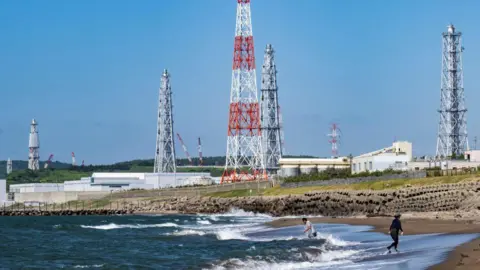
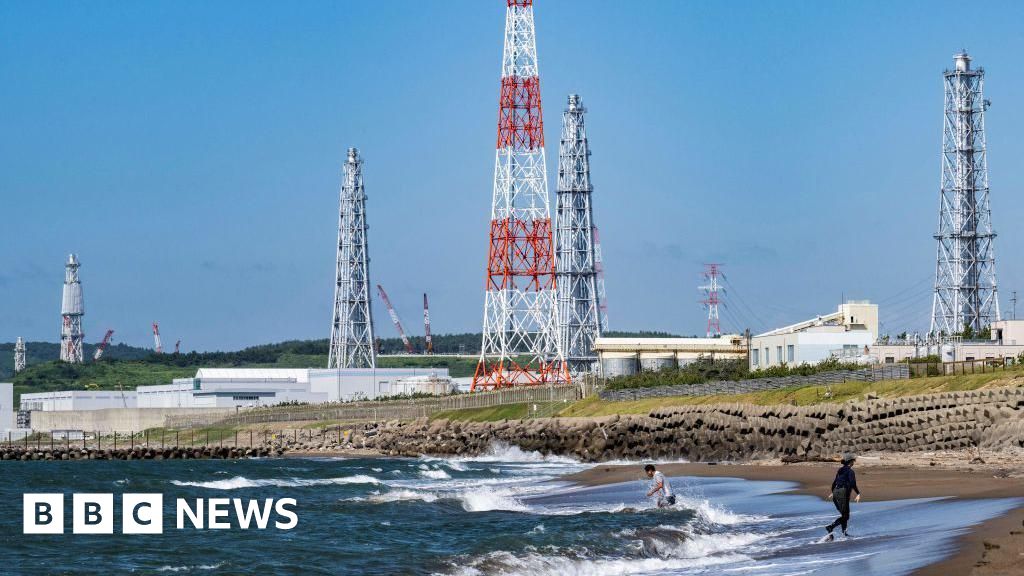
    Getty Images Two people walking on a beach, with the Kashiwazaki-Kariwa nuclear power plant in the background.Getty Images

    The Kashiwazaki-Kariwa Nuclear Power Plant has the world’s largest installed capacity

    Japan has restarted operations at the world’s largest nuclear power plant for the first time since the 2011 Fukushima disaster forced the country to shut all of its reactors.

    The decision to restart reactor number 6 at Kashiwazaki-Kariwa north-west of Tokyo was taken despite local residents’ safety concerns.

    It was delayed by a day because of an alarm malfunction and is due to begin operating commercially next month.

    Japan, which had always heavily relied on energy imports, was an early adopter of nuclear power. But in 2011 all 54 of its reactors had to be shut after a massive earthquake and tsunami triggered a meltdown at Fukushima, causing one of the worst nuclear disasters in history.

    This is the latest installment in Japan’s nuclear power reboot, which still has a long way to go.

    The seventh reactor at Kashiwazaki-Kariwa is not expected to be brought back on until 2030, and the other five could be decommissioned. That leaves the plant with far less capacity than it once had when all seven reactors were operational: 8.2 gigawatts.

    Triggered by the most powerful earthquake ever recorded in Japan, the meltdown in the reactors at Fukushima Daiichi, 220km (135 miles) north-east of Tokyo on the coast, led to radioactive leakage. Local communities were evacuated, and many have not returned despite official assurances that it was safe to do so.

    Critics say the plant’s owner Tokyo Electric Power Company, or Tepco, was not prepared, and the response from them and government was not well co-ordinated. An independent government report called it a “man-made disaster” and blamed Tepco, although a court later cleared three of their executives of negligence.

    Still the fear and lack of trust fuelled public opposition to nuclear power and Japan suspended all of its 54 reactors shortly after the Fukushima disaster.

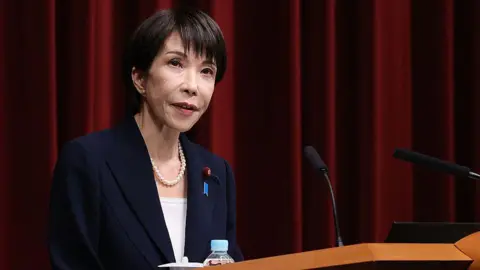
    Getty Images Japan's Prime Minister Sanae Takaichi speaks during a press conference at the Prime Minister's Office in Tokyo on January 19, 2026. Getty Images

    PM Sanae Takaichi is advocating for more shut reactors to be restarted

    It has now spent the past decade trying to wake up those power plants, as it seeks to reach net zero emissions by 2050.

    Since 2015, Japan has restarted 15 out of its 33 operable reactors. The Kashiwazaki-Kariwa plant is the first of those owned by Tepco to be turned back on.

    Before 2011, nuclear power accounted for nearly 30% of Japan’s electricity and the country planned to get that up to 50% by 2030. Its energy plan last year unveiled a tamer goal: it wants nuclear power to provide 20% of its electricity needs by 2040.

    Even that may be tricky.

    ‘A drop on a hot stone’

    Global momentum is building around nuclear energy, with the International Atomic Energy Agency estimating that the world’s nuclear power capacity could more than double by 2050. In Japan, as of 2023, nuclear power accounted for just 8.5% of electricity.

    Prime Minister Sanae Takaichi, who took office in October, has emphasised the importance of nuclear power for Japan’s energy self-sufficiency. Especially as it expects energy demand to surge because of data centres and semiconductor manufacturing.

    Japan’s leaders and its energy companies have long pushed for nuclear power. They say it’s more reliable than renewable energy like solar and wind, and better suited for Japan’s mountainous terrain. But critics say the emphasis on nuclear energy has come at the cost of investing in renewables and cutting emissions.

    Now, as Japan tries to revive its nuclear power ambitions, the costs of running the reactors have surged, partly because of new safety checks that require hefty investments from companies trying to restart plants.

    “Nuclear power is getting much more expensive than they ever thought it would,” says Dr Florentine Koppenborg, a senior researcher at the Technical University of Munich.

    The government could subsidise the costs, or pass them on to consumers – both unpalatable options for Japan’s leaders, who have for decades been hailing the affordability of nuclear power. An expensive energy bill could also hurt the government at a time when households are protesting about rising costs.

    The government’s “hands are tied when it comes to financially supporting nuclear power, unless it’s willing to go back on one of the main selling points”, Koppenborg says.

    “I think [Japan’s nuclear power revival] is a drop on a hot stone, because it does not change the larger picture of nuclear power decline in Japan.”

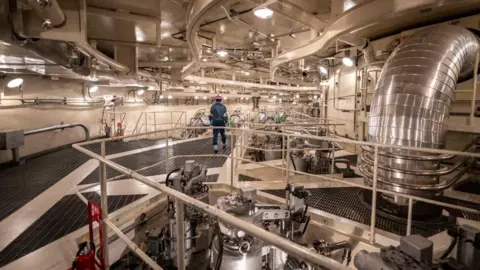
    Getty Images Backview of a man walking through a nuclear power plantGetty Images

    Only one of the seven reactors at the Kashiwazaki-Kariwa plant are coming back on for now

    Beyond the fear of another disaster like Fuksuhima, a series of scandals has also rattled public trust.

    The Kashiwazaki-Kariwa plant in particular found itself embroiled in a couple of them. In 2023, one of its employees lost a stack of documents after placing it on top of their car and forgetting it was there before driving away. In November, another was found to have mishandled confidential documents.

    A Tepco spokesperson said the company reported the incidents to the Nuclear Regulation Authority (NRA), adding that it aimed to continue improving security management.

    These revelations are “a good sign” for transparency, says Koppenborg. But they also reveal that “Tepco is struggling to change its ways [and] the way it approaches safety”.

    Earlier this month, the NRA suspended its review to restart nuclear reactors at Chubu Electric’s Hamaoka plant in central Japan, after the company was found to have manipulated quake data in its tests. The company apologised, saying: “We will continue to respond sincerely, and to the fullest extent possible, to the instructions and guidance of the NRA.”

    Hisanori Nei, a former senior nuclear safety official, tells the BBC, while he was “surprised” by the scandal at Hamaoka, he believed the harsh penalty handed to its operator should deter other companies from doing the same.

    “Power companies should recognise the importance not to [falsify data],” he said, adding that authorities will “reject and punish” offending companies.

    Surviving another Fukushima

    What happened at Fukushima turned Japanese public opinion against what had been hailed as an affordable and sustainable form of energy.

    Thousands of residents filed class action lawsuits against Tepco and the Japanese government, demanding compensation for property damage, emotional distress and health problems allegedly linked to radiation exposure.

    In the weeks after the March 2011 disaster, 44% of Japanese thought the use of nuclear power should be reduced, according to a survey by Pew Research Center. That figure jumped to 70% by 2012. But then polls by the Japanese business publication Nikkei in 2022 showed that more than 50% of people supported nuclear power if safety was ensured.

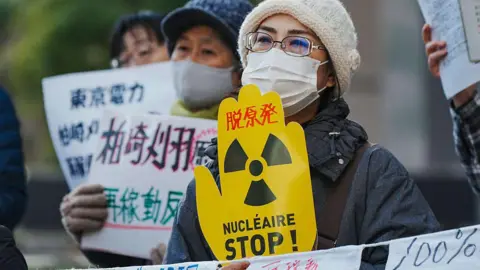
    Getty Images A woman in a face mask holding an anti-nuclear power sign.Getty Images

    Many remain opposed to Japan’s nuclear power revival

    But there is still fear and mistrust. In 2023, the release of treated radioactive water from the Fukushima Daiichi nuclear plant sparked anxiety and anger both at home and abroad.

    And many remain opposed to restarting nuclear plants. In December, hundreds of protesters gathered outside the Niigata prefectural assembly where Kashiwazaki-Kariwa is located, voicing safety concerns.

    “If something was to happen at the plant, we would be the ones to suffer the consequences,” one protester told Reuters news agency.

    Last week, ahead of Kashiwazaki-Kariwa’s restart, a small crowd gathered in front of Tepco’s headquarters to protest again.

    Nuclear safety standards have been ramped up after Fukushima. The NRA, a cabinet body established in 2012, now oversees the restarting of the country’s nuclear plants.

    At Kashiwazaki-Kariwa, 15-metre-high (49-foot) seawalls have been built to guard against large tsunamis; watertight doors now protect critical equipment at the facility.

    “Based on the new safety standards, [Japan’s nuclear plants] could survive even a similar earthquake and tsunami like the one we had in 2011,” says Nei, the former senior nuclear safety official.

    But what worries Koppenborg is: “They’re preparing for the worst they’ve seen in the past but not for what is to come.”

    Some experts worry that these policies are not planning enough to account for rising sea levels due to climate change, or the once-in-a-century megaquake that Japan has been anticipating.

    “If the past repeats itself, Japan is super well-prepared,” Koppenborg says. “If something really unexpected happens and a bigger than expected tsunami comes along, we don’t know.”


    Source link

  • Israeli PM Netanyahu agrees to join Trump’s Board of Peace

    Israeli PM Netanyahu agrees to join Trump’s Board of Peace


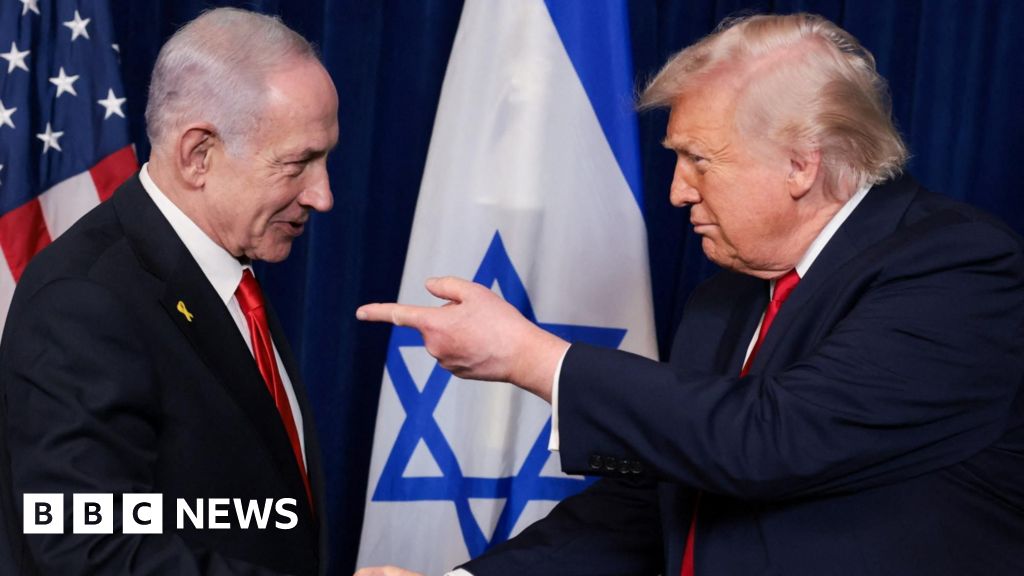
    Israel’s Prime Minister Benjamin Netanyahu has accepted an invitation to join US President Donald Trump’s Board of Peace.

    A statement from his office said Netanyahu would become a member of the board “which is to be comprised of world leaders”.

    The board was originally thought to be aimed at helping end the two-year war between Israel and Hamas in Gaza and oversee reconstruction. But its proposed charter does not mention the Palestinian territory and appears to be designed to supplant functions of the UN.

    The United Arab Emirates and Bahrain have also agreed to join, as have Albania, Armenia, Azerbaijan, Belarus, Hungary, Kazakhstan, Morocco and Vietnam. Many others have expressed reservations.

    It is not clear how many countries have been invited to join Trump’s new body -Canada, Russia, Turkey and the UK are among them, but have not yet publicly responded.

    Norway has said it will not join because the current proposal “raises a number of questions”, while France and Sweden have indicated they will do the same.

    According to a copy of the charter leaked to the media, member states will be given a renewable three-year term, but they can secure a permanent place if they contribute $1bn (£740m) of funding to the board.

    The document says the Board of Peace will be “an international organisation that seeks to promote stability, restore dependable and lawful governance, and secure enduring peace in areas affected or threatened by conflict”. It will “undertake such peace-building functions in accordance with international law”, it adds.

    Trump will be the chairman but also “separately serve” as representative of the US. A US official has said the chairmanship can be held by Trump “until he resigns it”, but that a future US president may choose a new representative.

    As chairman, he will have “exclusive authority to create, modify or dissolve subsidiary entities as necessary or appropriate to fulfil the Board of Peace’s mission”, according to the document.

    He will also select “leaders of global stature” to serve two-year terms on an Executive Board that will help deliver the mission of the Board of Peace, US officials say.

    Last Friday, the White House named the seven members of the founding Executive Board. They included US Secretary of State Marco Rubio, Middle East special envoy Steve Witkoff, Trump’s son-in-law Jared Kushner as well as former British prime minister Tony Blair.

    Trump also named Nickolay Mladenov, a Bulgarian politician and former UN Middle East envoy, as the Board of Peace’s representative on the ground in Gaza during phase two of Trump’s peace plan, which should see the reconstruction and demilitarisation of the territory, including the disarmament of Hamas, as well as a full withdrawal of Israeli forces.

    Mladenov will act as a link with a Palestinian technocratic government which will “oversee the restoration of core public services, the rebuilding of civil institutions, and the stabilisation of daily life”.

    A separate Gaza Executive Board will help support the technocratic government, according to the White House.

    Witkoff, Kushner, Blair, Rowan, Mladenov will serve on it with Turkish Foreign Minister Hakan Fidan, Egyptian intelligence chief Hassan Rashad, Qatari strategic affairs minister Ali al-Thawadi, UAE minister of state for international co-operation Reem al-Hashimy, billionaire Israeli real estate developer Yakir Gabay, and Sigrid Kaag, a Dutch politician and UN special co-ordinator for the Middle East peace process.

    On Saturday, Netanyahu’s office said the Gaza Executive Board’s composition “was not co-ordinated with Israel and runs contrary to its policy”.

    Israeli media said the decision to include representatives of Turkey and Qatar – which both helped broker the ceasefire that took effect in October, along with Egypt and the US – had happened “over Israel’s head”.

    Under phase one of the peace plan, Hamas and Israel agreed to the ceasefire, an exchange of living and dead Israeli hostages in Gaza for Palestinian prisoners in Israeli jails, a partial Israeli withdrawal, and a surge in deliveries of humanitarian aid.

    Phase two faces major challenges, with Hamas having previously refused to give up its weapons without the creation of an independent Palestinian state, and Israel having not committed to fully withdrawing from Gaza.

    The ceasefire is also fragile. More than 460 Palestinians killed in Israeli strikes since it came into force, according to Gaza’s Hamas-run health ministry, while the Israeli military says three of its soldiers have been killed in Palestinian attacks during the same period.

    The war was triggered by the Hamas-led attack on southern Israel on 7 October 2023, in which about 1,200 people were killed and 251 others were taken hostage.

    Israel responded to the attack by launching a military campaign in Gaza, during which more than 71,550 people have been killed, according to the territory’s health ministry.


    Source link