Category: Uncategorized

  • Survivors tell of Pakistan mall fire horror

    Survivors tell of Pakistan mall fire horror


    Riaz Sohail, Zubair Khan and Qaisar KamranBBC Urdu

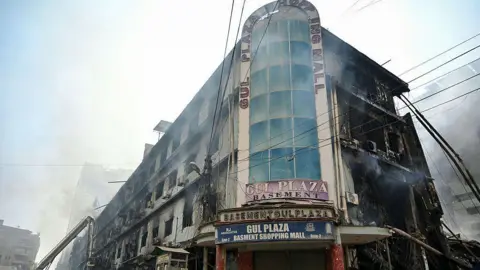
    AFP via Getty Images Fire fighters and rescue workers perform a cooling operation amid the debris after a massive fire at a shopping mall in Karachi on January 19, 2026AFP via Getty Images

    Dozens of people are still missing after Gul Plaza caught fire on Saturday evening

    Muhammed Amin is beside himself with grief and despair.

    His brother, Naveed Memon, was inside Gul Plaza when a massive fire ripped through the densely-packed shopping centre in Pakistan’s commercial capital, Karachi.

    Like dozens of others, he still hasn’t been found.

    “What should I tell my mother when I go home? What should I tell my nieces?” asks Amin.

    “My nieces are crying for their father – they are asking me why he is late to come home. What should I tell them? How can I tell them that their father is gone?”

    Housing an estimated 1,200 shops across a basement, mezzanine and three floors, Gul Plaza was a wholesale market that offered a wide range of cheaply-priced products, including wedding wear, toys, decorations, bed sheets, artificial flowers and baby clothes. The city’s residents would frequent it in droves, particularly ahead of festivals, weddings and other important occasions.

    What started the fire is still unknown.

    But witnesses say the speed at which it spread, a lack of working fire exits and the density of shoppers and stalls crammed into the building exacerbated the disaster.
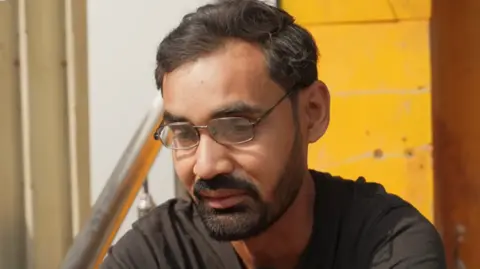
    Muhammed Amin, whose brother is believed to have died in the fire

    Muhammed Amin’s brother is still missing

    Rehan Faisal, who owned a bedsheet shop, said that he was able to escape because his shop was located near one of the exits – he broke down the door to get out.

    He said that although his staff had heard there was a fire in one part of the market, they had initially not worried because it was located some distance away from them.

    “No-one knew it would spread so much,” Faisal added, saying it only took about “five to seven minutes” for everything to “burn before our eyes”.

    Shoiab, 19, who worked at a decorations shop, said he first heard about the fire on a lower floor at around 22:00 local time (17:00 GMT) on Saturday night.

    “Many customers and shopkeepers were coming up… and saying there was a fire downstairs. I was just beginning to comprehend the situation when the shop owner told me to lock up and get out,” he told BBC Urdu.

    “Then suddenly everything was covered with smoke – we couldn’t see anything and there was panic and confusion everywhere. People were just running here and there. I knew some ways to get out of the plaza. But the first exit I tried was locked and the crowds were too dense for me to go the other way.”

    With the facility due to close soon, most of the gates of the shopping centre were locked. Senior police official Syed Asad Raza told Reuters news agency that all but three of the centre’s 16 exits were locked.

    Shoiab was among the luckier ones. He fainted amid the smoke, but someone – he doesn’t know who – pulled him out of the building to safety.

    Another colleague who was trying to escape with him is still missing.
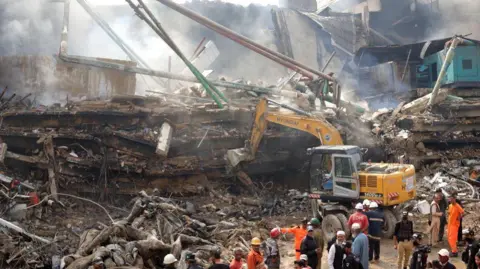
    EPA Rescuers search through the rubble at Gul Plaza in Karachi, Pakistan, 19 January 2026. EPA

    The remaining structure is at risk of collapse, making further rescue efforts difficult, an official told the BBC

    The confirmed death toll from the fire currently stands at 27, but more than 70 are still missing and the unstable structure of the still smouldering building is making it difficult for rescue officials to go inside and assess the full extent of the disaster.

    Dr Abid Jalaluddin Sheikh, a senior rescue official, told BBC Urdu that rescue efforts were being slowed further because the structure of the building had been so severely damaged that it was at risk of completely collapsing at any time. He added that many bodies were unrecognisable and they would need to conduct forensic examinations to confirm the exact number of deaths.

    Meanwhile crowds of people looking for their loved ones have gathered around the building, desperate for any news.

    Muhammad Qaiser told the BBC that his wife, sister and daughter-in-law were among the missing. “They had said that they were going to the market. The last contact with them was at 20:00 when it was discovered that a fire had broken out. We do not know what happened to them.”

    Qaiser said that officials were unable to help them, describing how his family had been told to visit both the burns centre and the morgue at different times.

    Another resident, Haroon, said that three of his brothers had been inside the building. Two managed to escape but one was still missing.

    “My brother called our parents from inside the plaza asking them to save him. He also called his friends and appealed to them, but no one could save him,” he said.
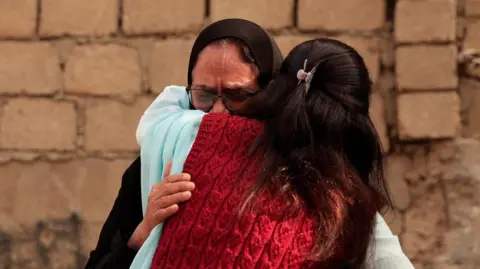
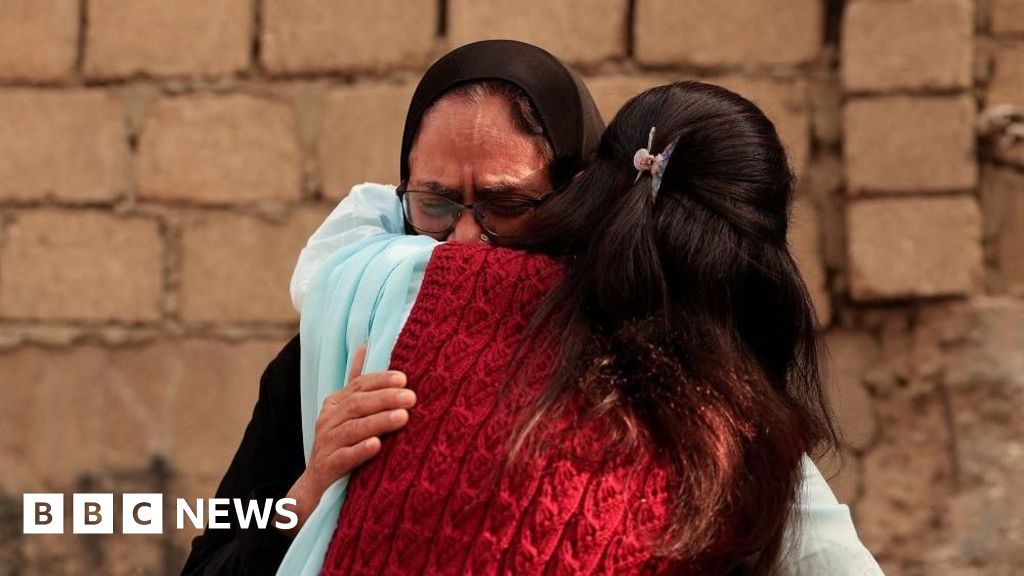
    Reuters A woman is comforted as she mourns six missing family members who were there shopping for a wedding ceremony, following a massive fire that broke out in the Gul Plaza Shopping Mall in Karachi, Pakistan, January 19, 2026.Reuters

    Some are questioning if more could have been done to save those trapped inside

    The survivor, Shoaib, is also still at the building hoping for news of his cousin, Faizan, who worked at a different shop.

    “Every morning, I used to go to work and back with my cousin. Now I don’t feel like going back home without him. I’m waiting for him to be pulled out of the building alive,” he said, adding that his phone was ringing all the time because Faizan’s family keep asking if he had any news.

    “I have no answers for them.”

    As the searches continue, anger is growing.

    On Monday, hundreds of protesters gathered around the building calling for accountability.

    Karachi Mayor Murtaza Wahab, who arrived on the scene nearly 24 hours after the fire broke out, was met with jeers.

    Muhammed Arif, whose nephew is among the missing, says that the relief work did not start on time and that “precious lives could have been saved”.

    Many residents and politicians have echoed the sentiment that rescue officials took long to get to the building.

    Faisal said that it took a long time for the fire brigade to arrive, “while the ambulances, which weren’t even needed at that moment – had already reached”.

    News agency Reuters quoted rescue services as saying that authorities only received the first emergency call at 22:38 on Saturday, reporting that ground-floor shops were on fire. By the time firefighters arrived, the flames had already spread to the upper floors, engulfing much of the building.

    Murad Ali Shah, the chief minister of the southern province of Sindh, which includes Karachi, has promised an investigation into the fire and response time.

    And lawmakers from across the political spectrum on Tuesday condemned the fire and called for sweeping reforms in building safety, emergency response and urban governance, as the House debated an adjournment motion on the tragedy.

    The prime minister is among those who have offered condolences and promised action.

    But for those gathered at the ruins of Gul Plaza, this is little consolation.

    “This is the third time in a while that a building has caught fire in the Saddar area of Karachi,” said Muhammed Arif.

    “How long will this continue to happen and how many more people must die?”


    Source link

  • Indian couple win $200,000 settlement over ‘food racism’ at US university

    Indian couple win $200,000 settlement over ‘food racism’ at US university


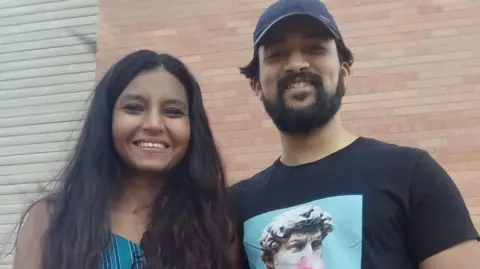
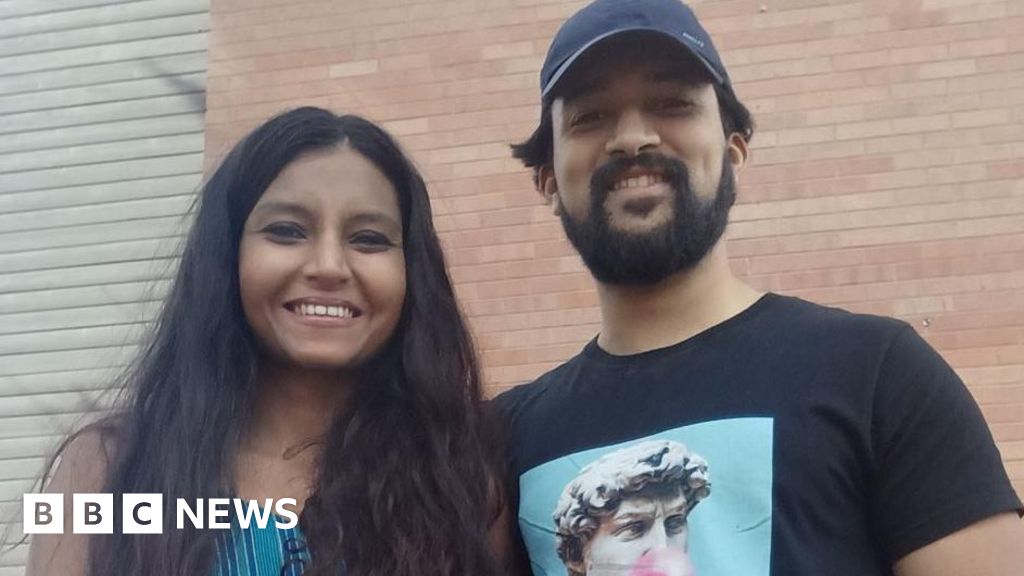
    Urmi Bhattacheryya Urmi Bhattacheryya and Aditya Prakash pose outside a building.Urmi Bhattacheryya

    Urmi Bhattacheryya and Aditya Prakash sued their university for alleged racial discrimination

    A dispute that began over heating a dish in a microwave has ended with two Indian students winning a $200,000 settlement from a US university.

    Aditya Prakash and his fiancee, Urmi Bhattacheryya, told the BBC they filed a civil rights lawsuit against the University of Colorado, Boulder, after they faced a series of “microaggressions and retaliatory actions” following the microwave incident.

    The harassment began, the lawsuit alleged, after a university staff member objected to Prakash heating up his lunch of palak paneer – one of northern India’s most popular dishes, made of pureed spinach and paneer (considered an Indian equivalent of cottage cheese) – in a microwave on campus, because of the way it smelled.

    In response to the BBC’s questions, the university said it could not comment on the “specific circumstances” surrounding the students’ claims of discrimination and harassment due to privacy laws, but added it was “committed to fostering an inclusive environment for all students, faculty and staff regardless of national origin, religion, culture and other classes protected under US laws and by university policies”.

    “When these allegations arose in 2023, we took them seriously and adhered to established, robust processes to address them, as we do with all claims of discrimination and harassment. We reached an agreement with the students in September [2025] and deny any liability in this case,” the university said.

    Prakash said for them, the point of the lawsuit was not the money. “It was about making a point – that there are consequences to discriminating against Indians for their ‘Indianness’.”

    The lawsuit has received significant media coverage in India since it was first reported last week, starting a conversation around what many have described as “food racism” in Western countries. Many Indians on social media have shared their own experiences of facing ridicule over their food habits abroad.

    Some have also pointed out that discrimination over food is rampant in India as well, where non-vegetarian food is banned in many schools and colleges over perceptions of it being impure or dirty. People from disadvantaged castes and north-eastern states often face bias over their food habits, with some complaining about the smell of the ingredients they use.

    And it’s not just Indian or South Asian food – communities from Africa, Latin America and other parts of Asia have also shared their experiences of being shamed over their food habits.

    Prakash and Bhattacheryya claim their ordeal began in September 2023. Prakash, a PhD student in the Anthropology Department at the university, was microwaving his lunch of palak paneer when a British staff member allegedly remarked that his food was giving off a “pungent” odour and told him that there was a rule against heating foods with strong odours in that microwave.

    Prakash said the rule wasn’t mentioned anywhere and when he later inquired about which foods were considered pungent, he was told that sandwiches were not, while curry was.

    Getty Images Palak paneer is prepared using pureed spinach and cubes of cheese and is mostly eaten with naan, a type of bread, and riceGetty Images

    Palak paneer is prepared using pureed spinach and cubes of paneer cheese

    Prakash alleged that the exchange was followed by a series of actions by the university which led to him and Bhattacheryya – who was also a PhD student there – losing their research funding, teaching roles and even the PhD advisers they had worked with for months.

    In May 2025, Prakash and Bhattacheryya filed a lawsuit against the university, alleging discriminatory treatment and a “pattern of escalating retaliation” against them.

    In September, the university settled the lawsuit. Such settlements are usually arrived at to avoid lengthy and expensive court battles for both parties.

    According to the terms of the settlement, the university agreed to give the students their degrees but denied all liabilities and banned them from studying or working there in future.

    In its statement shared with the BBC, the university added: “CU Boulder’s Anthropology Department has worked to rebuild trust among students, faculty and staff. Among other efforts, department leaders met with graduate students, faculty and staff to listen and discuss changes that best support the department’s efforts to foster an inclusive and supportive environment for all.”

    “Individuals who are determined to be responsible for violating university policies preventing discrimination and harassment are held accountable,” it added.

    Prakash says that this isn’t his first brush with discrimination over food.

    When he was growing up in Italy, his school teachers would often ask him to sit at a separate table during lunch breaks because his classmates found the smell of his food “off-putting”, he says.

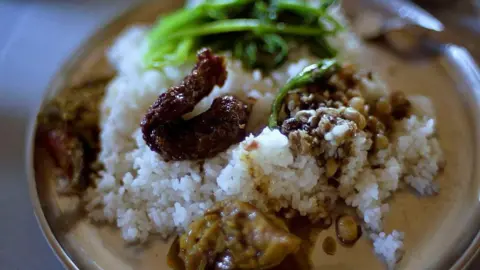
    Getty Images A lunch of traditional smoked pork and Naga chili chutney at a roadside restaurant in Nagaland. Getty Images

    People from north-eastern India often face bias over their food habits, with some complaining about the smell of the ingredients they use

    “Acts like isolating me from my European classmates or stopping me from using a shared microwave because of how my food smells are how white people control your Indianness and shrink the spaces you can exist in,” he says.

    He adds that there is a long history of food being used to put down Indian and other ethnic groups.

    “The word ‘curry’ has been conflated with the ‘smell’ of marginalised communities who toil in kitchens and peoples’ homes and has been turned into a pejorative term for ‘Indian’,” he says.

    Bhattacheryya says that even someone like former Vice-President Kamala Harris isn’t immune to being insulted over food.

    She points to a 2024 social media post by far-right activist Laura Loomer saying that if Harris became president, the White House “will smell like curry”. Loomer has denied being racist.

    In the lawsuit, Bhattacheryya also alleged she faced retaliation after she invited Prakash to speak as a guest lecturer on the topic of cultural relativism in her anthropology class. Cultural relativism is the view that no culture is superior or inferior to another as cultural practices of all groups exist within their own cultural context.

    During the lecture, Prakash says he shared several examples of food racism he had encountered, including the palak paneer incident, without naming anyone.

    Bhattacheryya says that she also faced racist abuse when she posted a thread on X about the “systemic racism” she and Prakash were facing at the university in 2024.

    Below the post, there are several comments supporting the couple but also ones that said, “go back to India”, “decolonisation was a mistake” and “it’s not just the food, many of you don’t bathe and we know”.

    Prakash and Bhattacheryya said what they wanted from the university was to be heard and understood; for their hurt and pain at being “othered” to be acknowledged and for amends to be made in a meaningful way.

    They claim that they never received a meaningful apology from the university. The university did not respond to the BBC’s question about this.

    They have since returned to India and say that they might never go back to the US.

    “No matter how good you are at what you do, the system is constantly telling you that because of your skin colour or your nationality, you can be sent back any time. The precarity is acute and our experience at the university is a good example of this,” Prakash says.

    Follow BBC News India on Instagram, YouTube, X and Facebook.


    Source link

  • Trump doubles down on Greenland threats, saying there is ‘no going back’

    Trump doubles down on Greenland threats, saying there is ‘no going back’


    Watch: BBC asks if breakup of Nato is price Trump willing to pay for Greenland

    US president Donald Trump has doubled down on his threats to take control of Greenland, saying on social media that there is “no going back” and that “Greenland is imperative”.

    During a news conference at the White House, Trump was asked how far he was willing to go to acquire Greenland and replied, “You’ll find out”.

    Meanwhile, French president Emmanuel Macron warned at a meeting at the World Economic Forum meeting in Davos, Switzerland of a “shift towards a world without rules”, while Canadian Prime Minister Mark Carney said the “old order is not coming back”.

    Trump was due to arrive in Davos on Wednesday, but a minor electrical issue on Air Force One forced the plane to turn around.

    It was unclear how the delay would impact his schedule. The White House said the plane turned around and that Trump would fly to Davos on another aircraft.

    Trump has said there are “a lot of meetings scheduled on Greenland”.

    Earlier, during the lengthy press briefing, Trump also told reporters that “things are going to work out pretty well” in Greenland.

    Asked by the BBC whether the possible break up of the Nato alliance was a price the president was willing to pay for Greenland, he responded, “Nobody has done more for Nato than I have, in every way,” and said “Nato is going to be happy and we are going to be happy,” adding, “We need it for world security.”

    But he earlier questioned whether Nato would come to aid of the US, should it be required.

    “I know we’ll come to (Nato’s) rescue, but I just really do question whether or not they’ll come to ours,” he told reporters.

    Nato – the North Atlantic Treaty Organization – currently has 32 member states, with the US one of the 12 founding countries.

    Designed to safeguard freedom and security through a collective defence, one of the core principles of the Nato alliance is outlined in Article 5, which says that an armed attack against one or more members will be considered an attack against all.

    Trump has not ruled out using military force to acquire Greenland; when NBC News asked yesterday whether he would use force to seize the territory, the president replied “no comment”.

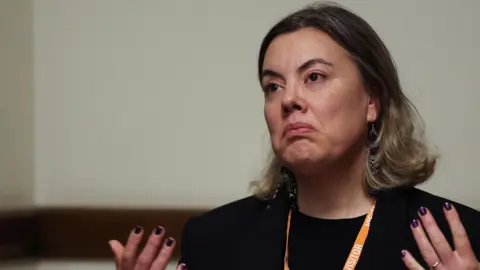
    Reuters Greenland's Minister for Business, Mineral Resources, Energy, Justice and Gender Equality Naaja Nathanielsen speaks at a press conference, wearing a black top and an orange lanyard around her neck.Reuters

    In an interview with BBC Newsnight on Tuesday evening, Greenland’s Minister of Industry and Natural Resources, Naaja Nathanielsen, said that Greenlanders were “bewildered” by the president’s demands.

    “We do not want to be Americans, and we have been quite clear about that,” Nathanielsen said.

    “What value do you put on our culture and our right to decide what happens with us in the future?”

    Ahead of the forum in Davos, Trump shared screenshots that he says showed text messages sent to him by Macron and Nato Secretary General Mark Rutte.

    In them, Rutte said he was committed to finding a way forward on Greenland, while Macron said he “does not understand what you are doing”, but offered to organise a meeting with other leaders in Paris.

    The President of the European Commission, Ursula von der Leyen, addressed the matter directly in a speech to attendees on Tuesday, which was the first day of the forum, emphasising that Europe is “fully committed” when it comes to the security of the Arctic.

    However, she said that this could only be achieved together, and called Trump’s proposed additional tariffs “a mistake”.

    The US president has said he will add a 10% tariff to “any and all goods” imported from eight European countries from 1 February if they opposed his proposed takeover of Greenland.

    In her speech, Von der Leyen added that the European Union stands in “full solidarity” with Greenland and the Kingdom of Denmark – adding that their sovereignty is “non-negotiable”.

    Her words were echoed by Canada’s Mark Carney, who said that his country’s commitment to Nato’s Article 5 – which states an armed attack against one or more members is considered an attack against all – is “unwavering”.

    “We stand firmly with Greenland and Denmark and fully support their unique right to determine Greenland’s future,” Carney said.

    In Macron’s remarks, he said he preferred “respect to bullies” and the “rule of law to brutality”.

    Earlier on Tuesday, Trump threatened a 200% tariff on French wine and champagne after Macron reportedly declined an invitation to join the Gaza “Board of Peace”.

    The French president condemned the “endless accumulation of new tariffs” as “fundamentally unacceptable”, particularly when used as leverage against territorial sovereignty.

    Macron is among those urging the EU to consider retaliatory options against US tariffs, including the anti-coercion instrument, nicknamed a “trade bazooka”.

    Sources close to the international trade committee have said that the European Parliament is planning to suspend approval of the US trade deal agreed in July, in a move that would mark another escalation in tensions between the US and Europe.


    Source link