Category: Uncategorized

  • Seven killed in explosion at Chinese restaurant

    Seven killed in explosion at Chinese restaurant


    Beijing has demanded the Taliban government protect its citizens after an explosion at a Chinese restaurant in the Afghan capital Kabul killed at least seven people.

    Six Afghans and one Chinese national were killed, and several more injured, in the blast at a Chinese restaurant in a heavily-guarded part of the city centre on Monday, officials told the media.

    The jihadist group Islamic State (IS) said it was behind the attack – although police in Kabul said the “nature of the explosion is unknown so far and is being investigated”.

    China has urged its citizens not to travel to Afghanistan, where the Taliban seized control in 2021. Islamic State has claimed numerous bombings since then.

    Speaking on Tuesday, Beijing’s foreign ministry spokesman Guo Jiakun added that China had “made urgent representations with the Afghan side, demanding that the Afghan side spare no effort to treat the injured, further take effective measures to protect the safety of Chinese citizens”.

    City police spokesman Khalid Zadran said the explosion took place near the kitchen of the Chinese Noodle restaurant, which is located under a guesthouse in the capital’s Shahr-e-Naw area.

    Dejan Panic, the Afghanistan director of humanitarian group EMERGENCY, said they received “20 people” at their hospital, seven of whom were dead on arrival. Four women and a child were also among the injured.

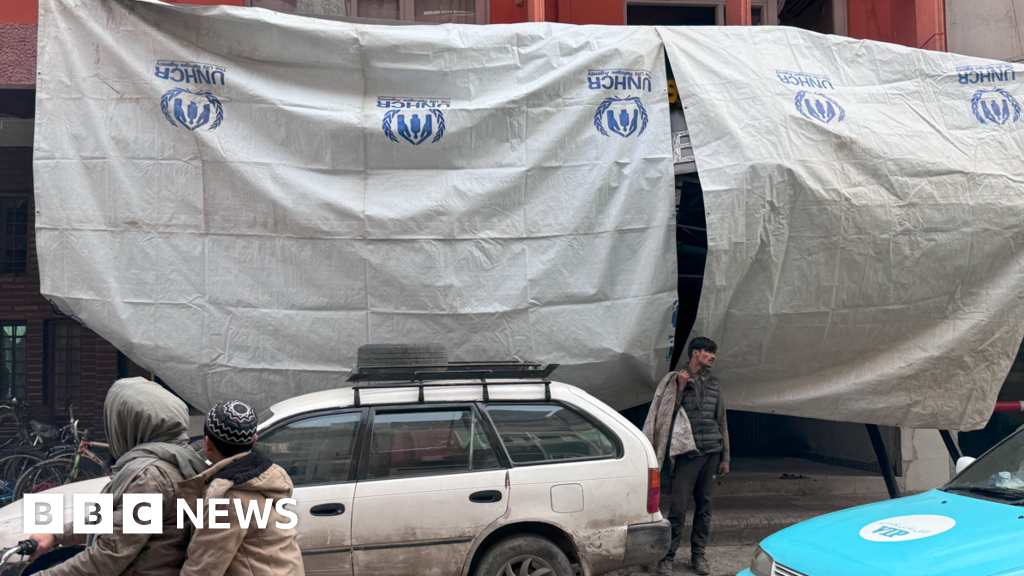
    Footage circulating on social media of the aftermath of the explosion showed a large hole torn in the side of the building, Reuters news agency said.

    Eyewitnesses told BBC Afghan that a car outside the restaurant had been completely destroyed, and that locals had helped rush people in “critical condition” to hospital. Large sheets were later put up to cover the damaged building.

    Police spokesman Zadran said the restaurant mainly served Chinese Muslims, and was run by a Chinese Muslim man from the Chinese region of Xinjiang, his wife and his Afghan business partner.

    In its statement, the local branch of IS said that China was on “the list” of its targets, especially given China’s “increasing crimes against the oppressed Uyghur Muslims”.

    China has been accused of committing crimes against humanity against the Uyghur population and other mostly-Muslim ethnic groups in the north-western region of Xinjiang.

    The Chinese government has denied all allegations of human rights abuses in Xinjiang.

    IS has previously said it was behind an attack on a Chinese-owned hotel in Kabul back in 2022, in which three of the attackers died and at least two other people were injured.

    More recently, Chinese nationals just over the border in Tajikistan have been targeted by unknown attackers. In November, six Chinese nationals were killed in three separate incidents. Beijing has told its citizens to leave the Tajik-Afghan border.

    Source link

  • BBC reports from UN compound being demolished in East Jerusalem

    BBC reports from UN compound being demolished in East Jerusalem


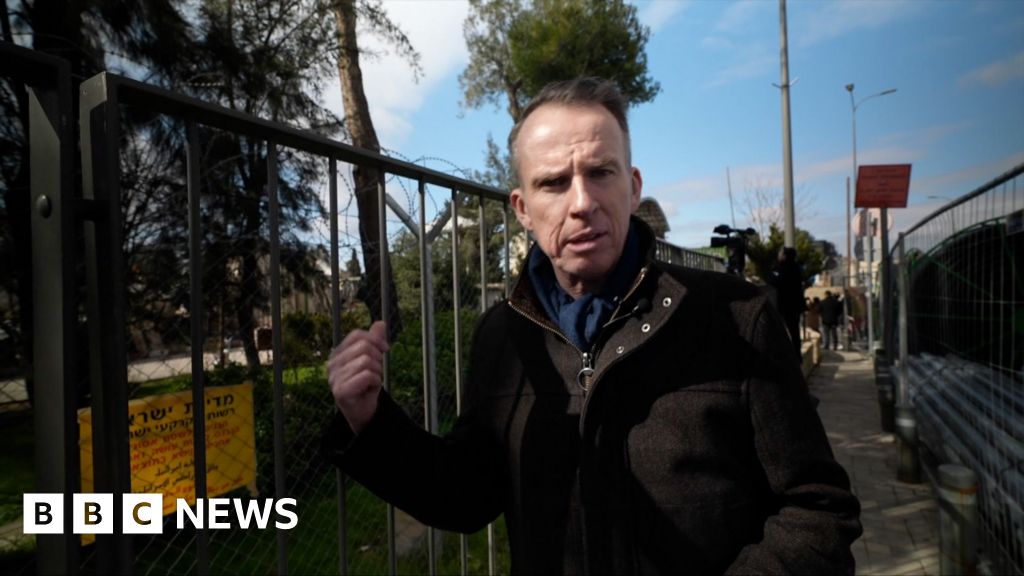
    Israeli demolition teams have begun to tear down the headquarters of the UN Palestinian Refugee Agency, known as Unrwa, in occupied East Jerusalem.

    Israel says it owns the land on which the compound stands and has accused Unrwa of being infiltrated by Hamas.

    Unrwa says its premises are protected under international conventions and, while it admits that nine Unrwa staff may have been involved in the 7 October Hamas-led attacks, it says Israel hasn’t proven anything more extensive than that.

    The BBC’s John Sudworth reports from the site.


    Source link

  • Spain train crash continues as investigators probe ‘gap’ in rail

    Spain train crash continues as investigators probe ‘gap’ in rail


    Watch: At the scene of Spain’s worst rail disaster in over a decade

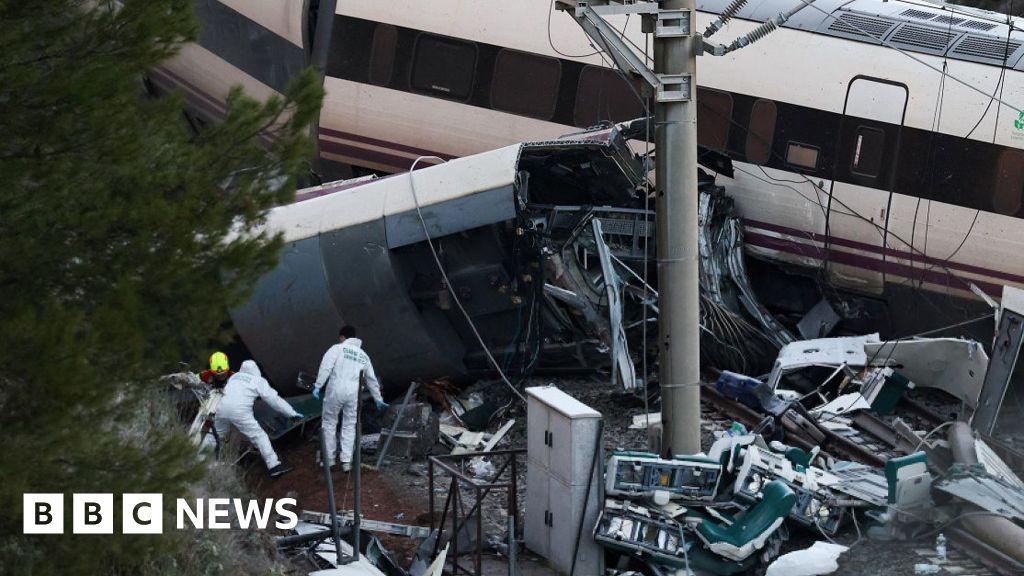
    Heavy machinery is being used to assist in the recovery following a two-train crash in southern Spain which killed at least 41 people.

    Rescuers worked through a second night as more bodies are feared to be trapped in the wreckage.

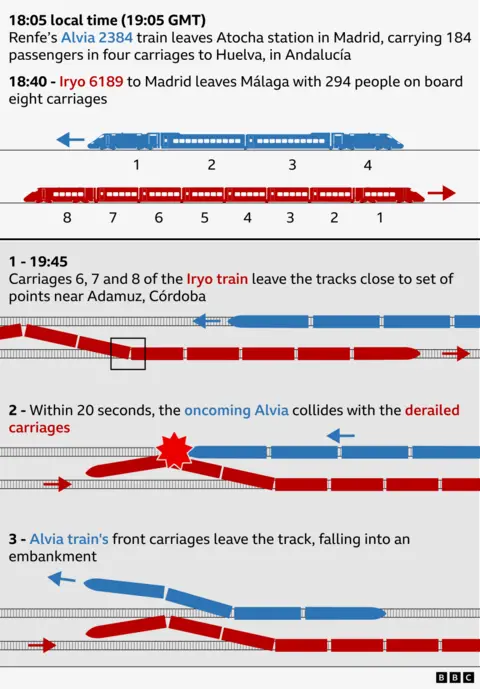
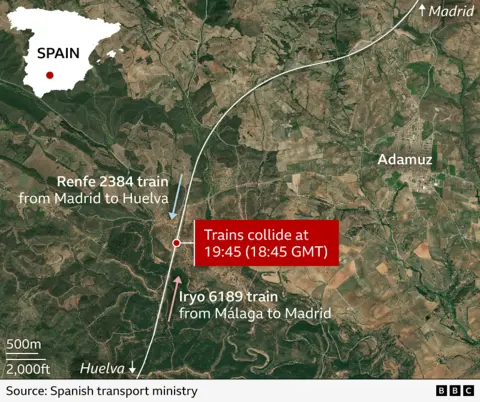
    More than 120 people were injured when carriages on a Madrid-bound train derailed and crossed over to the opposite tracks, hitting an oncoming train in Adamuz on Sunday evening.

    A faulty or damaged weld on a rail is being investigated as a factor in the crash, Spanish media report.

    Prime Minister Pedro Sanchez has cancelled his planned trip to the World Economic Forum in Davos, pledging to get to the bottom of Spain’s worst train disaster in more than a decade.

    Spain’s King Felipe and Queen Letizia will visit the site later on Tuesday.

    Three days of national mourning have been announced.

    A satellite-style map of southern Spain showing the location of a train collision near Adamuz. Two labelled train routes are marked: the Renfe 2384 train travelling south from Madrid to Huelva (yellow arrow) and the Iryo 6189 train travelling north from Málaga to Madrid (green arrow). A red marker indicates the collision point at 19:45 local time (18:45 GMT). A small inset map of Spain highlights the region. Source: Spanish transport ministry.

    Transport Minister Óscar Puente said the death toll “is not yet final”.

    Officials are working to identify the dead.

    Puente said the investigation could take at least a month, describing the incident as “extremely strange”.

    Spanish media report that a 30cm gap in one of the rails is the current focus of the investigation.

    Technicians told the El Mundo newspaper that a “bad” or “deteriorated” weld was “more than likely” the cause for the derailment.

    Ignacio Barron, head of Spain’s Commission of Investigation of Rail Accidents (CIAF), said on RTVE: “What always plays a part in a derailment is the interaction between the track and the vehicle, and that is what the commission is currently [looking into].”

    However, Spain’s El País newspaper reports that it was not clear whether the fault was a cause or a result of the crash.

    On Monday, Renfe President Álvaro Fernández Heredia apparently ruled out “human error”, telling RNE programme Las Mañanas that, if “the driver makes a mistake, the system itself corrects it”.

    Heredia also told RNE that both trains were travelling under the maximum speed limit on the stretch of track where the crash happened.

    As the investigation into the crash continues, Spanish media reported that train drivers warned about the state of the Madrid-Andalusia line in August and requested a speed limit of under 250kph.

    In a letter to the state-owned rail infrastructure administrator, Adif, the drivers union reportedly said the increase in the number and weight of high-speed trains was causing a greater number of failures.

    Graphic showing how the train crash happened in Spain in three stages. The image shows the Renfe train is four carriages long and the Irya train is eight carriages long. Text says that at 18:05 local time (19:05 GMT), Renfe’s Alvia 2384 train (shown in blue) leaves Atocha station in Madrid, carrying 184 passengers in four carriages to Huelva, in Andalucía. At 18:40, Iryo 6189 to Madrid (shown in red) leaves Málaga with 294 people on board eight carriages. At 19:45, carriages 6, 7 and 8 of the Iryo train leave the tracks close to set of points near Admuz, Córdoba. Within 20 seconds, the oncoming Alvia collides with the derailed carriages. The Alvia train's front carriages leave the track, falling into an embankment.

    Four hundred passengers and staff were on board the two trains, the rail authorities said. Emergency services treated 122 people, with 41, including children, still in hospital. Of those, 12 are in intensive care.

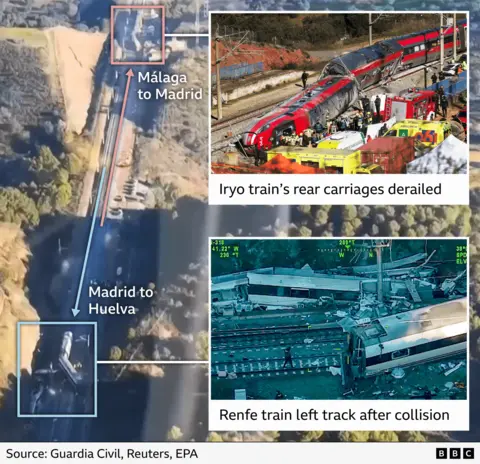
    Most of those killed and injured were in the front carriages of the Huelva-bound train, officials said.

    A composite graphic showing the scene of a train collision in Spain. The main background is an aerial image with two highlighted locations: one labelled “Málaga to Madrid” showing derailed train carriages, and another labelled “Madrid to Huelva” showing another derailed train. At the top right, an inset photo shows emergency workers around red Iryo train carriages that have derailed, labelled “Iryo train’s rear carriages derailed.” At the bottom right, another inset shows damaged Renfe train carriages lying off the tracks after the collision, labelled “Renfe train left track after collision.”

    Salvador Jimenez, a journalist with RTVE who was on one of the trains, said the impact felt like an “earthquake”.

    “I was in the first carriage. There was a moment when it felt like an earthquake and the train had indeed derailed,” Jimenez said.

    Footage from the scene appears to show some train carriages had tipped over on their sides. Rescue workers can be seen scaling the train to pull people out of the lopsided train doors and windows.

    A Madrid-bound passenger, José, told public broadcaster Canal Sur: “There were people and screaming, calling for doctors.”

    Watch: Footage inside Spanish train as passengers evacuate from crash

    Rail network operator Adif said the collision happened at 19:45 local time (18:45 GMT) on Sunday, about an hour after one of the trains left Málaga heading north to Madrid, when it derailed on a straight stretch of track near the city of Córdoba.

    The force of the crash pushed the carriages of the second train into an embankment, according to the transport minister.

    All high-speed services between Madrid and the southern cities of Malaga, Cordoba, Sevilla and Huelva have been suspended until Friday.


    Source link