
Category: Uncategorized

  • ‘Europe won’t be blackmailed,’ Danish PM says in wake of Trump Greenland threats

    ‘Europe won’t be blackmailed,’ Danish PM says in wake of Trump Greenland threats


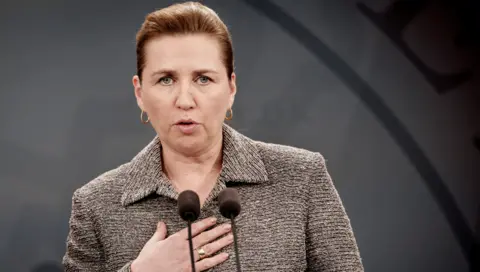
    Reuters Danish Prime Minister Mette Frederiksen speaks at a press conference Reuters

    Mette Frederiksen and other European allies are standing in solidarity with Greenland, despite Trump’s threat of tariffs

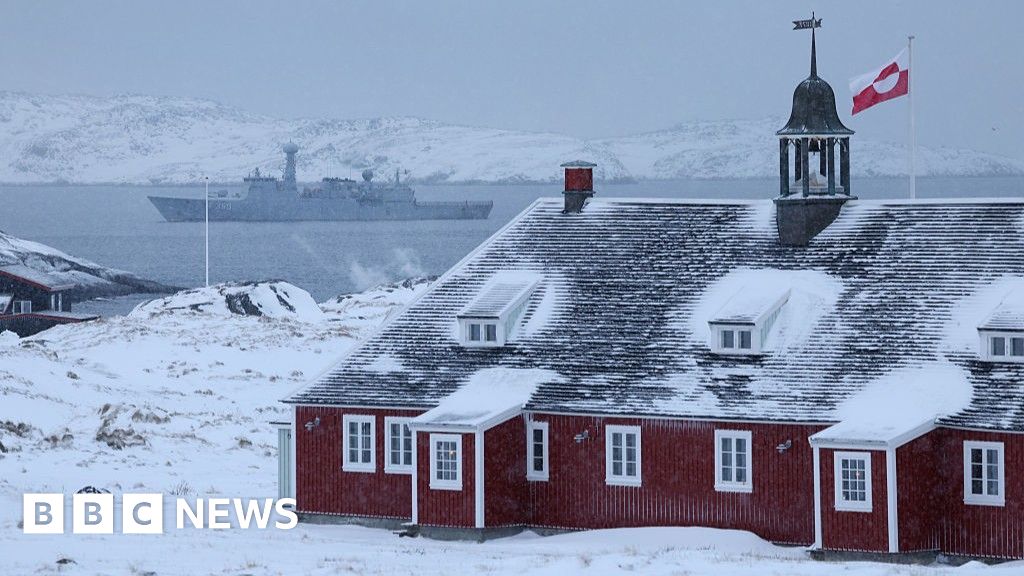
    Denmark’s Prime Minister Mette Frederiksen says “Europe won’t be blackmailed”, as she and other European leaders continue to weigh their response to US President Donald Trump’s tariff threats over Greenland.

    Trump says he will impose new taxes on eight US allies – Denmark, Finland, France, Germany, the Netherlands, Norway, Sweden and the UK – in February if they oppose his proposed takeover of the autonomous Danish territory.

    He insists Greenland is critical for US security and has not ruled out taking it by force – a move that has drawn widespread criticism.

    The countries threatened with tariffs have now issued joint statement, saying Trump’s plan risks a “dangerous downward spiral”.

    “Tariff threats undermine transatlantic relations,” they said, reiterating that they “stand in full solidarity with the Kingdom of Denmark and the people of Greenland”.

    The countries stressed they are “committed to strengthening Arctic security as a shared transatlantic interest” as members of the Nato military alliance.

    “We stand ready to engage in a dialogue based on the principles of sovereignty and territorial integrity that we stand firmly behind,” the statement reads.

    Separately, Frederiksen wrote on Facebook: “We want to cooperate and we are not the ones seeking conflict. And I am happy for the consistent messages from the rest of the continent: Europe will not be blackmailed.”

    “It is all the more important that we stand firm on the fundamental values that created the European community.”

    It came as EU members held an emergency meeting in Brussels on Sunday.

    Trump has threatened to impose a 10% tariff on goods from Denmark, Norway, Sweden, France, Germany, the UK, the Netherlands and Finland, which would come into force on 1 February, but could later rise to 25% – and would last until a deal was reached.

    “These Countries, who are playing this very dangerous game, have put a level of risk in play that is not tenable or sustainable,” he wrote, adding: “This is a very dangerous situation for the Safety, Security and Survival of our Planet”.

    The US president insists Greenland is critical for US security and has said previously that Washington would get the territory “the easy way” or “the hard way”.

    Greenland is a sparsely populated but resource-rich and its location between North America and the Arctic makes it well placed for early warning systems in the event of missile attacks and for monitoring vessels in the region.

    US Treasury Secretary Scott Bessent on Sunday told NBC News’ Meet the Press that “Greenland can only be defended if it is part of the US, and it will not need to be defended if it is part of the US”.

    “I believe that the Europeans will understand that this is best for Greenland, best for Europe and best for the United States,” he said.

    It is still unclear how the tariffs will affect those Trump has already imposed on the UK and EU. French President Emmanuel Macron, who is working to co-ordinate the European response to the tariff threats, said he would request that the EU activate its “anti-coercion instrument” if Trump does impose them.

    The US president is due to speak at the World Economic Forum in Davos, Switzerland on Wednesday on the theme “how can we co-operate in a more contested world?” Macron, as well as the leaders of Germany and the EU, will also be attending the annual conference.

    Canadian Prime Minister Mark Carney, who will also be there, said his country was “concerned by the recent escalation” and that it would be “significantly increasing Arctic security — strengthening our military and investing in critical infrastructure”.

    “Canada strongly believes that the best way to secure the Arctic is by working together within Nato,” he also wrote on X.

    The head of Nato, Mark Rutte, meanwhile, said he had spoken to Trump “regarding the security situation in Greenland and the Arctic”.

    “We will continue working on this, and I look forward to seeing him in Davos later this week,” he added.
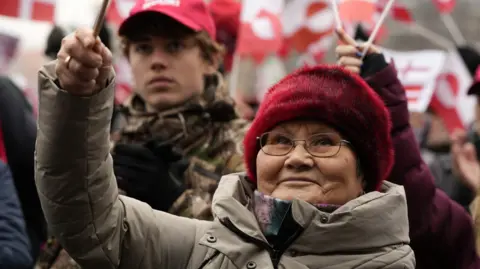
    EPA/Shutterstock People take part in a protest under the slogans 'Hands off Greenland' and 'Greenland for Greenlanders' in Copenhagen, Denmark, 17 January 2026.EPA/Shutterstock

    Protests were held over the weekend in both Denmark and Greenland

    Public anger in both Denmark and Greenland at Trump’s threats over Greenland appears undiminished. Demonstrations against Trump’s takeover plans were held in Greenland’s capital, Nuuk, on Saturday – before the tariff announcement – as well as in Danish cities.

    These rallies coincide with a visit to Copenhagen by a delegation from the US Congress. Its leader, Democratic Senator Chris Coons, described Mr Trump’s rhetoric as “not constructive”.

    The island’s representative to the US has said that the last time Greenlanders were asked if they wanted to be part of the US, in January 2025, only 6% were in favour of doing so, while 85% were against.

    A recent poll suggests that most Americans also oppose US control of Greenland. A Reuters/Ipsos poll, which was released last Wednesday, indicated just 17% of Americans support the US taking Greenland, compared to 47% who said they opposed Trump’s push to acquire the island.

    Source link

  • Syria, SDF agree ceasefire and integration deal

    Syria, SDF agree ceasefire and integration deal


    The Syrian government has announced an immediate nationwide ceasefire with the Kurdish-led Syrian Democratic Forces (SDF), taking almost full control of the country, according to Syrian state media.

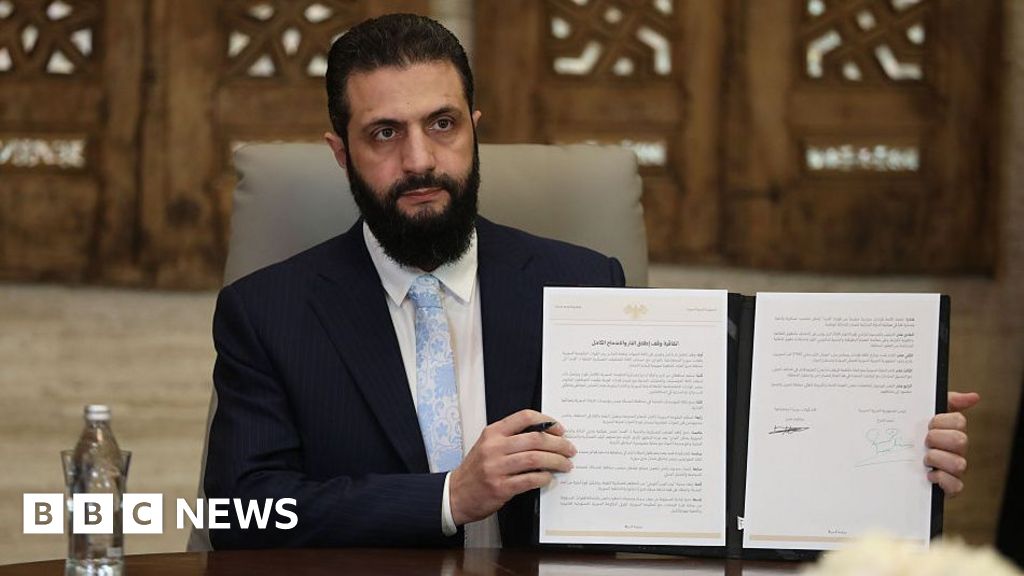
    The ceasefire ends nearly two weeks of fighting and forms part of a broader 14-point agreement that will see the SDF integrated into Syria’s military and state institutions.

    Speaking in Damascus, President Ahmed al-Sharaa said the deal would allow Syrian state institutions to reassert control over three eastern and northern governorates – al-Hasakah, Deir Ezzor and Raqqa.

    The announcement followed a meeting between al-Sharaa and the US special envoy to Syria, Tom Barrack, in Damascus. Barrack praised the agreement as a step toward a “unified Syria.”

    SDF commander Mazloum Abdi was expected to attend the meeting but was unable to travel due to weather conditions, with his visit postponed until Monday, al-Sharaa said.

    Kurdish-led forces established their autonomous administration during Syria’s civil war, almost a decade ago, with strong backing from the United States, which armed and trained the SDF as its main local partner in the fight against the Islamic State group (Isis).

    With US military support, the SDF drove Isis from much of northeastern Syria and went on to govern both Kurdish and Arab-majority areas.

    Under the agreement, signed by al-Sharaa and Abdi, Syrian authorities will take over civilian institutions, border crossings and oil and gas fields that have underpinned Kurdish self-rule.

    SDF military and security personnel will be integrated into Syria’s defence and interior ministries following vetting, while Damascus will assume responsibility for prisons and detention camps holding tens of thousands of foreign Isis fighters and their families.

    Damascus also reiterated pledges to recognise Kurdish cultural and linguistic rights, including giving Kurdish official language status and marking the Kurdish new year as a national holiday – the first formal recognition of Kurdish rights since Syria’s independence from France in 1946.

    The agreement also reaffirms Syria’s participation in the US-led coalition against Islamic State.

    The deal follows months of stalled negotiations after a previous integration effort failed and comes after Syrian government forces moved into Raqqa and nearby oil facilities following an SDF withdrawal earlier on Sunday.

    Al-Sharaa said last week it was unacceptable for a militia to control a quarter of the country and hold its main oil and commodities resources.


    Source link

  • Deadly Chile fires trigger state of catastrophe in Ñuble and Biobío regions

    Deadly Chile fires trigger state of catastrophe in Ñuble and Biobío regions


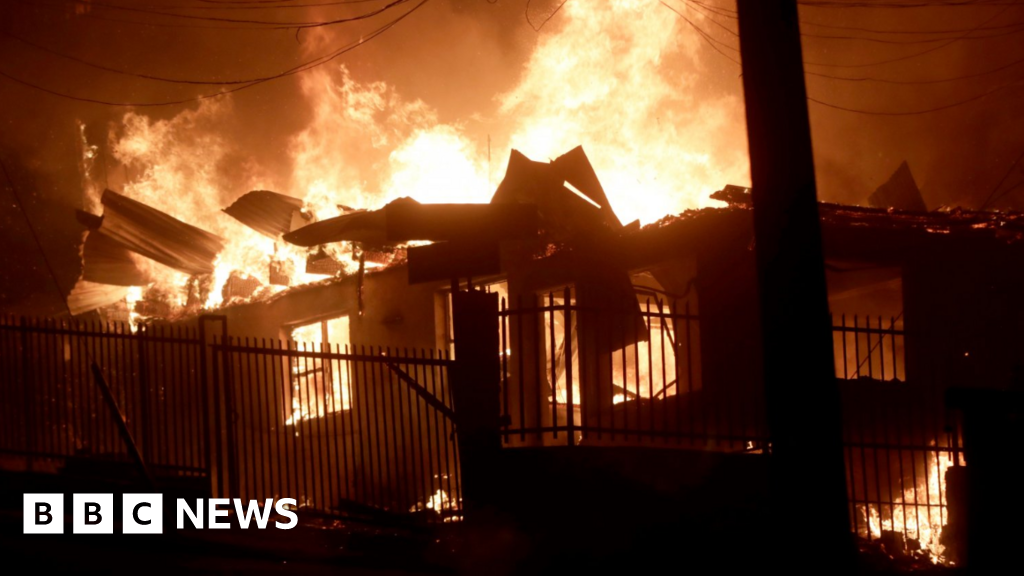
    Chilean President Gabriel Boric has declared a state of catastrophe in two regions where deadly wildfires are raging.

    At least 16 people are confirmed dead in the Ñuble and Biobío regions, about 500km (300 miles) south of the capital Santiago. At least 20,000 have been evacuated.

    The most dangerous fire has swept through dry forests bordering the coastal city of Concepción. About 250 homes have been destroyed, disaster officials said.

    Local media show pictures of charred cars in the streets. Chile has experienced a series of devastating fires in recent years, worsened by long-term drought.

    Chile’s forestry agency, Conaf, said firefighters were battling a total of 24 fires across the country on Sunday. The most threatening, it added, were in Ñuble and Biobío.

    “In light of the serious ongoing wildfires, I have decided to declare a state of catastrophe” in the two regions, Boric said in a post on X. “All resources are available,” he added.

    The fires have affected 20,000 hectares (50,000 acres) in the two regions so far, local media say.

    The bulk of the evacuations were carried out in the cities of Penco and Lirquen, just north of Concepción, which have a combined population of 60,000.

    Strong winds have fanned the flames amid summer temperatures, endangering communities and hampering firefighting efforts.

    Much of Chile is under heat alerts, with temperatures expected to reach 38C between Santiago and Biobío in the next two days.

    Two years ago, forest fires killed at least 120 people in the Valparaíso region near Santiago.


    Source link