
 Reuters / Getty Images / EPA
The White House has released the names of the members who will be part of the senior executive working with his new “Board of Peace” for Gaza.
With the US president as chair, the founding “Executive Board” will oversee the work of a committee of technocrats tasked with the temporary governance of Gaza – and its reconstruction.
Each member is expected to be in charge of a portfolio that will be “critical to Gaza’s stabilisation”, the White House has said. But it is not yet clear who will be responsible for which priorities.
There will also be a separate “Gaza Executive Board” – responsible for overseeing all on-the-ground work of yet another administrative group, the National Committee for the Administration of Gaza (NCAG).
Meanwhile, the Board of Peace is expected to sit above these two executive bodies and comprise a number of world leaders.
No women and no Palestinians have been announced so far at the top level, but the White House said additional members will be announced over the coming weeks.
So, who is on the Executive Board?
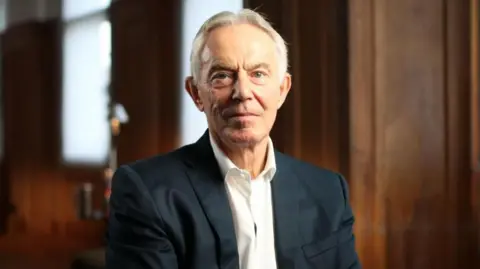
Sir Tony Blair
 BBC/Monika Ghosh
Former UK Prime Minister Sir Tony Blair had long been talked about as a potential member of Trump’s “Board of Peace”, with the US president confirming back in September that he had expressed an interest in joining the body.
The former Labour Party leader was the UK prime minister from 1997 to 2007 and took the country into the Iraq War in 2003, a decision which means some may view his presence on the board as controversial.
After leaving office, he served as Middle East envoy for the Quartet of international powers – the United Nations, European Union, US and Russia – from 2007 to 2015.
Sir Tony is the only founding member of the executive board who is not a US citizen.
He previously described Trump’s plans for Gaza as the “best chance of ending two years of war, misery and suffering”.
In a statement, Sir Tony said he was “honoured” to be named on the executive board, and thanked president Trump for his leadership in establishing the group.
He will also serve on the Gaza Executive Board.
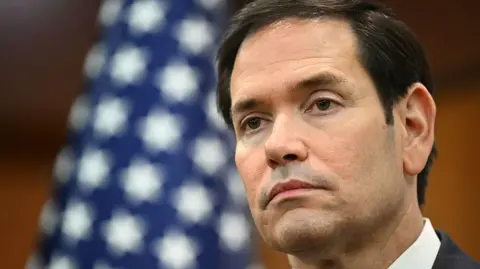
Marco Rubio
 Getty Images
As US Secretary of State, Marco Rubio is central to the Trump administration’s approach to foreign policy.
Before Trump’s return to office, Rubio had spoken out against a ceasefire in Gaza, saying that he wanted Israel “to destroy every element of Hamas they can get their hands on”.
But he has since praised the first phase of the Israel-Hamas ceasefire deal signed in October as the “best” and “only” plan.
Also in October, Rubio criticised a move by the Israeli parliament towards annexation of the occupied West Bank.
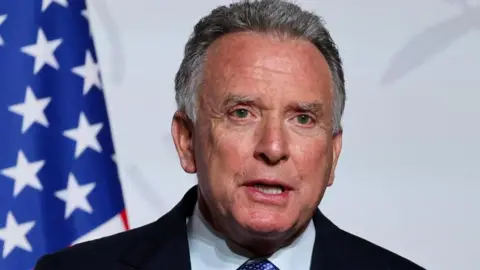
Steve Witkoff
 Reuters
US Special Envoy to the Middle East Steve Witkoff, a real estate magnate and golf partner to Trump, will also serve on the Gaza Executive Board.
Earlier this month, Witkoff announced the start of phase two of Trump’s plan to end the war in Gaza, adding that it would see the reconstruction and full demilitarisation of Gaza – including the disarmament of Hamas.
He added that he expects Hamas to “comply fully with its obligations” under the deal, or face “serious consequences”.
Witkoff has been a central figure in US-led efforts to negotiate a peace deal between Russia and Ukraine, including holding a five-hour meeting with Russian President Vladimir Putin in Moscow in December.
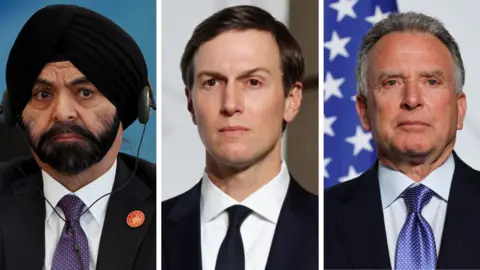
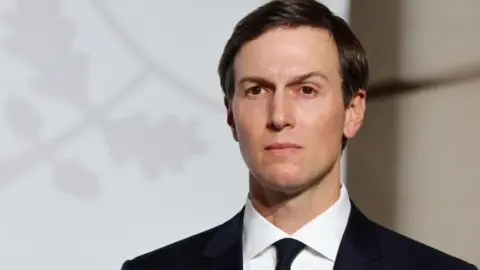
Jared Kushner
 EPA
EPAJared Kushner, the US president’s son-in-law, has also played a key role in the Trump administration’s foreign policy negotiations.
Alongside Witkoff, Kushner has often worked as a US mediator for the Russia-Ukraine and Israel-Gaza wars, and he will now also serve on the Gaza Executive Board.
In November, he met with Israeli Prime Minister Benjamin Netanyahu to discuss key sticking points in the peace deal.
At a talk at Harvard University in 2024, Kushner said “Gaza’s waterfront property could be very valuable… if people would focus on building up livelihoods.”
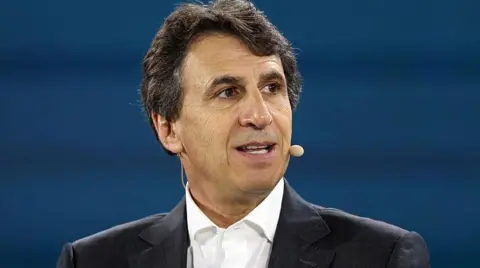
Marc Rowan
 Getty Images
Billionaire Marc Rowan is the CEO of Apollo Global Management, a large private equity firm headquartered in New York.
Rowan was seen as a contender to become US treasury secretary for Trump’s second term. He will also be a member of the Gaza Executive Board.
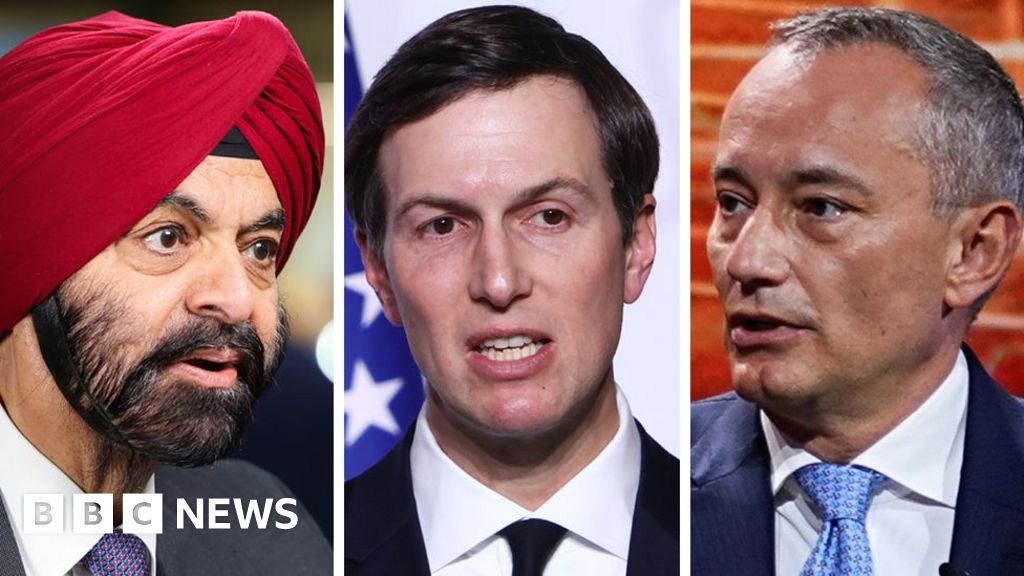
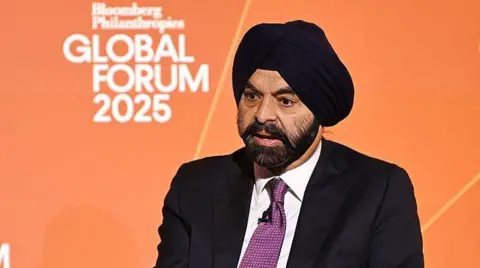
Ajay Banga
 Getty Images
Ajay Banga, president of the World Bank, has advised a number of senior US politicians, including President Barack Obama, during his lengthy career.
Born in India in 1959, Banga became a US citizen in 2007, and later served as the CEO of Mastercard for more than a decade.
Former US President Joe Biden nominated him to lead the World Bank in 2023.
Robert Gabriel
Robert Gabriel, a US national security adviser, will be the final member of the “founding executive board”.
Gabriel has worked with Trump since his 2016 presidential campaign, shortly after which, according to PBS, he became a special assistant to Stephen Miller, another of Trump’s key current advisers.
Nickolay Mladenov
 Getty Images
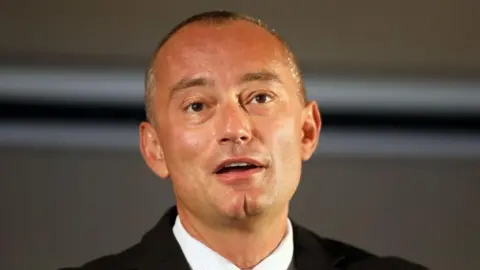
While not on the Executive Board, Nickolay Mladenov, a Bulgarian politician and former UN Middle East envoy, will be the Board of Peace’s representative on the ground in Gaza, the White House has said.
He will sit on the Gaza Executive board and oversee a separate 15-member Palestinian technocratic committee, the National Committee for the Administration of Gaza (NCAG), charged with managing the day-to-day governance of post-war Gaza.
The NCAG will be led by Ali Shaath, a former deputy minister in the Palestinian Authority (PA) which governs parts of the occupied West Bank not under Israeli control.
Correction: An earlier version of this story stated that members of the executive boards were members of the Board of Peace.