Category: Uncategorized

  • Canada’s deal with China signals it is serious about shift from US

    Canada’s deal with China signals it is serious about shift from US


    Nadine YousifSenior Canada reporter

    Watch: Canada-China trade relationship “more predictable” than with US, says Carney

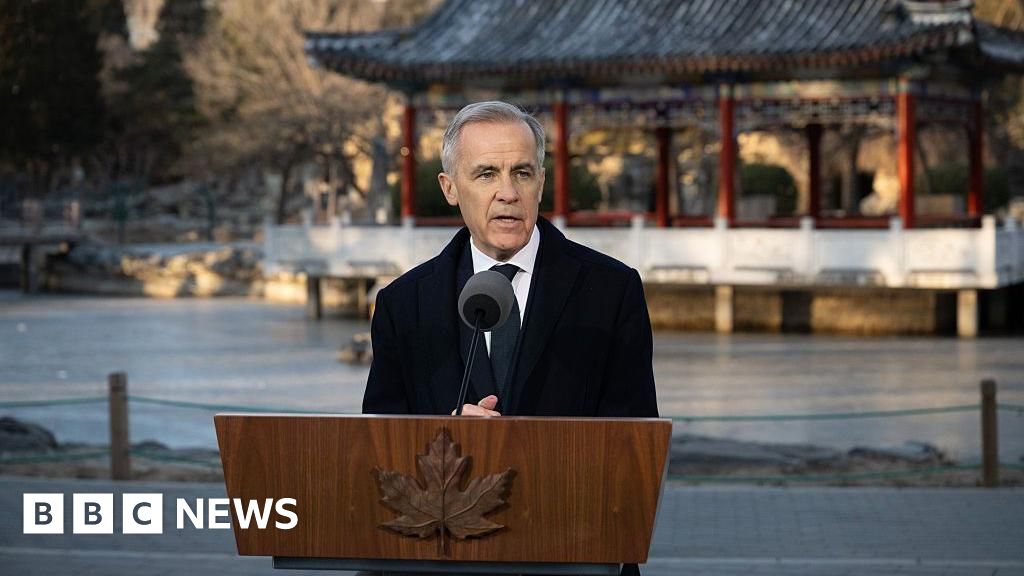
    Prime Minister Mark Carney’s new approach to Canada’s foreign policy can perhaps be distilled in one line: “We take the world as it is, not as we wish it to be.”

    That was his response when asked about the deal struck with China on Friday, despite concerns over its human rights record and nearly a year after he called China “the biggest security threat” facing Canada.

    The deal will see Canada ease tariffs on Chinese electric vehicles that it imposed in tandem with the US in 2024. In exchange, China will lower retaliatory tariffs on key Canadian agricultural products.

    Experts told the BBC the move represents a significant shift in Canada’s policy on China, one that is shaped by ongoing uncertainty with the US, its largest trade partner.

    “The prime minister is saying, essentially, that Canada has agency too, and that it’s not going to just sit and wait for the United States,” said Eric Miller, a Washington DC based trade adviser and president of the Rideau Potomac Strategy Group.

    Carney told reporters on Friday that “the world has changed” in recent years, and the progress made with China sets Canada up “well for the new world order”.

    Canada’s relationship with China, he added, had become “more predictable” than its relationship with the US under the Trump administration.

    He later wrote, in a social media post, that Canada was “recalibrating” its relationship with China, “strategically, pragmatically, and decisively”.

    In Canada, as daylight broke on Friday, reaction to the deal was swift.

    Some, like Saskatchewan Premier Scott Moe, hailed it as “very good news”. Farmers in Moe’s province have been hard hit by China’s retaliatory tariffs on Canadian canola oil, and the deal, he said, would bring much needed relief.

    But Ontario Premier Doug Ford, whose province is home to Canada’s auto sector, was sharply critical of the deal. He said removing EV tariffs on China “would hurt our economy and lead to job losses”.

    In a post on X, Ford said Carney’s government was “inviting a flood of cheap made-in-China electric vehicles without any real guarantees of equal or immediate investment in Canada’s economy”.

    Some experts said the electric vehicle provisions in the trade deal would help China make inroads into the Canadian automobile market.

    With the lower EV tariffs, approximately 10% of Canada’s electric vehicle sales are now expected to go to Chinese automakers, said Vivek Astvansh, a business professor at McGill University in Montreal.

    The expected increase in Chinese EV sales could put pressure on US-based EV makers like Tesla which are seeking to expand their market share in Canada, he said.

    “Carney has signalled to the Trump administration that it is warming up to China,” Astvansh added.

    Reaction from the White House, meanwhile, has been mixed.

    In an interview with CNBC on Friday morning, US trade representative Jamieson Greer called the deal “problematic” and said Canada may come to regret it.

    President Donald Trump, however, hailed it as “a good thing”.

    “If you can get a deal with China, you should do that,” he told reporters outside the White House.

    Since taking office for a second time last year, Trump has imposed tariffs on Canadian sectors like metals and automotives, which has led to swirling economic uncertainty. He has also threatened to rip up a longstanding North American free trade agreement between Canada, the US and Mexico, calling it “irrelevant”.

    That trade agreement, the USMCA, is now under a mandatory review. Canada and Mexico have both made clear they want it to remain in place.

    But the decision to carve out a major new deal with China is a recognition by Carney that the future of North American free trade remains unclear, Miller of the Rideau Potomac Strategy Group told the BBC.

    “There’s a reasonable chance that we could end up in 2026 without a meaningful, workable trade deal with the United States,” he said. “And Canada needs to be prepared.”

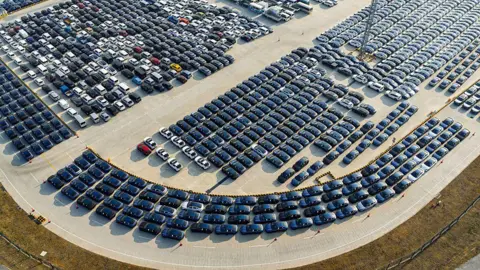
    Getty Images Aerial view showing hundreds of new energy vehicles waiting to be loaded onto a ro-ro ship for export at Taicang Port on January 15, 2025 in Taicang, Suzhou City, Jiangsu Province of China.Getty Images

    China is the world’s largest producer of EVs, accounting for over 70% of global production

    The deal with China drops Canada’s levies on Chinese EVs from 100% to 6.1% for the first 49,000 vehicles imported each year. That quota could rise, Carney said, reaching 70,000 in half a decade.

    Canada and the US put levies on Chinese EVs in 2024, arguing that China was overproducing vehicles and undermining the ability of other countries to compete.

    China is the world’s largest producer of EVs, accounting for 70% of global production.

    In exchange, China will cut tariffs on Canadian canola seed to around 15% by 1 March, down from the current rate of 84%. Carney said Beijing had also committed to removing tariffs on Canadian canola meal, lobsters, crabs and peas “until at least the end of the year”.

    China also committed to removing visa requirements for Canadian visitors, Carney said.

    Beijing did not corroborate the details in a separate statement, but said “the two reached a preliminary joint agreement on addressing bilateral economic and trade issues”.

    The introduction of Chinese EVs to Canada’s market will likely mean cheaper prices for Canadian consumers, said Gal Raz, an associate professor of Operations Management and Sustainability at Western University and an expert on the EV supply chain.

    But Raz acknowledged that the deal Canada struck could hurt Canadian car manufacturers if it comes without further action from the Carney government to help the domestic sector.

    He said it was the result of an “unfortunate” deterioration of the Canada-US trade relationship, which he noted has also hurt Canada’s automotive industry.

    “The US has really put Canada in a corner,” he said.

    Asked why Canada is giving China access to its automotive market, Carney said that China produces “some of the most affordable and energy-efficient vehicles in the world”. He said he expects the deal will spur Chinese investment into Canada’s auto industry, though he did not provide further details.

    Trump himself has signalled openness to China building plants in the US if it means creating more jobs for Americans, despite his tough-on-China stance.

    “If they want to come in and build a plant and hire you and hire your friends and your neighbours, that’s great, I love that,” Trump said at the Detroit Economic Club on Tuesday. “Let China come in, let Japan come in.”

    The US president is notably headed to Beijing for his own meeting with President Xi Jinping in April. He has also invited Xi for a state visit to Washington.

    For Carney, though, Friday’s deal may just be the first step in a “recalibration” of Canada’s trade relations.

    With additional reporting from Daniel Bush in Washington


    Source link

  • Five die in Austrian avalanches, rescuers say

    Five die in Austrian avalanches, rescuers say


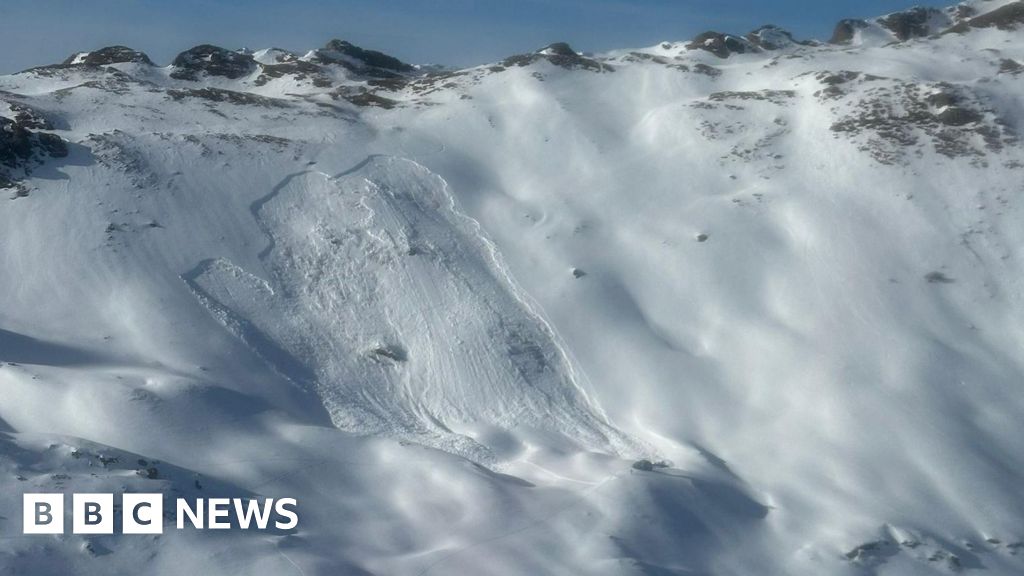
    Five off-piste skiers have died in two avalanches in the Austria’s Alps following heavy snowfall in the region.

    An avalanche hit a group of seven skiers in the Pongau area near Salzburg, killing four and seriously injuring one on Saturday, local mountain rescue officials said.

    A similar avalanche swept away a skier in the same area earlier in the day.

    Poor conditions have led to the recent deaths of a number of people in the Alps over the last week.

    In the latest incidents, the mountain rescue service said it was alerted around 14:00 local time (13:00 GMT).

    Four people were found dead, while another suffered serious injuries, they said.

    Around an hour and a half before, a female skier was buried by an avalanche in open alpine terrain near the same area.

    “Our deepest sympathies go out to the families. This tragedy painfully demonstrates how serious the current avalanche situation is,” said Gerhard Kremser, district head of the Pongau mountain rescue service.

    Further avalanches were recorded in the Pongau region around midday, but no-one was injured.

    On Tuesday, an avalanche killed a 13-year-old Czech boy skiing in the Austrian Alpine resort of Bad Gastein.

    Last Sunday, 58-year-old skier died in an avalanche in the Tyrolean resort of Weerberg in western Austria.

    In neighbouring Switzerland, a German man was killed in an avalanche, and four other people were injured, as they were cross-country skiing on Friday.

    Last weekend in France, six skiers died after being caught in avalanches in various Alpine resorts.


    Source link

  • Trump tariff threat over Greenland ‘unacceptable’, European leaders say

    Trump tariff threat over Greenland ‘unacceptable’, European leaders say


    Henri Astierand

    Bernd Debusmann Jr,White House reporter

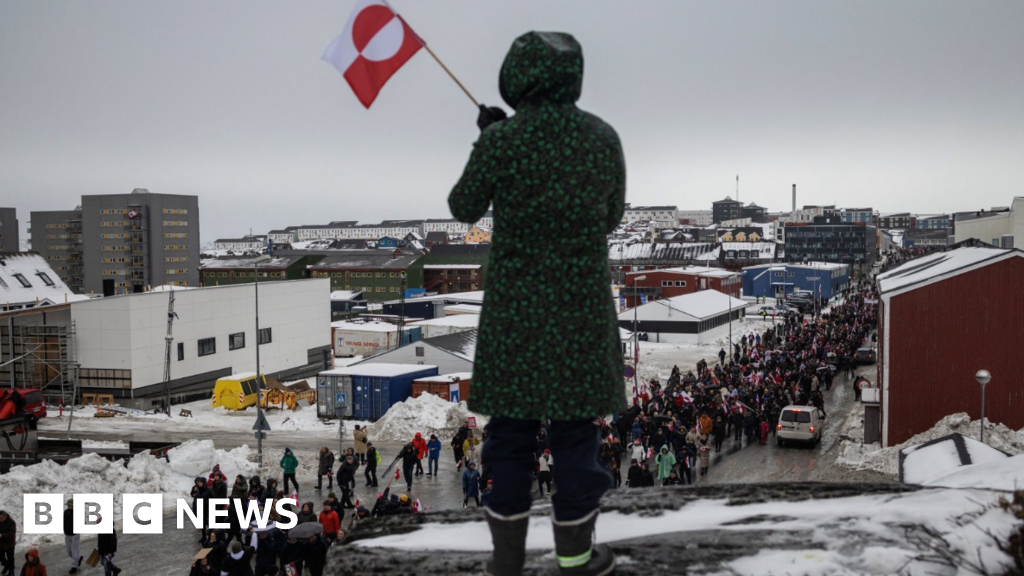
    Reuters A woman waves a Greenlandic flag as people attend a protest against President Donald Trump's demand that the Arctic island be ceded to the US, in Nuuk, the capital of GreenlandReuters

    Protesters in Greenland rallied on Saturday against any US move acquire the territory

    A threat by President Donald Trump to impose fresh tariffs on eight allies opposed to his proposed takeover of Greenland has drawn condemnation from European leaders.

    UK Prime Minister Keir Starmer said the move was “completely wrong”, while French President Emmanuel Macron called it “unacceptable”.

    The comments came after Trump announced a 10% tariff on goods from Denmark, Norway, Sweden, France, Germany, the UK, the Netherlands and Finland would come into force on 1 February but could later rise to 25% – and would last until a deal was reached.

    Mr Trump insists the autonomous Danish territory is critical for US security and has not ruled out taking it by force.

    Meanwhile, thousands of people took to the streets in Greenland and Denmark on Saturday in protest at the proposed US takeover.

    Greenland is sparsely populated but resource-rich and its location between North America and the Arctic makes it well placed for early warning systems in the event of missile attacks and for monitoring vessels in the region.

    Trump has previously said Washington would get the territory “the easy way” or “the hard way”.

    Greenland: ‘Diplomatic channels are the way to go’ US speaker tells BBC before tariff announcement

    European countries have rallied to Denmark’s support. They have argued that the security of the Arctic region should be a joint Nato responsibility.

    France, Germany, Sweden, Norway, Finland, the Netherlands and the UK have dispatched a small number of troops to Greenland in a so-called reconnaissance mission.

    Announcing the new tariffs in a post on his Truth Social platform on Saturday, Trump said those countries were playing “a very dangerous game”. At stake, he said, was the “Safety, Security, and Survival of our Planet”.

    He said the proposed 10% levy to be introduced next month on goods exported to the US would rise to 25% in June and remain “payable until such time as a Deal is reached for the Complete and Total purchase of Greenland”.

    In his response, Starmer said: “Applying tariffs on allies for pursuing the collective security of Nato allies is completely wrong. We will of course be pursuing this directly with the US administration.”

    France’s Emmanuel Macron said: “Tariff threats are unacceptable in this context… We will not be swayed by any intimidation.”

    Swedish PM Ulf Kristersson said: We won’t let ourselves be blackmailed.”

    “Sweden is currently having intensive discussions with other EU countries, Norway and the United Kingdom to find a joint response,” he added.

    European Council President Antonio Costa stated: “The European Union will always be very firm in defending international law… which of course begins within the territory of the member states of the European Union.”

    Denmark’s foreign minister Lars Lokke Rasmussen said the threat had “come as a surprise”.

    Meanwhile, German MEP Manfred Weber, head of the conservative EPP group in the European Parliament, said Trump’s move raised questions about the still-to-be-ratified EU-US trade deal negotiated last year.

    Brussels and Washington clinched a deal that agreed a US tariff on all EU goods of 15% and that the 27-member bloc would open its markets to US exporters with 0% tariffs on certain products.

    “The EPP is in favour of the EU-US trade deal, but given Donald Trump’s threats regarding Greenland, approval is not possible at this stage,” Weber posted on X. “The 0% tariffs on US products must be put on hold,” he added.

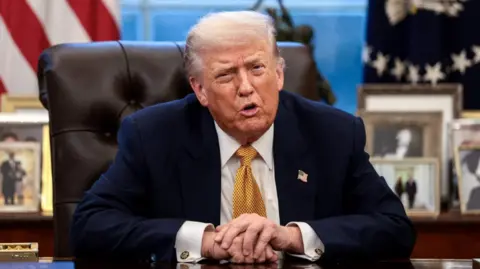
    Reuters Trump at his Oval Office desk Reuters

    Trump has recently escalated his drive to acquire Greenland

    The US ambassador to the UN, Mike Waltz, however, said Denmark “just doesn’t have the resources or the capacity to do what needs to be done in the northern region”.

    He told Fox News the life of Greenlanders would be “safer, stronger and more prosperous under the umbrella of the United States”.

    Trump has often mused that “tariff” is his favourite word, and he has made clear that he views it as something of a blunt instrument with which to convince – or coerce – countries around the world to align their policies with the desired outcomes of the White House.

    But his announcement represents a significant escalation in his recently rekindled drive to acquire Greenland, despite their opposition.

    It is unclear what immediately prompted the tariffs announcement, which Trump first hinted at while speaking to reporters at the White House on Friday.

    While in recent weeks he has repeatedly said that a variety of options – including the potential use of military force – remained on the table, the announcement comes just days after US and Danish officials agreed to set up a high-level working group to discuss the future of the island.

    In Washington’s diplomatic and political circles, that announcement was seen by many as a “best-case” scenario for Denmark and its European allies – one that would, at the very least, delay any decision or further escalation from the White House.

    Instead, the latest tariffs have injected a newfound sense of urgency into the issue and strained relations with important Nato allies and trading partners.

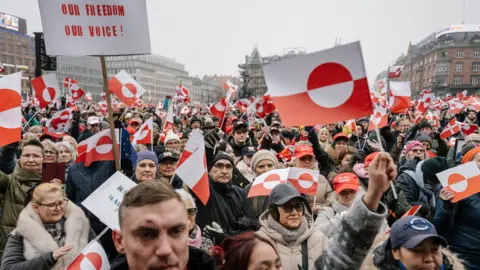
    EPA Protesters waving Greenland's white and red flag in support of self-determination in Copenhagen, 17 January 2016EPA

    Protesters in Copenhagen waved Greenland’s white and red flag in support of self-determination

    Opinion polls suggest 85% of Greenlanders oppose the territory joining the US.

    Demonstrations against Trump’s takeover plans were held in Danish cities as well as in Greenland’s capital, Nuuk, on Saturday – before the tariff announcement.

    In the Danish capital, Copenhagen, placards were held up reading: “Hands Off Greenland” and “Greenland for Greenlanders”.

    “We demand respect for the Danish Realm and for Greenland’s right to self-determination,” said Camilla Siezing, heads of Inuit, an umbrella group of Greenlandic associations.

    In Nuuk, Greenland’s Prime Minister Jens-Frederik Nielsen joined protesters holding signs reading “Greenland is not for sale” and “we shape our future” as they headed for the US consulate.

    The rallies coincide with a visit to Copenhagen by a delegation from the US Congress. Its leader, Democratic Senator Chris Coons, described Mr Trump’s rhetoric as “not constructive”.

    Watch: Why is there so much international interest in Greenland?


    Source link