Category: Uncategorized

  • AI suspicions surround mysterious singer

    AI suspicions surround mysterious singer


    Mark Savage Music Correspondent

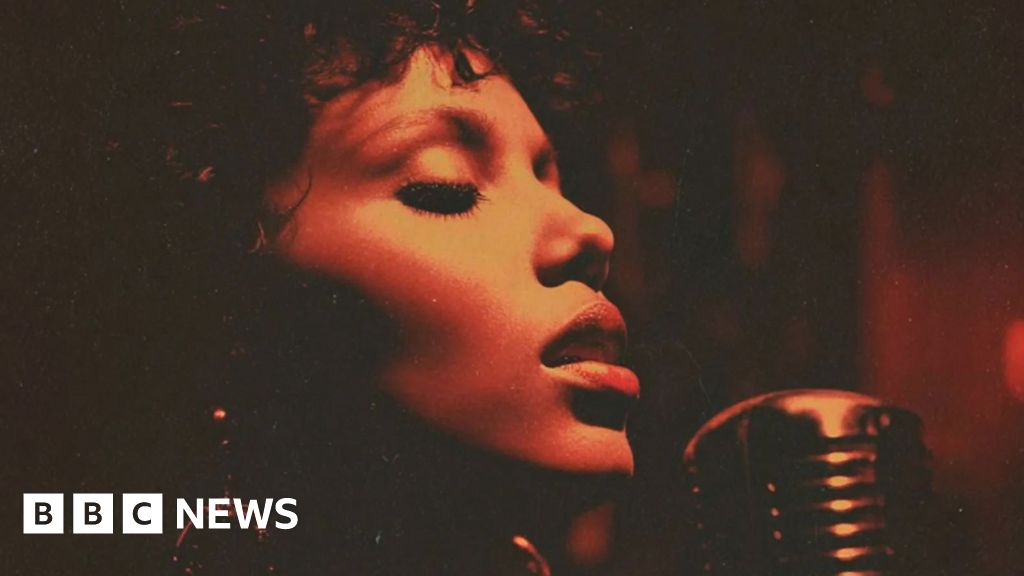
    Sienna Rose Sienna Rose, a woman with dark curly hair seen in a sepia-toned image with eyes closed, wearing large hoop earrings and singing into an old-fashioned microphone Sienna Rose

    Sienna Rose has almost three million monthly listeners on Spotify

    Sienna Rose is having a good month.

    Three of her dusky, jazz-infused soul songs are in Spotify’s Viral Top 50. The most popular, a dreamy ballad called Into the Blue, has been played more than five million times.

    If she continues on this trajectory, Rose could become one of the year’s hottest new stars.

    There’s only one problem: all the signs indicate she’s not real.

    Streaming service Deezer, which has developed tools to tackle AI music, told the BBC that “many of her albums and songs on the platform are detected and flagged” as computer-generated.

    Look closer and you’ll see the indications of an AI artist. Rose has no social media presence, has never played a gig, has no videos, and has released an improbable number of songs in a short space of time.

    Between 28 September and 5 December, she uploaded at least 45 tracks to streaming services. Even Prince, an artist known for restless creative mania, would have struggled to match that figure.

    Her Instagram account, which is currently deactivated, featured a strangely homogenous series of headshots, all showing the gauzy, unreal lighting that’s characteristic of AI image generators.

    Tidal A screenshot of Sienna Rose's artist page on TidalTidal

    On streaming service Tidal, Rose is also credited with albums of folk and ambient music, all uploaded last year, with different singers pictured in the artwork

    Then there’s the music itself. Songs like Into the Blue and Breathe Again sit neatly next to Norah Jones or Alicia Keys, full of jazzy guitar lines and buttery smooth vocals.

    But many listeners have noted what they have identified as “AI artefacts”.

    Play Under the Rain or Breathe Again and you’ll hear a telltale hiss running throughout the tracks.

    That’s a common trait of music generated on apps like Suno and Udio – partly because of the way they start with white noise and gradually refine it until it resembles music.

    It’s this quirk that enables Deezer to flag AI songs.

    “When the [software] adds all the layers and the instruments, it introduces errors,” explains Gabriel Meseguer-Brocal, a senior research scientist for the streaming company.

    “They’re not perceptual, we cannot listen to them, but they’re easy to spot if you do a few mathematical operations.”

    The errors act like a fingerprint, Meseguer-Brocal says, with a “unique signature” that means it’s possible to detect which piece of software was used to create any piece of music.

    Sienna Rose Sienna Rose in another image with eyes closed and a microphone in front of her, with her dark hair and large hoops and face seen in profile Sienna Rose

    The mystery surrounding the singer poses bigger questions around AI-generated music

    For casual listeners, there are other signs: inconsistent drum patterns, bland lyrics, and a singer who never strays from the melody or lets rip on the final chorus.

    That “generic” sound has been the biggest clue for some of Sienna Rose’s listeners.

    “I was like, ‘I like this’, but there was something that was very ‘uncanny valley’,” said TikTok music critic Elosi57.

    “So I went to look [at her profile] and I was like, ‘This is AI’.”

    Another user posted on X: “Started listening to Olivia Dean (fantastic). Within two days Spotify recommended Sienna Rose, who has a similar, but more generic sound. Took me a few songs to realise she’s AI.”

    Broadcaster Gemma Cairney told BBC Radio 4: “The photographs of her do look a little bit unreal… And having listened to the music, is there just some of the soul in the soul missing?”

    To be fair, many others have fallen for Rose’s songs.

    Among them is pop star Selena Gomez, who used the Rose track Where Your Warmth Begins as the background for an Instagram post about Sunday’s Golden Globes.

    The song was later removed when questions about Rose’s identity spread online, but Gomez’s post took interest in Rose and her identity to a new level.

    And many of the listeners who’d been playing Rose’s music reacted with dismay when they learned she might not exist.

    “Please tell me she’s real,” pined one on Threads.

    “I’m disappointed cuz a couple of her songs came on and the music isn’t BAD,” agreed another on Bluesky. “[But] somebody said once you know then it sounds soulless’ and I agree.”

    AI music ban

    Of course, it’s entirely possible that everyone has got it wrong, and Sienna Rose is a real singer who shuns the limelight. Maybe she’s in witness protection. Perhaps she’s a real singer, stuck in a contractual dispute with her label, and releasing music under a pseudonym.

    If so, I’m sorry. It must be crushing to have your music labelled as soulless “slop”. But that’s indicative of the problem facing the entire music industry right now.

    AI software is becoming so sophisticated that clone artists are competing with genuine musicians.

    In Sweden this week, a chart-topping song was banned from the charts after journalists discovered the artist behind it, Jacub, didn’t exist.

    There are many people – both in tech companies and the business side of the music industry – who want to see AI succeed.

    The costs of launching an act like Sienna Rose are practically zero, but her music is making an estimated £2,000 in royalties per week.

    Compare that to the K-Pop industry, where labels invest an average of $1m (£750,000) per member of a girl or boy group per year, and you can see the attraction.

    Interestingly, several of Rose’s songs appear to be credited to US indie record label Broke – who have a track record in turning viral artists like bbno$ and Ndotz into chart stars.

    If you visit their website, Rose isn’t listed as one of their signings – but British dance act Haven are.

    If that name rings a bell, it’s because they got into trouble late last year for creating a song using an AI clone of Jorja Smith’s voice.

    Their song, Run, was removed from streaming services after record industry bodies issued takedown notices, alleging the track violated copyright – but was re-recorded with human vocals, and entered the UK Top 10 two weeks ago.

    The BBC has contacted Broke to ask about their relationship with Sienna Rose, but has yet to receive a reply.

    The BBC has also contacted another label, Nostalgic Records, which lists Rose on its website.

    Nostalgic Records’ biography claims she is “London-based” and says she is “not just a performer, but a storyteller of the heart”.

    Reuters Raye sings on stage wearing a red dress with a microphone in her hand, with the lead over her shoulder Reuters

    The pop star Raye says fans prefer genuine, heartfelt music over computer-generated emptiness

    Deezer says 34% of the songs uploaded to its streaming service – about 50,000 per day – are AI-generated.

    “Eighteen months ago, it was around 5% or 6%,” says Meseguer-Brocal. “It’s kind of shocking how quickly it’s increasing.”

    Still, Deezer hasn’t gone as far as online music store Bandcamp, which this week announced it was banning all AI-generated music.

    In a statement, Spotify defended the presence of artists like Rose on its playlists.

    “It’s not always possible to draw a simple line between ‘AI’ and ‘non-AI’ music,” a spokesperson said. “Spotify does not create or own any music, and does not promote or penalise tracks created using AI tools.”

    In the meantime, a backlash against AI music is growing.

    Last year, artists including Paul McCartney, Kate Bush, Damon Albarn, the Pet Shop Boys and Annie Lennox released a “silent album” protesting against companies who train their AI models on copyrighted work without permission.

    Speaking at the Ivor Novello Awards in 2024, pop star Raye told me she believed fans would always choose real music over algorithmically-generated filler.

    “There’s no reason to feel a threat,” she said. “I don’t write because I’m trying to be the best writer. I write because I’m trying to tell my story.

    “I’m trying to lift off some weight I’ve been carrying or I’m trying to express myself and feel better.”

    At the same event, Kojey Radical said he wasn’t worried about AI when he couldn’t even trust his washing machine to start at the right time.

    “Why is everyone trying to make me scared of the robots?” he laughed.

    “I’m not scared of the robots. I will win.”


    Source link

  • Who is on Trump’s senior executive overseeing Gaza’s reconstruction?

    Who is on Trump’s senior executive overseeing Gaza’s reconstruction?


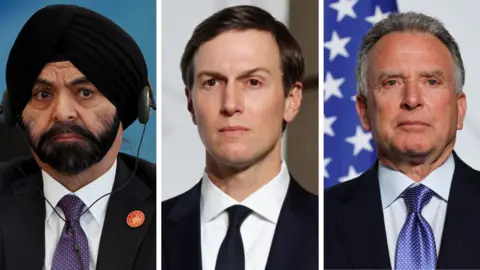
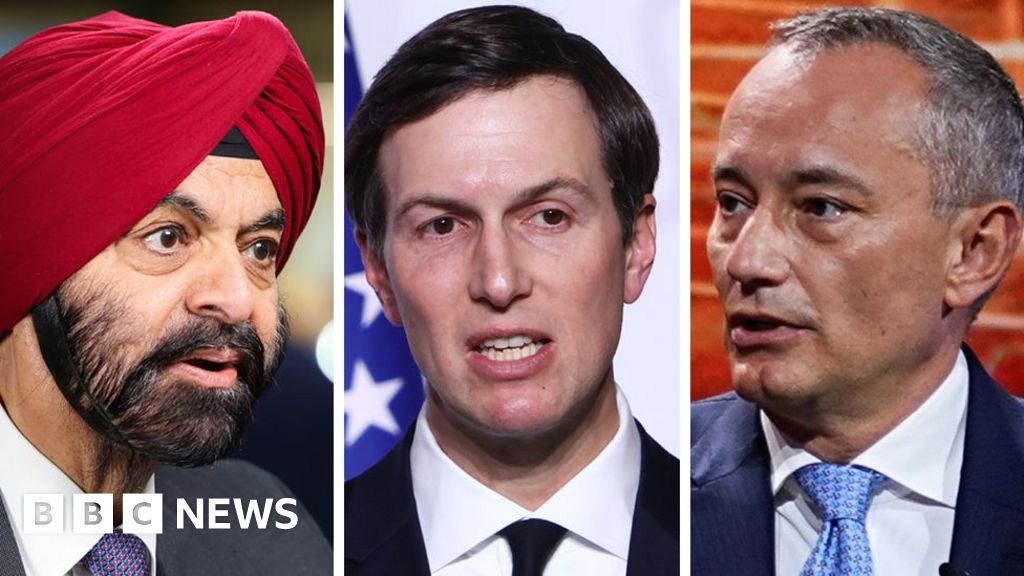
    Reuters / Getty Images / EPA A composite image of Ajay Banga, Jared Kushner and Steve Witkoff.Reuters / Getty Images / EPA

    Ajay Banga, Jared Kushner and Steve Witkoff are among those on the committee

    The White House has released the names of the members who will be part of the senior executive working with his new “Board of Peace” for Gaza.

    With the US president as chair, the founding “Executive Board” will oversee the work of a committee of technocrats tasked with the temporary governance of Gaza – and its reconstruction.

    Each member is expected to be in charge of a portfolio that will be “critical to Gaza’s stabilisation”, the White House has said. But it is not yet clear who will be responsible for which priorities.

    There will also be a separate “Gaza Executive Board” – responsible for overseeing all on-the-ground work of yet another administrative group, the National Committee for the Administration of Gaza (NCAG).

    Meanwhile, the Board of Peace is expected to sit above these two executive bodies and comprise a number of world leaders.

    No women and no Palestinians have been announced so far at the top level, but the White House said additional members will be announced over the coming weeks.

    So, who is on the Executive Board?

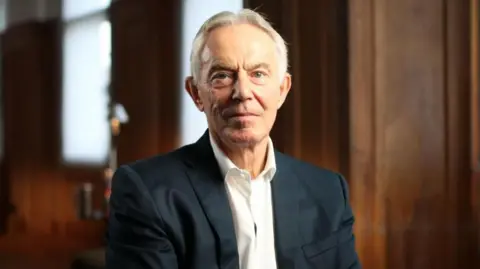
    Sir Tony Blair

    BBC/Monika Ghosh An image of former UK prime minister Tony Blair looking at the camera while dressed in a black suit and white shirt in a room with wooden walls. BBC/Monika Ghosh

    Former UK Prime Minister Sir Tony Blair had long been talked about as a potential member of Trump’s “Board of Peace”, with the US president confirming back in September that he had expressed an interest in joining the body.

    The former Labour Party leader was the UK prime minister from 1997 to 2007 and took the country into the Iraq War in 2003, a decision which means some may view his presence on the board as controversial.

    After leaving office, he served as Middle East envoy for the Quartet of international powers – the United Nations, European Union, US and Russia – from 2007 to 2015.

    Sir Tony is the only founding member of the executive board who is not a US citizen.

    He previously described Trump’s plans for Gaza as the “best chance of ending two years of war, misery and suffering”.

    In a statement, Sir Tony said he was “honoured” to be named on the executive board, and thanked president Trump for his leadership in establishing the group.

    He will also serve on the Gaza Executive Board.

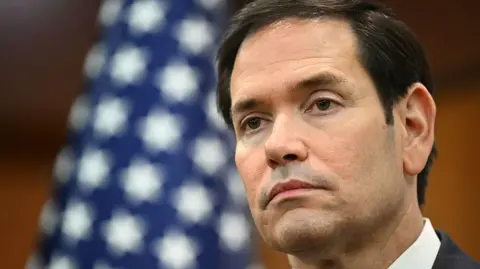
    Marco Rubio

    Getty Images An image of the US Secretary of State, Marco Rubio, speaking into a microphone while wearing a navy suit with a red tie.Getty Images

    As US Secretary of State, Marco Rubio is central to the Trump administration’s approach to foreign policy.

    Before Trump’s return to office, Rubio had spoken out against a ceasefire in Gaza, saying that he wanted Israel “to destroy every element of Hamas they can get their hands on”.

    But he has since praised the first phase of the Israel-Hamas ceasefire deal signed in October as the “best” and “only” plan.

    Also in October, Rubio criticised a move by the Israeli parliament towards annexation of the occupied West Bank.

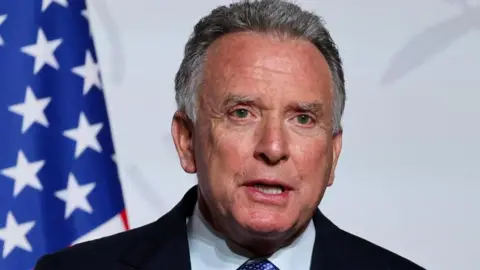
    Steve Witkoff

    Reuters An image of the US Special Envoy to the Middle East, Steve Witkoff, speaking in front of the American Flag visible to the left.Reuters

    US Special Envoy to the Middle East Steve Witkoff, a real estate magnate and golf partner to Trump, will also serve on the Gaza Executive Board.

    Earlier this month, Witkoff announced the start of phase two of Trump’s plan to end the war in Gaza, adding that it would see the reconstruction and full demilitarisation of Gaza – including the disarmament of Hamas.

    He added that he expects Hamas to “comply fully with its obligations” under the deal, or face “serious consequences”.

    Witkoff has been a central figure in US-led efforts to negotiate a peace deal between Russia and Ukraine, including holding a five-hour meeting with Russian President Vladimir Putin in Moscow in December.

    Jared Kushner

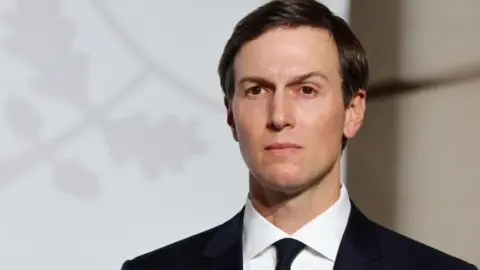
    EPA An image of Jared Kushner dressed in a black suit with a white shirt staring off into the distance. EPA

    Jared Kushner, the US president’s son-in-law, has also played a key role in the Trump administration’s foreign policy negotiations.

    Alongside Witkoff, Kushner has often worked as a US mediator for the Russia-Ukraine and Israel-Gaza wars, and he will now also serve on the Gaza Executive Board.

    In November, he met with Israeli Prime Minister Benjamin Netanyahu to discuss key sticking points in the peace deal.

    At a talk at Harvard University in 2024, Kushner said “Gaza’s waterfront property could be very valuable… if people would focus on building up livelihoods.”

    Marc Rowan

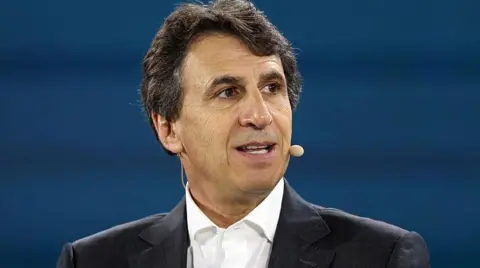
    Getty Images An image of businessman Marc Rowan looking to the right with a microphone attached to his face, while dressed in a black suit and sat in front of a blue backdrop. Getty Images

    Billionaire Marc Rowan is the CEO of Apollo Global Management, a large private equity firm headquartered in New York.

    Rowan was seen as a contender to become US treasury secretary for Trump’s second term. He will also be a member of the Gaza Executive Board.

    Ajay Banga

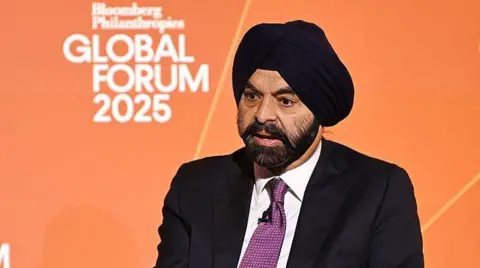
    Getty Images An image of Ajay Banga speaking in front of an orange backdrop, while dressed in a black turban and black suit with a purple tie.Getty Images

    Ajay Banga, president of the World Bank, has advised a number of senior US politicians, including President Barack Obama, during his lengthy career.

    Born in India in 1959, Banga became a US citizen in 2007, and later served as the CEO of Mastercard for more than a decade.

    Former US President Joe Biden nominated him to lead the World Bank in 2023.

    Robert Gabriel

    Robert Gabriel, a US national security adviser, will be the final member of the “founding executive board”.

    Gabriel has worked with Trump since his 2016 presidential campaign, shortly after which, according to PBS, he became a special assistant to Stephen Miller, another of Trump’s key current advisers.

    Nickolay Mladenov

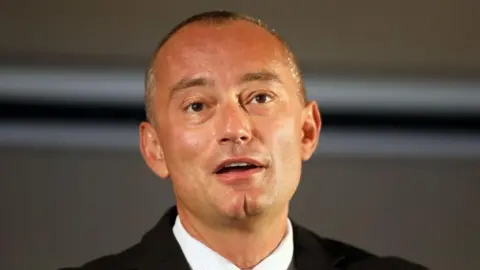
    Getty Images Bulgarian politician Nickolay Mladenov speaking into a microphone while dressed in black suit and pale blue tie. Getty Images

    While not on the Executive Board, Nickolay Mladenov, a Bulgarian politician and former UN Middle East envoy, will be the Board of Peace’s representative on the ground in Gaza, the White House has said.

    He will sit on the Gaza Executive board and oversee a separate 15-member Palestinian technocratic committee, the National Committee for the Administration of Gaza (NCAG), charged with managing the day-to-day governance of post-war Gaza.

    The NCAG will be led by Ali Shaath, a former deputy minister in the Palestinian Authority (PA) which governs parts of the occupied West Bank not under Israeli control.

    Correction: An earlier version of this story stated that members of the executive boards were members of the Board of Peace.


    Source link

  • US judge restricts ICE response to Minneapolis protesters

    US judge restricts ICE response to Minneapolis protesters


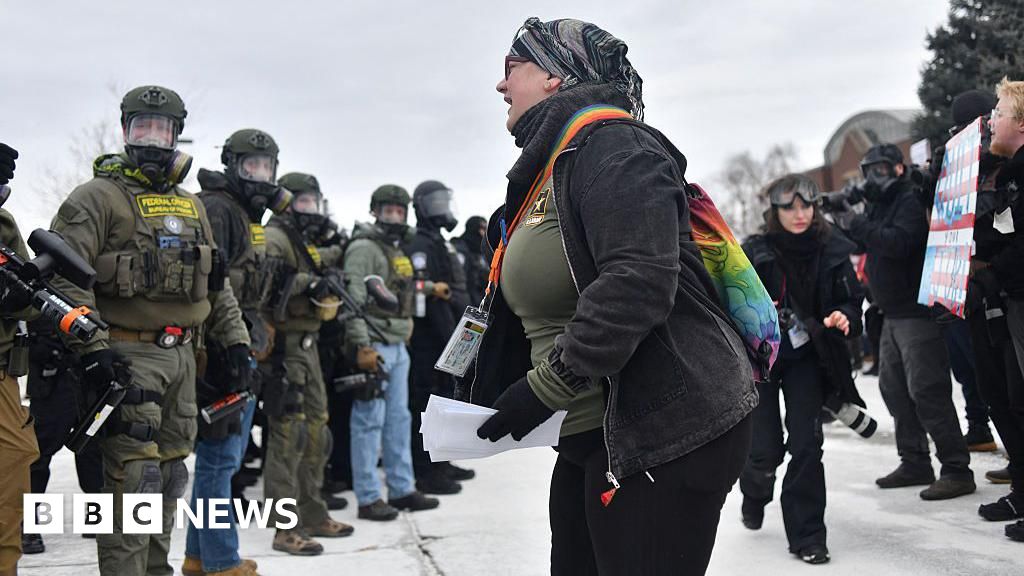
    A US federal judge has issued an order limiting the crowd control tactics that can be used by Immigration and Customs Enforcement agents (ICE) towards “peaceful and unobstructive” protesters in Minneapolis.

    Judge Katherine Menendez ruled on Friday night that federal agents can’t arrest or pepper spray peaceful demonstrators, including those monitoring and observing ICE agents.

    The ruling comes ahead of planned weekend protests against the widespread immigration action in the city and follows the fatal shooting of Renee Good by an ICE agent earlier this month.

    The US Department of Homeland Security said it is taking measures to protect officers from rioters.

    On Friday, Minnesota officials urge protesters expected to take to the streets this weekend to stay orderly and peaceful.

    The state’s National Guard has been placed on alert and other law enforcement officers have been deployed ahead of both expected anti-ICE demonstrations and a counter march being planned by a conservative influencer.

    Judge Menendez’s 83-page order bars federal agents from arresting and “using pepper-spray or similar nonlethal munitions and crowd dispersal tools against persons who are engaging in peaceful and unobstructive protest activity”.

    The ruling, which stems from a lawsuit filed by a group of protesters in December, also limits agents from “stopping or detaining drivers and passengers in vehicles where there is no reasonable articulable suspicion that they are forcibly obstructing or interfering” with their work.

    “The act of safely following [immigration agents] at an appropriate distance does not, by itself, create reasonable suspicion to justify a vehicle stop,” it says.

    In a statement to CBS, the BBC’s US partner, in response to the order, a spokesperson for the Department of Homeland Security said the agency “is taking appropriate and constitutional measures to uphold the rule of law and protect our officers and the public from dangerous rioters”.

    The White House also criticised the ruling.

    “This absurd ruling embraces a dishonest, left-wing narrative,” spokesperson Abigail Jackson told Politico. “Here’s the truth: federal agents have acted lawfully to protect themselves and ensure the integrity of their operations when individuals attempt to intervene.”

    Minneapolis has been on edge since Good’s 7 January shooting, with protests across the city.

    There have been some reported clashes between protesters and federal officers over the past week.

    Additionally on Friday, the justice department announced it was investigating two of the state’s leading Democrats – Governor Tim Walz and Minneapolis Mayor Jacob Frey – over alleged attempts to impede federal immigration operations.

    Both have condemned the ICE operations in the city.

    “A reminder to all those in Minnesota: No one is above the law,” US Attorney General Pam Bondi said in an online statement.

    The investigation was criticised by Walz and Frey.

    “Weaponizing the justice system against your opponents is an authoritarian tactic,” Walz said in a statement.


    Source link