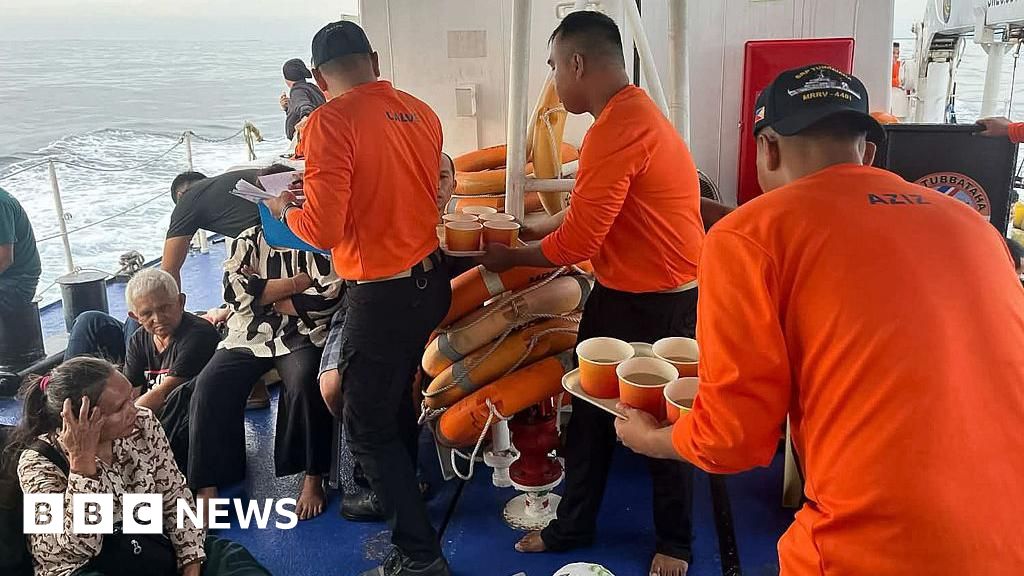
At least 18 people have died after a ferry carrying more than 350 passengers and crew members onboard sank in the waters off Philippines’ southern coast.
Search crews have rescued 317 people on board the MV Trisha Kerstin 3, but at least 24 people are still missing, according to the Philippine Coast Guard.
The ship, both a cargo and passenger ferry, was on its way from the southern island of Mindanao to Jolo island when it issued a distress call at 1:50 local time Monday (17:50 GMT Sunday).
Authorities say they are investigating the cause of the sinking. The Philippines – an archipelago nation of 7,100 islands – has a long history of maritime disasters involving inter-island ferries.
“Based on the account of some survivors, the waters in the area were rough at the time,” Philippine Coast Guard spokeswoman Noemie Cayabyab said in a televised interview, according to an AFP report.
A video shared by the disaster management office in the southwestern Bongao Municipality show people wearing life vests floating in the water as they wait for rescuers.
Another Facebook video posted byBasilan Governor Mujiv Hataman showed survivors wrapped in blankets as they disembarked from a rescue boat.
Rescuers have been overwhelmed by the influx of survivors, Basilan emergency responder Ronalyn Perez told AFP.
“The challenge really is the number of patients that are coming in. We are short-staffed at the moment,” Perez said.
Another rescuer said their office had received more than 100 calls from family members, AFP reported.
Poor maintenance and overloading have been blamed for past ferry accidents in the Philippines. Despite this, many Filipinos still travel by ferry due to its low costs.
In May 2023, 28 people died after a passenger ferry caught fire. The fatalities included three children, among them a six-month-old baby.
The year before that, at least seven people died after a fire in a high-speed ferry carrying 134 people.
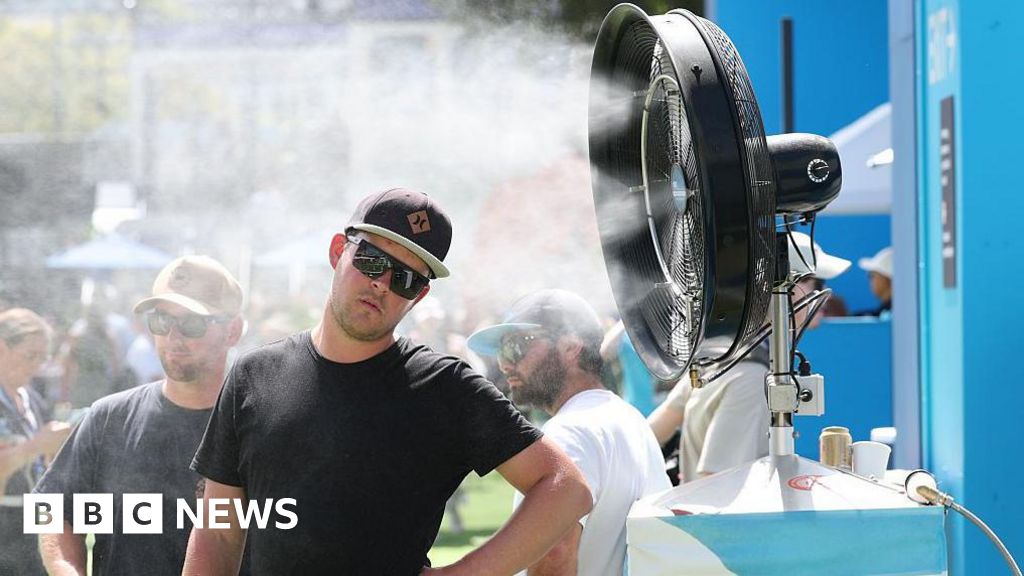
Australian authorities have issued heatwave warnings for most of the country as millions celebrate Australia Day.
Temperatures are expected to peak on Tuesday, reaching the “high forties” Celsius in the southern states of Victoria and South Australia, the Bureau of Meteorology said.
On Sunday, South Australia recorded temperatures as high as 48.5C, according to the bureau, which is warning of fire danger in parts of the country.
Some national day celebrations on Monday have been cancelled out of safety concerns.
In Adelaide, an Australia Day parade and light show have been cancelled due to the extreme heat forecast.
“While this is deeply disappointing for the community, performers and partners, community safety and wellbeing must come first,” organisers said.
Australia Day – 26 January – is the anniversary of the 1788 landing of Britain’s First Fleet, which began the era of colonisation.
But to many Indigenous Australians the occasion is a reminder of their cultural destruction under European settlers – referring to the occasion as “Invasion Day”.
Across the country on Monday, crowds gathered for rallies in support of Indigenous Australians.
Aside from Victoria and South Australia, heatwave warnings have also been issued in New South Wales, Queensland, Tasmania, Northern Territory and the Australian Capital Territory.
Many of these warnings will remain in place until Wednesday.
“We haven’t seen heatwave conditions like this in Victoria for almost 20 years,” Tim Wiebusch, Victoria’s emergency management commissioner, told ABC.
“It was 2009 ahead of the bushfires where we saw those prevailing conditions and so we are indicating to all Victorians that this is a very serious set of weather conditions.”
On Monday, the Bureau of Meteorology warned of “extreme fire dangers” across parts of South Australia and much of south-western Victoria “due to very hot and dry weather combined with moderate to gusty winds”.
Firefighters in Victoria are working to combat several fires across the state, which have prompted evacuations and threatened properties.
The heat has also affected the Australian Open at Melbourne Park. Tennis player Jannik Sinner was seen suffering from cramps on the court on Saturday, before play was temporarily suspended in the rising heat. Nearly 80,000 fans were warned to take care under the scorching sun.
Meanwhile, parts of Western Australia were pummelled by Tropical Cyclone Luana over the weekend. The storm damaged homes and a popular beach resort before weakening as it moved inland.
The meteorological bureau has advised people to find places to keep cool, like their homes, libraries, community centres or shopping centres. It also told people to close their windows and draw the curtains to keep heat out of their homes.
Watch: Winter storm grips US as millions face power outages and disruption
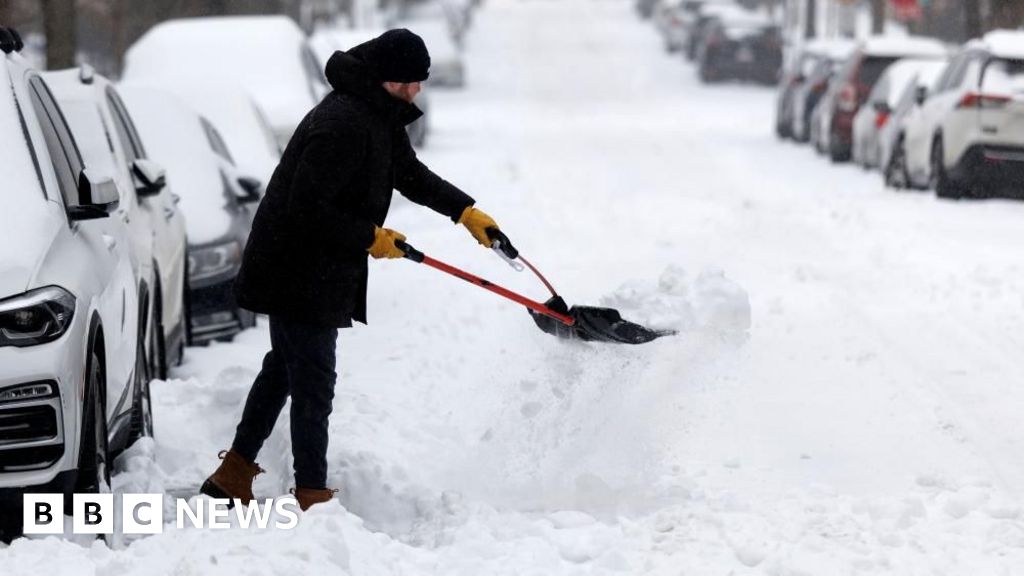
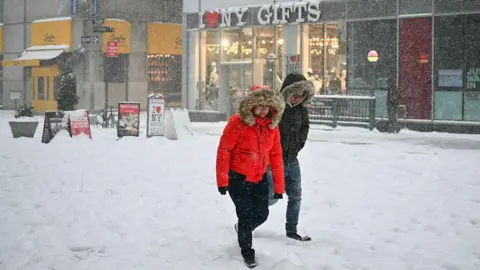
A dangerous winter storm has swept across the US, leaving at least seven people dead and cutting power to hundreds of thousands of homes.
Schools and roads across the country have been closed and flights have been cancelled as “life threatening” conditions stretched from Texas to New England, according to the National Weather Service (NWS).
At least two people died of hypothermia in Louisiana, and other deaths linked to the storm have been reported in Texas, Tennessee and Kansas.
As of Sunday afternoon, more than 800,000 households had lost power, according to poweroutage.us. Meanwhile, more than 11,000 flights were cancelled, FlightAware reported.
Widespread heavy snow, sleet and freezing rain, which is a dangerous phenomenon where cooled rain droplets freeze instantly on surfaces, could last for days, and the storm could affect around 180 million Americans – more than half the population.
“The snow and the ice will be very, very slow to melt and won’t be going away anytime soon, and that’s going to hinder any recovery efforts,” Allison Santorelli, a meteorologist with the National Weather Service, told the BBC’s US media partner CBS News.
Louisiana’s Department of Health confirmed on Sunday that two men had died of hypothermia.
The mayor of Austin, Texas, said there had been an “exposure-related” death.
Officials in Kansas said a woman, whose body was found on Sunday afternoon covered in snow, “may have succumbed to hypothermia”.
Weather-related deaths of three people have also been reported in Tennessee.
New York City Mayor Zohran Mamdani wrote in a post on X that at least five people in the city had died on Saturday but added their cause of death was yet to be determined.
He said, however, “It is a reminder that every year New Yorkers succumb to the cold”.
Will Oliver/EPA/Shutterstock
Washington DC is experiencing one of its biggest snowstorms in a decade
New York state Governor Kathy Hochul warned residents to stay inside and off roads.
“This is certainly the coldest weather we’ve seen, the coldest winter storm we’ve seen in years,” she said on Sunday.
“A sort of an arctic siege has taken over our state and many other states across the nation.”
Hochul said the “brutal” conditions were expected to bring the longest cold stretch and highest snow falls in years.
“It is bone chilling and it is dangerous,” she said.
Kentucky Governor Andy Beshear said on Sunday that the state was seeing more ice and less snow than was originally predicted.
“That is not good news for Kentucky,” he said.
Weather experts have warned that one of the biggest dangers of the storm is ice, which has the potential to damage trees, down power lines and make roads unsafe.
In Virginia and Kentucky, authorities have responded to hundreds of crashes on roads.
Canadians have also been hit with heavy snow and hundreds of cancelled flights.
Officials estimate that there will be 15-30cm (5-11in) of snowfall in the province of Ontario.
Winter storm continues to sweep east across US
Emergencies declared
Nearly half the states have declared emergencies, and schools across the country are already canceling classes in anticipation of the storm continuing into Monday. The US Senate has also scrapped a scheduled vote for Monday evening.
In declaring an emergency in the nation’s capital, Washington Mayor Muriel Bowser said: “We’re experiencing the biggest snowstorm in a decade in DC this weekend.”
While places in the north such as the Dakotas and Minnesota are used to below- freezing temperatures in winter, it is unusual to see such extreme cold in states like Texas, Louisiana and Tennessee, where temperatures are around 15-20C below the seasonal average.
Those states could also see ice accretions of around an inch caused by freezing rain.
Getty Images
The polar vortex – a ring of strong westerly winds that form above the Arctic every winter containing a pool of very cold air – led to the powerful storm, according to weather experts.
When the winds are strong, they stay in place, however when the winds weaken, the vortex loops further south and cold air plunges toward the US. As the cold air meets mild air in the south, the air rises and storm fronts form.
In this case, the winter storm is pushing northwards and eastwards, clearing the Canadian maritime by Tuesday but leaving more cold air in its wake. It is forecast to stay dangerously cold into the start of February.
Some experts contend climate change could influence the behaviour of the polar vortex due to changes in sea surfaces temperatures in our warming world.