Category: Uncategorized

  • Bangladesh newspaper staff ‘gasping for air’ as offices set ablaze

    Bangladesh newspaper staff ‘gasping for air’ as offices set ablaze


    Anbarasan Ethirajan,Global Affairs Correspondent,

    Toaha Faroque,BBC Bangla, Dhakaand

    Kelly Ng

    Watch: Large crowd burns rubble after death of Bangladesh youth protest leader

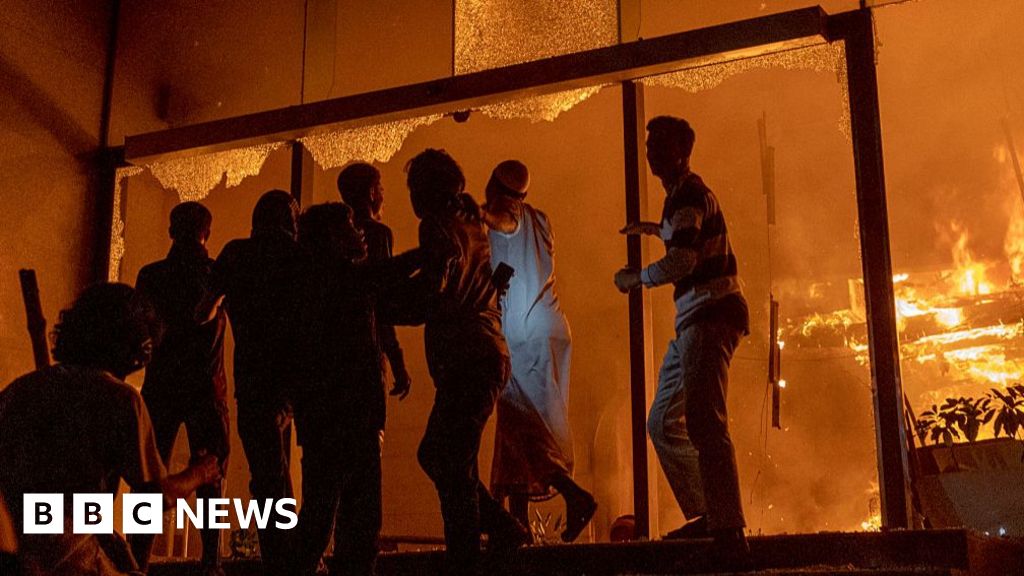
    Staff at two leading Bangladeshi newspapers say they were “gasping for air” as protesters, roused by the death of a prominent activist, set their offices alight on Thursday.

    Sharif Osman Hadi, who had emerged as a key figure after last year’s anti-government protests that ousted former prime minister Sheikh Hasina, was shot in Dhaka last week and died of his injuries on Thursday.

    Hundreds of protesters stormed the offices of English newspaper The Daily Star and Bengali daily Prothom Alo on Thursday night and the demonstrations extended into the next day.

    “It is one of the darkest days for independent journalism in Bangladesh,” the English language Daily Star said in a statement.

    For the first time in 35 years, The Daily Star could not publish its print edition on Friday and will be “inoperable for a while”, consulting editor Kamal Ahmed told the BBC.

    “Twenty-eight of our colleagues were trapped in the rooftop of the building for hours… They were gasping for fresh air,” Ahmed said. “They were rescued only after additional military reinforcement came.”

    No one has been seriously injured, but large parts of the buildings were completely charred when BBC Bangla visited on Friday. Smoke was still seen coming out of Prothom Alo’s building.

    The interim government led by Nobel laureate Muhammad Yunus condemned the violence, vowing to hand perpetrators “full justice”.

    “Attacks on journalists are attacks on truth itself,” it said in a statement on Friday.

    The country is making a “historic democratic transition”, it said, which must not be derailed by “those few who thrive on chaos and reject peace.”

    Bangladesh is scheduled to hold elections next February, the first since Hasina’s ousting.

    It is unclear why the hundreds of protesters targeted The Daily Star and Prothom Alo, which have long been regarded as secular and progressive. Because of that, they often came under fire during Hasina’s administration.

    However, since the July 2024 uprising, the two newspapers have maintained their critical stance on some of the interim government’s policies, which may have angered supporters of Yunus’ administration.

    Other prominent buildings, including the home of the country’s first president Sheikh Mujibur Rahman, who was Hasina’s father, were also vandalised and set on fire on Thursday.

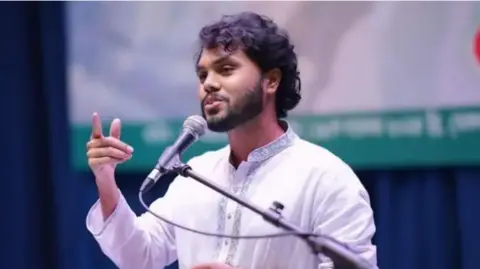
    Sharif Osman Hadi's Facebook page Sharif Osman HadiSharif Osman Hadi’s Facebook page

    Sharif Osman Hadi was a key figure in the youth movement that topped Sheikh Hasina

    Hadi, 32, was a senior leader of the student protest group Inqilab Mancha, and part of the youth movement that topped Hasina.

    He was also a vocal critic of neighbouring India, where Hasina remains in self-imposed exile.

    Hadi made regular appearances on various media programmes after last year’s protest and quickly attracted a wide following – as well as a steady pool of opponents.

    Hadi had planned to contest in next February’s election as an independent candidate, but was shot one day after authorities announced the date for the poll.

    He was gunned down by masked attackers while leaving a mosque in Dhaka on 12 December. He succumbed to his injuries at a hospital in Singapore.

    Yunus called Hadi’s death “an irreparable loss for the nation” and called it a premeditated attack by those conspiring to “derail” the election.

    “The country’s march toward democracy cannot be halted through fear, terror, or bloodshed,” he said in a televised speech on Thursday.

    The interim government has declared a day of national mourning on Saturday.

    Investigations are ongoing and several people have been detained over the shooting.

    Hasina fled to India in August 2004, following weeks of student-led protests, bringing an end to 15 years of increasingly authoritarian rule.

    In November, she was sentenced to death for crimes against humanity after being found guilty of allowing lethal force to be used against protesters, 1,400 of whom died during the unrest.

    Source link

  • What does TikTok’s deal mean for America’s users?

    What does TikTok’s deal mean for America’s users?


    The Chinese owner of TikTok, ByteDance, has struck a deal with US and global investors to operate its business in America, TikTok’s boss told employees on Thursday.

    ByteDance has been under pressure from Washington to sell its US operations over national security concerns.

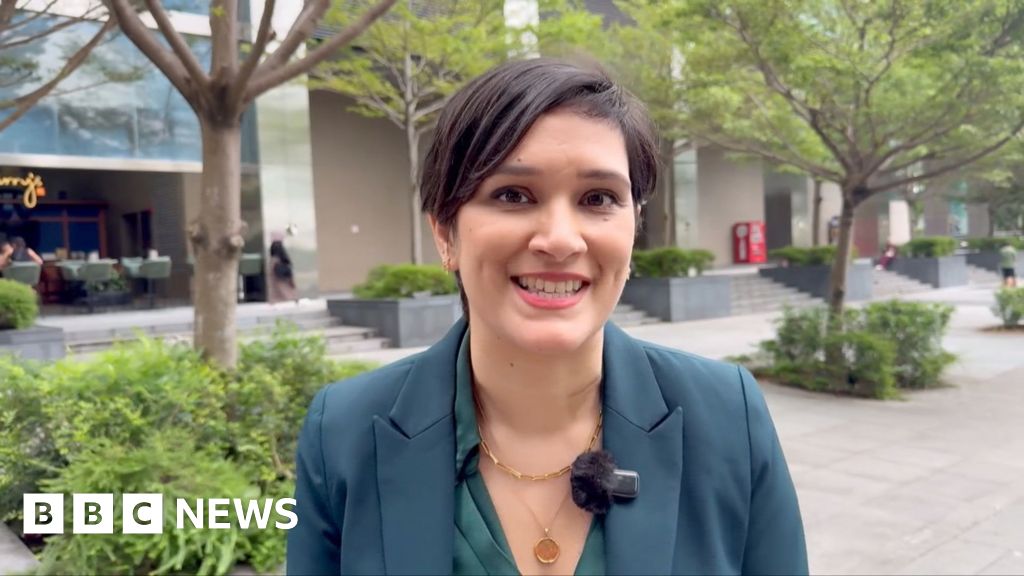
    As BBC Asia business correspondent Suranjana Tewari explains, it is still unclear what sort of experience TikTok users in the US will get.

    Read more on this story here.


    Source link

  • Anthony Albanese announces hate speech crackdown after Bondi shooting

    Anthony Albanese announces hate speech crackdown after Bondi shooting


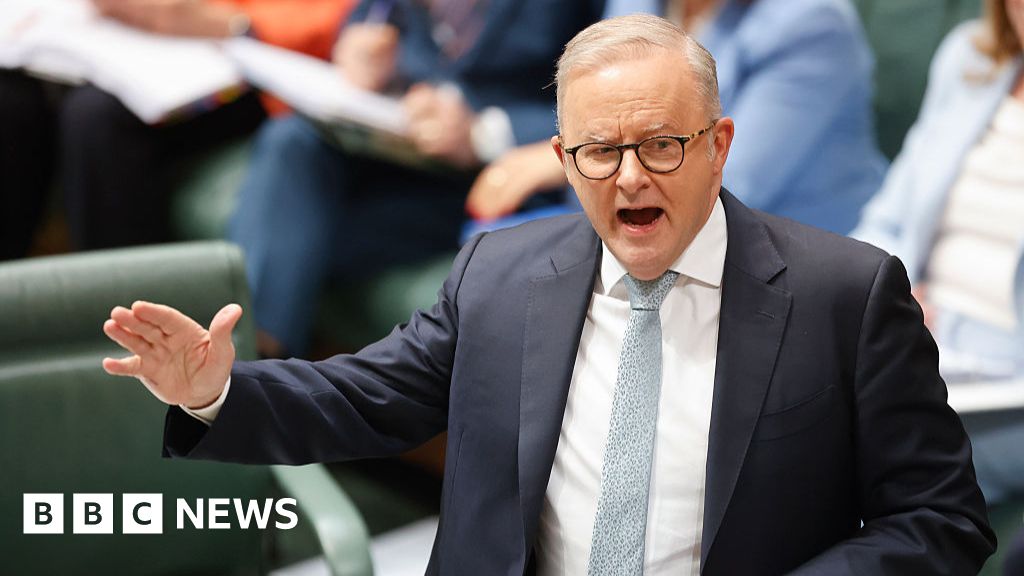
    Australian Prime Minister Anthony Albanese says his government will crack down on hate speech following Sunday’s deadly shooting at Bondi Beach that targeted a Jewish festival.

    Fifteen people were killed when two gunmen opened fire at an event to mark the first day of Hanukkah.

    New laws will target “those who spread hate, division and radicalisation”, Albanese told reporters in Canberra.

    The home affairs minister will also be given new powers to cancel or refuse visas for those who spread hate and a new taskforce will be set up to ensure the education system “prevents, tackles and properly responds to antisemitism”.

    The new laws will also include penalties for preachers and leaders who promote violence, a new federal offence of “aggravated hate speech”, and the introduction of “hate” as an aggravating factor in sentencing crimes for online threats and harassment.

    “Every Jewish Australian has the right to feel safe, valued and respected for the contribution that they make to our great nation,” Albanese said.

    “The terrorists, inspired by ISIS… sought to turn Australians against each other. Australians have responded to that act of hatred with love and sympathy for those in mourning.”

    Daniel Aghion, the President of the Executive Council of Australian Jewry, the peak body representing Australian Jews, said he would “need to see the details before making an assessment as to whether the measures are likely to live up to their billing.”

    “We warned of the risk of not dealing with antisemitism in this country promptly and effectively after 7 October. It is an absolute tragedy that it has taken a massacre of Jewish and other Australians for that step to be taken.”

    David Ossip, president of NSW Jewish Board of Deputies, welcomed the changes. “For too long, Australian Jews have been targeted through social media, hate preachers and university campus activities. It was conveniently ignored until it was too late. The gaslighting and dismissal must end,” he was quoted by the Sydney Morning Herald as saying.

    Tensions have been high in the country since the shooting, with police detaining seven men in southwest Sydney on Thursday after receiving a tip that a “violent act was possibly being planned”, New South Wales Police said in a statement.

    Police said they did not identify “any connection” to their investigation into Sunday’s attack in Bondi.

    Two cars were “intercepted” at George Street, police said. In videos shared by local media sites, armed officers appeared to detain people on the street just hours after Albanese made his speech.

    Antisemitism envoy Jillian Segal, who also spoke at the press conference, said the country was “at a very important moment not only for our community, but for fighting antisemitism around the world.”

    Albanese said his government would be “fully supporting and adopting” the recommendations Segal put forward in July in a report.

    Her report was criticised by some upon its release in July due to its implications for free speech, including plans to monitor universities and arts organisations and withhold funding if they were deemed to have failed to act against antisemitism. There were concerns for instance, that the funding could be used to silence pro-Palestinian protests.

    The Jewish Council of Australia said it supported Albanese’s commitment to act, including his focus on gun reform and online hate.

    But, it said it was “concerned that elements of today’s announcement resemble long-standing proposals from the pro-Israel lobby which have nothing to do with addressing violent extremism.”

    “If education initiatives like university scorecards become a form of ideological policing – particularly where they are used to limit legitimate criticism of Israel – they will only make Jews less safe, and do the opposite of combating antisemitism,” Jewish Council of Australia executive officer Dr Max Kaiser said.

    Meanwhile, Albanese acknowledged accusations from the Jewish community that his government had not done enough to prevent antisemitism since the 7 October attack on Israel by Hamas, and said more could have been done.

    “I accept my responsibility for the part in that as prime minister of Australia,” he said. “But what I also do is accept my responsibility to lead the nation and unite the nation. Because what people are looking for at this time isn’t more division.”

    Home Affairs Minister Tony Burke said the government was “shifting the threshold” on hate speech.

    “There have been individuals who have managed to exploit a nation that had different principles of freedom of speech and have gone right to the limits of language that is clearly dehumanising, unacceptable, having no place in Australia, but have not quite crossed the threshold to violence,” he said.


    Source link