Category: Uncategorized

  • Stateless in South Africa: ‘You’re invisible, you don’t exist’

    Stateless in South Africa: ‘You’re invisible, you don’t exist’


    Mayeni JonesAfrica correspondent, Johannesburg

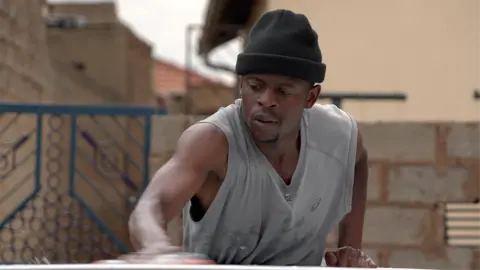
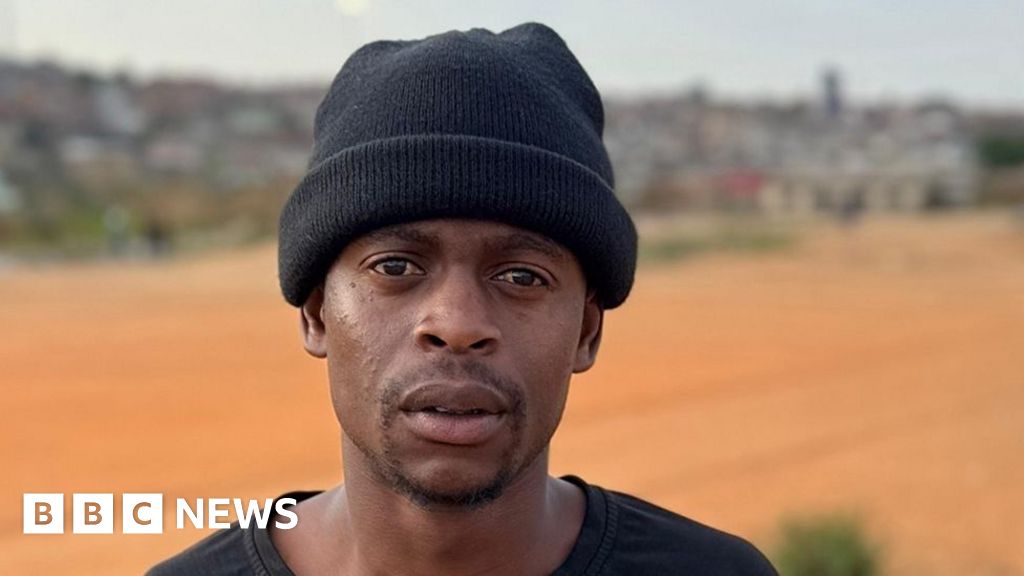
    Christian Parkinson / BBC A shot of Arnold Ncube from the waist up. He is wearing a grey V-neck vest and black beanie hat. His right arm is slightly blurred as he can be seen wiping a car.Christian Parkinson / BBC

    Arnold Ncube was unable to complete his education because he could not prove he was South African

    Many people may take their birth certificate, or similar official papers, for granted – hidden in a drawer and rarely seeing the light of day – but for those without one, it can lead to a shadow life or an uncertain existence.

    This is thought to affect millions of people around the world, described as stateless, and 25-year-old South African Arnold Ncube is one of those.

    Because he has no state-issued documents, washing cars in the backstreets of Thembisa township near Johannesburg is one of the few ways he can make a living.

    He was born in Johannesburg and his father is South African, qualifying him for citizenship here. But when he tried to register for secondary school, he realised he didn’t have a birth certificate.

    Having been abandoned by his parents – his dad left before he was born and his mum when he was 14 – he could not prove his status.

    “It’s a painful thing,” he says. “You’re basically invisible. You don’t exist. It’s like you’re living in the shadows. You don’t have a bank account, you can’t apply for a decent job that you can earn a living with.”

    He adds that he tries to stay positive but it’s been challenging.

    “When I see my peers, they are done with school now. Whereas I couldn’t study further. It’s a lot. Depression was once my friend.”

    Arnold is one of at least an estimated 10,000 stateless people living in South Africa who, despite being born here, are struggling to prove their nationality and access public services.

    There are no official statistics available on stateless people here because they tend to slip through the cracks. So the figures are based on estimations by organisations like the UN’s refugee agency, the UNHCR and civil rights organisations.

    With no citizenship, stateless people cannot get documents and struggle to get access to basic necessities including education and healthcare.

    Statelessness is caused by many factors, including administrative barriers and poor record-keeping. As a result the real number of stateless people is hard to gauge in many parts of the world.
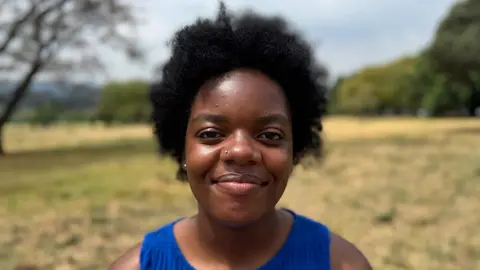
    Ed Habershon / BBC A head and shoulders image of a smiling Christy Chitengu. The top of a blue vest can be seen around he shoulders.Ed Habershon / BBC

    Christy Chitengu only found out at 17 that she was stateless

    Human rights lawyer and advocate Christy Chitengu used to be stateless herself.

    She only got South African citizenship three years ago with the help of the organisation Lawyers for Human Rights who worked on her case for free.

    “I found out I was stateless at the age of 17. My high school principal called me into her office and told me that she didn’t have any documents for me and that she didn’t understand how I’d gotten into the school,” she tells the BBC near her home in northern Johannesburg.

    “I was born in Johannesburg to two foreign parents [both from Zimbabwe] and at my birth I was given a handwritten South African birth certificate.”

    But officials in South Africa need a printed certificate.

    Christy says that when she found out she was stateless she looked into taking her parents’ nationality but it was too late.

    “I couldn’t claim my Zimbabwean citizenship because by that time I was 16 and they wouldn’t allow me to do a late birth registration. Also I would have had to physically leave South Africa to get a Zimbabwean passport and without any documents to leave the country, I wouldn’t be allowed back in.”

    South Africa has large numbers of undocumented migrants and the authorities and local vigilante groups have been trying to crack down on irregular migration for years.

    When asked whether giving stateless children citizenship could be seen as a reward to undocumented migrants who give birth in South Africa, Christy disagrees.

    “I think citizenship is not a reward. It’s an entitlement for someone to be able to live a dignified life and for someone to be seen as a human being. I think if we look at it through that lens, we realise that there’s nothing that we lose by recognising a child who would otherwise not be able to go to primary school or receive healthcare.”
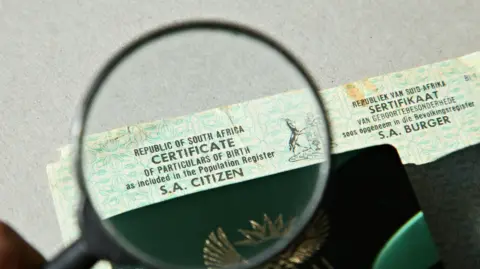
    Getty Images A South African birth certificate can be seen through a magnifying glass.Getty Images

    In South Africa, an estimated 10,000 people are stateless

    On several occasions, the BBC contacted the home affairs department, which handles immigration issues in South Africa, to find out how it is tackling the issue of statelessness but got no reply.

    Statelessness is not just an issue here, it is a huge global problem.

    There’s an estimated 4.5 million stateless people around the world. Some say the figure could even be as high as 15 million.

    Experts believe tackling the problem requires policy changes, including allowing refugees to register their children where they’re born, and giving mothers the right to pass their nationality to their children.

    “For us statelessness is not just a legal issue, it’s a matter that involves the right to development,” says Jesus Perez Sanchez who works for the UNHCR.

    “That person that’s affected by statelessness will not be able to contribute fully to that country that is hosting. So we think that it’s important that as a matter of inclusion, all issues of statelessness are addressed so that all these people on the margins of society can contribute fully to society and the economy.”

    Back in Thembisa, Arnold is playing football with local children.

    After years of struggle, he now has a lawyer helping him fight for the papers that prove he belongs here. He wants to go back to school to study computer science. He hopes having documents will lead to a brighter future.

    Additional reporting by Christian Parkinson

    Getty Images/BBC A woman looking at her mobile phone and the graphic BBC News AfricaGetty Images/BBC


    Source link

  • Families grieve contaminated tap water deaths in India city

    Families grieve contaminated tap water deaths in India city


    Sameer Khan,Indoreand

    Abhishek Dey,Delhi

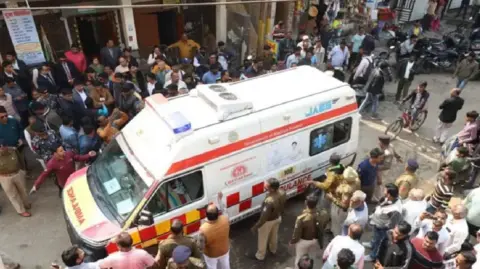
    Sameer Khan An ambulance, surrounded by a huge group of people and police officials, in Madhya Pradesh's Indore city ferrying patients of a local diarhhoea outbreak caused by contaminated tap waterSameer Khan

    More than 200 people are admitted in hospitals in Indore

    Sunil Sahu bitterly regrets the day his five-month-old son was given some cow milk diluted with tap water.

    Avyan was being breast-fed but his father says the family – who live in Indore city in India’s central Madhya Pradesh state – gave him the diluted mixture in addition.

    In many Indian families, cow’s milk is believed to be too thick for infants and capable of upsetting their digestion, leading caregivers to dilute it.

    Aware that tap water is unsafe to drink, the family said they boiled the milk–water mixture and allowed it to cool before feeding Avyan.

    The infant started suffering from diarrhoea on 26 December. Despite being treated by a local doctor, the child died within three days. Mr Sahu alleges that the tap water killed his son.

    Avyan is among several people suspected to have died after drinking contaminated water in Indore’s Bhagirathpura neighbourhood. Investigations are still going on but officials say that a pipeline leak led to sewage mixing with drinking water, leading to a diarrhoea outbreak in the area.

    The exact death toll remains unclear. Madhya Pradesh Chief Minister Mohan Yadav said postmortem reports have so far confirmed four deaths linked to contaminated drinking water.

    But the number is likely to increase. While state minister Kailash Vijayvargiya says he has heard about eight deaths so far, local journalists told BBC Hindi that the toll is close to 14.

    More than 200 people have been admitted to hospitals in the city.

    Over the past week, around 40,000 residents of Bhagirathpura – a neighbourhood of largely poor and lower-middle income families – were screened by health authorities and around 2,450 cases of vomiting and diarrhoea were identified, said the government.

    The deaths in Indore – often ranked India’s cleanest city – have sparked an uproar and put the governing Bharatiya Janata Party (BJP) on the defensive.

    District Magistrate Shivam Verma said the leak that caused the contamination has been fixed and officials are checking for others. One municipal officer has been dismissed and two suspended.

    “It should not have happened in the first place. We have set up a committee to investigate the matter, and no stone will be left unturned to make sure that it does not happen again,” Chief Minister Yadav told the media.

    The local municipal corporation is currently supplying water to Bhagirathpura through tankers. Residents say they have been told not to use tap water until further notice.

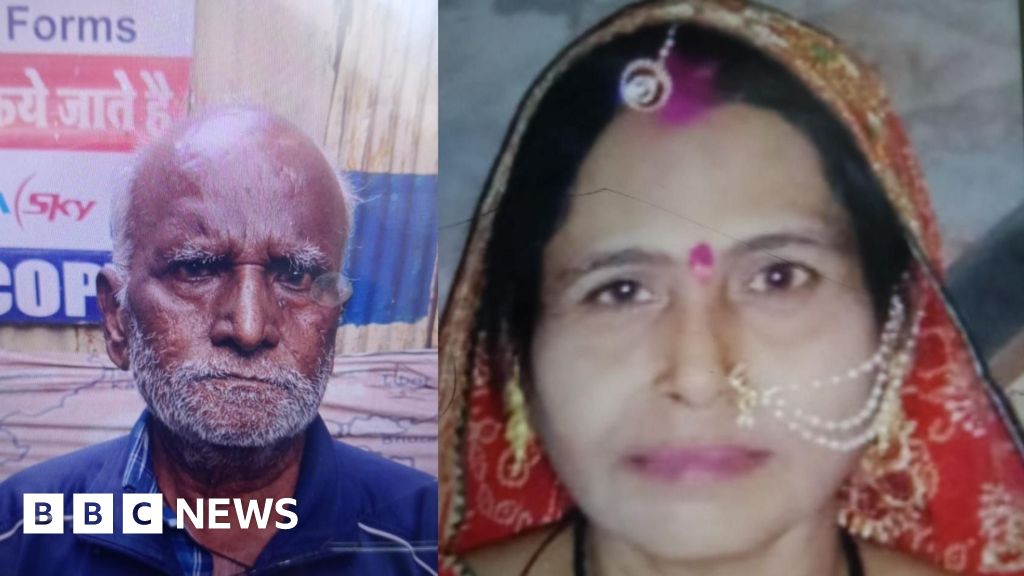
    Sameer Khan Nandalal Pal (left), wearing a blue shirt, and Seema Prajapat (right), wearing a red saree, are among people who died in Indore after consuming contaminated waterSameer Khan

    Nandalal Pal (left) and Seema Prajapat (right) are among the victims

    While government teams conduct inspection drives in Bhagirathpura, families are grieving.

    Sanjay Yadav, a tailor, says his 69-year-old mother started vomiting on the evening of 26 December.

    “We took her to a hospital, but she died in less than 24 hours,” said Mr Yadav, whose 11-month-old son is also unwell.

    His neighbour Sudha Pal’s 76-year-old father Nandalal Pal also died after a bout of severe diarrhoea.

    “The tap water in our house is still contaminated and it stinks,” she says.

    “The water smelt foul, but we never thought it could kill someone,” said Arun Prajapat, who alleges that his mother Seema died after consuming the contaminated water.

    According to media reports, residents of Bhagirathpura had complained about the foul-smelling and contaminated water for more than two months before the diarrhoea outbreak.

    When asked about this, local councillor Kamal Waghela of the BJP told news agency ANI on Thursday that Indore’s sewage and water pipelines need a lot of repairs and that work had been progressing in most areas.

    Jitu Patwari of the opposition Congress, however, accused the BJP government of misgovernance and hiding the actual number of deaths.

    “Indore has consistently given votes to the BJP but they have given poisoned water instead,” he told ANI.

    Follow BBC News India on Instagram, YouTube, Twitter and Facebook.


    Source link

  • Two people killed in magnitude 6.5 earthquake in Mexico

    Two people killed in magnitude 6.5 earthquake in Mexico


    At least two people have died after a powerful earthquake hit southern and central Mexico on Friday.

    CBS, the BBC’s news partner in America, reported that as of Friday evening local time, two people were killed and several injured.

    The epicentre of the 6.5 magnitude earthquake was near the popular tourist town of Acapulco, near San Marcos in the southwestern state of Guerrero.

    A woman, 50, is believed to have died in Guerrero, state governor Evelyn Salgado said, while Clara Brugada, Mexico City’s mayor, confirmed the death of a 60-year-old man. She also said 12 people were injured. Brugada said aftershocks from Friday’s earthquake continued to be felt.

    She urged locals to “remain calm” and “always keep the Life Backpack ready”.

    She was referring to the emergency backpack Mexico’s National Disaster Prevention Center encourages residents to prepare to “help survive the first hours of disaster”. Items should include a flashlight, radio, water, non-perishable foods, warm clothing and a photocopy of all important documents, it says.

    Two structures were being evaluated for risk of collapse, said Brugada. “And as a preventive measure, 34 buildings and 5 homes are being inspected.”

    After hearing the Mexican Seismic Alert System early Friday, residents and tourists rushed into the streets of Mexico City and Acapulco.

    The seismic system was put into place following the deadly 1985 earthquake that claimed more than 10,000 lives.

    President Claudia Sheinbaum was holding her first press conference of the year when the earthquake struck.

    In a video capturing the moment, Sheinbaum is heard saying “it’s shaking” as an earthquake alert system rings in the background. The president tells the media to “all get out calmly”. Additional video footage video shows buildings shaking in Mexico City and cars trembling in Acapulco, Guerrero.


    Source link