Category: Uncategorized

  • Nepal to scrap ‘failed’ Mount Everest waste deposit scheme

    Nepal to scrap ‘failed’ Mount Everest waste deposit scheme


    Navin Singh KhadkaEnvironment correspondent, BBC World Service

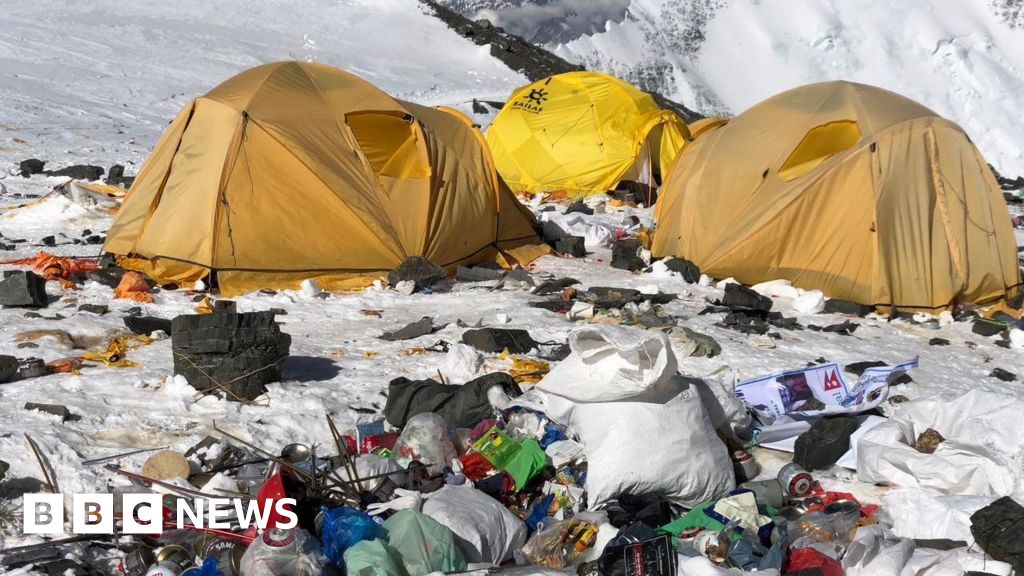
    David Liano Camp IV on Everest. A cluster of yellow tents surrounded by snow and rubbish. David Liano

    Officials say the problem of waste piling up is more evident on higher camps of Everest

    A scheme to encourage climbers to bring their waste down from Mount Everest is being scrapped – with Nepalese authorities telling the BBC it has been a failure.

    Climbers had been required to pay a deposit of $4,000 (£2964), which they would only get back if they brought at least 8kg (18lbs) of waste back down with them.

    It was hoped it would begin to tackle the rubbish problem on the world’s highest peak, which is estimated to be covered in some 50 tonnes of waste.

    But after 11 years – and with the rubbish still piling up – the scheme is being shelved because it “failed to show a tangible result”.
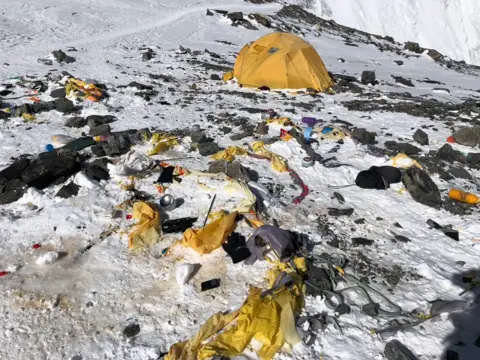
    David Liano Camp IV on Everest. A yellow tent surrounded by snow and rubbish. David Liano

    Clean-up campaigns have usually focused on lower camps of Mt Everest as it is difficult and costly to operate at higher altitudes

    Himal Gautam, director at the tourism department, told the BBC that not only had the garbage issue “not gone away”, but the deposit scheme itself had “become an administrative burden”.

    Tourism ministry and mountaineering department officials told the BBC most of the deposit money had been refunded over the years – which should mean most climbers brought back their trash.

    But the scheme is said to have failed because the rubbish climbers have brought back is usually from lower camps – not the higher camps where the garbage problem is worst.

    “From higher camps, people tend to bring back oxygen bottles only,” said Tshering Sherpa, chief executive officer of the Sagarmatha Pollution Control Committee, which runs an Everest checkpoint.

    “Other things like tents and cans and boxes of packed foods and drinks are mostly left behind there, that is why we can see so much of waste piling up.”

    Mr Sherpa said on average a climber produces up to 12kg (26lbs) of waste on the mountain where they spend up to six weeks for acclimatisation and climbing.

    Apart from the “flawed rule” that required climbers to bring back less trash than they produce, authorities in the Everest region said lack of monitoring has been the main challenge.

    “Apart from the check point above the Khumbu Icefall, there is no monitoring of what climbers are doing,” said Mr Sherpa.

    Nepalese authorities are hoping a new scheme will be more effective.
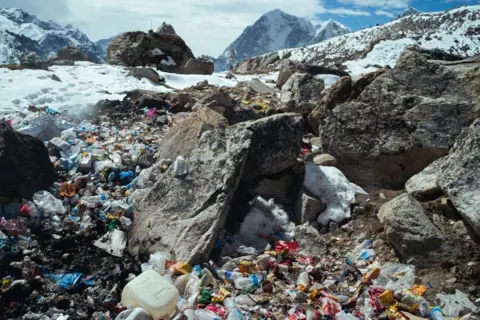
    Getty Images Abandoned plastic waste partially covered by snow as seen in a makeshift landfill on the outskirts of town on on October 12, 2024 in Gorakshep, Sagarmatha Region, Nepal. The growing popularity of trekking in Nepal has resulted in various forms of pollution spoiling the fragile ecosystem. Gorakshep is the last human settlement on the Nepal side before trekkers arrive at Everest Base Camp just 3.5km away. Here, waste management issues due to trekking tourism are apparent with plastic bottles and debris from lodges and restaurants dumped just meters from the town centre. Early in the autumn trekking season, Everest Base Camp itself also shows signs of waste mismanagement.Getty Images

    Even the lower parts of the Everest region below the base camp see abandoned waste by visitors and trekkers

    Under the changed rule, officials said, a non-refundable clean-up fee from climbers will be used to set up a checkpoint at Camp Two and also deploy mountain rangers who will keep going to the higher parts of the mountain to make sure climbers bring down their trash.

    Tourism ministry officials said it will most probably be $4,000 per climber – the same amount as deposit money – and will come into effect once passed by the parliament.

    Mingma Sherpa, chairperson of the Pasang Lhamu rural municipality, said the change was something the Sherpa community had lobbied for for many years now.

    “We had been questioning the effectiveness of the deposit scheme all this time because we are not aware of anyone who was penalised for not bringing their trash down.

    “And there was no designated fund but now this non-refundable fee will lead to creation of a fund that can enable us to do all these clean-up and monitoring works.”

    Getty Images View from Kala Pattha towards Mount Everest, Nuptse and the Khumbu Glacier, Everest Mountain Range, Nepal.Getty Images

    Increasing number of climbers on Mount Everest has been a growing concern for sustainable mountaineering

    The non-refundable fee will form part of a recently introduced five-year mountain clean-up action plan, with Jaynarayan Acarya, spokesperson at the ministry of tourism, saying it was designed “to immediately address the pressing problem of waste on our mountains”.

    Although there has been no study quantifying the waste on Everest, it is estimated there are tons of it including human excrement which does not decay on the higher part of the mountain because of freezing temperature.

    And the growing number of climbers each year, averaging around 400 with many more supporting staff, has been a growing concern for mountaineering sustainability.

    Source link

  • US pledges $2bn for humanitarian aid, but tells UN ‘adapt or die’

    US pledges $2bn for humanitarian aid, but tells UN ‘adapt or die’


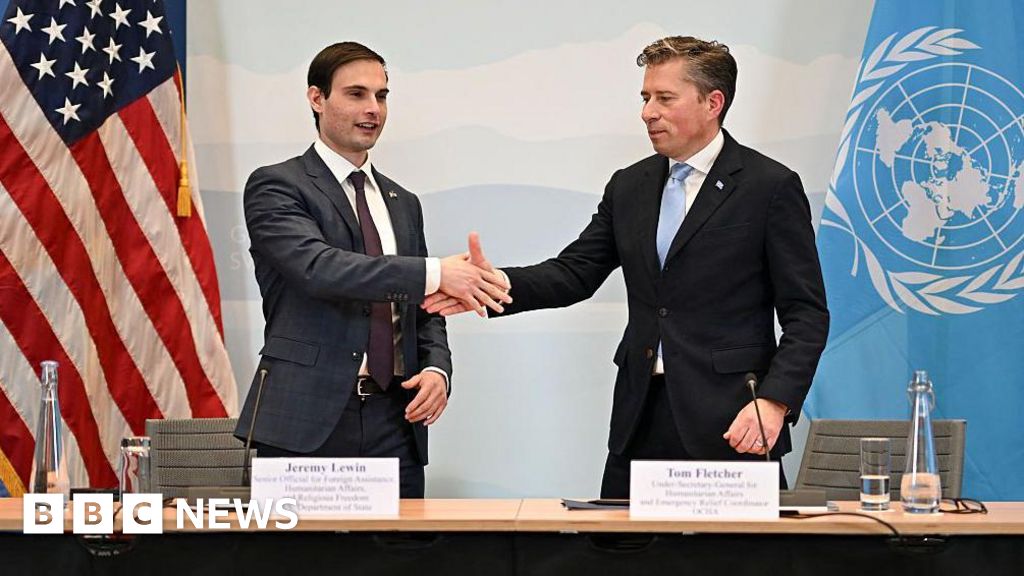
    The United States has pledged $2 billion (£1.5bn) to fund United Nations (UN) humanitarian programmes, but has warned the UN it must “adapt or die”.

    The announcement was made in Geneva by Jeremy Lewin, President Trump’s Under Secretary for Foreign Assistance, and the UN’s emergency relief chief, Tom Fletcher.

    It comes amid huge cuts in US funding for humanitarian operations, and further cuts expected from other donors, such as the UK and Germany.

    Mr Fletcher welcomed the new funds, saying they would save “millions of lives”. But $2 billion is just a fraction of what the US has traditionally spent on aid. In 2022 its contribution to the UN’s humanitarian work was estimated at $17 billion (£12.6bn).

    And the funding comes with some strings attached. Although UN donors do sometimes earmark specific projects, the UN funding prioritises just 17 countries, among them Haiti, Syria, and Sudan.

    Afghanistan and Yemen will not, Mr Lewin said, receive any money, adding that Washington had evidence that in Afghanistan UN funds were being diverted to the Taliban and that “President Trump will never tolerate a penny of taxpayers’ money going to terrorist groups”.

    Such restrictions will be hard for aid agencies working in countries not on the list. The impact of funding cuts has already led to the closure of mother and baby clinics in Afghanistan, and reductions in food rations for displaced people in Sudan. Globally, child mortality, which has been declining, is set to rise this year.

    The conditions placed on the new US funding also rule out spending money on projects related to tackling climate change, which Mr Lewin said were not “life saving”, and not in “the US interest”.

    Mr Lewin, a Trump loyalist who reportedly masterminded the shutdown of USAID and the firing of its thousands of staff, warned the UN that it must “adapt or die”, saying that the US “piggy bank is not open to those organisations that just want to return to the old system”.

    The US says funding must be focused and efficient, with no duplication among aid projects. These are qualities Tom Fletcher, and the entire UN system, say they wholeheartedly support. It’s in no one’s interests, least of all those of the estimated 200 people caught up in crises, for money to be spent unwisely.

    But while the UN is gratefully welcoming the new US funding, there remain big questions about whether the conditions around it are too politicised. The fundamental principles of humanitarian aid are that it should be neutral, impartial, and directed at those most in need. Eliminating specific countries, or specific crises such as climate change, challenges those principles.

    But, as it struggles with a continued funding crises, and, in Washington, a very skeptical donor, many in the UN will be acknowledging that $2 billion is better than nothing.


    Source link

  • Ukraine denies drone attack on Putin’s residence

    Ukraine denies drone attack on Putin’s residence


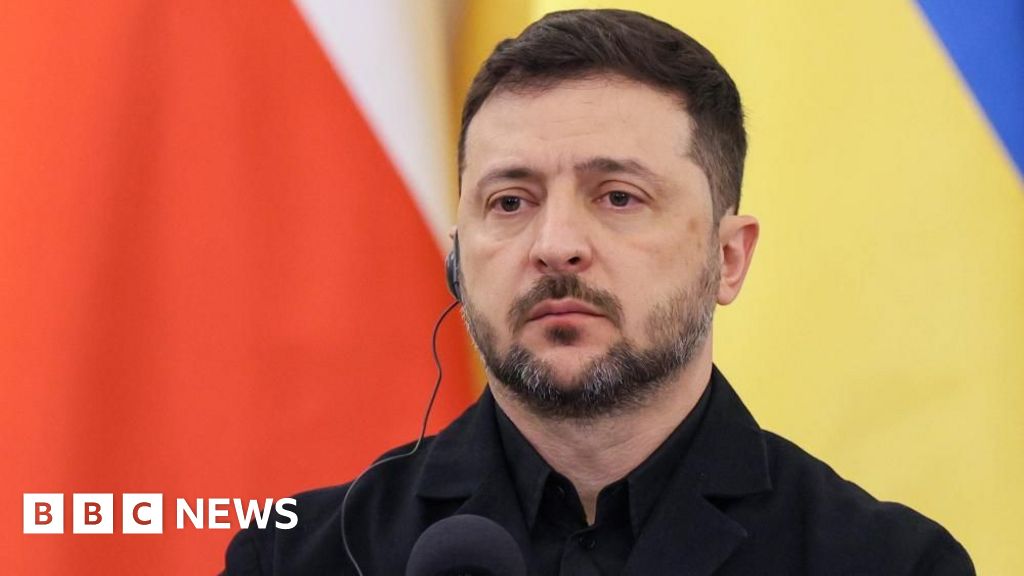
    President Volodymyr Zelensky has denied allegations by Russia that Ukraine launched a drone attack on one of President Vladimir Putin’s residences, and accused Moscow of trying to derail peace talks.

    Russia’s Foreign Minister Sergei Lavrov claimed Kyiv had launched an attack overnight using 91 long-range unmanned aerial vehicles (UAVs) on Putin’s state residence in Russia’s northwestern Novgorod region.

    Russia said it would now review its position in peace negotiations. It is not yet clear where Putin was at the time of the alleged attack.

    Zelensky dismissed the claim as “typical Russian lies”, intended to give the Kremlin an excuse to continue attacks on Ukraine.

    He said that Russia had previously targeted government buildings in Kyiv.

    Zelensky added on X: “It is critical that the world doesn’t stay silent now. We cannot allow Russia to undermine the work on achieving a lasting peace.”

    In a statement shared on Telegram on Monday, Lavrov said all of the 91 drones he claimed were launched at Putin’s residence were intercepted and destroyed by Russian air defence systems.

    He added that there were no reports of casualties or damage as a result of the attack.

    “Given the final degeneration of the criminal Kyiv regime, which has switched to a policy of state terrorism, Russia’s negotiating position will be revised,” he said.

    But he added that Russia does not intend to exit the negotiating process with the US, Russian news agency Tass reported.

    The claim by Moscow comes after talks between the US and Ukraine in Florida on Sunday, where Presidents Trump and Zelensky discussed a revised peace plan to end the war.

    Zelensky said the US had offered Ukraine security guarantees for 15 years, and Trump said an agreement on this point was “close to 95%” done.

    Ukraine’s leader described territorial issues and the Russian-occupied Zaporizhzhia nuclear plant as the last unresolved matters, and there was little sign of progress on the future of Ukraine’s contested Donbas region – which Russia wants to seize in full.

    Moscow currently controls about 75% of the Donetsk region, and some 99% of the neighbouring Luhansk. The two regions are known collectively as Donbas.

    Russia has previously rejected key parts of the plan under discussion.

    The White House said on Monday that President Trump had “concluded a positive call” with Putin, following the US-Ukraine talks.

    Yuri Ushakov, a Kremlin foreign policy aide, told reporters on Monday that during the call, Putin had pointed out the alleged attack on his residence happened “almost straight after what the US had considered to be a successful round of talks”.

    Ushahov said: “The US president was shocked by this information, he was angry and said he couldn’t believe such mad actions. It was stated that this will no doubt affect the US approach to working with Zelensky”.

    The White House did not address this claim when confirming the call took place.

    Ushakov added that Putin had stated that the “reckless terrorist action” would be met with “the strongest response”.


    Source link