Category: Uncategorized

  • Kosovo’s ruling party wins election after months of political deadlock

    Kosovo’s ruling party wins election after months of political deadlock


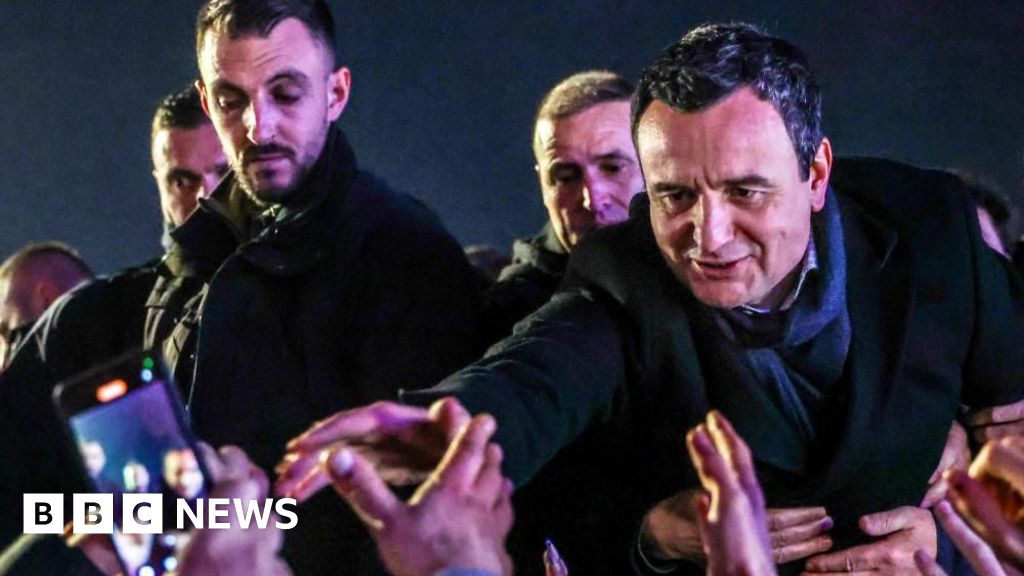
    The Albanian nationalist Vetevendosje party has won a landslide victory in Kosovo’s parliamentary elections, according to preliminary results.

    With 90% of the votes counted, the party, whose name means “self determination”, was on 50.8%, meaning a third term in power for its leader, Albin Kurti.

    The two main opposition parties, the centre-right Democratic Party of Kosovo (PDK) and the Democratic League of Kosovo (LDK), were on 20.98% and 13.89%, respectively.

    Vetevendosje won elections in February, but without a majority, and Kosovo has been without a functioning government since then.

    The impasse meant there was one big question hanging over this second parliamentary election of the year.

    Would voters punish Kurti for the long months of deadlock in the country’s National Assembly – or the opposition parties who refused to countenance a coalition with Kurti’s left-wing movement?

    The electorate has given a clear answer. This will not be quite enough to deliver enough seats for Kurti to govern without coalition partners. But he should not find it difficult to find support among the MPs from the ethnic minority parties who are guaranteed 20 of the 120 seats in the National Assembly.

    It is the fourth successive victory in parliamentary elections for Vetevendosje. The result is vindication after the opposition parties blocked his attempts to form a government following the previous polls on February 9.

    Kurti claimed it was “the greatest victory in the history of the country” – and said he expected opposition parties to cooperate, rather than frustrate, this time around.

    Arben Gashi, of the third-placed Democratic League of Kosovo (LDK), indicated that could be possible. “When voters speak, the result cannot be ignored,” he posted on social media. “Reflection and responsible action are required,” he added.

    There is plenty at stake. Kosovo has missed out on hundreds of millions of euros’ worth of European Union funds because of the lack of a functioning government. Kurti also cited potential agreements with the World Bank which would bring the total sum to more than €1bn.

    Repairing relations with Kosovo’s strongest international supporters, the EU and the US, should also be on the agenda. Kurti angered Brussels and Washington by repeatedly targeting institutions serving Kosovo’s Serb minority – from post offices to healthcare facilities. This increased tensions in majority-Serb north Kosovo.

    The EU has finally agreed to remove the punitive measures it imposed in 2023. But it will be looking for Kurti to take a pragmatic approach to the long-stalled normalisation dialogue with Serbia, rather than stick to his usual dogmatic line. Given his frosty relations with Serbia’s president, Aleksandar Vucic, this may be a vain hope.

    The fact that Kosovo’s voters have resoundingly endorsed such a polarising figure reflects their jaundiced view of the alternatives. Parties connected to the Kosovo Liberation Army dominated government in the decade following 2008’s unilateral declaration of independence – but failed to deliver on their promises of prosperity.

    One analyst, Artan Muhaxhiri, noted Vetevendosje’s “countless violations of the constitution, the lack of economic development and the breakdown of relations with allies” over its years in power.

    But he concluded that “despite all the shortcomings, citizens have considered the opposition to be more harmful”.

    Source link

  • The godfather of Ethio-jazz plays his last live concert

    The godfather of Ethio-jazz plays his last live concert


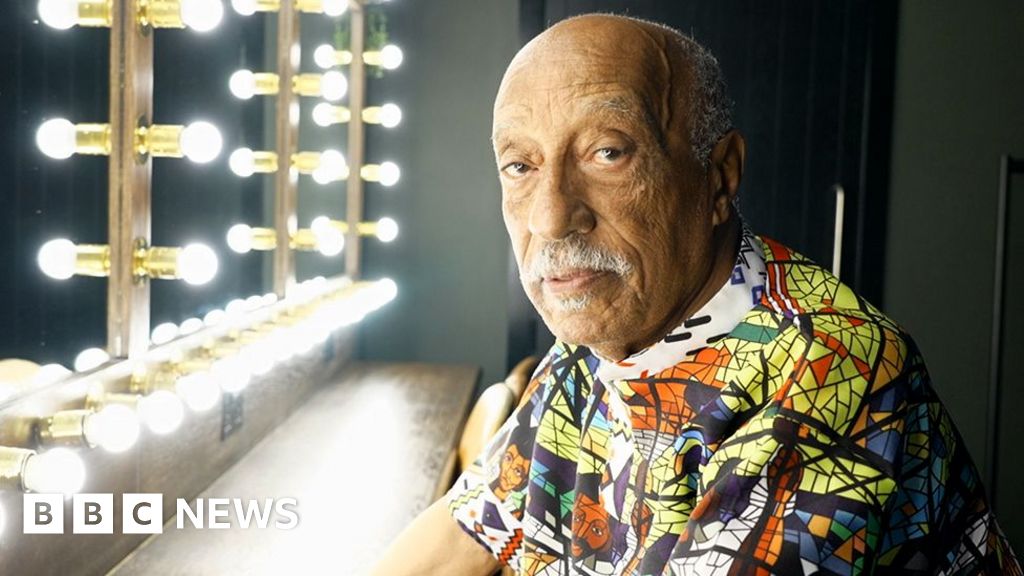
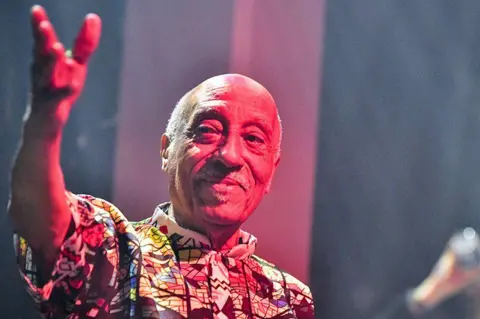
    Mulatu Astatke Mulatu Asatke wearing a patterned shirt smiles and waves to the audience.Mulatu Astatke

    Ethiopian jazz musician Mulatu Astatke smiled as he held his arms aloft to acknowledge his audience for the last time.

    Last month in London, the 82-year-old pioneer, who has done much to bring his blend of musical styles to the world, played his final live concert after a six-decade performing career.

    Twenty years ago, he gained a wider listenership after the soundtrack for the 2005 Hollywood film Broken Flowers included his music, and the use of one of his recordings in last year’s best-picture-Oscar-nominated Nickel Boys saw further interest.

    But since the 1960s he has used the studio and rehearsal room as a laboratory where he has mixed musical styles to create what he calls the “science” of Ethio-jazz.

    Outside, it was a cold November evening, but inside the West End venue, Mulatu was bathed in the warm embrace of a crowd eager to get one last glimpse of this alchemist at work.

    Dressed in a shirt featuring work by Ethiopian artist Afework Tekle, he slowly and steadily walked on stage.

    Squeezing past a set of congas he came to his signature instrument – the vibraphone.

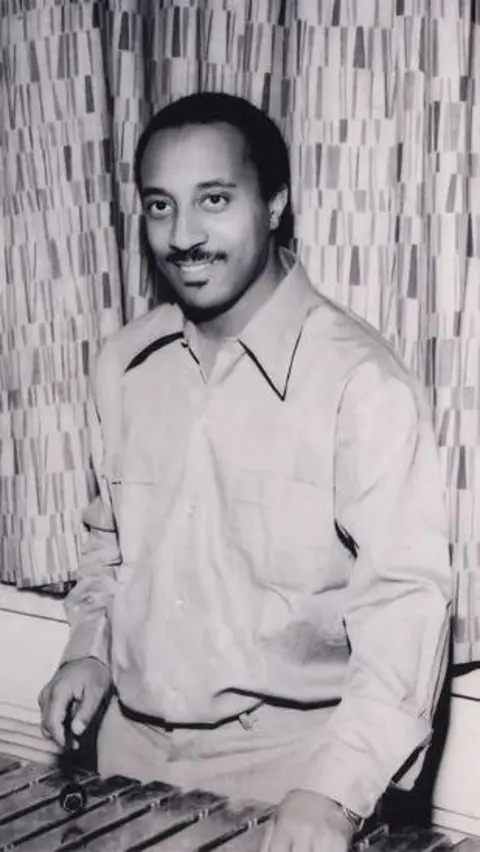
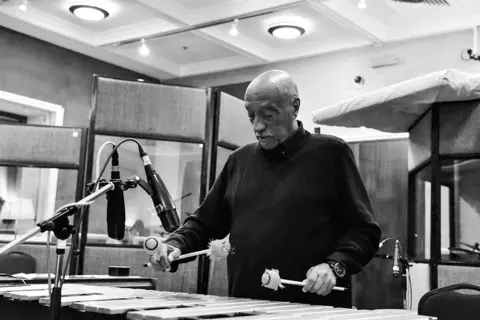
    Mulatu Astatke A black and white image of Mulatu Astatke in a recording studio standing at the vibraphone - he is holding the mallets as he plays the instrument.Mulatu Astatke

    In the studio and the concert hall, Mulatu has been working to create his Ethio-jazz sound

    With two pink-felted mallets in his right hand and one in the left, he began to pick out the mesmeric rhythm and melody, expertly striking the xylophone-like metal bars creating a delicate, resonant sound.

    The first song was based on a 4th Century tune from the Ethiopian Orthodox church.

    It was a nod to his musical heritage and the Ethiopian pentatonic scale that gives his sound its unique flavour when combined with other jazz traditions from around the world.

    “It was a beautiful show. Really enjoyed it,” Mulatu told the BBC in his gentle voice after the concert.

    But he would not be drawn on how he felt saying goodbye to his international fans.

    For US musician and composer Dexter Story the gig was “bittersweet”.

    “It was so vibrant and so alive. A reverent and gracious… and wonderful, wonderful energy,” he said.

    “I’m very saddened that we won’t have this genius… touring the world.”

    But his influence will live on in his recordings.

    Mulatu Astatke Mulatu Astatke as a young man standing at the vibraphone.Mulatu Astatke

    Mulatu has been making records since the 1960s

    “My instinct when someone asks me to introduce them to Ethiopian music or to Ethiopian culture is to play Mulatu,” says London-based fan Juweria Dino.

    “They have listened to it all over the world,” the musician said with pride. “They loved it. It was so beautiful.”

    He remains determined to promote music from Ethiopia and the wider continent which he feels does not get the acknowledgment it deserves.

    “Africa has given so much culturally to the world. It is not being recognised as it should be recognised,” he said.

    His knowledge of life and culture beyond his home began at an early age.

    Mulatu was born in 1943 in Jimma, south-western Ethiopia. As a teenager, his parents sent him to Lindisfarne College, near Wrexham in North Wales, to continue his education.

    “I wanted to study engineering,” he said.

    But during his time there, Mulatu got drawn into the world of music, first taking up the trumpet. The headmaster at the time noticed his natural talent and eventually encouraged him to devote more of his energy to developing that gift.

    “After I finished my school, they were telling me: ‘Mulatu, if you become a musician, you will be successful.’ So, I followed their advice. I went to Trinity College here in London.”

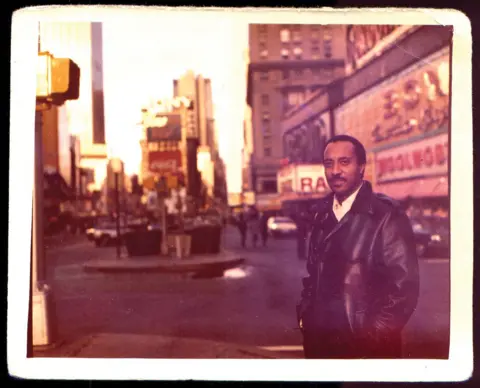
    Mulatu Astatke An archive shot surrounded by a white border of Mulatu Astatke wearing a leather jacket and standing in Times Square in New York.Mulatu Astatke

    Mulatu toured the world – seen here in New York’s Times Square in 1972

    He remembers this period at one of the UK’s foremost music colleges as a formative part of his journey. He has fond memories of jamming in jazz clubs with his musician friends.

    “[Jamaican] Joe Harriot was one of the greatest alto saxophone players and we used to play together at a place called the Metro Club in London,” he said.

    To this day, Mulatu holds the UK close to his heart.

    “To me it was so really great to be back again here.”

    In the 1960s, Mulatu moved to the US to enrol at Berklee College of Music in Boston – the first African to do so.

    He studied vibraphone and percussion and began incorporating Latin jazz into his own music, recording his first two albums.

    But it was only when he returned to Addis Ababa in 1969 that he created his own sound.

    He changed the face of music at home during these “Swinging Addis” years. Using what he had learned at Berklee and combining it with Ethiopian modes, he “created this science called Ethio-jazz”, Mulatu said.

    Initially his radical sound was met with complaints.

    “I remember them telling me ‘get off, stop, stop there’. Because they don’t understand.”

    But the resistance did not last long and his influence quickly grew.

    In 1974, after Emperor Haile Selassie was deposed in a coup, many musicians left the country, but Mulatu stayed in Addis and kept making music.

    Throughout his career, his deepest inspiration came from traditional musicians back home, who he calls “our scientists”.

    His tracks weave together traditional instruments from his homeland like the washint (flute), kebero (drum), and the masenqo, a single-stringed fiddle.

    Mulatu describes the masenqo as sounding exactly like a cello.

    “But the question is, who came first? Was it the cello or the masenqo?” he asked.

    “The problem is we don’t do research. We have so many great scientists in Africa. Great people, geniuses, who created all these instruments. But we don’t give them credit.”

    Today, he says his mission is to broaden the range of the traditional instruments of his homeland by “computerising” the sound.

    For his fans, it is his unique blend of the modern and traditional that makes Ethio-jazz so special.

    “It reminds me a lot of music from South Asia, melded with the pentatonic scale which reminds me more of Arab music, along with the African percussion sounds that come through,” said concert-goer Joseph Badawi-Crook.

    “It’s a completely unique mix and I just fell in love with it years ago.”

    Mulatu’s legacy spans generations.

    “Some of our grandparents or our parents or our aunts or our uncles, have seen Mulatu throughout his career,” said London-based Ethiopian fan Solliana Kineferigb.

    “To also be part of the younger generation and to have the opportunity to still see him live is amazing.”

    While the touring may be over, Mulatu pledges to continue to bring Ethiopian music to the world.

    “It’s not the end,” he said.

    More about African music:
    Getty Images/BBC A woman looking at her mobile phone and the graphic BBC News AfricaGetty Images/BBC


    Source link

  • How Putin has kept Russia’s billionaires on side in the war

    How Putin has kept Russia’s billionaires on side in the war


    Vitaly ShevchenkoBBC Monitoring Russia editor

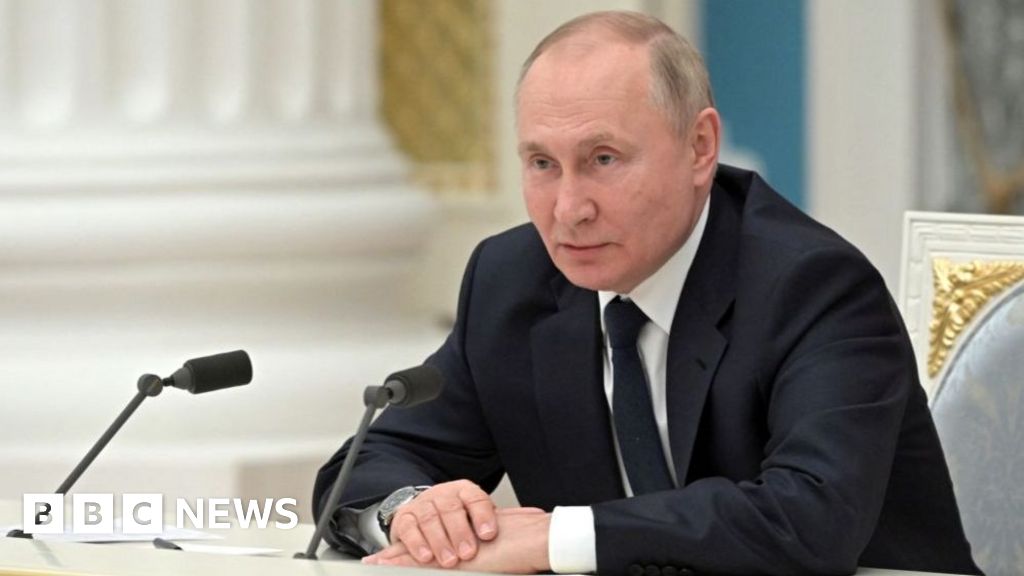
    ALEXEY NIKOLSKY/SPUTNIK/AFP Russian President Vladimir Putin chairs a meeting of big businesses at the Kremlin in Moscow on February 24, 2022ALEXEY NIKOLSKY/SPUTNIK/AFP

    Putin summoned business leaders to the Kremlin on the day he ordered the full-scale invasion of Ukraine

    During the war with Ukraine, the number of billionaires in Russia has reached an all-time high. But in the 25 years Vladimir Putin has been in power, Russia’s rich and powerful – known as oligarchs – have lost almost all their political influence.

    All this is good news for the Russian president. Western sanctions have failed to turn the uber-rich into his opponents, and his carrot-and-stick policies have turned them into silent backers.

    Former banking billionaire Oleg Tinkov knows exactly how the sticks work.

    The day after he criticised the war as “crazy” in an Instagram post, his executives were contacted by the Kremlin. They were told his Tinkoff Bank, Russia’s second-largest at the time, would be nationalised unless all ties to its founder were cut.

    “I couldn’t discuss the price,” Tinkov told the New York Times. “It was like a hostage – you take what you are offered. I couldn’t negotiate.”

    Within a week, a company linked to Vladimir Potanin – currently Russia’s fifth-richest businessman, who supplies nickel for fighter jet engines – announced that it was buying the bank. It was sold for only 3% of its true value, says Tinkov.

    In the end, Tinkov lost almost $9bn (£6.5bn) of the fortune he once had, and left Russia.

    Chris Graythen/Getty Images A man wearing a white baseball cap and grey T-shirt grins while standing under a treeChris Graythen/Getty Images

    Oleg Tinkov lost billions and left Russia after criticising the war against Ukraine

    This is a far cry from the way things were before Putin became president.

    In the years following the break-up of the Soviet Union, some Russians became fabulously rich by taking ownership of massive enterprises formerly owned by the state, and by exploiting the opportunities of their country’s nascent capitalism.

    Their newly acquired wealth brought them influence and power during a period of political turmoil and they became known as oligarchs.

    Russia’s most powerful oligarch, Boris Berezovsky, claimed to have orchestrated Putin’s ascent to presidency in 2000, and years later he appealed for forgiveness for doing so: “I didn’t see the future greedy tyrant and usurper in him, the man who would trample freedom and stop Russia’s development,” he wrote in 2012.

    Berezovsky may have exaggerated his role, but Russia’s oligarchs were certainly capable of pulling strings at the highest echelons of power.

    A little more than a year after his apology, Berezovsky was found dead in mysterious circumstances in exile in the UK. By that time, Russian oligarchy was well and truly dead, too.

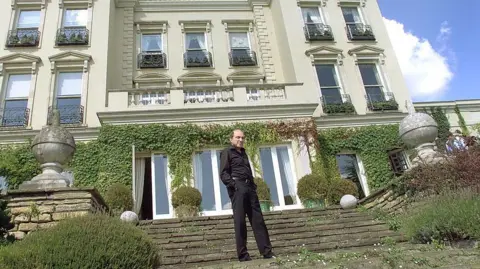
    Hulton Archive/Getty Images A man dressed in black stands on steps in front of a smart houseHulton Archive/Getty Images

    Boris Berezovsky went into exile in the UK where he later died in mysterious circumstances in 2013

    So when Putin gathered Russia’s richest in the Kremlin hours after ordering the full-scale invasion of Ukraine on 24 February 2022, there was little they could do to object, even though they knew their fortunes were about to take a massive hit.

    “I hope that in these new conditions, we’ll work together just as well and no less effectively,” he told them.

    One reporter present at the meeting described the assembled billionaires as “pale and sleep-deprived”.

    The run-up to the invasion was very bad for Russia’s billionaires, and so was its immediate aftermath.

    According to Forbes magazine, in the year to April 2022, their number fell from 117 to 83 because of the war, sanctions and a weakened rouble. Collectively, they lost $263bn – or 27% of their wealth each on average.

    But the years that followed showed that immense benefits were to be reaped from being part of Putin’s war economy.

    Lavish spending on the war spurred economic growth of more than 4% a year in Russia in 2023 and 2024. It was good for even those among Russia’s ultra-rich who were not making billions directly out of defence contracts.

    In 2024, more than half of Russia’s billionaires either played some role in supplying the military or benefited from the invasion, says Giacomo Tognini, from Forbes’s Wealth team.

    “That’s not even counting those who aren’t directly involved, but do need a relationship of sorts with the Kremlin. And I think it’s fair to say that anyone running a business in Russia needs to have a relationship with the government,” he told the BBC.

    This year saw the highest ever number of billionaires in Russia – 140 – on the Forbes list. Their collective worth ($580bn) was just $3bn shy of the all-time high registered in the year before the invasion.

    While allowing loyalists to profit, Putin has consistently punished those who have refused to toe the line.

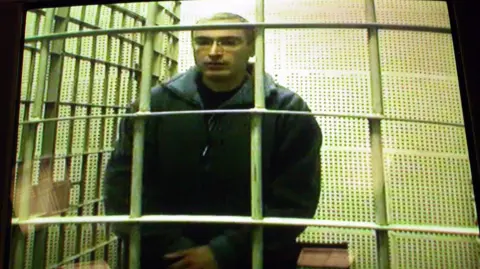
    Russians remember all too well what happened to oil tycoon Mikhail Khodorkovsky. Once Russia’s richest man, he spent 10 years in jail after launching a pro-democracy organisation in 2001.

    AFP Russia's richest man and oil magnate Mikhail Khodorkovsky is seen in his cage in "Matroska tishina" prison on a TV screen during a video-link in the courthouse in Moscow, 15 January 2003AFP

    Mikhail Khodorkovsky was Russia’s richest man but he was sent to jail and his oil company Yukos was nationalised

    Since the invasion, almost all of Russia’s mega-rich have stayed quiet, and those few who have publicly opposed it have had to abandon their country and much of their wealth.

    Russia’s wealthiest are clearly key to Putin’s war effort, and many of them, including the 37 business people summoned to the Kremlin on 24 February 2022, have been targeted by Western sanctions.

    But if the West wanted to make them poorer and turn against the Kremlin, it has failed, given the continuing wealth and absence of dissent among Russian billionaires.

    If any of them had considered defecting to the West with their billions, the sanctions made that impossible.

    “The West did everything possible to ensure that Russian billionaires rallied around the flag,” says Alexander Kolyandr of the Center for European Policy Analysis (CEPA).

    “There was absolutely no plan, no idea, no clear path for any of them to jump ship. Assets were sanctioned, accounts frozen, property seized. All that effectively helped Putin to mobilise the billionaires, their assets and their money, and use it to support the Russian war economy,” he tells the BBC.

    The exodus of foreign companies in the wake of the invasion of Ukraine created a vacuum quickly filled by Kremlin-friendly business people who were allowed to buy up highly lucrative assets on the cheap.

    This created a new “army of influential and active loyalists”, argues Alexandra Prokopenko of the Carnegie Russia Eurasia Center.

    “Their future wellbeing depends on continued confrontation between Russia and the West,” while their worst fear is the return of the previous owner, she says.

    In 2024 alone, 11 new billionaires emerged in Russia in this way, according to Giacomo Tognini.

    Russia’s leader has maintained a firm grip on the country’s key movers and shakers, despite the war and Western sanctions – and in some respects because of them.


    Source link