
Category: Uncategorized

  • ‘I’ve never seen a year as worrying as 2025’

    ‘I’ve never seen a year as worrying as 2025’


    John Simpson profile image

    John SimpsonBBC world affairs editor
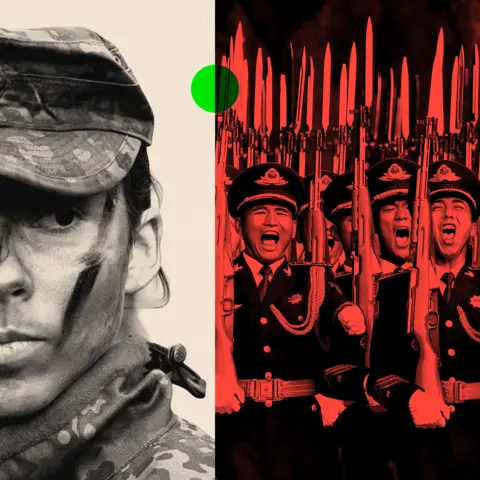
    BBC A treated image showing a recruit in the armed forces and on the right an image of the Chinese People's Liberation Army honour guard membersBBC

    Sensitive content: This article contains a graphic description of death that some readers may find upsetting

    I’ve reported on more than 40 wars around the world during my career, which goes back to the 1960s. I watched the Cold War reach its height, then simply evaporate. But I’ve never seen a year quite as worrying as 2025 has been – not just because several major conflicts are raging but because it is becoming clear that one of them has geopolitical implications of unparalleled importance.

    Ukraine’s President Volodymyr Zelensky has warned that the current conflict in his country could escalate into a world war. After nearly 60 years of observing conflict, I’ve got a nasty feeling he’s right.
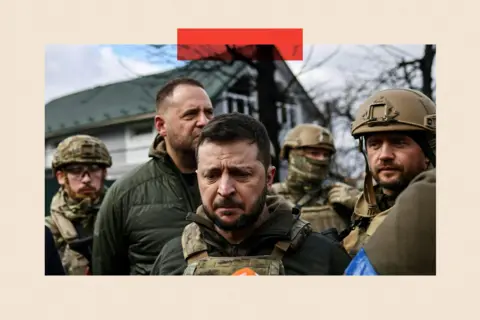
    AFP via Getty Images Ukainian President Volodymyr Zelensky AFP via Getty Images

    Ukraine’s President has warned that the current conflict in Ukraine could escalate into a world war

    Nato governments are on high alert for any signs that Russia is cutting the undersea cables that carry the electronic traffic that keeps Western society going. Their drones are accused of testing the defences of Nato countries. Their hackers develop ways of putting ministries, emergency services and huge corporations out of operation.

    Authorities in the west are certain Russia’s secret services murder and attempt to murder dissidents who have taken refuge in the West. An inquiry into the attempted murder in Salisbury of the former Russian intelligence agent Sergei Skrypal in 2018 (plus the actual fatal poisoning of a local woman, Dawn Sturgess) concluded that the attack had been agreed at the highest level in Russia. That means President Putin himself.

    This time feels different

    The year 2025 has been marked by three very different wars. There is Ukraine of course, where the UN says 14,000 civilians have died. In Gaza, where Israel’s prime minister, Benjamin Netanyahu promised “mighty vengeance” after about 1,200 people were killed when Hamas attacked Israel on 7 October 2023 and 251 people were taken hostage.

    Since then, more than 70,000 Palestinians have been killed by Israeli military action, including more than 30,000 women and children according to Gaza’s Hamas-run health ministry – figures the UN considers reliable.

    Meanwhile there has been a ferocious civil war between two military factions in Sudan. More than 150,000 people have been killed there over the past couple of years; around 12 million have been forced out of their homes.

    Maybe, if this had been the only war in 2025, the outside world would have done more to stop it; but it wasn’t.

    “I’m good at solving wars,” said US President Donald Trump, as his aircraft flew him to Israel after he had negotiated a ceasefire in the Gaza fighting. It’s true that fewer people are dying in Gaza now. Despite the ceasefire, the Gaza war certainly doesn’t feel as though it’s been solved.

    Given the appalling suffering in the Middle East it may sound strange to say the war in Ukraine is on a completely different level to this. But it is.

    AFP via Getty Images US President Donald Trump disembarks from Air Force One AFP via Getty Images

    “I’m good at solving wars,” said US President Donald Trump

    The Cold War aside, most of the conflicts I’ve covered over the years have been small-scale affairs: nasty and dangerous, certainly, but not serious enough to threaten the peace of the entire world. Some conflicts, such as Vietnam, the first Gulf War, and the war in Kosovo, did occasionally look as though they might tip over into something much worse, but they never did.

    The great powers were too nervous about the dangers that a localised, conventional war might turn into a nuclear one.

    “I’m not going to start the Third World War for you,” the British Gen Sir Mike Jackson reportedly shouted over his radio in Kosovo in 1999, when his Nato superior ordered British and French forces to seize an airfield in Pristina after the Russian troops had got there first.

    In the coming year, 2026, though, Russia, noting President Trump’s apparent lack of interest in Europe, seems ready and willing to push for much greater dominance.

    Earlier this month, Putin said Russia was not planning to go to war with Europe, but was ready “right now” if Europeans wanted to.

    At a later televised event he said: “There won’t be any operations if you treat us with respect, if you respect our interests just as we’ve always tried to respect yours”.
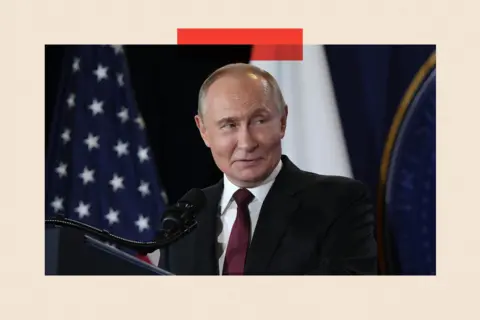
    Getty Images Russian President Vladimir Putin delivers a statement during a press conference
Getty Images

    Putin said Russia was not planning to go to war with Europe, but was ready “right now” if Europeans wanted to

    But already Russia, a major world power, has invaded an independent European country, resulting in huge numbers of civilian and also military deaths. It is accused by Ukraine of kidnapping at least 20,000 children. The International Criminal Court (ICC) has issued an arrest warrant for Russian President Vladimir Putin for his involvement in this, something Russia has always denied.

    Russia says it invaded in order to protect itself against Nato encroachment, but President Putin has indicated another motive: the desire to restore Russia’s regional sphere of influence.

    American disapproval

    He is gratefully aware that this last year, 2025, has seen something most Western countries had regarded as unthinkable: the possibility that an American president might turn his back on the strategic system which has been in force ever since World War Two.

    Not only is Washington now uncertain it wants to protect Europe, it disapproves of the direction it believes Europe is heading in. The Trump administration’s new national security strategy report claims Europe now faces the “stark prospect of civilisational erasure”.

    The Kremlin welcomed the report, saying it is consistent with Russia’s own vision. You bet it is.

    Inside Russia, Putin has silenced most internal opposition to himself and to the Ukraine war, according to the UN special rapporteur focusing on human rights in Russia. He’s got his own problems, though: the possibility of inflation rising again after a recent cooling, oil revenues falling, and his government having had to raise VAT to help pay for the war.
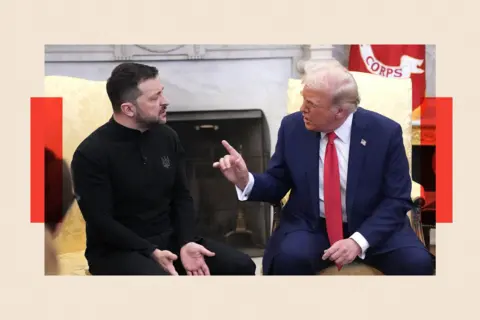
    Getty Images US President Donald Trump and Ukrainian President Volodymyr Zelensky meet in the Oval Office at the White HouseGetty Images

    US President Donald Trump and Ukraine’s President Volodymyr Zelensky clashed during a meeting at the White House in February 2025

    The economies of the European Union are 10 times bigger than Russia’s; even more than that if you add the UK. The combined European population of 450 million, is over three times Russia’s 145 million. Still, Western Europe has seemed nervous of losing its creature comforts, and was until recently reluctant to pay for its own defence as long as America can be persuaded to protect it.

    America, too, is different nowadays: less influential, more inward-looking, and increasingly different from the America I’ve reported on for my entire career. Now, very much as in the 1920s and 30s, it wants to concentrate on its own national interests.

    Even if President Trump loses a lot of his political strength at next year’s mid-term elections, he may have shifted the dial so far towards isolationism that even a more Nato-minded American president in 2028 might find it hard to come to Europe’s aid.

    Don’t think Vladimir Putin hasn’t noticed that.

    The risk of escalation

    The coming year, 2026, does look as though it’ll be important. Zelensky may well feel obliged to agree to a peace deal, carving off a large part of Ukrainian territory. Will there be enough bankable guarantees to stop President Putin coming back for more in a few years’ time?

    For Ukraine and its European supporters, already feeling that they are at war with Russia, that’s an important question. Europe will have to take over a far greater share of keeping Ukraine going, but if the United States turns its back on Ukraine, as it sometimes threatens to do, that will be a colossal burden.
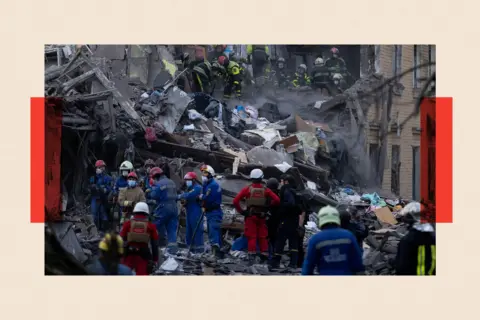
    Global Images Ukraine via Getty Images Rescue workers search for people under rubble of an apartment building destroyed by a Russian missile strike in Kyiv
Global Images Ukraine via Getty Images

    If the United States turns its back on Ukraine, that will be a colossal burden for Europe

    But could the war turn into a nuclear confrontation?

    We know President Putin is a gambler; a more careful leader would have shied away from invading Ukraine in February 2022. His henchmen make bloodcurdling threats about wiping the UK and other European countries off the map with Russia’s vaunted new weapons, but he’s usually much more restrained himself.

    While the Americans are still active members of Nato, the risk that they could respond with a devastating nuclear attack of their own is still too great. For now.

    China’s global role

    As for China, President Xi Jinping has made few outright threats against the self-governed island of Taiwan recently. But two years ago the then director of the CIA William Burns said Xi Jinping had ordered the People’s Liberation Army to be ready to invade Taiwan by 2027. If China doesn’t take some sort of decisive action to claim Taiwan, Xi Jinping could consider this to look pretty feeble. He won’t want that.

    You might think that China is too strong and wealthy nowadays to worry about domestic public opinion. Not so. Ever since the uprising against Deng Xiaoping in 1989, which ended with the Tiananmen massacre, Chinese leaders have monitored the way the country reacts with obsessive care.

    I watched the events unfold in Tiananmen myself, reporting and even sometimes living in the Square.
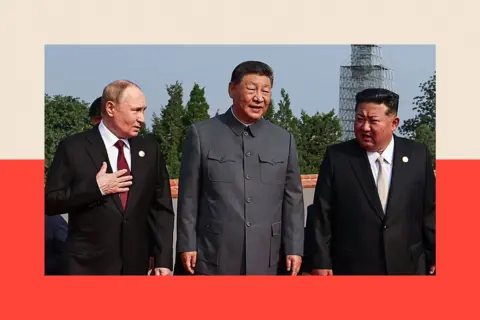
    AFP via Getty Images, Sputnik, Pool  (L-R) Russia's President Vladimir Putin walks with China's President Xi Jinping and North Korea's leader Kim Jong Un AFP via Getty Images, Sputnik, Pool

    President Xi Jinping (centre) has made few outright threats against Taiwan recently

    The story of 4 June 1989 wasn’t as simple as we thought at the time: armed soldiers shooting down unarmed students. That certainly happened, but there was another battle going on in Beijing and many other Chinese cities. Thousands of ordinary working-class people came out onto the streets, determined to use the attack on the students as a chance to overthrow the control of the Chinese Communist Party altogether.

    When I drove through the streets two days later, I saw at least five police stations and three local security police headquarters burned out. In one suburb the angry crowd had set fire to a policeman and propped up his charred body against a wall. A uniform cap was put at a jaunty angle on his head, and a cigarette had been stuck between his blackened lips.

    It turns out the army wasn’t just putting down a long-standing demonstration by students, it was stamping out a popular uprising by ordinary Chinese people.

    China’s political leadership, still unable to bury the memories of what happened 36 years ago, is constantly on the look-out for signs of opposition – whether from organised groups like Falun Gong or the independent Christian church or the democracy movement in Hong Kong, or just people demonstrating against local corruption. All are stamped on with great force.

    I have spent a good deal of time reporting on China since 1989, watching its rise to economic and political dominance. I even came to know a top politician who was Xi Jinping’s rival and competitor. His name was Bo Xilai, and he was an anglophile who spoke surprisingly openly about China’s politics.

    He once said to me, “You’ll never understand how insecure a government feels when it knows it hasn’t been elected.”

    As for Bo Xilai, he was jailed for life in 2013 after being found guilty of bribery, embezzlement and abuse of power.
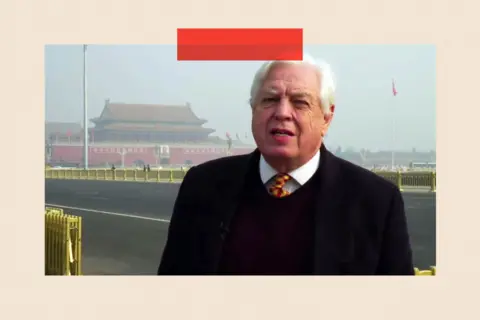
    John Simpson reports from Tiananmen Square

    John Simpson has spent a good deal of time reporting on China since 1989 (pictured in Tiananmen Square, 2016)

    Altogether, then, 2026 looks like being an important year. China’s strength will grow, and its strategy for taking over Taiwan – Xi Jinping’s great ambition – will become clearer. It may be that the war in Ukraine will be settled, but on terms that are favourable to President Putin.

    He may be free to come back for more Ukrainian territory when he’s ready. And President Trump, even though his political wings could be clipped in November’s mid-term elections, will distance the US from Europe even more.

    From the European point of view, the outlook could scarcely be more gloomy.

    If you thought World War Three would be a shooting-match with nuclear weapons, think again. It’s much more likely to be a collection of diplomatic and military manoeuvres, which will see autocracy flourish. It could even threaten to break up the Western alliance.

    And the process has already started.

    Top picture credits: AFP / Getty Images

    InDepth notifications banner

    BBC InDepth is the home on the website and app for the best analysis, with fresh perspectives that challenge assumptions and deep reporting on the biggest issues of the day. You can now sign up for notifications that will alert you whenever an InDepth story is published – click here to find out how.
    Source link

  • An orphan’s murder shines a spotlight on child abuse in Somalia

    An orphan’s murder shines a spotlight on child abuse in Somalia


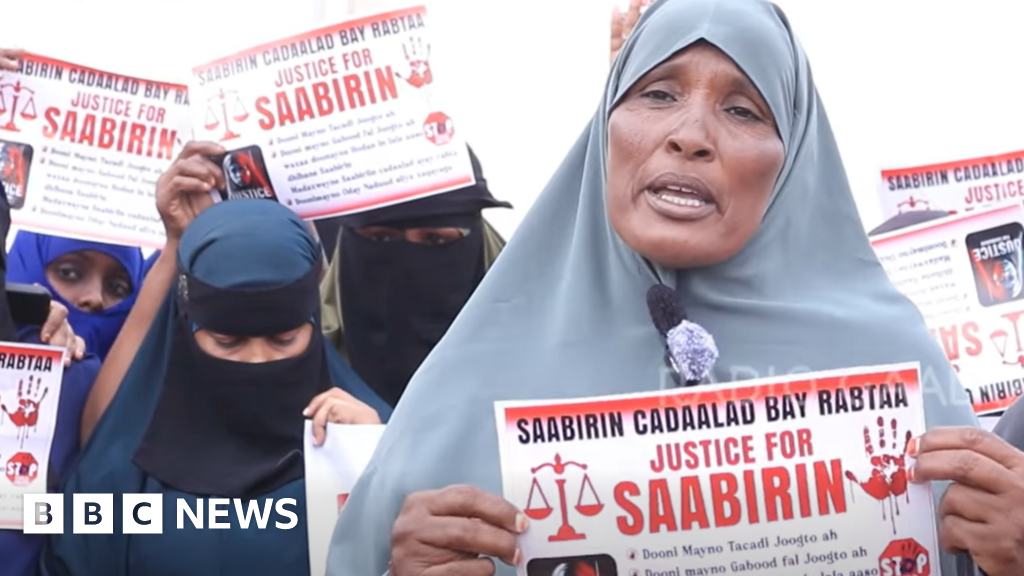
    Radio Gaalkacyo A woman in a grey headscarf is looking at the camera and holding a sign that says 'Justice for Saabirin' on it. Other women are behind her holding similar signs.Radio Gaalkacyo

    Saabirin’s death sparked calls for child protection measures to be properly implemented

    A woman is currently awaiting execution in Somalia after being convicted of killing a 14-year-old girl in her care.

    The murder of orphan Saabirin Saylaan in November, and the horrific details that emerged about the circumstances surrounding her death, sparked protests near her home in Galkayo, along with renewed calls for greater child protection.

    The case touched a deep nerve in a country where child abuse often goes unreported, especially when it occurs inside extended families.

    For many, Saabirin’s death symbolised a broader failure in child protection and the slow implementation of legal safeguards meant to prevent such tragedies.

    The conviction of 34-year-old Hodan Mohamud Diiriye for murder marked one of the rare instances in Somalia where a court imposed the ultimate penalty for child abuse.

    Diiriye had denied the charges and her lawyer has filed an appeal against the verdict.

    Her husband, Abdiaziz Nor, 65, was acquitted of murder but sentenced to one year in prison and fined $500 (£375) for negligence.

    Saabirin was orphaned when both her parents died within a short period when she was just one year old.

    Both of her grandmothers had also died so she was looked after by her late mother’s aunt, who ensured she got an education and attended a traditional Quranic school.

    But her life took a devastating turn in September after Saabirin’s great-aunt agreed that Diiriye’s family, who needed a home help, could take her in.

    During their investigation, police revealed that in the two months she was living there, the young girl had endured “routine physical abuse” – she was beaten and tortured.

    Evidence recovered from Diiriye’s phone, including videos and audio recordings documented repeated violence. Some of these were leaked to the public before the trial – it is not clear who released them.

    In one particularly disturbing recording, Diiriye can be heard saying: “I’m enjoying your pain.”

    A post-mortem examination of Saabirin’s body revealed multiple injuries and deep stab wounds consistent with prolonged violence.

    As details of the police investigation emerged, public anger grew.

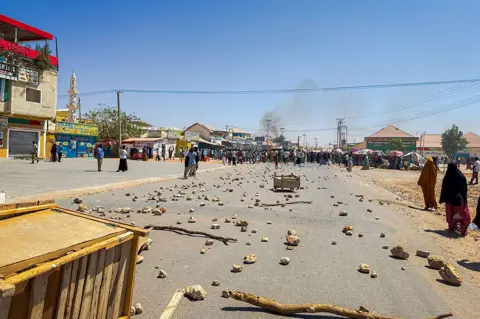
    Abdiqaadir Washington A tarmac road is in the foreground strewn with wooden sticks and stones as a result of a protest. A crowd can be seen in the distance, where a small cloud of smoke is rising.Abdiqaadir Washington

    In the aftermath of one of the protests in Galkayo, debris could be seen strewn across the road

    Hundreds of women and young people marched in Galkayo, one of the largest cities in Somalia’s semi-autonomous Puntland region, carrying signs reading “Justice for Saabirin” and calling on the authorities to prosecute all those responsible.

    They gathered outside the local hospital where her body was lying in the morgue.

    Things got so heated that during one protest demonstrators clashed with police and a young man was shot dead, though it is not clear who fired the bullet.

    Online, young women and girls launched a wave of solidarity campaigns, using hashtags invoking Saabirin’s name.

    “No child should die like this,” a tearful 18-year-old protester Aniiso Abdullahi said in a clip shared on social media.

    “We also reject the attempts by traditional elders who want to resolve this case through clan customs or behind closed doors.”

    This is when elders from the clans of those involved in a dispute intervene with the aim of avoiding revenge and further violence, rather than establish criminal guilt. Some kind of compensation is usually agreed but as this process prioritises peace over justice for the victim, and the voices of women and children are not often heard, there is a feeling that some crimes are not being addressed.

    Child abuse in Somalia is often hidden within households, and extended families are traditionally viewed as safe and private spaces – where the state should not interfere.

    Diiriye’s trial and other related hearings were broadcast live on social media to ensure public trust in the justice system.

    Regional police commander Mohamud Abdihakim said the verdict marked an important moment in the pursuit of justice for the murdered teenager.

    “The perpetrator is now only awaiting the implementation of the death sentence. If further evidence emerges proving that additional individuals were involved in this crime, they will not be spared, the law will be fully applied to them as well,” he said.

    Najeb Wehelie, the director of child rights organisation Dhoodaan said that “the case highlights the profound gaps that still exist in safeguarding the most basic human rights of children in our society.

    “Children continue to face violence inside family homes, and only the most extreme cases ever reach the police,” he added.

    In June this year, police in the capital, Mogadishu, received a report that a three-year-old boy had been severely abused inside the home of his father’s wife.

    The alleged perpetrator was swiftly arrested.

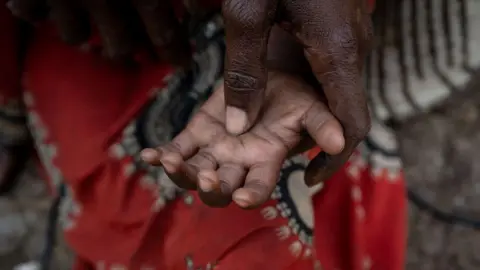
    Getty Images A child's hand is face up with the thumb of an older person's hand pressing into it. A red cloth is out of focus behind the hands.Getty Images

    There is a debate in Somalia about the extent the authorities should intervene in what happens in the home

    According to Save the Children in Somalia, three horrific acts of violence against children occurred in the country during October and November – the murder of four young children through arson in Hargeisa, the violent rape of an 11-year-old girl in Puntland and the murder of a mother and her three daughters in central Somalia.

    The head of the local women’s association in Galkayo, Shukri Abdi, said the community was overwhelmed with cases of violence in the home, many of which never reach the courts.

    On 1 October this year, Somalia’s parliament ratified the African Charter on the Rights and Welfare of the Child, with 130 lawmakers voting in favour, 10 against, and five abstaining.

    The decades-old charter outlines legal frameworks to prevent abuse, exploitation and violence against minors.

    Its provisions include:

    • Criminalising all forms of child abuse
    • Strengthening legal punishment for guardians who harm or neglect children
    • Ensuring state responsibility for vulnerable and orphaned children
    • And establishing monitoring systems in school, hospitals and communities.

    But just three days later, the ministry of family and human rights development issued a clarification stating that the implementation of the charter would be guided by Islamic law and the constitution, with provisions contrary to religious teaching not being enforced.

    It said that Somali parental authority was fundamental and no external entity could override it. The ministry also said that the charter’s restriction on marriage before the age of 18 contradicted Sharia, which allows marriage when a girl reaches puberty – though in practice in Somalia the minimum age has been 15.

    Fadumo Ahmed, a women’s and child’s rights activist, argued that enforcement of similar measures that already existed in Somalia remained weak.

    The police lack the capacity to deal with cases along with social services. Cases often get interfered with by clan elders, which undermines the justice system and victims’ voices are not heard, she said.

    She adds that children were often unaware that they could speak out and many schools were not teaching them that they could report abuse.

    “In many similar cases [to Saabirin’s], both sides of the family reach a behind-the-door agreement and then inform the government that the matter has been resolved,” Ms Ahmed said.

    Shukri Ahmed Hussein, the coordinator for Puntland’s ministry of women’s development and family affairs for the region that includes Galkayo, denies that the authorities are failing in their responsibility to protect children.

    In an interview with the BBC, she pointed out programmes to help youths who at one time had been recruited into armed groups, as well as efforts to protect street children.

    She did however admit that in cases like the one involving Saabirin, it is sometimes difficult to intervene. She acknowledged that more should be done to increase awareness that people can speak out if they suspect that a child might not be safe.

    “Every child in Puntland has the right to be removed from any household in which they do not feel safe,” Ms Hussein said.

    Although Saabirin’s life was cut tragically short, her death is now forcing overdue conversations about child safety in Somalia.

    But as the local community reflects on the verdict, some are unsure if the justice will be served in the long run.

    “There is nothing to celebrate yet, we still need clarity,” one of the young protesters, Abdikadir Ali, said in a social media message.

    “We don’t want justice in words, we want to see it with our own eyes. We don’t want delays.”

    More about Somalia from the BBC:
    Getty Images/BBC A woman looking at her mobile phone and the graphic BBC News AfricaGetty Images/BBC


    Source link

  • How to Browse the Web More Sustainably With a Green Browser

    How to Browse the Web More Sustainably With a Green Browser


    As the internet becomes an essential part of daily life, its environmental footprint continues to grow.

    Data centers, constant connectivity, and resource-heavy browsing habits all contribute to energy consumption and digital waste. While individual users may not see this impact directly, the collective effect of everyday browsing is significant.

    Choosing a browser designed with sustainability in mind is one practical way to reduce that impact, without changing how you work online.

    This article explains what eco-friendly browsing means, why it matters, and how a green browser like Wave Browser pairs a modern, secure browsing experience with a mission to help protect our ocean through verified cleanup efforts.

    Why Eco-Friendly Browsing Matters

    Most people think of environmental impact in terms of transportation, food, or physical products. Digital activity is often overlooked. However:

    • Browsers run continuously throughout the day
    • Heavy tabs and background processes increase energy usage
    • Ads and trackers load unnecessary data
    • Inefficient browsing tools consume system resources

    Over time, these factors contribute to higher energy demand across devices and infrastructure.

    Eco-friendly browsing focuses on reducing unnecessary digital load while keeping the browsing experience efficient, functional, and user-friendly.

    What Makes a Browser “Green”?

    A green or eco-conscious browser isn’t defined by a single feature. Instead, it combines responsible design choices with transparency and measurable impact.

    Key characteristics include:

    • Efficient use of system resources
    • Built-in tools that reduce excess data loading
    • Fewer unnecessary background processes
    • A clear commitment to environmental responsibility

    Rather than asking users to change their habits, a green browser should fit naturally into everyday browsing.

    How Wave Browser Supports Eco-Friendly Browsing

    Wave Browser is designed for users who want a modern browsing experience while supporting environmental action. Its approach to eco browsing combines efficient technology with real-world impact with AppEsteem-certified software standards.

    Reducing Unnecessary Resource Usage

    Wave Browser includes built-in tools that help limit excess digital clutter. Features like free ad blocking (available on Windows, Mac and Android), memory-saving tools, and integrated utilities reduce the need for multiple extensions and background processes.

    By cutting down on unnecessary data requests and system strain, Wave helps devices run more efficiently, using less energy over time.

    Using Built-In Tools Instead of Extra Extensions

    Many users install multiple browser extensions to manage everyday tasks. Each extension can introduce additional scripts, permissions, and background activity.

    Wave Browser integrates common tools directly into the browser, such as:

    • A sidebar for quick access to tools and favorite sites
    • Built-in productivity features like split view and reading lists
    • Tools for saving and organizing online content directly within the browser

    Keeping these tools built into the browser reduces the need for third-party add-ons developed outside the browser’s control, helping maintain a simpler and more predictable browsing environment.

    Browsing With Awareness, Not Disruption

    Eco-friendly browsing shouldn’t feel restrictive. Wave is designed to feel familiar from the first launch, with clear browser settings and an intuitive interface.

    Users can:

    • Adjust privacy and browsing preferences
    • Choose their default search engine
    • Manage permissions for unfamiliar sites
    • Use Incognito Mode when needed

    This balance allows users to browse comfortably while avoiding unnecessary digital noise.

    Connecting Everyday Browsing to Real-World Impact

    Wave Browser goes beyond digital efficiency by linking browsing activity to verified environmental action.

    Through a Certified Cleanup Partnership with 4ocean, Wave helps fund the removal of plastic and trash from our ocean, rivers, and coastlines. Users support this effort simply by downloading and using the browser as part of their normal routine without special actions required.

    Cleanup efforts support:

    • Professional cleanup crews
    • Vessels and equipment
    • Cleanup materials and operations

    Progress is tracked transparently through the browser homepage and through monthly impact reports shared by Wave, connecting everyday browsing to verified ocean cleanup efforts and a long-term goal of removing 300,000 pounds of trash from our ocean, rivers, and coastlines by 2028.

    Eco Browsing Without Changing How You Work

    One of the biggest barriers to sustainable technology is friction. If a product requires major behavior changes, adoption drops quickly.

    Wave Browser is designed to avoid that problem. It works like a modern browser should—efficient, intuitive, and flexible—while supporting more responsible browsing behind the scenes.

    Users don’t need to browse differently. They simply browse with more intention built into the tool they already use every day.

    Making More Sustainable Choices Online

    Eco-friendly browsing isn’t about perfection. It’s about small, practical decisions that scale when adopted by many users.

    By choosing a browser that:

    • Uses resources efficiently
    • Reduces unnecessary digital load
    • Supports verified environmental action

    Users can make a meaningful difference without sacrificing usability or performance.

    Wave Browser shows how everyday technology can support both productivity and environmental responsibility, one browsing session at a time.

    Found this article interesting? This article is a contributed piece from one of our valued partners. Follow us on Google News, Twitter and LinkedIn to read more exclusive content we post.


    Source link