By Joel Westheimer
This article was originally published by Truthout
Having lived in Argentina after dictatorship, I know restoring democracy requires far more than just deposing fascists.
I lived in Argentina in the mid-1980s, just after the fall of the brutal military dictatorship that ruled from 1976 to 1983. The country was taking its first, shaky steps back toward democracy. It was a time of great hope, but also of grave uncertainty — because while the generals were gone, the political culture that enabled them remained.
Like most of the nation, I was captivated by the pioneering trials of the military generals that promised to restore justice. But watching the trials, reading the commentary, and witnessing the national response, it became increasingly clear that after a dictatorship collapses, its shadow lingers. Institutions that propped it up may be quick to pivot but slow to reform. And a political culture conditioned to authoritarian rule does not easily snap back.
I see that same danger now in the United States.
Let’s be clear: Fascism isn’t some distant or hypothetical threat — it is already here. Unmarked vans and masked agents snatch students off the streets without due process. Judges and lawyers are intimidated. The most powerful institutions in society — universities, tech firms, law firms, billionaires, legislators — preemptively prostrate themselves to an autocratic leader’s whims, not because they are forced to, but because they calculate that accommodation is safer than resistance. Tens of millions of people are demonized while the military is deployed against civilian populations. These are not warning signs. They are the thing itself.
Of course we must resist. We must speak out, organize, and push back against creeping authoritarianism wherever it appears. But resistance alone is not enough. Post-dictatorship Argentina demonstrates that the harder question comes later: What happens if — and when — authoritarianism is pushed back? What happens after?
In Argentina, the military junta was defeated, but the nation’s political culture remained deeply scarred. The public had seen generals on trial, but many still struggled to grasp why their crimes mattered. The substance of the prosecution — that to fight terrorism, members of the military became terrorists themselves — was incomprehensible not only to the defendants but also to an alarming number of legislators who had returned to power. Even after convictions, defendants like Jorge Rafael Videla, commander of the first and most ruthless of the three military juntas, proclaimed innocence, maintaining that the proceedings were nothing more than a “trial generated by political motivations.” Ex-president Roberto Eduardo Viola, convicted of responsibility for torture and murder, echoed Videla, adding that “had the military not won [the dirty war] the country would not now be living in democracy. Instead, we would now be a Marxist international dictatorship.”
It was not only these men who needed to face their crimes. Early in the trials, nearly an entire day was spent hearing the defense counsel’s attempt to prove that the daughter of a prominent human rights lawyer might have been a terrorist, and therefore her murder was justified. The claim was not only false; it inverted the very idea of justice. The spectacle continued until the editor of the English-language newspaper that had illegally published the names of the disappeared was called to testify. When a defense attorney asked him how he knew the woman was not a terrorist, the editor replied simply: “Because everyone knows that a person is innocent until proven guilty.”
That moment was electric. It was also sobering. A foundational democratic principle had to be restated aloud, as if newly rediscovered. Years of authoritarian rule had so corroded civic norms that even the presumption of innocence could no longer be assumed as common sense.
Democracy is not just a system of government. It is a way of thinking, of arguing, of living together. It rests on habits of mind — about truth, responsibility, evidence, dissent, and the limits of power. Once those habits are degraded, they are not easily restored.
Argentina faced a powerful temptation in the years after the trials to move on. The central call of human rights organizations was for “castigo a los culpables” (punishment to the guilty). But conviction of these brutal authoritarian generals would not restore democratic culture. To treat justice as an endpoint — try the guilty, punish them, close the chapter — does not ensure a robust democracy capable of resisting the next aspiring fascist leader. Punishment alone could not repair what had been broken. Fear had reshaped social life and cynicism had replaced trust. Many people had internalized the idea that the right strong leader who didn’t have to deal with interference from independent legislatures or courts might fix the nation’s problems.
The United States now risks a similar fate. Even if authoritarian leadership is removed through elections or legal action, the damage will persist. Institutions that learned to comply will not automatically relearn courage. Citizens who learned that politics is dangerous, rigged, or pointless will not suddenly reengage. A public culture trained to reward cruelty, spectacle, and domination does not revert on its own to one grounded in deliberation and care.
This is why focusing solely on an individual villainous leader misses the deeper problem. Authoritarianism is not just a personality; it is a political project that reshapes institutions and habits alike. When it recedes, what remains are organizations that survived by accommodating power, and citizens unsure of what democracy is for. Without a deliberate effort to rebuild democratic culture, post-authoritarian societies risk becoming democracies in name only. Elections return, but fear and distrust remain. Free speech exists on paper, but silence persists in practice.
In the long aftermath of military rule, Argentine democracy moved unevenly forward, struggling at times to sustain public trust and institutional legitimacy. Fast-forward to today, and the country has entered a new phase of democratic erosion — one in which elections still occur, but many citizens place their faith in an anti-democratic populist who treats democracy as a means rather than a shared project. Javier Milei, elected president in 2023, treats democratic institutions as obstacles rather than aspirations. He governs through permanent crisis rhetoric, stokes division, and routinely questions the legitimacy of political opposition, not merely their policies. In doing so, he undermines the idea that democracy exists to balance interests, protect minorities, or sustain public goods.
In the years following 1983, Argentina did many things right: civilian control of the military; war crimes trials; and memory, truth, and justice initiatives. Milei emerges not despite that history, but partly because of what remained unresolved, what was never fully repaired. Deep distrust of political institutions remained and economic precarity hollowed out solidarity. Milei is not a return to military dictatorship, but he is a symptom of democratic exhaustion — an anti-democratic populist who exploits the failures of democratic culture rather than openly rejecting democracy itself.
If the United States manages to restore democratic governance after this authoritarian moment, it will need far more than new leaders. It will require a massive cultural and educational project — one that re-teaches not only how democracy works, but why it matters. One that confronts institutional complicity rather than glossing over it. And one that restores civility, compassion, and trust.
Schools and universities will be central to this work. They are among the few public institutions capable of cultivating democratic habits at scale (which is why they are among the first institutions to be attacked by authoritarian regimes). But they, too, will have to reckon with their own failures — with the ways they rewarded obedience over inquiry and collapsed in the face of political pressure. Democratic renewal will demand that education once again be understood not as workforce preparation, but as preparation for shared self-government.
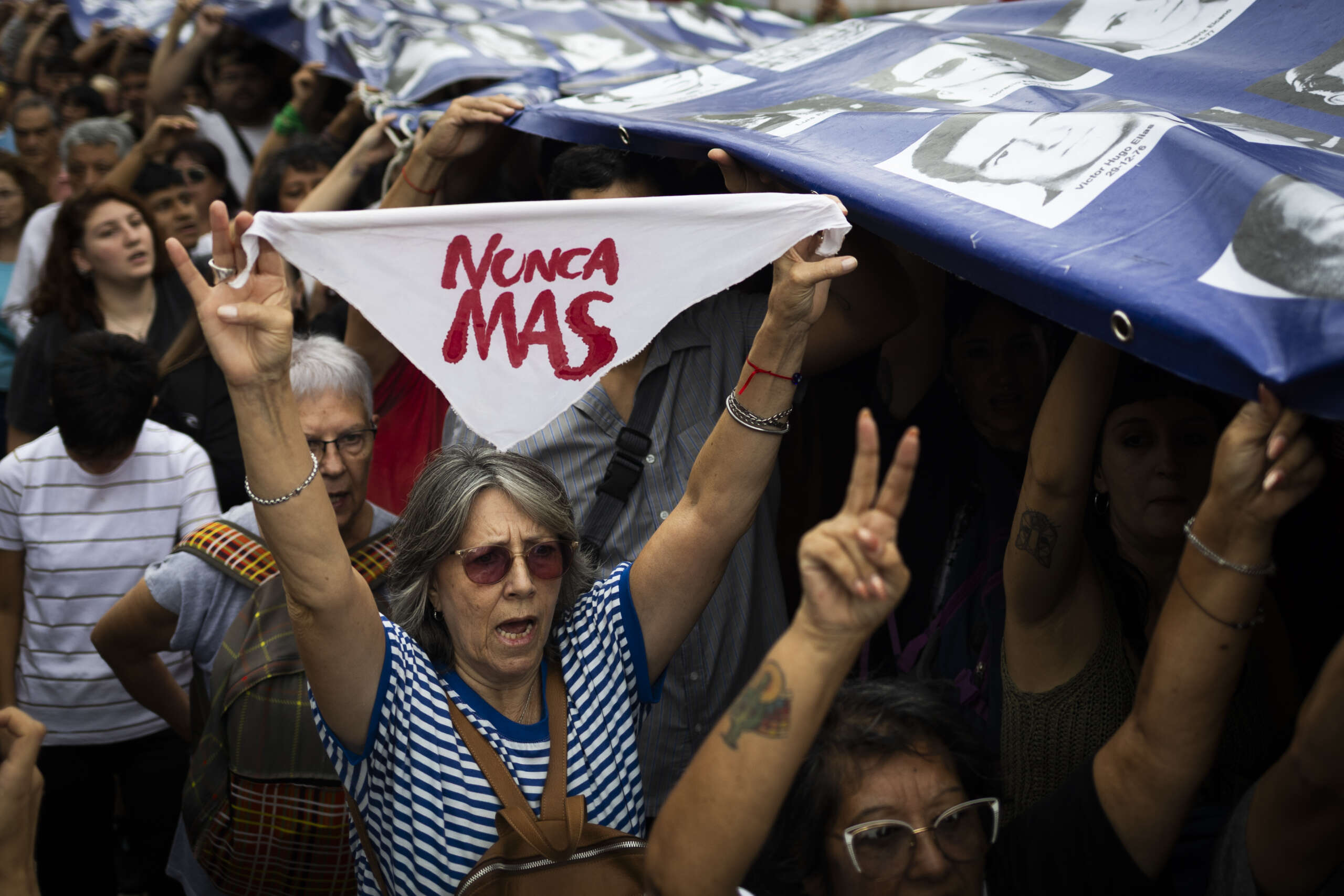
When the military dictatorship in Argentina fell, one could still see in the streets of Buenos Aires the green Ford Falcons which were used to transport many of the desaparecidos to and from clandestine prisons in the countryside. They stood as monuments to tragedy and as metaphors for the remnants of authoritarian rule. Yet, every Thursday afternoon, the Madres de Plaza de Mayo (mothers demanding truth about their sons and daughters who were murdered during the military dictatorship) continue even today to march in front of the Casa Rosada to remind the nation of the fragility of the rule of law.
When the violent power-grabbers who currently lead the U.S. government are held accountable for their abuses, we will breathe a sigh of relief. Accountability is necessary, but it is not sufficient. Justice and fair and free elections matter, but democracy does not survive on procedures alone. It survives when people believe it is worth defending — when they experience it not as an abstract ideal, but as a way of living together that makes dignity, disagreement, and solidarity possible.
That work does not end when autocrats fall. In many ways, it only begins.
This article was originally published by Truthout and is licensed under Creative Commons (CC BY-NC-ND 4.0). Please maintain all links and credits in accordance with our republishing guidelines.
Leave a Reply