By Theia Chatelle
This article was originally published by Truthout
New changes could undermine Palestinian sovereignty and pave the way for further illegal settlements in the West Bank.
Ramallah — On February 8, the Cabinet of Israel approved a slew of changes to further undermine Palestinian self-rule in the West Bank.
While still awaiting final approval by the Knesset, the changes, according to a statement released by Finance Minister Bezalel Smotrich, “will continue to bury the idea of a Palestinian state.”
Under the Oslo Accords, Areas A and B of the West Bank — which together comprise 40 percent of the West Bank — fall under the control of the Palestinian Authority.
However, due to the new changes approved by the Cabinet of Israel this month, the Israeli Civil Administration, which is in charge of civil affairs in the Israeli-occupied West Bank, will now claim jurisdiction in Areas A and B under the guise of environmental and archaeological protection.
Archaeological preservation of Jewish heritage in the West Bank has long been used as a justification for the assertion of Israeli sovereignty and the expansion of Israeli settlements there, which are illegal under international law.
The Cabinet decisions build on the 2023 antiquities bill, which created a body called the Israel Antiquities Authority that was given expanded legal authority to extend into parts of the West Bank, in order to assert responsibility for archaeological sites there. Now, Israeli politicians are seeking to establish a new Israeli body called the West Bank Heritage Authority, which would have even more invasive power, regulating vast swaths of Palestinian territory and representing another step toward de facto annexation.
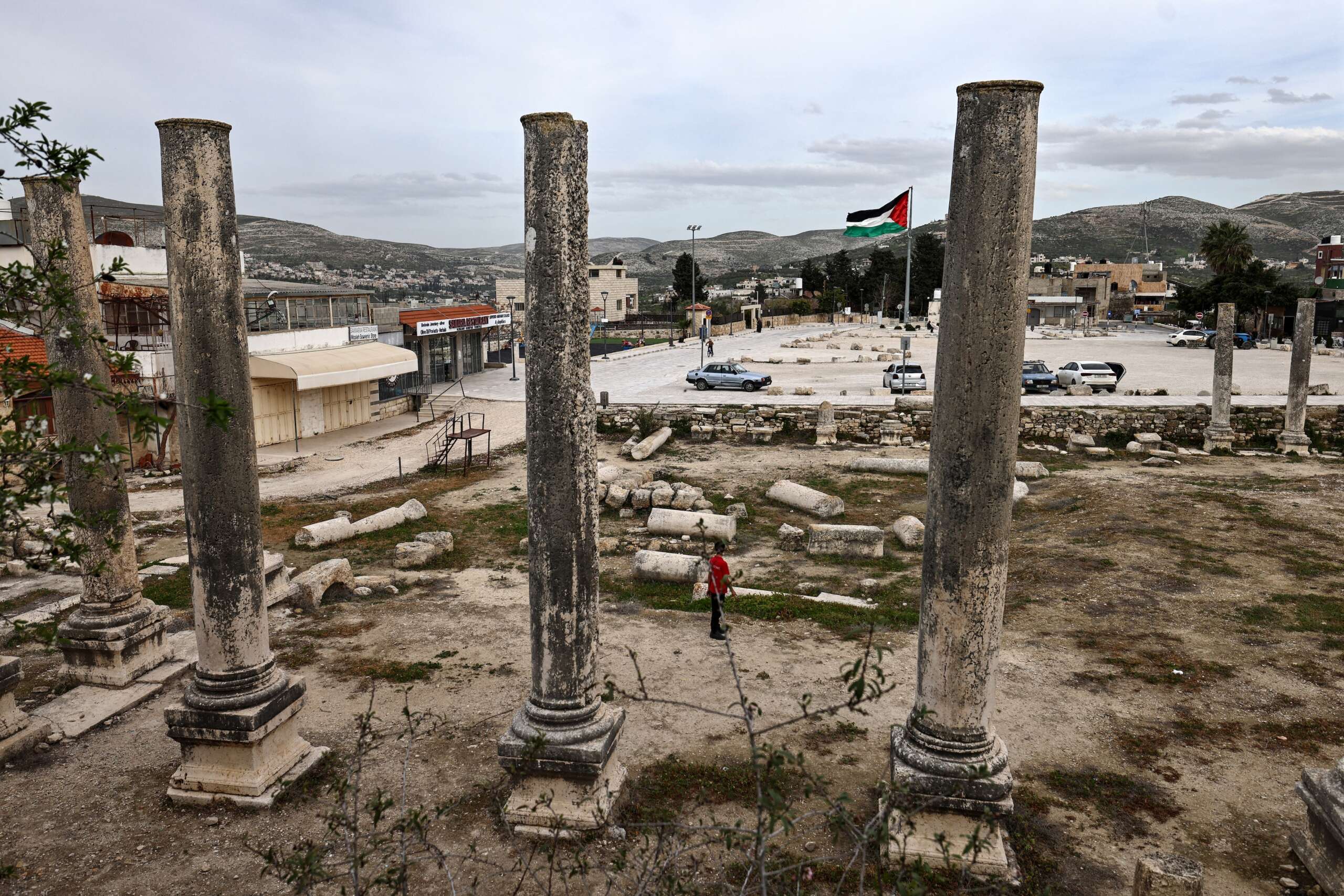
The Tomb of the Patriarchs, located in Hebron, and the Palestinian city of Sebastia, which independent journalist Jasper Nathaniel has reported on as emblematic of Israel’s use of religiously significant sites to justify expulsion and land theft, are two sites that have been subject to varying degrees of Israeli control; under new legal frameworks, including the antiquities bill and Israeli Cabinet decisions, they are increasingly incorporated into Israeli-managed heritage development.
The slew of changes by the Israeli Cabinet also opened the Palestinian land registries, which document land claims across the West Bank. These registries had previously been kept confidential due to concerns that Israeli settlers and settlement organizations would use the information to assert fraudulent claims to Palestinian land.
Allowing, for the first time, Israelis to purchase land directly from Palestinians in Areas A and B could open up the potential for the establishment of illegal Israeli settlements in the middle of Palestinian cities like Ramallah, which have served as the last strongholds of Palestinian self-rule in the West Bank.
Ubai Aboudi, the director of BISAN, a human rights organization based in Ramallah, told Truthout in an interview that the spate of Cabinet decisions is about continuing the farce of a legal regime enforced by the Israeli occupation in the West Bank that is meant to legitimize the settlement enterprise.
At face value, the changes might appear to be piecemeal and far from solidifying the path to legal annexation, as many headlines have proclaimed. But the changes, if nothing else, are just another step by the Israeli government to undermine Palestinian sovereignty in the West Bank.
While the Oslo agreements created the framework of Palestinian self-rule in the Israeli-occupied West Bank, the constant drumbeat of settlement expansion and Israeli military activity in the territory has shattered any hope of Palestinian self-rule in the short term, according to Shawan Jabarin, the director of Al-Haq, a Palestinian human rights organization that has frequently been targeted by Israeli authorities, who joined Truthout for an interview at the organization’s offices in Ramallah.
He emphasized that this “farce” of a legal regime serves Israel’s interests in that it justifies expansion and violations of international law beyond simply expelling Palestinians from their land.
“For example, when it comes to house demolitions, they demolish the home because you did not get a permit. ‘But you did not give it to me,’” Jabarin said.
On February 15, the Israeli Cabinet also announced, for the first time since 1967, that it would begin a process of registering Palestinian land in Area C, which is under the civil and military control of Israel. Under this new change, invalid property claims, to be decided by the Israeli Civil Administration, will lead to “vacant” land being claimed as Israeli state property.
Allowing the Israeli Civil Administration jurisdiction in Area A, which per the Oslo Accords should be under the full civil and military control of the Palestinian Authority, not only undermines the limited degree of Palestinian self-rule in its fragmented scattering of municipalities but also legally justifies the almost constant intervention by Israeli forces within Area A — which includes escorting Israeli settlers into religious sites such as Joseph’s Tomb in Nablus.
Jabarin said, “If you look at all of these things and put them together, you will see the complete picture: ‘We do not want Palestinians there. We do everything in our capacity in order to push them out and bring in settlers and replace the Palestinians with settlers.’”
For Aboudi, environmental and archaeological protection are simply a means to an end for Ministers Smotrich and Itamar Ben-Gvir to put into reality Israel’s Decisive Plan, which Smotrich published in 2017. It calls for a continual expansion of settlements and Jewish sovereignty in the West Bank, including the forcible expulsion of Palestinians.
“Everywhere here has heritage. It’s just an excuse to expand settlements and take Palestinian land,” Aboudi said.
The Israeli NGO Emek Shaveh, which advocates for access to religious sites for both Palestinians and Israelis, said in a statement, “Taken together, these developments constitute a fundamental turning point. Empowering an Israeli civilian authority to carry out enforcement measures, expropriations, and excavations deep inside Palestinian Authority Areas B and A effectively dismantles the framework established under the Oslo II Accords.”
At least 1,050 Palestinians, including at least 230 children, have been killed by Israeli forces in the West Bank between October 7, 2023, and January 27, 2026, according to a UNRWA situation report. Israeli forces on Feb. 17 invaded a village just south of Jenin, chasing local Palestinian journalists with a military vehicle.
The Palestinian Ministry of Foreign Affairs said in a statement, “The ministry stresses that these measures amount to de facto annexation of Palestinian land and directly contradict the declared position of U.S. President Donald Trump rejecting annexation and settlement expansion.”
Whether the Trump administration would put that relationship in jeopardy during what appears to be an increasingly likely conflict with Iran — as the U.S. reportedly shifts military assets into the Gulf — is unlikely.
At play is also a careful calculus on the part of the Israeli government to continue the project outlined by Smotrich, but without drawing the ire of the Trump administration, which has stated that it opposes Israel’s annexation of the West Bank.
But on the ground in Ramallah, many Palestinian residents who spoke with Truthout did not appear concerned about the Israeli cabinet decisions, with many stating that these changes do little to change the reality for most Palestinians.
The Palestinian economy is on the brink. Since October 7, 2023, Palestinians have been largely banned from working inside Israel, cutting out a significant source of income, with daily wages in the West Bank hovering at 125 shekels instead of 250 in Israel.
With the start of Ramadan on Tuesday, festivities are muted. Where there would typically be lights dangling from apartments in downtown Ramallah al-Tahta, this year, despite the ceasefire in Gaza, which one resident described as “in name only,” celebrations remain subdued.
These changes by the Israeli Cabinet are just another step that cements what Jabarin called “a complete war on Palestinian life on the West Bank meant to kill any hope for self-determination.”
This article was originally published by Truthout and is licensed under Creative Commons (CC BY-NC-ND 4.0). Please maintain all links and credits in accordance with our republishing guidelines.
Leave a Reply