By Sharon Zhang
This article was originally published by Truthout
Four days into the war, US Central Command said that the US had struck 2,000 targets using more than 2,000 munitions.
The U.S. dropped nearly $6 billion worth of munitions on Iran in just the first two days of the U.S.-Israeli assault, officials say, giving a sense of the staggering scope of the carpet bombing campaign as the Trump administration sweeps aside affordability crises at home.
Three U.S. officials told The Washington Post that the U.S. dropped $5.6 billion in the first two days of its bombardments.
This represents hundreds of “precision” weapons like Terminal High Altitude Area Defense (THAAD) interceptor missiles and Tomahawk cruise missiles that the U.S. has fired since February 28. Last Tuesday, four days into the war, U.S. Central Command head Brad Cooper said that the U.S. had struck 2,000 targets using more than 2,000 munitions.
The Pentagon has signalled that it may soon shift toward the use of non-precision bombs like 2,000-pound bombs, which may cost less and are largely barred from use in civilian areas under international law.
The destruction has been immense. The first days saw a deluge of strikes, including a likely U.S. attack on an elementary school in Minab, Iran, that killed 175 people, most of them children aged between 7 and 12. The Iranian Red Crescent Society reported this week that the U.S.-Israeli assault has damaged 10,000 civilian structures, including residential buildings, schools, and nearly three dozen health facilities. Human rights group HRANA reports that at least 1,245 civilians have been killed.
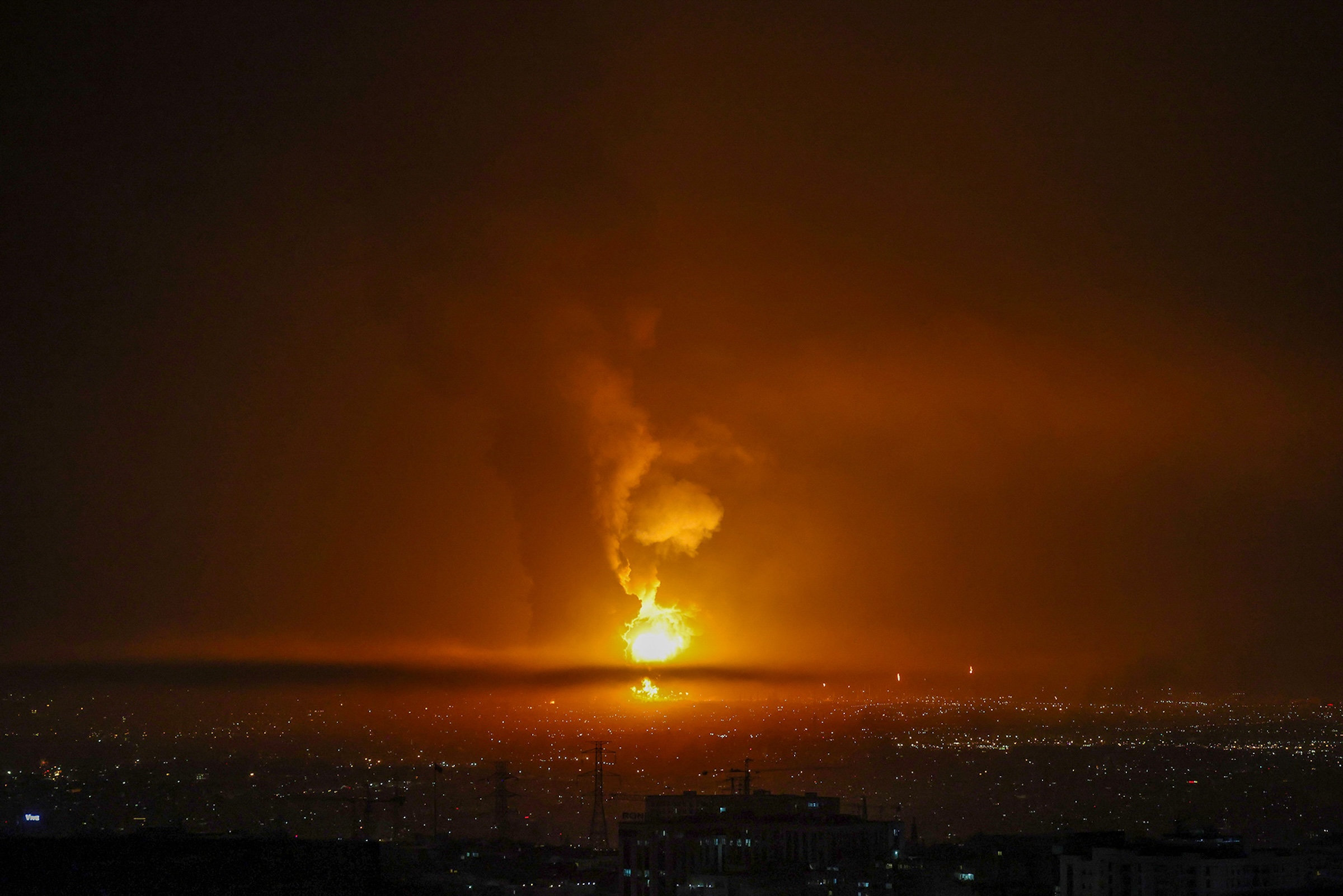
Thick, black clouds have loomed over the capital of Tehran this week after U.S.-Israeli strikes targeted oil depots in the city, sending columns of flame and smoke high into the sky. The Red Crescent has warned the 10 million residents of the city to avoid leaving their homes as the blackened rainfall itself could cause harm.
The exact cost of the U.S.’s assault is unclear, as lawmakers have said that the Pentagon has not responded to questions from Congress about the cost. Top U.S. officials, including President Donald Trump, have claimed that the U.S. can fight the war indefinitely, and there is seemingly no end in sight to the war.
However, the $5.6 billion figure over just two days is far higher than any other estimate put out so far, especially when other operational costs are taken into account. Further adding to costs, the Trump administration has only promised to escalate the campaign. Secretary of Defense Pete Hegseth said on Tuesday that it would be “our most intense day of strikes inside Iran” yet.
The Atlantic’s Nancy Youssef reported last week, citing a congressional official, that the war is costing $1 billion a day. The New York Times, citing Pentagon officials in a briefing to Congress, reported that the war cost $6 billion in its first week. The Center for American Progress found in an analysis that the war, including costs of actions like the repositioning of forces and the losses of the F-15 fighter jets in friendly fire, cost over $5 billion as of March 2, four days into the war.
The Institute for Policy Studies (IPS) estimated last week that just the costs for weapons systems backing naval and aircraft deployments, as well as an increase in support costs for the heightened combat operations, amounted to $60 million a day — not counting things like munitions, the buildup before the war, troop deployments outside of those needed for naval and aircraft, or the costs of the assets themselves.
IPS’s National Priorities Project pointed out last week that the estimate of $1 billion per day could cover the cost of Medicaid for all 16 million people expected to lose coverage due to the Republican cuts last year, as well as Supplemental Nutrition Assistance Program (SNAP) benefits for all 41 million Americans who use them.
Other costs are also building up. The Post reports that the Pentagon is moving parts of a THAAD system, a Lockheed Martin weapons system worth between $1 billion and $1.8 billion, from South Korea to the Middle East.
The White House is expected to submit a request for supplemental funding for the war in coming days, with Politico reporting that officials will ask Congress to grant the Pentagon an additional $50 billion.
The amount of spending is staggering, especially considering that initial polling has found it is the most unpopular of any U.S. military intervention in its starting days — and considering that the affordability crisis in the U.S. worsens by the day as billionaires continue sapping wealth from the working class, who, however involuntarily, pay their taxes into fueling more war.The U.S. is also funding Israel’s military actions amid record unfavorability for the state. Israel is burning through its munitions in its attacks, dropping 4,000 bombs on Iran in the first four days of the war. Last Friday, the State Department bypassed Congress to send $151.8 million worth of military support to Israel, including 12,000 1,000-pound bombs, citing an “emergency” in the Middle East.
This article was originally published by Truthout and is licensed under Creative Commons (CC BY-NC-ND 4.0). Please maintain all links and credits in accordance with our republishing guidelines.
Leave a Reply