By Sharon Zhang
This article was originally published by Truthout
Reports say Arab countries are furious that the US gave the go ahead to Israel’s strike on a key gas facility this week.
Arab countries are fuming after the U.S. and Israel escalated their war on Iran with an attack on a key natural gas field this week, an attack that Arab states reportedly sought to prevent in order to head off further chaos in the global energy industry.
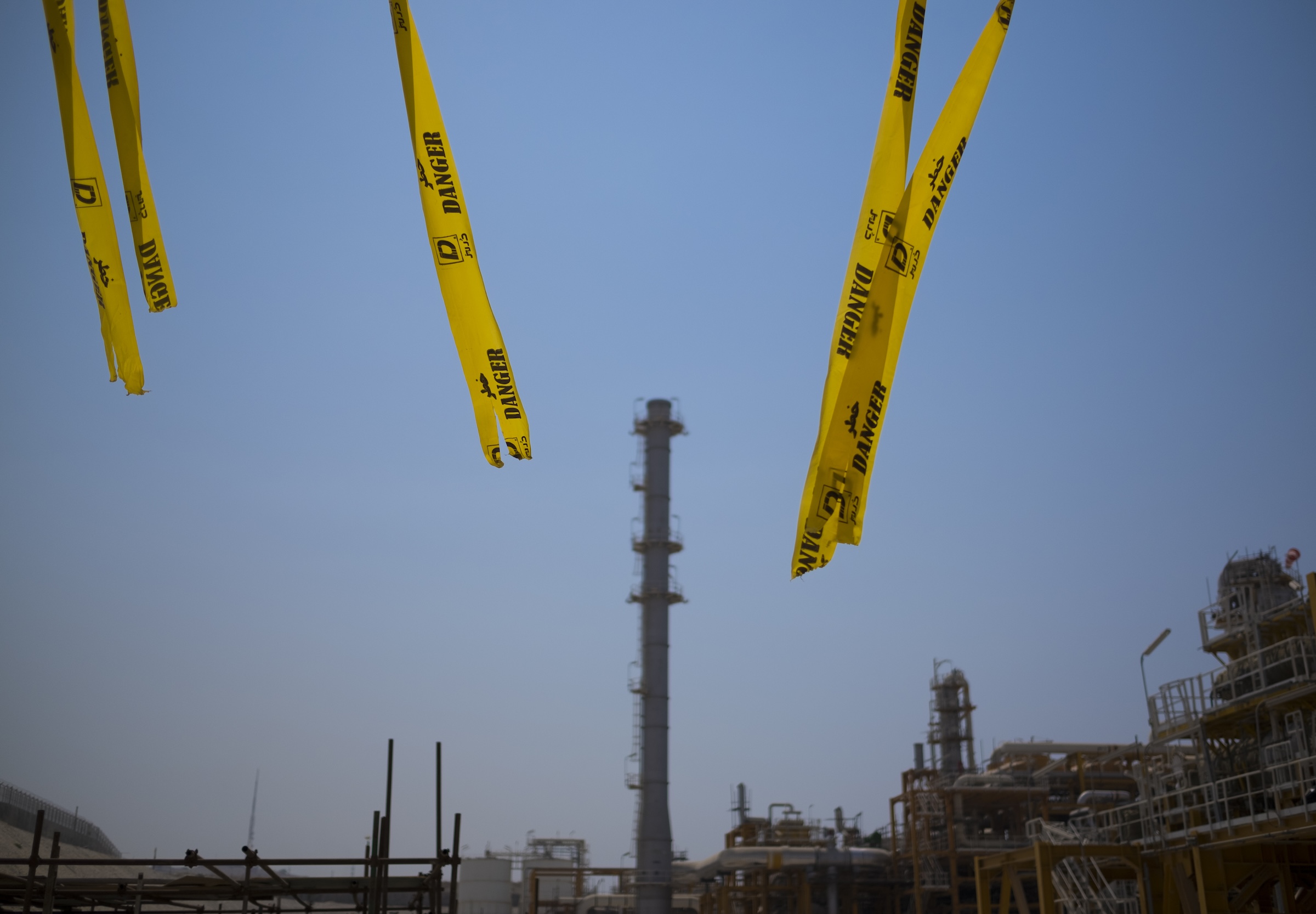
The Wall Street Journal reports that Arab countries were “furious” about Israel’s attack on the South Pars natural gas field on Wednesday. The field provides most of Iran’s natural gas, serving as a lifeline for the country after decades of heavy sanctions on its energy by the U.S. The natural gas field is the largest in the world, and is co-owned by Qatar.
The attack represents a major escalation of the war, and Iran retaliated by striking several oil and gas infrastructure sites across the region, after giving warnings that they were doing so. This includes an attack on the Ras Laffan gas facility in Qatar, the world’s largest liquefied natural gas (LNG) production facility. Roughly 20 percent of the world’s LNG supply is produced at the facility.
Iran also struck oil and gas infrastructure in Saudi Arabia, the United Arab Emirates, and Kuwait, among other countries.
WSJ, citing unnamed officials, reported that Arab countries were angered by “the U.S. failure to head [Israel’s attack] off” and “had aggressively lobbied the Trump administration to stop U.S. and Israeli strikes on Iranian energy infrastructure and now feel a target has been put on their backs.”
Qatari Ministry of Foreign Affairs spokesperson Majed al-Ansari said that Israel’s attack is “a dangerous & irresponsible step” in a statement on X. “Targeting energy infrastructure constitutes a threat to global energy security,” al-Ansari said, urging de-escalation. Qatar also condemned Iran’s retaliation, ordering several Iranian military and diplomatic officials to leave Qatar within 24 hours.
The UAE’s Ministry of Foreign Affairs said in a statement that Israel’s attack is a “serious escalation,” and represents targeting of civilian infrastructure.
Qatar’s state owned QatarEnergy said on Thursday that Iranian attacks have taken out 17 percent of the company’s exports. The company said it would have to declare force majeure in order to cancel contracts with Italy, Belgium, South Korea, and China, meaning that it would invoke clauses that allow the company to pull out due to extraordinary circumstances.
The damages will take three to five years to repair and cost tens of billions of dollars, according to QatarEnergy’s CEO and the state’s minister for energy affairs, Saad al-Kaabi. Al-Kaabi expressed frustration that Iran, a “brotherly Muslim country,” would attack Qatar’s facilities this way during Ramadan. “If Israel attacked Iran, it’s between Iran and Israel. It has nothing to do with us and the region,” al-Kaabi told Reuters.
President Donald Trump, potentially sensing the anger from Arab countries, has sought to distance himself from Israel’s South Pars strike. In a post on Truth Social on Wednesday evening, Trump said that Israel “violently lashed out” and that it would not be attacking that field again.
He also claimed that the U.S. “knew nothing about this particular attack,” but reporting contradicts this claim. Numerous outlets, citing Israeli and U.S. officials, have reported that the attack was carried out in coordination with the U.S. WSJ even reported that Trump himself approved the strike, and that it was done “to pressure Iran to unblock the Strait of Hormuz.”
Trump’s backtracking comes after oil and gas prices once again spiked after Israel’s strike, rising after what has already been a historically fast price change caused by the war.
This article was originally published by Truthout and is licensed under Creative Commons (CC BY-NC-ND 4.0). Please maintain all links and credits in accordance with our republishing guidelines.
Leave a Reply