Welcome back to Foreign Policy’s Situation Report.
Here’s what’s on tap for the day: U.S. President Donald Trump gives his first speech about the Iran war in more than a month, U.S. Attorney General Pam Bondi gets her walking papers, and Israel passes a controversial death penalty law targeting Palestinians.
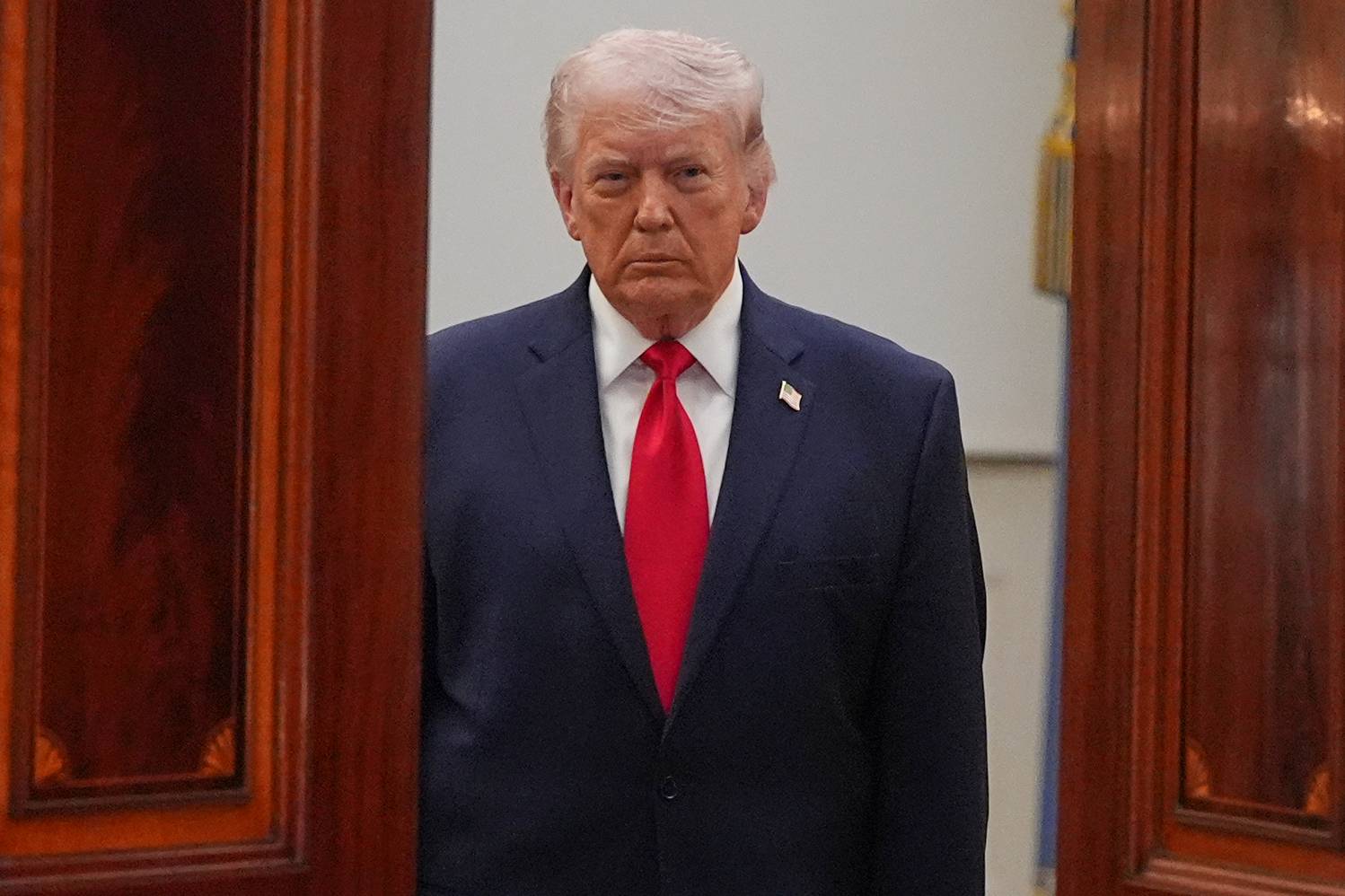
U.S. President Donald Trump’s rare prime-time address to the nation on Wednesday was billed as a major update on the Iran war’s progress, and financial markets rallied on hopes that he would provide a clear plan and timeline for ending the war.
Yet Trump spent most of the short, roughly 20-minute speech reiterating assertions that he has repeatedly made in interviews and on social media in recent weeks, proclaiming victory over Iran while also saying that the war will continue and offering only a vague timeline for when he intends to conclude it.
Despite the shifting and sometimes contradictory justifications that the Trump administration has provided for starting this war a month ago, Trump outlined “simple and clear” objectives, including the destruction of Iran’s navy, air force, and missile stockpiles, which he said will “deny them the ability to build a nuclear bomb.”
Notably, Trump did not mention a possible operation to seize Iran’s stockpile of the highly enriched uranium that it could use to build such a bomb, claiming instead that the “nuclear dust” is inaccessible to the Iranian regime because the U.S. military had “obliterated” it in airstrikes last June. Trump also said that regime change had not been a goal of the war but that “regime change has occurred because of all of their original leaders’ death.”
As for what comes next—and when—Trump offered few definitive answers to the American people and the rest of the world. “I can say tonight that we are on track to complete all of America’s military objectives shortly. Very shortly,” he said. However, he said that the United States was “going to hit them extremely hard over the next two to three weeks” and “bring them back to the Stone Ages, where they belong”—but also that “discussions are ongoing.”
Troop tallies. Meanwhile, the number of U.S. troops headed to the region continues to increase by the week. A third U.S. aircraft carrier—the USS George H.W. Bush—began deploying to the region on Tuesday. When it arrives in the Middle East—which is expected to take several weeks—it will add roughly 6,000 troops to the more than 50,000 that are already taking part in the operation against Iran.
The new carrier deployment comes as thousands of additional Marines and U.S. Army paratroopers have begun arriving in the Middle East. The USS Tripoli Amphibious Ready Group, composed of roughly 3,500 Marines and sailors, arrived in the region on March 27. Several hundred U.S. special operations forces also reportedly arrived in the region in recent days. The USS Boxer Amphibious Ready Group, which brings with it around 2,500 Marines, is still in transit.
The administration is also reportedly mulling over sending 10,000 more ground troops. This could bring the total number of U.S. ground troops in the region to around 17,000.
NATO reprieve. This week, Trump (again) threatened to withdraw from NATO over member countries’ refusals to help reopen the Strait of Hormuz. But despite having raged about this for days now, Trump didn’t mention the alliance by name in his speech, saying only that the “countries of the world that do receive oil through the Hormuz Strait must take care of that passage.”
Many of those countries may be preparing to do exactly that, with U.K. Prime Minister Keir Starmer convening a group of 40 countries—minus the United States—on Thursday to discuss strategies to reopen the strait.
But Trump also posited another theory on Wednesday night. “In any event, when this conflict is over, the strait will open up naturally,” he said.
Pam Bondi was ousted as attorney general on Thursday; Deputy Attorney General Todd Blanche will replace her as the United States’ top cop for now.
“We love Pam, and she will be transitioning to a much needed and important new job in the private sector, to be announced at a date in the near future,” Trump said in a Truth Social post. Trump was reportedly frustrated with Bondi for not moving faster to achieve his goals, including prosecuting political adversaries.
Reports also suggest that Trump is considering replacing Tulsi Gabbard as director of national intelligence, which is partly linked to him being unhappy over her recent testimony to Congress on the Iran war.
U.S. Defense Secretary Pete Hegseth has asked Army Chief of Staff Gen. Randy George to step down and take immediate retirement, CBS News reported.
What should be high on your radar, if it isn’t already.
Israel’s death penalty. The Israeli Knesset passed a controversial law on March 30 that makes death by hanging the default punishment for Palestinians convicted of lethal attacks. Critics have decried the new law, which was pushed by the far-right Jewish Power party led by National Security Minister Itamar Ben-Gvir, as discriminatory and inhumane. That’s in part because it applies the death penalty in attacks intended to “negate the existence of the state of Israel,” effectively excluding Jewish Israelis convicted of similar crimes.
U.N. High Commissioner for Human Rights Volker Türk said in a statement on Tuesday that the law is “patently inconsistent with Israel’s international law obligations,” adding that it “raises serious concerns about due process violations, is deeply discriminatory, and must be promptly repealed.” Allies of Israel, including the United Kingdom, France, Italy, and Germany, urged the country not to enact the law prior to it being passed. Eight Muslim-majority countries also condemned the law in a joint statement released by Pakistan on Thursday. The Trump administration has not been among the law’s critics, with the State Department stating that it “respects Israel’s sovereign right to determine its own laws.”
Drones and the U.S. homeland. As Iranian drones cause myriad problems for U.S. forces and their allies in the Middle East amid Operation Epic Fury, unmanned aerial vehicles are also a growing domestic concern. The Pentagon is reportedly considering sending an anti-drone laser system to Fort McNair, the military base in Washington where Defense Secretary Pete Hegseth and Secretary of State Marco Rubio live. Unidentified drones were recently sighted above the base.
There were also drone incursions over the course of a week in March at Barksdale Air Force Base in Louisiana, which is home to dozens of nuclear-capable bombers. The unauthorized drones were seemingly resistant to jamming, which suggests that they were more sophisticated than the types used by hobbyists. A confidential briefing document obtained by ABC News suggested that the drone operators may have been “testing security responses” at the base.
But Trump said this week that he was “not concerned” about the drone sightings over Barksdale. Meanwhile, experts have expressed serious concerns about the U.S. homeland’s vulnerabilities to drones. John recently wrote about this, which you can read here.

Damaged cars are seen after an Israeli airstrike hit a new-car holding yard in the Christian neighborhood of Mansourieh in Beirut, Lebanon, on March 31.Chris McGrath/Getty Images
Monday, April 6: NATO Secretary-General Mark Rutte is expected to travel to Washington to meet with Trump.
Tuesday, April 7: U.S. Vice President J.D. Vance is expected to visit Hungary.
Taiwan’s opposition Kuomintang party leader Cheng Li-wun is scheduled to visit China.
Friday, April 10: Djibouti holds a presidential election.
$700 million: The cost of replacing an important U.S. radar aircraft—an E-3 Sentry—that was recently destroyed by an Iranian strike on a base in Saudi Arabia.
66 percent: The share of Americans who want to see a quick end to the war in Iran, even if the Trump administration’s goals are not achieved, according to a new Reuters/Ipsos poll.
Leave a Reply