Category: Uncategorized

  • How Soviet urban planning is helping Russia freeze Ukraine

    How Soviet urban planning is helping Russia freeze Ukraine


    Ukraine is now living through its most difficult winter in recent memory.

    With January temperatures plummeting below -15C, Russia has been attacking energy infrastructure, leaving about a million Ukrainians without heating.

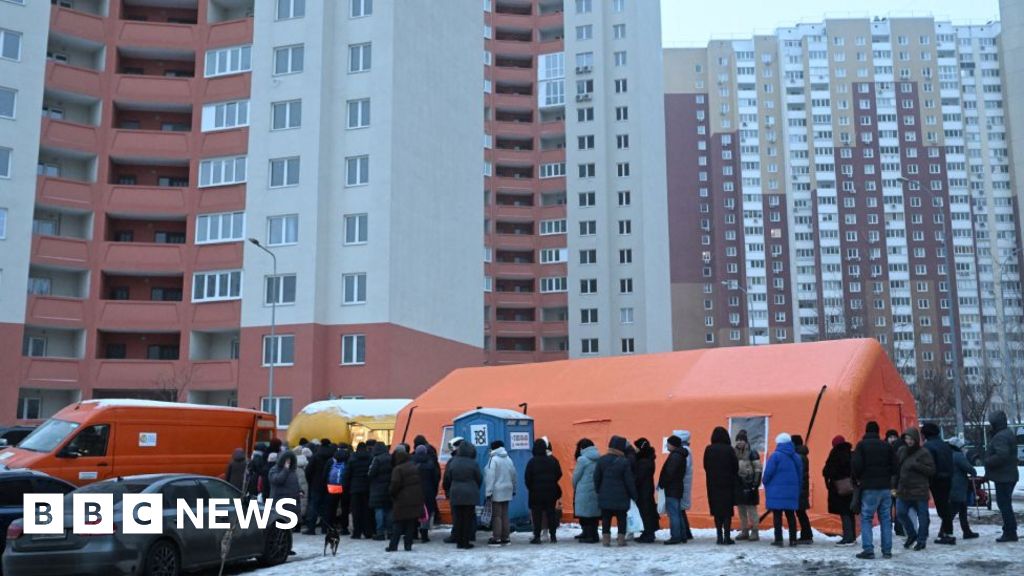
    The capital, Kyiv, is the main target of such attacks. Following the latest Russian bombardment overnight into 24 January, almost 6,000 apartment blocks were left without heating, according to mayor Vitaly Klitschko.

    This is the third such Russian attack targeting Kyiv’s heating infrastructure in little more than two weeks, after strikes on 9 and 20 January also left hundreds of thousands freezing in their flats.

    “Living in Kyiv is a bit of a gamble these days,” one resident of the Ukrainian capital, Rita, told the BBC.

    “If you have heating and gas, there is no electricity and water. If you have electricity and water, there is no heating.

    “Coming home is like playing a guessing game every day – will I be able to shower or have hot tea, or neither? And of course missiles and drones come on top of all that.”

    She says she has to go to bed wearing a hat and several layers of clothing.

    What is making things much worse for Ukraine and easier for Russia is the widespread prevalence of apartment blocks that rely on communal central heating – where water is heated up elsewhere and then pumped into their radiators.

    Heating plants in Ukraine are huge and many thousands of people are affected when they are targeted by Russian forces. Ukraine says that all such power plants have now been hit.

    Such attacks also disrupt electricity supplies, but while a generator or battery pack might help in this situation, heating is less straightforward – especially when there is also no electricity to power your heater.

    Kyivteploenergo, the monopoly supplying heating and hot water in the Ukrainian capital, told the BBC “the absolute majority” of houses in Kyiv rely on its services. It said it could not share the exact number for security reasons.

    In Zaporizhzhia, a frontline city home to 750,000 people, almost three-quarters of residents rely on central heating, according to Maksym Rohalsky, the head of the local association of apartment block dwellers.

    Before Russia’s full-scale invasion of 2022, about 11 million households in Ukraine relied on central heating, compared to seven million autonomously heated households, Ukrainian energy expert Yuriy Korolchuk said.

    Cities across the Soviet Union, including in Ukraine, were the focus of huge construction programmes launched in the 1950s to mass produce cheap housing.

    The landscapes of cities in the former USSR are dominated by ubiquitous nine-storey residential buildings made from pre-fabricated concrete panels, known as “panelki”, or smaller five-storey blocks of flats known as “khrushchevki”, after Soviet leader Nikita Khrushchev, who oversaw their construction in the 1950s and 1960s.

    Heating to such houses is supplied by large plants known as TETs – an acronym that stands for “heat and electricity centrals” in Ukrainian as they generate electricity as well as heat.

    Detached houses occupied by a single family, known as “private houses” in Ukraine, are normally found in rural areas and are rare in cities.

    “Ukraine inherited the Soviet heating system and it hasn’t changed anything, it stays predominantly centralised,” Korolchuk told the BBC.

    “These heating plants were not designed to be attacked with missiles or drones, that’s why these vulnerabilities came to the fore during the war.”

    According to him, this is a new tactic used by Russia.

    “During the previous winters, there were no such strikes against the heating system. They happened only occasionally, and they didn’t directly target heating plants,” he added.

    Referring to ongoing talks to end the war, he says “the factor of negotiations is now possibly playing a role, it’s a form of pressure”.

    Large centralised installations bring about efficiencies of scale, but should they be targeted by bombs or drones, the consequences can be devastating for hundreds of thousands of people.

    The Ukrainian government is acutely aware of this vulnerability, and is planning to reduce it by making individual heating points mandatory at apartment blocks.

    However, undoing decades of Soviet urban planning will not be quick or easy.


    Source link

  • Trump says UK soldiers in Afghanistan ‘among greatest of all warriors’

    Trump says UK soldiers in Afghanistan ‘among greatest of all warriors’


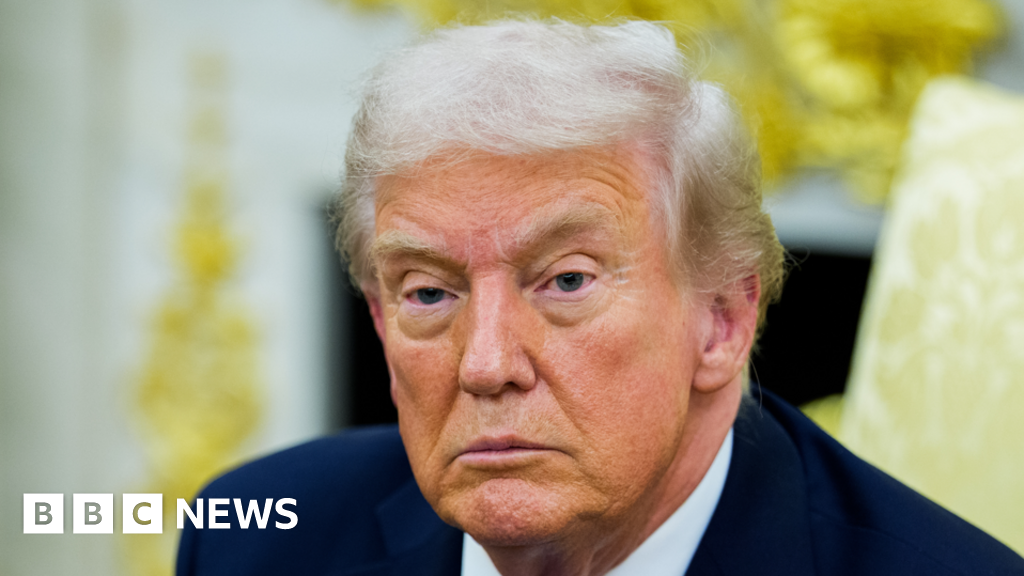
    Bloomberg via Getty Images US President Donald Trump during a meeting with Mark Rutte, secretary general of the North Atlantic Treaty OrganisationBloomberg via Getty Images

    President Donald Trump’s comments on Thursday about Nato soldiers fighting in Afghanistan angered many veterans and politicians

    Donald Trump has praised UK soldiers who fought in Afghanistan after his claim that allied forces avoided the front lines prompted criticism from veterans and politicians.

    Earlier this week Trump angered US allies by downplaying the role of Nato troops in the war and doubted whether the military alliance would be there for the US “if we ever needed them”.

    Trump’s words drew condemnation from international allies, while Sir Keir Starmer called them “insulting and frankly appalling”.

    The UK prime minister spoke to Trump on Saturday, after which the US president used his Truth Social platform to praise UK troops as being “among the greatest of all warriors”.

    Trump was criticised for remarks he made during an interview with Fox News on Thursday in which the president said of Nato troops: “We’ve never needed them. We have never really asked anything of them.

    “They’ll say they sent some troops to Afghanistan… and they did, they stayed a little back, a little off the front lines.”

    That triggered a huge backlash from the families of soldiers who served in Afghanistan, as well as veterans and politicians from across the Westminster and international spectrum who called for Trump to apologise.

    Prince Harry said the sacrifices of troops needed to be respected as he pointed out Nato’s collective security clause had been invoked once – following the 9/11 attacks.

    In October 2001 the US invaded Afghanistan to oust the Taliban, whom they said were harbouring Osama Bin Laden and other al-Qaeda figures linked to the 9/11 attacks the previous month. Nato nations contributed troops and military equipment to the US-led war.

    More than 3,500 coalition soldiers died, about two-thirds of them Americans, as of 2021 when the US withdrew from the country. The UK suffered the second-highest number of military deaths in the conflict behind the US, which suffered 2,461 fatalities.

    On Saturday, Downing Street said the prime minister and US president spoke about the UK’s involvement alongside US and Nato forces in the conflict.

    A spokesperson said: “The prime minister raised the brave and heroic British and American soldiers who fought side by side in Afghanistan, many of whom never returned home. We must never forget their sacrifice”.

    Shortly after the conversation, Trump posted fresh comments on his Truth Social platform – appearing to step back from his critical comments but stopping short of directly apologising for the words he used in Thursday’s interview.

    He wrote: “The great and very brave soldiers of the United Kingdom will always be with the United States of America.

    “In Afghanistan, 457 died, many were badly injured, and they were among the greatest of all warriors.

    “It’s a bond too strong to ever be broken. The UK military, with tremendous heart and soul, is second to none (except for the USA). We love you all, and always will!”

    Conservative leader Kemi Badenoch said she was pleased Trump had acknowledged the UK’s role in fighting alongside the US and Nato allies in Afghanistan.

    “It should never have been questioned in the first place,” she said.

    Watch: Trump’s comments ‘extremely disrespectful’ – British veteran

    On Friday, the Duke of Sussex released a statement in which he praised the contributions of Nato troops who were in Afghanistan.

    “I served there. I made lifelong friends there. And I lost friends there,” the prince said.

    “In 2001, Nato invoked Article 5 for the first – and only – time in history. It meant that every allied nation was obliged to stand with the United States in Afghanistan, in pursuit of our shared security. Allies answered that call.

    “Thousands of lives were changed forever. Mothers and fathers buried sons and daughters. Children were left without a parent. Families are left carrying the cost.

    “Those sacrifices deserve to be spoken about truthfully and with respect, as we all remain united and loyal to the defence of diplomacy and peace.”

    Most of the 457 British troops who died serving in Afghanistan over a period of nearly 20 years were killed in Helmand – the scene of the heaviest fighting.

    Hundreds more suffered injuries and lost limbs – including Cpl Andy Reid who lost both his legs and his right arm after stepping on an improvised explosive device (IED) in Afghanistan.

    “Not a day goes by when we’re not in some kind of pain, physically or mentally reflecting on that conflict,” he told BBC Breakfast on Friday.

    Reid recalled working with American soldiers, adding: “If they were on the front line and I was stood next to them, clearly we were on the front line as well.”

    Watch: “It’s just plain incorrect” – Afghanistan veterans react to Trump Nato remarks

    Badenoch, Sir Ed Davey and Nigel Farage were among the Westminster leaders to call out the US president for his comments; while outside the UK, ministers from foreign governments also criticised Trump’s remarks.

    Canada’s Minister of National Defence David J McGuinty said Canadian “men and women were on the ground from the beginning, not because we had to, but because it was the right thing to do.”

    American political and military figures have also expressed their anger and frustration over Trump’s Nato comments.

    “I think it’s insulting to those who were fighting alongside of us,” former national security adviser Herbery Raymond McMaster told the BBC.


    Source link

  • Germany arrests suspected Hamas member over alleged attack plot

    Germany arrests suspected Hamas member over alleged attack plot


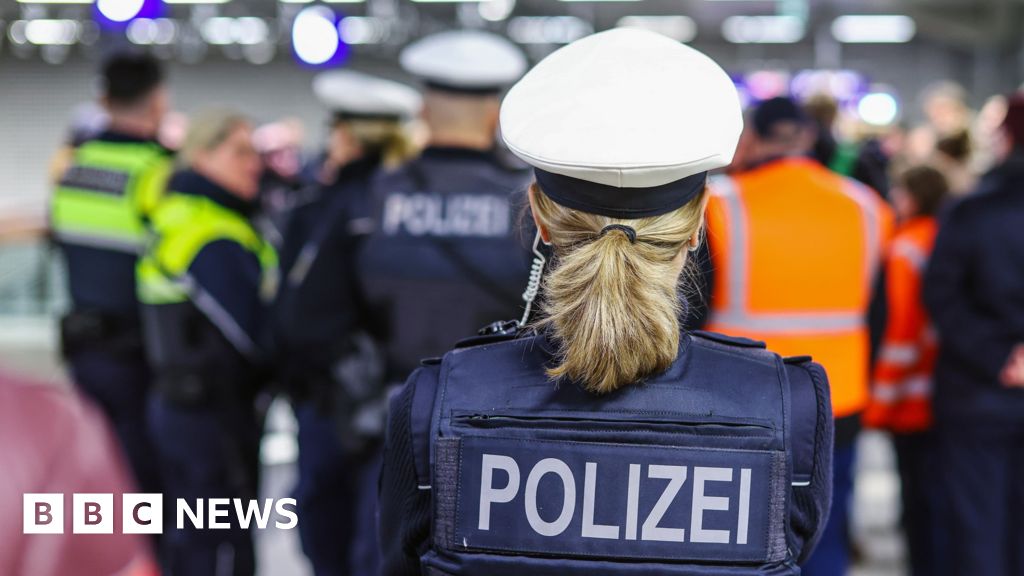
    German police have arrested a Lebanese national on suspicion of being a member of Hamas and planning attacks in Europe.

    The man, named as “Mohammad S”, was stopped at Berlin’s Brandenburg Airport after arriving from Beirut on Friday evening.

    Federal prosecutors said that in August 2025 he helped procure 300 rounds of ammunition and was involved in an alleged plot to attack Jewish and Israeli institutions.

    He is due to be brought before a federal judge who will decide on a pretrial detention.

    Hamas, which controlled Gaza but has been severely weakened by Israeli operations in the territory, is considered a terrorist organisation by the US, UK, Israel and many other countries.

    The militant Palestinian group carried out the attacks on Israel in October 2023, in which about 1,200 people were killed and more than 250 people taken hostage.

    Since then, according to Gaza’s Hamas-run health ministry, more than 70,000 Palestinians have been killed in Israeli military action.

    German authorities say “Mohammad S” colluded with “Abed Al G”, one of three alleged Hamas members arrested last October over planned attacks on Jewish and Israeli institutions.

    The three were reportedly arrested while meeting for a weapons handover in Berlin. Two of them are Germany nationals, another is from Lebanon.

    Around the time of the arrests, police searches also took place in the German cities of Leipzig and Oberhausen, Der Spiegel reported.

    Separately, in November, German authorities arrested another suspected member of Hamas – also a Lebanese national – near the border with the Czech Republic.


    Source link