Ofer emphasized that Graham’s remarks represent a sharp shift in the usual approach to dealing with Arab states.
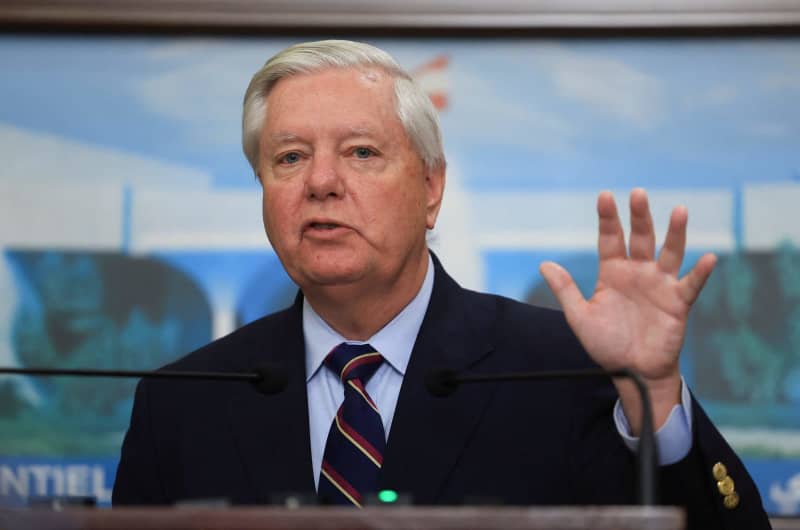
In an interview with Maariv, Eyal Ofer, an expert on Hamas’s economy, addressed unusually blunt remarks made by US Senator Lindsey Graham, warning that they could carry significant regional and Israeli implications.
In an interview before his visit to Israel, Graham addressed media reports claiming that “Arab leaders support the ayatollahs remaining in power”, telling journalists that “the era in which [Arab leaders] tell us one thing behind closed doors while publicly making opposing statements must end.”
Ofer emphasized that Graham’s remarks represent a sharp shift in the usual approach to dealing with Arab states.
“Graham, who for 30 years has supported the US having close ties with Saudi Arabia and Qatar, acknowledged what even some of Israel’s best intelligence professionals have been misled by: the gap between what Arab leaders say and do publicly and the calming messages they convey in diplomatic discussions that are always held in secret,” Ofer explained.
Emir of Qatar Sheikh Tamim bin Hamad Al Thani, US President Donald Trump, Saudi Crown Prince Mohammed Bin Salman and Bahrain’s King Hamad bin Isa Al Khalifa attend a group photo session with Gulf Cooperation Council (GCC) leaders in Riyadh, Saudi Arabia, May 14, 2025. (credit: REUTERS/BRIAN SNYDER)
‘Ignored what Arab leaders said publicly’
Ofer went on, noting that while Israel and the West hold what is said behind closed doors to a high standard, in the Arab world, public declarations are what hold significant weight.
“We have always convinced ourselves of the opposite: that Arabs ‘do not mean’ what they say publicly, and their assurances in secret represent the true agreement,” he said.
Ofer linked this mindset directly to the October 7 massacre, claiming that “we [Israel] ignored what Arab leaders said publicly.”
He brings the example of Yahya Sinwar, who “promised to return his people to ‘occupied’ Palestine,” and Egyptian President Abdul Fattah El-Sisi, who repeatedly threatened to cancel the Israel-Egypt peace treaty and “denounces us on every possible international stage (in English and Arabic) as Egypt moves forces into Sinai, allows weapons smuggling into the Negev and Gaza, and refuses to absorb Gazans while accusing Israel of imprisoning them.”
“If, thanks to Senator Graham, the IDF General Staff also begins to understand that the drones being smuggled into the Negev and Gaza are not coming, as the IDF Spokesperson describes it, ‘from the western border,’ but from Egypt, and that we should listen to public declarations, perhaps one day we will finally learn that Arabs mean what they say, and not what we tell ourselves was said behind closed doors,” Ofer concluded.
Ji says he has become more self-conscious interacting with younger colleagues
Ji Seung-ryeol, 41, prides himself on his sense of fashion.
He diligently shares mirror selfies on Instagram, where everyone knows the more likes you get, the cooler you are.
So he was bewildered to find out thatmen his age have become the subject of ridicule online, mocked for shoehorning their way into styles associated with Gen Z and younger millennials.
AI-generated caricatures of this demographic have gone viral on social media: a middle-aged man decked out in street wear and clutching an iPhone. The kids call them “Young 40s”.
The memes have made Ji’s beloved Nike Air Jordans and Stüssy T-shirts the butt of jokes—and the source of much indignation.
“I’m just buying and wearing things I’ve liked for a long time, now that I can afford them,” he tells the BBC. “Why is this something to be attacked for?”
The iPhone that started it all
Once celebrated as pioneers of taste in the 1990s, the tide of public opinion on 40-year-olds turned after the release of the iPhone 17 last September.
The smartphone, long considered the preserve of the youth, was suddenly recast as a tacky trademark of Young 40s. These are, in the words of Gen Z Jeong Ju-eun, people “trying too hard to look young”, who “refuse to accept that time has passed”.
The figures seem to reflect this shift. While the majority of young South Koreans still prefer the iPhone to the Samsung Galaxy, over the past year Apple’s market share fell by 4% among Gen Z consumers and rose 12% for people in their 40s, according to research by Gallup.
Something similar played out a few years back with Geriatric Millennials, born in the early ’80s, whose brand of humour—the crying-laughing emoji, finger moustaches and the word “adulting”—was derided as cringey.
Back then, debate over Geriatric Millennials sparked self-deprecating jokes, think pieces and quizzes dictating if you’re meant to pile on the ribbing or be subjected to it.
The same trends have taken hold in South Korea with Young 40s.
News1
The iPhone, long considered the preserve of young people, is now seen as a trademark of Young 40s
In Korea, age difference, even by a year, forms the basis of social hierarchy. Age is one of the first things strangers ask each other, setting the tone for future interactions: how they address one another, who gets to open the bottle of soju at parties (it’s usually the oldest person) and which way to tip your shot glass (the correct answer: away from your seniors).
But the Young 40 memes also represent Korean youth’s growing scepticism of this almost forced reverence for elders.
Just a few years ago, the term “kkondae” was another buzzword among young South Korean to describe an annoying breed of rigid, condescending elders.
Such friction has been exacerbated by social media, where “multiple generations mix within the same space”, says Lee Jae-in, a sociology professor at Korea University’s Sejong campus.
“The old pattern where different generations consumed separate cultural spaces has largely disappeared,” he adds.
A self-conscious sandwich generation
Popularised in marketing circles in the 2010s, the term “Young 40” originally referred to consumers with youthful sensibilities. They were health-conscious, active and comfortable with technology—an important target demographic for companies.
“In the past, people in their 40s were seen as already old,” says Kim Yong-Sup, a trend analyst widely credited with coining the term “Young 40”.
As the median age of South Korea’s society rose, however, these people were “no longer on the verge of old age but at the centre of society”, he says.
But the marketing term has since taken a viral, sardonic turn. Over the past year, “Young 40” was mentioned online more than 100,000 times – more than half the referenceswere used in a negative context, according to analytics platform SomeTrend. Many of them appeared alongside words like “old” and “disgusting”.
An offshoot of the meme is Sweet Young 40, a sarcastic label for middle-aged men who like to hit on young women.
Getty Images
Many South Korean youth face soaring house prices and cut-throat competition in the job market
Some see the jokes about Young 40s as a form of punching up: these are people at the peak of their careers, who amassed wealth in a time of economic stability and a property boom.
On the other side are Gen Z and young millennials, born a couple of decades later, who face soaring house prices and cut-throat competition in the job market. In their eyes, Young 40s represent “the generation that made it through just before the door of opportunity closed”, according to psychologist Oh Eun-kyung.
“They are seen not simply as individuals with personal tastes, but as symbols of privilege and power,” she says. “That’s why the energy of mockery is focused on them.”
But Ji, the 41-year-old fashion enthusiast who lived through the so-called golden era, tells a different version of that story.
After experiencing the Asian financial crisis as a teen, Ji entered a tough job market in his 20s, submitting around 60-70 applications to land a job. His generation is one that “had very little to enjoy growing up, and only began to enjoy things later, as adults”, he says.
Instagram/@detailance
Ji says he feels “caught in between” two generations
Now at the workplace, he often finds himself sandwiched between two worlds. The generation above him ran a “strict, top-down system where you did what you were told”, while below him is “a generation that asks ‘why””.
“We’re a generation that has experienced both cultures. We feel caught in between.”
While the ability to straddle two generations was once a badge of honour, Ji says he has become self-conscious about interacting with younger colleagues for fear of being labelled a kkondae or Young 40.
“These days, I hardly organise drinking gatherings,” he says. “I try to keep conversations focused on work or career concerns, and only share personal stories when discussions naturally deepen.”
According to Kang, another fashionable 41-year-old, sitting at the heart of the Young 40 meme is a deeply human desire.
“As you get older, longing for youth becomes completely natural. Wanting to look young is something every generation shares.”
Rebecca Morelle, Alison Francis and Kevin ChurchScience team
Watch: Timelapse shows Nasa rocket’s 12-hour journey to launch pad
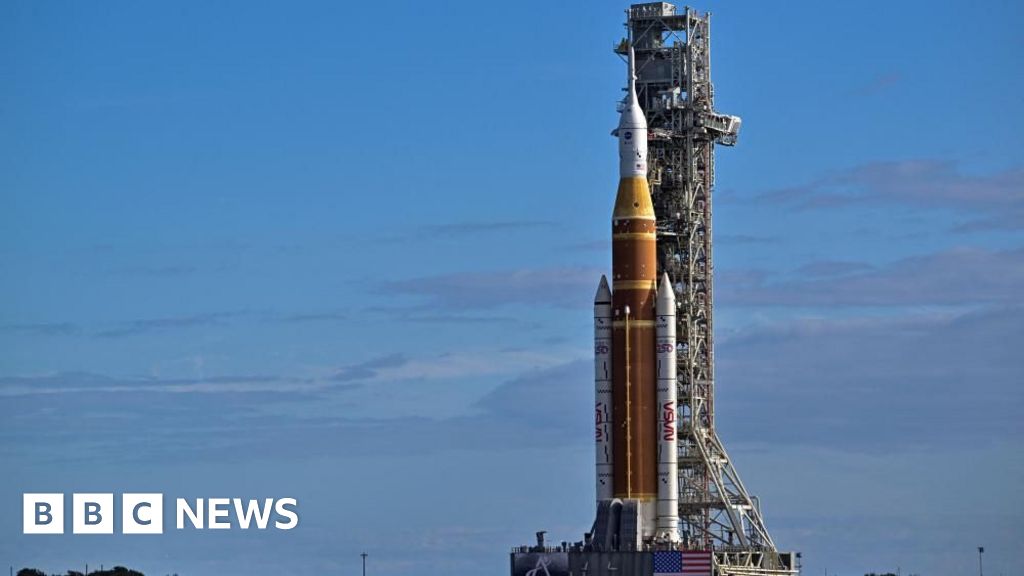
Nasa’s mega rocket has been moved to the launch pad in Cape Canaveral, Florida, as the final preparations get underway for the first crewed mission to the Moon in more than 50 years.
Over almost 12 hours, the 98m-tall Space Launch System was carried vertically from the Vehicle Assembly Building on the 4-mile (6.5km) journey to the pad.
Now it is in position, the final tests, checks – and a dress rehearsal – will take place, before the go-ahead is given for the 10-day Artemis II mission that will see four astronauts travel around the Moon.
Nasa says the earliest the rocket can blast off is 6 February, but there are also more launch windows later that month, as well as in March and April.
Reuters
The Space Launch System (SLS) rocket that will fly the Artemis II mission to the Moon
The rocket began moving at 07:04 local time (12:04 GMT) and arrived at Launch Pad 39B at the Kennedy Space Center at 18:41 local time (23:42 GMT).
The rocket was carried by a huge machine called a crawler-transporter, travelling at a top speed of 0.82 mph (1.3 km/h) as it trundled along. Live coverage captured the slow-moving spectacle.
Nasa said the rocket will be prepared over the next few days for what it calls a “wet dress rehearsal” – a test for fuel operations and countdown procedures.
The Artemis II crew – Nasa’s Reid Wiseman, Victor Glover and Christina Koch and Canadian astronaut Jeremy Hansen – were at the Kennedy Space Center watching the rocket as it was moved.
In just a few weeks, the four astronauts will be strapped into a spacecraft, perched on the top of the rocket, ready to blast off to the Moon.
It will be the first crewed mission to the Moon since Apollo 17 landed on its surface in December 1972.
NASA
From left to right the Artemis crew is Reid Wiseman, Victor Glover, Christina Koch and Jeremy Hansen
Nasa said the mission could take its astronauts further into space that anyone has been before.
Artemis II is not scheduled to land on the Moon, but will instead lay the groundwork for a future lunar landing led by the Artemis III mission.
Nasa said the launch of Artemis III will take place “no earlier than” 2027. But, experts believe 2028 is the earliest possible date.
Koch said it was an amazing feeling to see the rocket.
“Astronauts are the calmest people on launch day. And I think… it feels that way because we’re just so ready to fulfil the mission that we came here to do, that we’ve trained to do,” she said.
Hansen said he hoped the mission would inspire the world.
“The Moon is something that I’ve taken for granted. I’ve looked at it my whole life, but then you just glance at it and glance away,” he said.
“But now I’ve been staring at it a lot more, and I think others will be joining us and staring at the Moon a lot more as there will be humans flying around the far side and that is just good for humanity.”
Before Artemis II heads to the Moon, the first two days of their mission will be spent in orbit around the Earth.
“We’re going to be going into an orbit almost right away that is 40,000 miles out – like a fifth of the way of the Moon,” Koch told BBC News.
“We will have the Earth out the window as a single ball, something none of us have seen in that perspective.
“And then we’re going to travel a quarter of a million miles away… we’re going to do a lot of science and operations along the way.”
While they fly around the far side of the Moon, the crew will have three hours dedicated to lunar observation – to gaze, take images and to study its geology, which will help plan and prepare for a future landing at the Moon’s south pole.
NASA
The European Service Module provides power and propulsions and life support systems
A key part of the Orion spacecraft that the astronauts will be flying in was made in Bremen in Germany.
The European Service Module, which sits behind the crew capsule, is the European Space Agency’s contribution to the mission and has been built by Airbus.
“The European Service Module is so important – we basically can’t get to the Moon without it,” says Sian Cleaver, a spacecraft engineer at Airbus.
“It provides the propulsion that Orion needs to get us to the Moon.”
Its large solar arrays will generate all the electrical power for the craft, she adds.
“We’ve also got these big tanks full of oxygen and nitrogen, which are mixed to make air, and also water, so that we can provide everything that the astronauts need in the crew module to keep them alive on their journey.”
Kevin Church/ BBC News
Sian Cleaver from Airbus says the safety of the astronauts is the top priority
Inside their cleanroom, the team is busy building more modules for future Artemis missions. Each one takes about 18 months to put together but has taken thousands of engineering hours to design. Everything on board has to work perfectly.
“We’ve got to get those astronauts to the Moon and then back again, completely safely,” says Cleaver.
With the rocket now on launchpad 39B, the Artemis team is working around the clock to get it ready for lift off.
The mission has already faced years of delays, and Nasa is under pressure to get the astronauts on their way as soon as possible. However, the US space agency said it would not compromise on safety.
John Honeycutt, chair of the Artemis mission management team, said: “I’ve got one job, and it’s the safe return of Reid and Victor and Christina and Jeremy.
“We’re going to fly when we’re ready… crew safety is going to be our number one priority.”