Category: Uncategorized

  • Black Basta Ransomware Leader Added to EU Most Wanted and INTERPOL Red Notice

    Black Basta Ransomware Leader Added to EU Most Wanted and INTERPOL Red Notice


    Ravie LakshmananJan 17, 2026Law Enforcement / Cybercrime

    Ukrainian and German law enforcement authorities have identified two Ukrainians suspected of working for the Russia-linked ransomware-as-a-service (RaaS) group Black Basta.

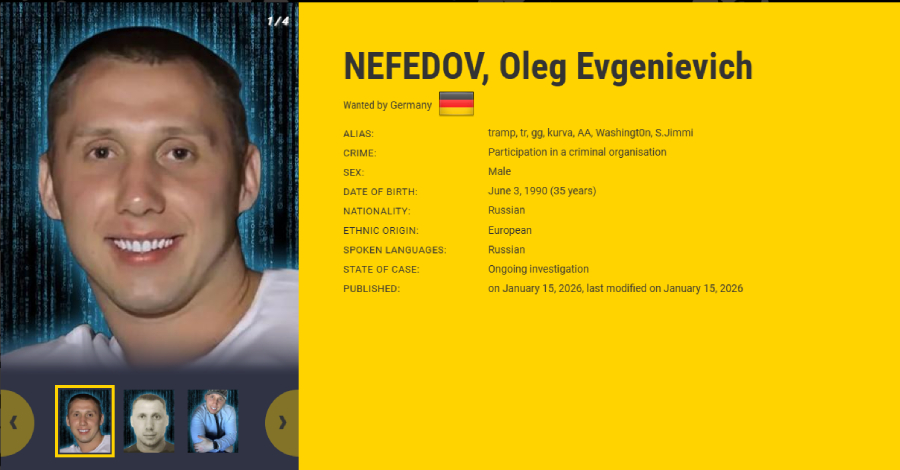
    In addition, the group’s alleged leader, a 35-year-old Russian national named Oleg Evgenievich Nefedov (Нефедов Олег Евгеньевич), has been added to the European Union’s Most Wanted and INTERPOL’s Red Notice lists, authorities noted.

    “According to the investigation, the suspects specialized in technical hacking of protected systems and were involved in preparing cyberattacks using ransomware,” the Cyber Police of Ukraine said in a statement.

    The agency said the accused individuals functioned as “hash crackers,” who specialize in extracting passwords from information systems using specialized software. Once the credential information was obtained, members of the ransomware group broke into corporate networks and ultimately deployed ransomware and extorted money to recover the encrypted information.

    Cybersecurity

    Authorities conducted searches at the defendants’ residences located in Ivano-Frankivsk and Lviv, allowing them to seize digital storage devices and cryptocurrency assets.

    Black Basta first emerged in the threat landscape in April 2022, and is said to have targeted more than 500 companies across North America, Europe, and Australia. The ransomware group is estimated to have earned hundreds of millions of dollars in cryptocurrency from illicit payments.

    Early last year, a year’s worth of internal chat logs from Black Basta leaked online, offering a glimpse into the group’s inner workings, its structure and key members, and the various security vulnerabilities exploited to gain initial access to organizations of interest.

    The leaked dossier also unmasked Nefedov as Black Basta’s ringleader, adding he goes by various aliases, such as Tramp, Trump, GG, and AA. Some documents alleged that Nefedov had ties to high-ranking Russian politicians and intelligence agencies, including the FSB and GRU.

    Nefedov is believed to have leveraged these connections to protect his operations and evade international justice. A subsequent analysis from Trellix revealed that Nefedov was able to secure his freedom despite getting arrested in Yerevan, Armenia, in June 2024. His other aliases include kurva, Washingt0n, and S.Jimmi. Although Nefedov is said to be in Russia, his exact whereabouts are unknown.

    Furthermore, there is evidence linking Nefedov to Conti, a now-defunct group that sprang forth in 2020 as a successor to Ryuk. In August 2022, the U.S. State Department announced a $10 million reward for information related to five individuals associated with the Conti ransomware group. They included Target, Tramp, Dandis, Professor, and Reshaev.

    It’s worth mentioning here that Black Basta surfaced as an autonomous group, alongside BlackByte and KaraKurt, following the retirement of the Conti brand in 2022. Other members joined groups like BlackCat, Hive, AvosLocker, and HelloKitty, all of which are now no longer active.

    Cybersecurity

    “He served as the head of the group. As such, he decided who or which organisations would be the targets of attacks, recruited members, assigned them tasks, took part in ransom negotiations, managed the ransom obtained by extortion, and used it to pay the members of the group,” Germany’s Federal Criminal Police Office (BKA or Bundeskriminalamt) said.

    The leaks have led to Black Basta’s apparent demise, with the group remaining silent after February and taking down its data leak later that month. But with ransomware gangs known to shut down, rebrand, and reemerge under a different identity, it won’t be surprising if members of the erstwhile criminal syndicate pivot to other ransomware groups or form new ones.

    Indeed, per reports from ReliaQuest and Trend Micro, it’s suspected that several of the former Black Basta affiliates might have migrated to the CACTUS ransomware operation – an assessment based on the fact that there was a massive spike in organizations named on the latter’s data leak site in February 2025, coinciding with Black Basta’s site going offline.


    Source link

  • Trump’s proposed credit card cap spotlights Americans’ debt. Would it help?

    Trump’s proposed credit card cap spotlights Americans’ debt. Would it help?


    Danielle KayeBusiness reporter

    Getty Images A woman is holding a credit card or debit card and doing online shopping on a smartphone. Getty Images

    Credit card debt is an increasingly heavy burden for millions of Americans.

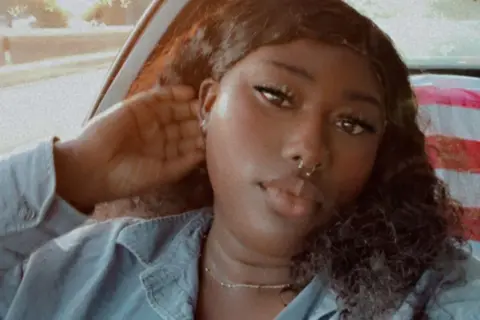
    Selena Cooper, 26, is among those dealing with the strain. A former paralegal at the Social Security Administration, she was left without a stable income when the US government shut down a few months ago. She lost her job permanently after Christmas.

    Cooper first missed her credit card payments in October, when her paycheques ground to a halt. Since then, she said her debt across her three credit cards has accumulated to $6,000.

    Last month, her card issuers Capital One and American Express notified her that they were raising her interest rates due to late payments. The rate on her Capital One cards doubled to 16%, while the one on her Amex jumped from 10% to 18%, she said.

    Credit card rates have caught the attention of US President Donald Trump. Last week, he proposed capping them at 10% for one year from 20 January – an idea that Cooper said “would help a little bit, but it’s still not going to get me out of debt”.

    Cooper, who lives in Columbia, South Carolina, is now leaning on her photography business for income. “It’ll pay small bills – but not my credit card debt,” she said.

    Selena Cooper A woman wearing a denim shirt poses for a photo.Selena Cooper

    Selena Cooper said her debt across her three credit cards has accumulated to $6,000

    Credit card interest rates have been rising in recent years. They averaged about 22% as of November, up from 13% a decade ago, Federal Reserve data shows. 37% of adults carry a credit card balance, and overall credit card debt in the US totals more than $1tn.

    “It does show that consumers are feeling pinched, they’re going to continue to feel pinched,” Susan Schmidt, portfolio manager at Exchange Capital Resources in Chicago, told the BBC.

    “I think the Trump administration is trying to find a way out of it.”

    Trump’s proposal, which was among his campaign promises, was met with a swift backlash from bank executives, who say a cap would erode consumers’ access to credit. Banks could cut credit limits or close riskier accounts.

    Interest charges are a source of revenue for banks and other big lenders, amounting to $160bn in 2024, according to the Consumer Financial Protection Bureau – an agency that Trump largely dismantled last year.

    Banks are already pushing to protect that income, arguing that a rate cap would backfire to the detriment of consumers. JP Morgan hinted at the possibility of legal action.

    “People will lose access to credit on a very, very extensive and broad basis, especially the people who need it the most,” Jeremy Barnum, JP Morgan’s chief financial officer, warned on the company’s earnings call on Monday.

    Jane Fraser, Citigroup’s chief executive, also pushed back against the proposal on Wednesday and warned of a “severe impact on access to credit and on consumer spending across the country”.

    Some analysts and economists agree that a cap, on its own, might not benefit consumers as much as Trump and lawmakers across the political aisle claim.

    “A 10% cap may not be the right solution because the people that are already in trouble, that’s not necessarily going to help them,” said Schmidt of Exchange Capital Resources.

    Benedict Guttman-Kenney, an assistant professor of finance at Rice University, said banks might respond by limiting how much they lend to people with lower credit scores, who are considered higher-risk borrowers. Those are the people most at risk of losing access to credit cards, he said.

    Banks, he added, might also try to recoup their revenue elsewhere, like by raising annual fees or late fees.

    “It’s not clear that people are going to be better off,” Guttman-Kenney said. “They’re still paying similar amounts of money.”

    But he noted that some bank expenses are “bloated”, meaning they have room to cut costs to keep their margins intact. They could, for example, trim down how much they spend on marketing, he said.

    And a recent Vanderbilt University study found that Americans would save roughly $100bn a year in interest costs if a 10% rate cap were to be implemented.

    “This is something people would see, they would notice, they would feel it,” said Brian Shearer, a researcher at Vanderbilt’s Policy Accelerator and the author of the study.

    “This alone would impact their household budgets substantially.”

    Shearer questioned a key argument put forward by bank executives and their lobbyists: that any reduction in rates will necessarily lead to a reduction in lending. He pointed to banks’ robust margins in the credit card market.

    Interest payments, he added, do not account for the majority of the revenue that banks earn on credit cards.

    “No policy is without some pros and cons,” Shearer said. “To continue lending, banks would have to reduce rewards to some extent, especially to people with lower FICO scores (credit scores).

    “However, the savings from interest, even to those people who lose some rewards, would far exceed the lost rewards.”

    ‘I’m losing sleep’

    Morgan, 31, who asked to use only her first name, is also among those struggling to pay down thousands of dollars.

    Since last May, she has been using her Discover card to pay for her two-year-old daughter’s childcare, while unemployed. She said she decided to send her daughter to daycare because she needed the freedom, due to struggles with her mental and physical health.

    Those payments have left her with $6,700 in credit card debt.

    Morgan’s husband works in the military and pays for the family’s other expenses. Through a service member benefit programme, she secured an interest rate of roughly 3% on her credit card. Had she been forced to pay the typical 27% interest rate, sending her daughter to childcare would not have been an option, she said.

    “I’m losing sleep over the $6,700, but I have a little wiggle room to be able to do that because once I get a job, I can pay it off,” Morgan said.

    That’s why Trump’s proposal to cap credit card rates at 10% struck her as a “step in the right direction”.

    “I hope it actually comes to fruition,” she said. “It’s one of the few things he’s done that prioritises people over businesses.”

    Will the proposal go anywhere?

    The idea to cap credit card rates has been floating in legislative circles for years, and it has garnered bipartisan support.

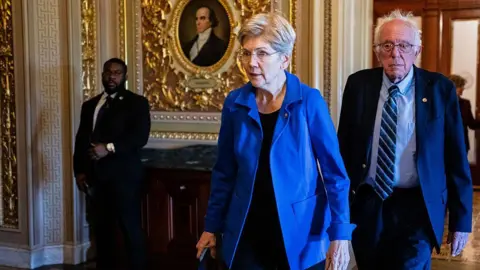
    Senator Josh Hawley, a Republican, and Senator Bernie Sanders, a Democrat, last year introduced a bill to cap credit card interest rates at 10%.

    Bloomberg via Getty Images A woman wearing a blue jacket and a man wearing a suit walk through the US Capitol.Bloomberg via Getty Images

    The proposal has received bipartisan support from the likes of Democrat Elizabeth Warren

    Democratic Senator Elizabeth Warren said in a statement that she spoke with Trump this week and “told him that Congress can pass legislation to cap credit card rates if he will actually fight for it”.

    “If he really wants to get something done, including capping credit card interest rates or lowering housing costs, he would use his leverage and pick up the phone,” Warren said.

    Still, there are hurdles ahead. Getting Congress on board could prove challenging, despite some support on both sides of the aisle.

    House Speaker Mike Johnson this week distanced himself from the rate cap proposal, citing “negative secondary effects” and a pullback in lending as a result. “It’s something that we’ve got to be very deliberate about,” Johnson said at a press conference.

    And banks are poised to keep pushing hard against it.

    “If the Trump administration backs down, I think it would be because of the bank lobbying,” said Shearer, of Vanderbilt.

    “This is their cash cow. They’re not going to let it go easily.”


    Source link

  • AI suspicions surround mysterious singer

    AI suspicions surround mysterious singer


    Mark Savage Music Correspondent

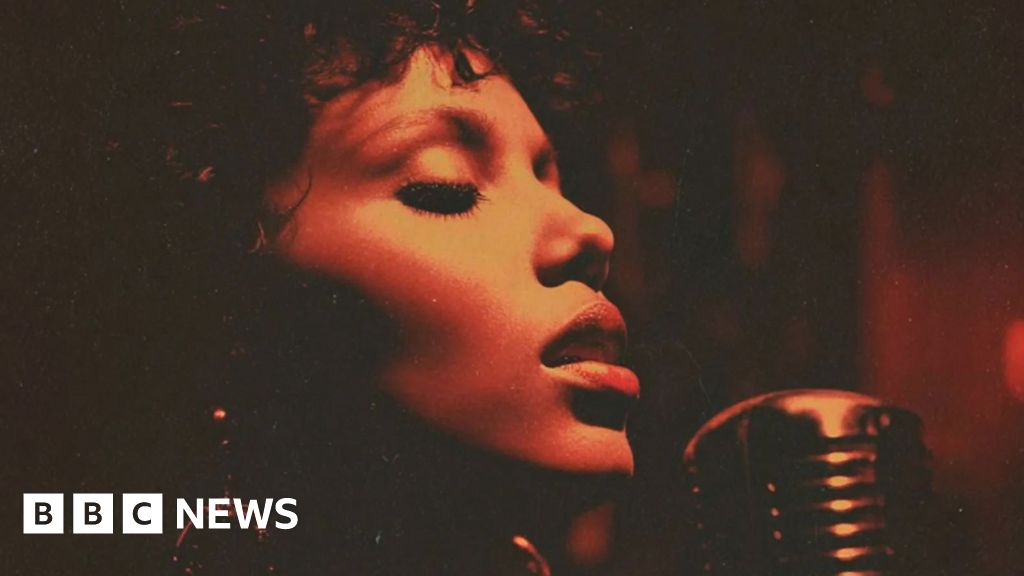
    Sienna Rose Sienna Rose, a woman with dark curly hair seen in a sepia-toned image with eyes closed, wearing large hoop earrings and singing into an old-fashioned microphone Sienna Rose

    Sienna Rose has almost three million monthly listeners on Spotify

    Sienna Rose is having a good month.

    Three of her dusky, jazz-infused soul songs are in Spotify’s Viral Top 50. The most popular, a dreamy ballad called Into the Blue, has been played more than five million times.

    If she continues on this trajectory, Rose could become one of the year’s hottest new stars.

    There’s only one problem: all the signs indicate she’s not real.

    Streaming service Deezer, which has developed tools to tackle AI music, told the BBC that “many of her albums and songs on the platform are detected and flagged” as computer-generated.

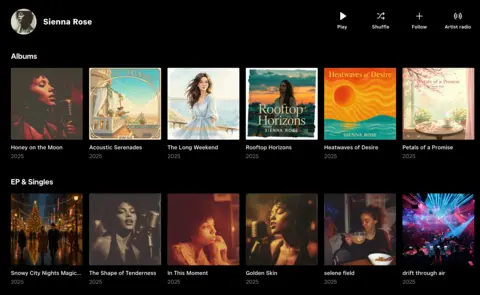
    Look closer and you’ll see the indications of an AI artist. Rose has no social media presence, has never played a gig, has no videos, and has released an improbable number of songs in a short space of time.

    Between 28 September and 5 December, she uploaded at least 45 tracks to streaming services. Even Prince, an artist known for restless creative mania, would have struggled to match that figure.

    Her Instagram account, which is currently deactivated, featured a strangely homogenous series of headshots, all showing the gauzy, unreal lighting that’s characteristic of AI image generators.

    Tidal A screenshot of Sienna Rose's artist page on TidalTidal

    On streaming service Tidal, Rose is also credited with albums of folk and ambient music, all uploaded last year, with different singers pictured in the artwork

    Then there’s the music itself. Songs like Into the Blue and Breathe Again sit neatly next to Norah Jones or Alicia Keys, full of jazzy guitar lines and buttery smooth vocals.

    But many listeners have noted what they have identified as “AI artefacts”.

    Play Under the Rain or Breathe Again and you’ll hear a telltale hiss running throughout the tracks.

    That’s a common trait of music generated on apps like Suno and Udio – partly because of the way they start with white noise and gradually refine it until it resembles music.

    It’s this quirk that enables Deezer to flag AI songs.

    “When the [software] adds all the layers and the instruments, it introduces errors,” explains Gabriel Meseguer-Brocal, a senior research scientist for the streaming company.

    “They’re not perceptual, we cannot listen to them, but they’re easy to spot if you do a few mathematical operations.”

    The errors act like a fingerprint, Meseguer-Brocal says, with a “unique signature” that means it’s possible to detect which piece of software was used to create any piece of music.

    Sienna Rose Sienna Rose in another image with eyes closed and a microphone in front of her, with her dark hair and large hoops and face seen in profile Sienna Rose

    The mystery surrounding the singer poses bigger questions around AI-generated music

    For casual listeners, there are other signs: inconsistent drum patterns, bland lyrics, and a singer who never strays from the melody or lets rip on the final chorus.

    That “generic” sound has been the biggest clue for some of Sienna Rose’s listeners.

    “I was like, ‘I like this’, but there was something that was very ‘uncanny valley’,” said TikTok music critic Elosi57.

    “So I went to look [at her profile] and I was like, ‘This is AI’.”

    Another user posted on X: “Started listening to Olivia Dean (fantastic). Within two days Spotify recommended Sienna Rose, who has a similar, but more generic sound. Took me a few songs to realise she’s AI.”

    Broadcaster Gemma Cairney told BBC Radio 4: “The photographs of her do look a little bit unreal… And having listened to the music, is there just some of the soul in the soul missing?”

    To be fair, many others have fallen for Rose’s songs.

    Among them is pop star Selena Gomez, who used the Rose track Where Your Warmth Begins as the background for an Instagram post about Sunday’s Golden Globes.

    The song was later removed when questions about Rose’s identity spread online, but Gomez’s post took interest in Rose and her identity to a new level.

    And many of the listeners who’d been playing Rose’s music reacted with dismay when they learned she might not exist.

    “Please tell me she’s real,” pined one on Threads.

    “I’m disappointed cuz a couple of her songs came on and the music isn’t BAD,” agreed another on Bluesky. “[But] somebody said once you know then it sounds soulless’ and I agree.”

    AI music ban

    Of course, it’s entirely possible that everyone has got it wrong, and Sienna Rose is a real singer who shuns the limelight. Maybe she’s in witness protection. Perhaps she’s a real singer, stuck in a contractual dispute with her label, and releasing music under a pseudonym.

    If so, I’m sorry. It must be crushing to have your music labelled as soulless “slop”. But that’s indicative of the problem facing the entire music industry right now.

    AI software is becoming so sophisticated that clone artists are competing with genuine musicians.

    In Sweden this week, a chart-topping song was banned from the charts after journalists discovered the artist behind it, Jacub, didn’t exist.

    There are many people – both in tech companies and the business side of the music industry – who want to see AI succeed.

    The costs of launching an act like Sienna Rose are practically zero, but her music is making an estimated £2,000 in royalties per week.

    Compare that to the K-Pop industry, where labels invest an average of $1m (£750,000) per member of a girl or boy group per year, and you can see the attraction.

    Interestingly, several of Rose’s songs appear to be credited to US indie record label Broke – who have a track record in turning viral artists like bbno$ and Ndotz into chart stars.

    If you visit their website, Rose isn’t listed as one of their signings – but British dance act Haven are.

    If that name rings a bell, it’s because they got into trouble late last year for creating a song using an AI clone of Jorja Smith’s voice.

    Their song, Run, was removed from streaming services after record industry bodies issued takedown notices, alleging the track violated copyright – but was re-recorded with human vocals, and entered the UK Top 10 two weeks ago.

    The BBC has contacted Broke to ask about their relationship with Sienna Rose, but has yet to receive a reply.

    The BBC has also contacted another label, Nostalgic Records, which lists Rose on its website.

    Nostalgic Records’ biography claims she is “London-based” and says she is “not just a performer, but a storyteller of the heart”.

    Reuters Raye sings on stage wearing a red dress with a microphone in her hand, with the lead over her shoulder Reuters

    The pop star Raye says fans prefer genuine, heartfelt music over computer-generated emptiness

    Deezer says 34% of the songs uploaded to its streaming service – about 50,000 per day – are AI-generated.

    “Eighteen months ago, it was around 5% or 6%,” says Meseguer-Brocal. “It’s kind of shocking how quickly it’s increasing.”

    Still, Deezer hasn’t gone as far as online music store Bandcamp, which this week announced it was banning all AI-generated music.

    In a statement, Spotify defended the presence of artists like Rose on its playlists.

    “It’s not always possible to draw a simple line between ‘AI’ and ‘non-AI’ music,” a spokesperson said. “Spotify does not create or own any music, and does not promote or penalise tracks created using AI tools.”

    In the meantime, a backlash against AI music is growing.

    Last year, artists including Paul McCartney, Kate Bush, Damon Albarn, the Pet Shop Boys and Annie Lennox released a “silent album” protesting against companies who train their AI models on copyrighted work without permission.

    Speaking at the Ivor Novello Awards in 2024, pop star Raye told me she believed fans would always choose real music over algorithmically-generated filler.

    “There’s no reason to feel a threat,” she said. “I don’t write because I’m trying to be the best writer. I write because I’m trying to tell my story.

    “I’m trying to lift off some weight I’ve been carrying or I’m trying to express myself and feel better.”

    At the same event, Kojey Radical said he wasn’t worried about AI when he couldn’t even trust his washing machine to start at the right time.

    “Why is everyone trying to make me scared of the robots?” he laughed.

    “I’m not scared of the robots. I will win.”


    Source link