Category: Uncategorized

  • How one woman lures foreign recruits to Russia’s front line in Ukraine

    How one woman lures foreign recruits to Russia’s front line in Ukraine


    Nawal Al-Maghafi,Senior international investigations correspondentand

    Sheida Kiran,BBC Eye Investigations

    ‘Do you recognise your passport? Now look what will happen to it’, says unseen woman in a video

    Flames lick around the edges of Omar’s passport. “It’s burning well,” an unseen woman says in Russian in the video.

    Omar, a 26-year-old Syrian construction worker, had been deployed for about nine months on the front line of Russia’s war in Ukraine when the clip arrived on his phone.

    He knew the woman’s voice. It was Polina Alexandrovna Azarnykh, who he says had helped him sign up to fight for Russia, promising lucrative work and Russian citizenship. But now she was angry.

    In a series of voice notes from Ukraine, Omar, speaking under a pseudonym for his safety, describes how he ended up trapped and terrified in the war zone.

    He says Azarnykh had promised that if he paid her $3,000 (£2,227), she would ensure he stayed in a non-combat role. But, he says, he was sent into battle with just 10 days of training, so he refused to pay and she eventually responded by burning his passport.

    He says he tried refusing to take part in a mission, but his commanders threatened to kill or jail him.

    “We were tricked… this woman is a con artist and a liar,” says Omar.

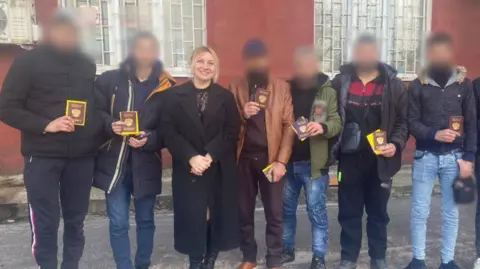
    Telegram Polina Azarnykh standing smiling in a long black coat and smart black boots in a line of men wearing jeans, casual shoes and jackets. Their faces have been blurred to conceal their identities. They are holding up Russian travel documents.Telegram

    Polina Azarnykh frequently posts images of herself with new recruits, including the Syrian group Omar travelled with

    A BBC Eye investigation has followed how Azarnykh, a 40-year-old former teacher, uses a Telegram channel to lure young men, often from poor countries, into joining Russia’s military.

    The former teacher’s smiling video messages and upbeat posts offer “one-year contracts” for “military service”.

    The BBC World Service has identified nearly 500 cases where she has provided documents, referred to as invitations, which allow the recipient to enter Russia to join the military. These have been for men – mainly from Syria, Egypt and Yemen – who appear to have sent her their passport details in order to enlist.

    But recruits and their relatives have told the BBC that she misled men into believing they would avoid combat, failed to make clear they could not leave after a year and threatened those who challenged her. When contacted by the BBC, she rejected the allegations.

    Twelve families told us of young men they say were recruited by her who are now dead or missing.

    Telegram Polina Azarnykh looking straight at the camera while seated in a vehicle. She has long blonde hair and is wearing large sunglasses and a black top and is smiling.Telegram

    Azarnykh frequently posts videos of herself encouraging people to serve in the Russian military

    Domestically, Russia has expanded conscription, recruited prisoners and offered increasingly generous sign-up bonuses to maintain its operation in Ukraine, despite substantial losses.

    More than one million of its soldiers have been killed or wounded since the full-scale invasion in 2022, with 25,000 killed in the month of December 2025 alone, according to Nato.

    Research by BBC News Russian, based on obituaries and other publicly available death records, suggests Russian troop losses in Ukraine rose faster than ever last year.

    It is difficult to determine how many foreigners have joined Russia’s military. BBC Russian’s analysis – which also looked at the number of foreigners killed and injured – suggests at least 20,000 may have signed up, including from countries such as Cuba, Nepal and North Korea.

    Ukraine has suffered significant troop losses too, and has also taken foreign fighters into its ranks.

    ‘Bodies everywhere’

    Omar’s first contact with Azarnykh was when he was stranded with barely any money at a Moscow airport in March 2024, together with 14 other Syrians.

    Jobs in Syria were scarce and low paid. Omar says a recruiter there had offered the men what they understood to be civilian work guarding oil facilities in Russia. They flew to Moscow, only to learn they had been scammed.

    Searching online for options, Omar says, one of the group found Azarnykh’s channel and messaged her.

    She met them at the airport within hours, and took them by train to a recruitment centre in Bryansk, western Russia, he says.

    There, he says, she offered them one-year contracts with the Russian army, with a monthly salary equivalent to about $2,500 (£1,856), and a sign-up payment of $5,000 (£3,711) – sums they could only dream of in Syria.

    Omar says the contracts were in Russian, which none of the men understood, and she took their passports, promising to arrange Russian citizenship. She also promised they could avoid combat roles if they paid her $3,000 (£2,227) each from their sign-up payments, he says.
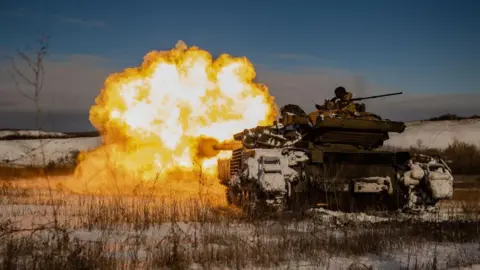
    Roman Chop/Global Images Ukraine via Getty Images A large blast of white and orange flame coming from a Ukrainian tank, as it fires towards Russian positions in a snowy landscape in the Donetsk region in January 2024Roman Chop/Global Images Ukraine via Getty Images

    Omar described fierce fighting and frequent explosions on the front line

    But, he says, within about a month, he was on the front line with, he says, just 10 days’ training and no military experience.

    “We’re 100% going to die here,” he says in one of his voice notes, sent to the BBC investigative team.

    “A lot of injuries, a lot of explosions, a lot of shelling. If you don’t die from the explosion, you’ll die from the debris landing on you,” he says in May 2024.

    “Dead bodies everywhere… I’ve stepped on dead bodies, God forgive me,” he reports the following month.

    “If someone dies, I’ve seen it with my own eyes, they put him in a rubbish bag and throw him next to a tree,” he adds.

    After nearly a year, he had discovered what he says Azarnykh had failed to explain – a 2022 Russian decree essentially allows the military to extend soldiers’ contracts automatically until the war ends.

    “If they renew the contract, I’m screwed – oh God,” he says.

    His contract was continued.

    ‘Recruited from university’

    Azarnykh’s Telegram channel has 21,000 subscribers. Her posts have often told readers wanting to apply to join the Russian military to send her a scan of their passport. She has then posted invitation documents, sometimes with a list of names of the men they are for.

    The BBC has identified more than 490 such invitations that she has sent over the past year to men from countries including Yemen, Syria, Egypt, Morocco, Iraq, Ivory Coast and Nigeria.

    Her posts have mentioned recruitment for an “elite international battalion” and made it clear that people in Russia illegally – including those whose visas have expired – are eligible.

    We have spoken to eight foreign fighters including Omar who were recruited by her, as well as the families of the 12 men who are missing or dead.

    Many felt Azarnykh had misled or exploited recruits. They told us the men knew they were joining the military, but did not expect to serve on the front line. Several, like Omar, felt they had inadequate training or thought they would be able to leave after a year.

    Watch: ‘Nothing happens for free’ – says Azarnykh in a video in October 2024

    In Egypt, Yousef – whose name we have also changed – told the BBC his older brother Mohammed, began a university course in Yekaterinburg in Russia in 2022.

    But he struggled to pay his fees, Yousef says, and told his family a Russian woman named Polina had begun offering him help online, including work with the Russian military that he believed would allow him to continue his studies.

    “She promised him housing and citizenship… monthly expenses,” he says. “Suddenly he was sent to Ukraine. He found himself fighting,” says Yousef.

    His last call was on 24 January 2024, Yousef says. About a year later, Yousef says a message arrived on Telegram from a Russian number, containing images of Mohammed’s body. The family eventually learned he had been killed almost a year earlier.

    ‘Some lost their minds’

    Azarnykh became “one of the most important recruiters” for Russia’s army, says Habib, another Syrian who has served in Russia’s military. He was willing to be filmed but spoke under a pseudonym for fear of repercussions.

    Habib says he and Azarnykh “worked together for around three years on visa invitations to Russia”. He gave no further details and we have not been able to confirm his role in the process. An image from social media in 2024 shows him alongside her.

    Azarnykh, who is from Russia’s south-western Voronezh region, ran a Facebook group helping Arab students come to Moscow to study, before starting her Telegram channel in 2024.
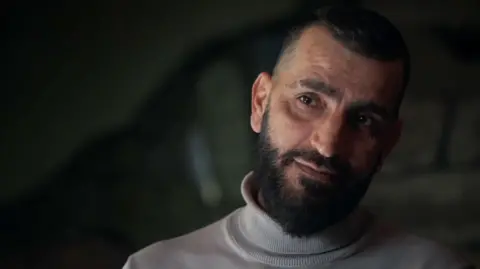
    Habib in a white roll-neck top speaking to the camera against a dark background. He has a dark beard and moustache.

    Habib told the BBC: “Polina would take the men, knowing that they were going to die”

    Habib says most foreign recruits arrived expecting roles securing facilities or standing at checkpoints. “The Arabs who are coming are dying immediately. Some people lost their minds – it’s hard to see dead bodies,” he says.

    Habib says he met Omar and the group of Syrians at a military training site. “She had promised them citizenship, good salaries and that they’d be safe,” Habib says. “But once you sign a contract here, there’s no way you can leave.”

    “None of them knew how to use a weapon. Even if they were shot at, they would choose not to shoot back… if you don’t shoot, you will be killed,” he says. “Polina would take the men, knowing that they were going to die.”

    He says she “received $300 (£223) from the army for every person she recruited”. The BBC could not confirm this, although other recruits also told us they believed she received payment.

    ‘Nothing happens for free’

    Azarnykh’s posts from mid-2024 begin to note that recruits will be “participating in hostilities” and mention foreign fighters who have died in combat.

    “You all understood well that you were going to war,” she says in one video in October 2024. “You thought that you could get a Russian passport, do nothing and live in a five-star hotel?… Nothing happens for free.”

    In another case, in 2024, the BBC has heard a voice message sent by Azarnykh to a mother whose son was serving in the military. Azarnykh says the woman has “published something horrible about the Russian army”. Using expletives, she threatens the son’s life and warns the woman: “I’ll find you and all your children.”

    The BBC made multiple attempts to contact Azarnykh. Initially she said she would do an interview with us if we travelled to Russia, but the BBC declined for safety reasons. Later, when asked in a voice call about claims that recruits were promised non-combat roles, she hung up. In voice notes sent afterwards, she said our work was “not professional” and warned of potential defamation proceedings. She also said: “Our respected Arabs can stick their accusations up their arses.”

    The BBC contacted the Russian Ministry of Foreign Affairs and Ministry of Defence for comment, but received no response.

    Previously, in March 2022 President Putin backed the recruitment of men from the Middle East, insisting they were ideologically, not financially, driven: “There are people who want to come voluntarily, especially not for money, and provide assistance to people.”
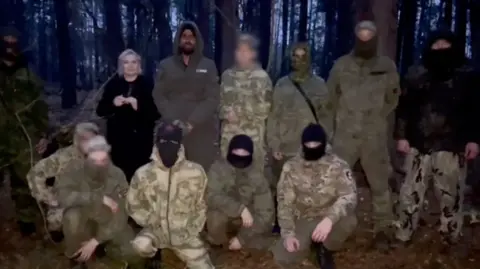
    Telegram Azarnykh in a dark coat standing next to nine people in military clothing, with dense forest in the background. Next to her is Habib, who is wearing a khaki-coloured hood but his face is visible. The other people's faces are covered with black balaclavas or scarves, except for one whose face has been blurred. Telegram

    An image shared on Azarnykh’s Telegram channel in January 2024 shows Habib standing next to her

    ‘Cash incentives’

    Journalists and researchers following the issue say individuals like Azarnykh are part of a web of informal recruiters.

    The BBC has found two other Telegram accounts in Arabic making similar offers for joining Russia’s military. One includes posts showing invitation documents and lists of names, the other has advertised large sign-up payments for joining an “elite battalion”.

    In September, Kenyan police said they had broken up a suspected “trafficking syndicate” that they said was luring Kenyans with job offers, but sending them to fight in Ukraine.

    Kateryna Stepanenko, a research fellow at the Institute for the Study of War, told the BBC some municipal and regional authorities in Russia have been offering cash incentives of up to $4,000 (£2,970) to individuals such as HR professionals and local residents who recruit Russians or foreigners into military service.

    She says the Kremlin initially used larger entities such as the Wagner private military group and prison system for recruitment, but since 2024 has also been “leveraging locals and smaller companies”.

    This “suggests to me that those earlier versions of recruitment are no longer generating the same number of recruits”, she adds.

    Meanwhile, Habib is now back in Syria after, he says, having bribed several commanders to terminate his contract. Omar eventually received Russian citizenship and has also managed to return to Syria. Two of the Syrians he served with are dead, according to their families.

    Azarnykh “sees us as numbers or money – she doesn’t see us as people”, he says. “We won’t forgive her for what she did to us.”

    Additional reporting by Olga Ivshina, Gehad Abbas, Ali Ibrahim, Victoria Arakelyan, and Rayan Maarouf

    Source link

  • January 2026 Microsoft Patch Tuesday Summary

    January 2026 Microsoft Patch Tuesday Summary


    Azure Connected Machine Agent Elevation of Privilege Vulnerability


    CVE-2026-21224

    No

    No

    Important

    7.8

    6.8


    Azure Core shared client library for Python Remote Code Execution Vulnerability


    CVE-2026-21226

    No

    No

    Important

    7.5

    6.5


    Capability Access Management Service (camsvc) Elevation of Privilege Vulnerability


    CVE-2026-20815

    No

    No

    Important

    7.0

    6.1


    CVE-2026-20830

    No

    No

    Important

    7.0

    6.1


    CVE-2026-21221

    No

    No

    Important

    7.0

    6.1


    Capability Access Management Service (camsvc) Information Disclosure Vulnerability


    CVE-2026-20835

    No

    No

    Important

    5.5

    4.8


    CVE-2026-20851

    No

    No

    Important

    6.2

    5.4


    Chromium: CVE-2026-0628 Insufficient policy enforcement in WebView tag


    CVE-2026-0628

    No

    No


    Desktop Window Manager Information Disclosure Vulnerability


    CVE-2026-20805

    No

    Yes

    Important

    5.5

    4.8


    Desktop Windows Manager Elevation of Privilege Vulnerability


    CVE-2026-20871

    No

    No

    Important

    7.8

    6.8


    DirectX Graphics Kernel Elevation of Privilege Vulnerability


    CVE-2026-20814

    No

    No

    Important

    7.0

    6.1


    CVE-2026-20836

    No

    No

    Important

    7.0

    6.1


    Dynamic Root of Trust for Measurement (DRTM) Information Disclosure Vulnerability


    CVE-2026-20962

    No

    No

    Important

    4.4

    3.9


    Host Process for Windows Tasks Elevation of Privilege Vulnerability


    CVE-2026-20941

    No

    No

    Important

    7.8

    6.8


    Inbox COM Objects (Global Memory) Remote Code Execution Vulnerability


    CVE-2026-21219

    No

    No

    Important

    7.0

    6.1


    LDAPTampering Vulnerability


    CVE-2026-20812

    No

    No

    Important

    6.5

    5.7


    Microsoft DWM Core Library Elevation of Privilege Vulnerability


    CVE-2026-20842

    No

    No

    Important

    7.0

    6.1


    Microsoft Excel Remote Code Execution Vulnerability


    CVE-2026-20946

    No

    No

    Important

    7.8

    6.8


    CVE-2026-20955

    No

    No

    Critical

    7.8

    6.8


    CVE-2026-20956

    No

    No

    Important

    7.8

    6.8


    CVE-2026-20950

    No

    No

    Important

    7.8

    6.8


    CVE-2026-20957

    No

    No

    Critical

    7.8

    6.8


    Microsoft Excel Security Feature Bypass Vulnerability


    CVE-2026-20949

    No

    No

    Important

    7.8

    6.8


    Microsoft Office Click-To-Run Elevation of Privilege Vulnerability


    CVE-2026-20943

    No

    No

    Important

    7.0

    6.1


    Microsoft Office Remote Code Execution Vulnerability


    CVE-2026-20953

    No

    No

    Critical

    8.4

    7.3


    CVE-2026-20952

    No

    No

    Critical

    8.4

    7.3


    Microsoft SQL Server Elevation of Privilege Vulnerability


    CVE-2026-20803

    No

    No

    Important

    7.2

    6.3


    Microsoft SharePoint Information Disclosure Vulnerability


    CVE-2026-20958

    No

    No

    Important

    5.4

    4.7


    Microsoft SharePoint Remote Code Execution Vulnerability


    CVE-2026-20963

    No

    No

    Important

    8.8

    7.7


    Microsoft SharePoint Server Remote Code Execution Vulnerability


    CVE-2026-20951

    No

    No

    Important

    7.8

    6.8


    CVE-2026-20947

    No

    No

    Important

    8.8

    7.7


    Microsoft SharePoint Server Spoofing Vulnerability


    CVE-2026-20959

    No

    No

    Important

    4.6

    4.0


    Microsoft Windows File Explorer Spoofing Vulnerability


    CVE-2026-20847

    No

    No

    Important

    6.5

    5.7


    Microsoft Word Remote Code Execution Vulnerability


    CVE-2026-20944

    No

    No

    Critical

    8.4

    7.3


    CVE-2026-20948

    No

    No

    Important

    7.8

    6.8


    NTLM Hash Disclosure Spoofing Vulnerability


    CVE-2026-20925

    No

    No

    Important

    6.5

    5.7


    CVE-2026-20872

    No

    No

    Important

    6.5

    5.7


    Remote Procedure Call Information Disclosure Vulnerability


    CVE-2026-20821

    No

    No

    Important

    6.2

    5.4


    Secure Boot Certificate Expiration Security Feature Bypass Vulnerability


    CVE-2026-21265

    Yes

    No

    Important

    6.4

    5.6


    TPM Trustlet Information Disclosure Vulnerability


    CVE-2026-20829

    No

    No

    Important

    5.5

    4.8


    Tablet Windows User Interface (TWINUI) Subsystem Information Disclosure Vulnerability


    CVE-2026-20826

    No

    No

    Important

    7.8

    6.8


    CVE-2026-20827

    No

    No

    Important

    5.5

    4.8


    Win32k Elevation of Privilege Vulnerability


    CVE-2026-20811

    No

    No

    Important

    7.8

    6.8


    CVE-2026-20920

    No

    No

    Important

    7.8

    6.8


    CVE-2026-20863

    No

    No

    Important

    7.0

    6.1


    Windows Admin Center Elevation of Privilege Vulnerability


    CVE-2026-20965

    No

    No

    Important

    7.5

    6.5


    Windows Ancillary Function Driver for WinSock Elevation of Privilege Vulnerability


    CVE-2026-20810

    No

    No

    Important

    7.8

    6.8


    CVE-2026-20831

    No

    No

    Important

    7.8

    6.8


    CVE-2026-20860

    No

    No

    Important

    7.8

    6.8


    Windows Client-Side Caching (CSC) Service Information Disclosure Vulnerability


    CVE-2026-20839

    No

    No

    Important

    5.5

    4.8


    Windows Clipboard Server Elevation of Privilege Vulnerability


    CVE-2026-20844

    No

    No

    Important

    7.4

    6.4


    Windows Cloud Files Mini Filter Driver Elevation of Privilege Vulnerability


    CVE-2026-20857

    No

    No

    Important

    7.8

    6.8


    CVE-2026-20940

    No

    No

    Important

    7.8

    6.8


    Windows Common Log File System Driver Elevation of Privilege Vulnerability


    CVE-2026-20820

    No

    No

    Important

    7.8

    6.8


    Windows Connected Devices Platform Service Elevation of Privilege Vulnerability


    CVE-2026-20864

    No

    No

    Important

    7.8

    6.8


    Windows Deployment Services Remote Code Execution Vulnerability


    CVE-2026-0386

    No

    No

    Important

    7.5

    6.5


    Windows Error Reporting Service Elevation of Privilege Vulnerability


    CVE-2026-20817

    No

    No

    Important

    7.8

    6.8


    Windows File Explorer Elevation of Privilege Vulnerability


    CVE-2026-20808

    No

    No

    Important

    7.0

    6.1


    Windows File Explorer Information Disclosure Vulnerability


    CVE-2026-20823

    No

    No

    Important

    5.5

    4.8


    CVE-2026-20932

    No

    No

    Important

    5.5

    4.8


    CVE-2026-20937

    No

    No

    Important

    5.5

    4.8


    CVE-2026-20939

    No

    No

    Important

    5.5

    4.8


    Windows Graphics Component Elevation of Privilege Vulnerability


    CVE-2026-20822

    No

    No

    Critical

    7.8

    6.8


    Windows HTTP.sys Elevation of Privilege Vulnerability


    CVE-2026-20929

    No

    No

    Important

    7.5

    6.5


    Windows Hello Tampering Vulnerability


    CVE-2026-20804

    No

    No

    Important

    7.7

    6.7


    CVE-2026-20852

    No

    No

    Important

    7.7

    6.7


    Windows Hyper-V Information Disclosure Vulnerability


    CVE-2026-20825

    No

    No

    Important

    4.4

    3.9


    Windows Installer Elevation of Privilege Vulnerability


    CVE-2026-20816

    No

    No

    Important

    7.8

    6.8


    Windows Kerberos Elevation of Privilege Vulnerability


    CVE-2026-20849

    No

    No

    Important

    7.5

    6.5


    Windows Kerberos Information Disclosure Vulnerability


    CVE-2026-20833

    No

    No

    Important

    5.5

    4.8


    Windows Kernel Information Disclosure Vulnerability


    CVE-2026-20818

    No

    No

    Important

    6.2

    5.4


    CVE-2026-20838

    No

    No

    Important

    5.5

    4.8


    Windows Kernel Memory Elevation of Privilege Vulnerability


    CVE-2026-20809

    No

    No

    Important

    7.8

    6.8


    Windows Kernel-Mode Driver Elevation of Privilege Vulnerability


    CVE-2026-20859

    No

    No

    Important

    7.8

    6.8


    Windows Local Security Authority Subsystem Service (LSASS) Denial of Service Vulnerability


    CVE-2026-20875

    No

    No

    Important

    7.5

    6.5


    Windows Local Security Authority Subsystem Service (LSASS) Remote Code Execution Vulnerability


    CVE-2026-20854

    No

    No

    Critical

    7.5

    6.5


    Windows Local Session Manager (LSM) Elevation of Privilege Vulnerability


    CVE-2026-20869

    No

    No

    Important

    7.0

    6.1


    Windows Management Services Elevation of Privilege Vulnerability


    CVE-2026-20858

    No

    No

    Important

    7.8

    6.9


    CVE-2026-20865

    No

    No

    Important

    7.8

    6.8


    CVE-2026-20877

    No

    No

    Important

    7.8

    6.8


    CVE-2026-20918

    No

    No

    Important

    7.8

    6.8


    CVE-2026-20923

    No

    No

    Important

    7.8

    6.8


    CVE-2026-20924

    No

    No

    Important

    7.8

    6.8


    CVE-2026-20861

    No

    No

    Important

    7.8

    6.8


    CVE-2026-20866

    No

    No

    Important

    7.8

    6.8


    CVE-2026-20867

    No

    No

    Important

    7.8

    6.8


    CVE-2026-20873

    No

    No

    Important

    7.8

    6.8


    CVE-2026-20874

    No

    No

    Important

    7.8

    6.8


    Windows Management Services Information Disclosure Vulnerability


    CVE-2026-20862

    No

    No

    Important

    5.5

    4.8


    Windows Media Remote Code Execution Vulnerability


    CVE-2026-20837

    No

    No

    Important

    7.8

    6.8


    Windows NDIS Information Disclosure Vulnerability


    CVE-2026-20936

    No

    No

    Important

    4.3

    3.8


    Windows NTFS Remote Code Execution Vulnerability


    CVE-2026-20840

    No

    No

    Important

    7.8

    6.8


    CVE-2026-20922

    No

    No

    Important

    7.8

    6.8


    Windows Remote Assistance Security Feature Bypass Vulnerability


    CVE-2026-20824

    No

    No

    Important

    5.5

    4.8


    Windows Remote Procedure Call Interface Definition Language (IDL) Elevation of Privilege Vulnerability


    CVE-2026-20832

    No

    No

    Important

    7.8

    6.8


    Windows Routing and Remote Access Service (RRAS) Elevation of Privilege Vulnerability


    CVE-2026-20843

    No

    No

    Important

    7.8

    6.8


    Windows Routing and Remote Access Service (RRAS) Remote Code Execution Vulnerability


    CVE-2026-20868

    No

    No

    Important

    8.8

    7.7


    Windows SMB Server Denial of Service Vulnerability


    CVE-2026-20927

    No

    No

    Important

    5.3

    4.6


    Windows SMB Server Elevation of Privilege Vulnerability


    CVE-2026-20919

    No

    No

    Important

    7.5

    6.5


    CVE-2026-20921

    No

    No

    Important

    7.5

    6.5


    CVE-2026-20926

    No

    No

    Important

    7.5

    6.5


    CVE-2026-20934

    No

    No

    Important

    7.5

    6.5


    CVE-2026-20848

    No

    No

    Important

    7.5

    6.5


    Windows Server Update Service (WSUS) Remote Code Execution Vulnerability


    CVE-2026-20856

    No

    No

    Important

    8.1

    7.1


    Windows Spoofing Vulnerability


    CVE-2026-20834

    No

    No

    Important

    4.6

    4.0


    Windows Telephony Service Elevation of Privilege Vulnerability


    CVE-2026-20931

    No

    No

    Important

    8.0

    7.0


    Windows Virtualization-Based Security (VBS) Enclave Elevation of Privilege Vulnerability


    CVE-2026-20876

    No

    No

    Critical

    6.7

    5.8


    CVE-2026-20938

    No

    No

    Important

    7.8

    6.8


    Windows Virtualization-Based Security (VBS) Information Disclosure Vulnerability


    CVE-2026-20819

    No

    No

    Important

    5.5

    4.8


    CVE-2026-20935

    No

    No

    Important

    6.2

    5.4


    Windows WalletService Elevation of Privilege Vulnerability


    CVE-2026-20853

    No

    No

    Important

    7.4

    6.4


    Windows Win32 Kernel Subsystem Elevation of Privilege Vulnerability


    CVE-2026-20870

    No

    No

    Important

    7.8

    6.8


    Windows rndismp6.sys Information Disclosure Vulnerability


    CVE-2026-20828

    No

    No

    Important

    4.6

    4.0


    Source link

  • Yoweri Museveni and Bobi Wine battle for the votes of a young electorate

    Yoweri Museveni and Bobi Wine battle for the votes of a young electorate


    Sammy AwamiBBC Africa, Kampala

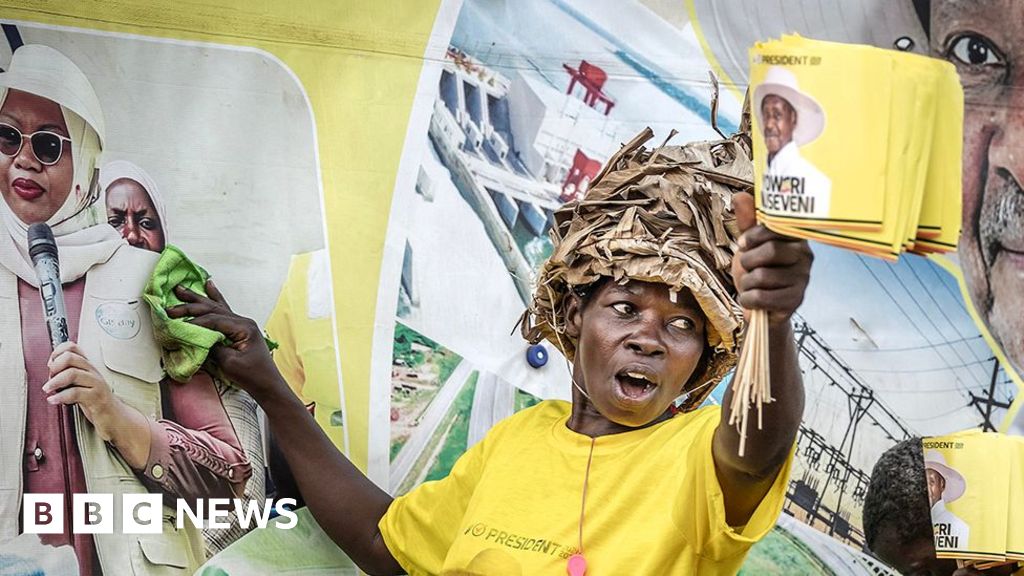
    AFP via Getty Images A supporter of Yoweri Museveni in a yellow campaign T-shirt holds flags with Museveni's face on them and is putting up posters with the other.AFP via Getty Images

    Backers of Yoweri Museveni are hoping for a seventh successive election victory

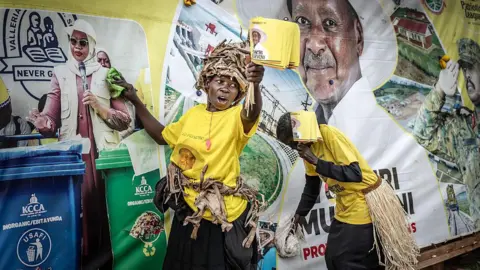
    Whether decked in the bright yellow of the ruling party or donning the revolutionary red of the main opposition, young people are dominant among the foot soldiers of Uganda’s election campaign.

    In crowded public grounds and roadside gatherings, young supporters belting out party songs and filming events on their phones outnumber all others.

    Their opinions may be diametrically opposed but they are held with equivalent zeal.

    “Bobi Wine is a good guy. If he gets to power, I believe he will take the country to a certain point in terms of development. We just need to trust him and allow him to bring out his potential,” Steven Bagasha Byaruhanga tells the BBC at a packed opposition rally in a village in south-western Uganda.

    Although Ndyasima Patrick supports the status quo, he was also at the rally, presumably to hear what Bobi Wine has to say. But Patrick wasn’t swayed.

    “I support President Yoweri Museveni in this election because he has kept us alive all these years. He may have been in power for a long time but we haven’t got the right one yet. Bobi Wine seems qualified but this is not his time yet, maybe 2031,” he says.

    Thursday’s presidential election is a rematch of the 2021 contest with 81-year-old Museveni, in power for four decades, being challenged once again by the relatively youthful former pop star, 43-year-old Bobi Wine, whose real name is Robert Kyagulanyi.

    The campaign’s high energy is a reminder that in a country where the median age is just 17, politics is overwhelmingly fuelled by the young.

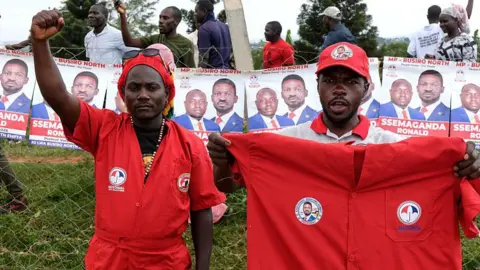
    Getty Images Two supporters of Bobbi Wine, one in a red boiler suit, the other holding one up for the cameral pose for the camera. The one on the left, in the boiler suit, holds his fist in the air.Getty Images

    Bobi Wine’s supporters are yearning for a change at the top

    Forty years ago, Ronald Reagan and Margaret Thatcher were in their pomp, Diego Maradona lifted the World Cup for Argentina, Whitney Houston had a smash hit with The Greatest Love of All and rebel leader Yoweri Museveni seized power in Uganda.

    For the vast majority of Ugandans, those other figures only live on in the memories of their parents but Museveni remains the only president they have known.

    The ruling National Resistance Movement (NRM) is campaigning under the slogan “Protecting the Gains”, urging continuity and stability.

    “Look at Uganda – 40 years ago, we were among the biggest exporters of refugees in all neighbouring countries surrounding us. Right now, Uganda is the biggest host of refugees in Africa,” NRM spokesperson Emmanuel Lumala Dombo tells the BBC, as he lists the gains his party is seeking to defend.

    Bobi Wine’s National Unity Platform (NUP), on the other hand, is mobilising the electorate with the slogan “Protest Vote”, a message that emphasises urgency and generational change.

    “This election is about liberation, it’s about freedom, it’s about people asserting their voices,” says Bobi Wine, who has become the most prominent political conduit for youth frustration.

    Both appeals are aimed at the same young audience, but they imagine Uganda’s future in fundamentally different ways.

    Museveni’s search for a seventh successive election victory underscores the paradox.

    Uganda is one of the youngest countries in the world, but its political system is dominated by leaders who came to power decades ago and have never left.

    This tension is not unique to Uganda.

    BBC election graphics
    BBC election graphics

    Across much of Africa, youthful societies remain governed by ageing elites who have successfully outmanoeuvred constitutional limits and political pressure to step aside.

    Uganda’s youth bulge is both its greatest asset and its most volatile risk.

    Each year, hundreds of thousands of young people enter the labour market, but the economy struggles to absorb them.

    Genuine opportunities to change things, meanwhile, remain tightly controlled.

    Protest is often met with arrests, intimidation and violence – a response that has only deepened anger rather than suppressed it.

    Across the region, young people are no longer waiting quietly.

    In neighbouring Kenya, youth-led protests over governance and economic hardship have shaken the political establishment.

    In Tanzania, long regarded as politically subdued, new forms of activism are emerging and protests over last year’s elections left many dead.

    Mozambique has experienced violent unrest fuelled by unemployment and inequality.

    And in Madagascar, the military took over last year after youth-led protests caused the president to flee.

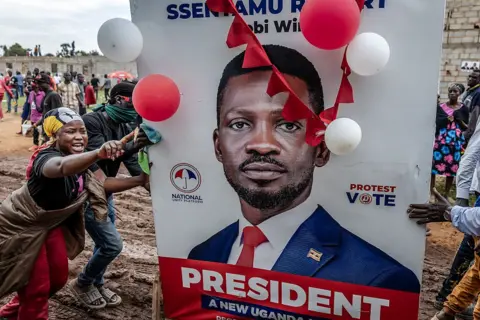
    AFP via Getty Images A large poster of Bobi Wine draped in red and white balloons dominates the picture. On the left of the image a woman is shouting and waving her finger.AFP via Getty Images

    Bobi Wine is campaigning under the slogan “Protest Vote”

    These developments are being closely watched in Uganda, both by young activists seeking inspiration, and by a government determined to prevent similar unrest.

    Against this backdrop, many observers see Thursday’s election less as a genuine search for public legitimacy and more as a managed security operation aimed at containing dissent.

    Fergus Kell, research fellow with the London-based Chatham House think tank has written about a “heavily militarised” politics where the NRM has used “state machinery to protect its own authority by suppressing alternative centres of power”.

    Museveni is widely expected to win. Uganda’s electoral history, with observers frequently criticising how free and fair the polls actually were, suggests that a different outcome is unlikely.

    Last week, the UN’s human rights office said the elections would “take place in an environment marked by widespread repression and intimidation against the political opposition, human rights defenders, journalists and those with dissenting views”.

    Netherlands-based academic Prof Kristof Titeca says the “rituals of democratic competition” are on show but the “outcome is predetermined”.

    Many contend that this year’s vote has seen less electoral violence than the last one when at least 54 people died.

    One reason may be that the 2021 election was held amid the Covid-19 pandemic, when the authorities here enforced restrictions more strictly.

    Beyond the two leading camps, several smaller opposition parties are also contesting the election, though with far less visibility and organisational reach.

    Long-established parties such as the Forum for Democratic Change (FDC) and the Democratic Party (DP) continue to field presidential candidates and parliamentary hopefuls, drawing on older support bases, particularly among urban professionals and sections of the middle class.

    But years of internal divisions have left them struggling to compete, and though unlikely to alter the outcome of the presidential race, these parties continue to shape local contests and parliamentary dynamics.

    For many younger voters, however, these traditional opposition parties are seen as part of an earlier political era, unable to channel the urgency and confrontational feeling that now defines youth-led activism.

    Beyond the predictable result, the January election highlights a more fundamental question: What happens after Museveni?

    The tension running through the campaign betrays a regime unsettled by the prospect of life after an octogenarian president.

    “Only a fool or a snake-oil salesman would claim to have a single definitive answer. Many outcomes are possible,” wrote one of Uganda’s most seasoned journalists, Charles Onyango-Obbo, three years ago, when considering the post-Museveni era.

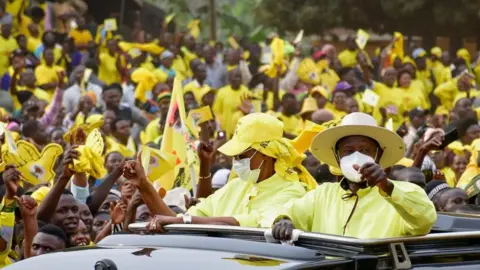
    Reuters Yoweri Museveni in the right of the foreground campaigns from an open-roofed vehicle. Wearing a hat and a face mask, he is raising his arm to the crowds. Behind him,  supporters, out of focus, are wearing yellow.Reuters

    Museveni is emphasising the need for continuity and stability

    Speculation about Museveni’s retirement plans has persisted for 25 years.

    “Ever since 2001, we’ve been having transitional elections. But every hint of departure has been followed by constitutional amendments including the removal of presidential term limits and age limits – reforms that have enabled him to remain in office indefinitely,” says political analyst Monday Akol Amazima.

    More recently, the clearest indications of an impending shift have surfaced inside the centres of power themselves, particularly within the armed forces.

    At the heart of this is Gen Muhoozi Kainerugaba, Museveni’s son, whose growing prominence has recast long-standing questions about succession into more immediate and tangible ones.

    His swift accumulation of authority, coupled with an increasingly public profile, has made the prospect of a hereditary transfer of power a central feature of political debate.

    After taking command of the land forces in 2021, Gen Kainerugaba’s rise accelerated rapidly.

    By the middle of the decade, he was overseeing the entire military, even as he cultivated a national following beyond the barracks.

    In 2022, he traversed the country with a series of highly choreographed “birthday” parties for himself that doubled as political rallies, before unveiling the Patriotic League of Uganda party, an organisation widely interpreted as a testing ground for his future political ambitions.

    Despite speculation that he might run for the presidency, he later declared allegiance to his father’s re-election bid. However, his messaging continues to position him as a leader-in-waiting.

    The shift became more pronounced in March 2024, when Gen Kainerugaba initiated sweeping changes within the senior ranks of the military. Such decisions had historically been the preserve of the presidency, not an active service chief.

    By moving to reorder the command structure and improving retirement benefits, he signalled both an expansion of his authority and an effort to secure it, neutralising potential resistance while embedding loyalists in strategic roles across the security apparatus.

    Yet NRM spokesperson Dombo downplays suggestions that Museveni is grooming his son as an heir.

    He insists the party has clear internal processes for leadership succession, adding that if Gen Kainerugaba were to express interest in a political position through the NRM, he would be required to follow those established channels.

    “Whether Gen Muhoozi would want to exploit his advantage as a military leader, he should also know that there are other things he must still prove, so that the combination of them can portray him as a leader he may choose to be,” Dombo says.

    Reuters A close-up of a stack of ballot boxes sealed with plastic ties. Stickers for the electoral commission can be seen on them.Reuters

    Ballot boxes are being sent round the country in preparation for Thursday’s vote

    Bobi Wine, for his part, remains sceptical that Museveni is preparing to step aside.

    He draws parallels with Zimbabwe’s former President Robert Mugabe, who clung to power into his 90s before being removed by the military.

    “Just like Mugabe, and all these other dictators. He will not step down, I can guarantee you. Because he believes this country belongs to him and his family,” the opposition leader argues.

    These days, the memory of Museveni’s rise to power and challenge to dictator Idi Amin has little emotional pull.

    Against that backdrop, the election has taken on a significance that extends well beyond individual candidates.

    It has become a referendum on whether to preserve an established order rooted in historical achievement and or respond to a younger generation’s insistence on inclusion, fairness and meaningful participation in public life.

    What is unmistakable is that Uganda’s youth are no longer passive observers.

    You may also be interested in:
    Getty Images/BBC A woman looking at her mobile phone and the graphic BBC News AfricaGetty Images/BBC


    Source link