Category: Uncategorized

  • Niger revokes licences of tanker drivers who refuse to travel

    Niger revokes licences of tanker drivers who refuse to travel


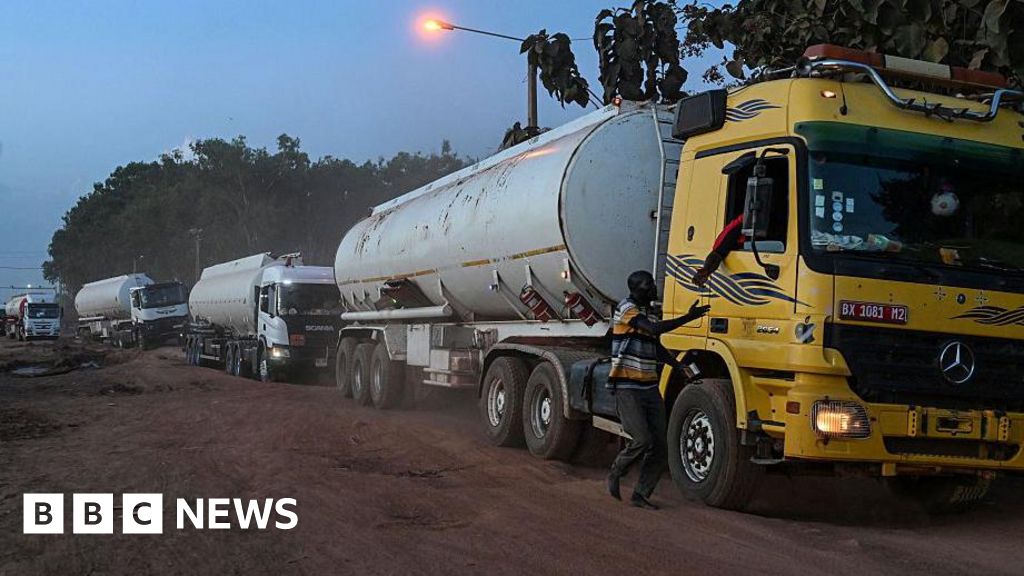
    Niger has revoked the licences of dozens of transport operators and drivers for refusing to deliver fuel to neighbouring Mali where they face possible attacks by jihadists.

    An al-Qaeda affiliate imposed a fuel blockade on Mali in September and began attacking petrol tankers on major highways.

    The landlocked country depends on fuel imports and in July had signed a deal with Niger to supply 85 million litres of fuel over six months to its vast, northern desert region, where various militant groups operate.

    Niger is an oil-producing country and a major ally of Mali – both run by military juntas which face jihadist violence.

    The fuel convoys from Niger making the journey crossing a route of 1,400km (870 miles) have faced jihadist attacks even under military escort.

    Last November, Niger delivered 82 fuel tankers to Mali, which managed to stabilise the energy supply hit by the recent blockade – as convoys travelling from Senegal and Ivory Coast have also been hit.

    Additional fuel shipments from Niger were expected in the following months, but plans were disrupted after drivers and transport operators refused to make the deliveries.

    This has prompted Niger’s transport ministry to revoke the licences of 14 transport operators and 19 drivers for refusing to transport the fuel.

    “This refusal constitutes a serious violation of the legal and regulatory obligations in force,” Niger Transport Minister Abdourahamane Amadou said in a statement dated 6 January that has just come to light.

    Another operator was handed a one-year suspension.

    “Those who are sanctioned must also surrender their transport documents and licences to the ministry,” the statement said.

    It is the militant group Jama’at Nusrat al-Islam wal-Muslimin (JNIM) that has imposed the blockade – broadening its years-long insurgency to include economic warfare.

    JNIM’s fighters have kidnapped drivers and torched lorries. Last year, schools and universities across Mali were temporarily closed because of the severe fuel scarcity.

    The fuel shortage has sparked concern outside of Mali, with the US last November urging Americans not to travel to Mali and France advising its citizens in the West African country to leave.

    Mali’s military government is led by Gen Assimi Goïta, who first seized power in a coup in 2020.

    He had popular support at the time – promising to deal with the long-running security crisis prompted by a separatist rebellion in the north by ethnic Tuaregs, which was then hijacked by Islamist militants.

    A UN peacekeeping mission and French forces were deployed in 2013 to deal with the escalating insurgency – both have left since the junta took over.

    It has hired Russian mercenaries to tackle the insecurity, though large parts of the country remain outside government control.

    Source link

  • ‘Now there’s the threat of executions’ in Iran

    ‘Now there’s the threat of executions’ in Iran


    Anti-government protests have continued in Iran with thousands feared dead after the government crackdown on demonstrators.

    One protester, 26-year-old Erfan Soltani, will reportedly be “executed tomorrow”, with the Hengaw Organisation for Human Rights saying they “have never witnessed a case move so quickly”.

    The protests, which began in Tehran on 28 December, were sparked by the collapse of the Iranian currency.

    BBC diplomatic correspondent Caroline Hawley tells us more.

    Read more here.


    Source link

  • Greenland chooses Denmark over US, island’s PM Jens-Frederik Nielsen says

    Greenland chooses Denmark over US, island’s PM Jens-Frederik Nielsen says


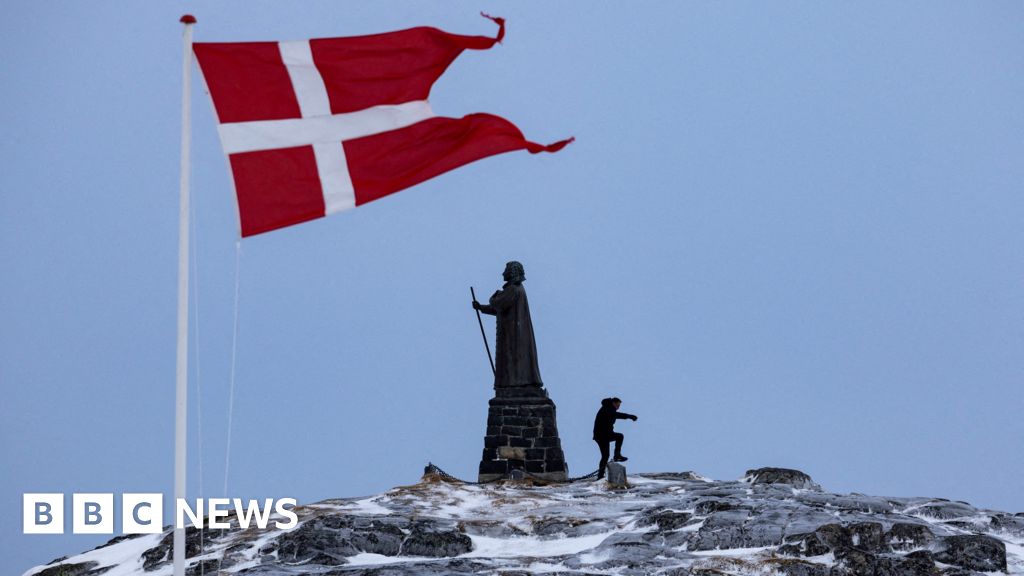
    Greenland’s prime minister has said his people would choose Denmark over the US if they were asked to make such a choice “here and now”.

    Jens-Frederik Nielsen’s remark at a joint news conference with Denmark’s prime minister is the strongest by a representative of the semi-autonomous Danish territory since US President Donald Trump renewed his plan to annex it.

    Trump says the US needs to “own” Greenland to defend against Russia and China. The White House has suggested buying the island, but not ruled out the use of force to annex it.

    Denmark is a fellow Nato member and Prime Minister Mette Frederiksen has warned that military force would spell the end of the trans-Atlantic defence alliance.

    Asked later on Tuesday what he made of Nielsen’s comments, Trump said: “That’s their problem, I disagree with him… That’s going to be a big problem for him.”

    Despite being the most sparsely populated territory, Greenland’s location between North America and the Arctic makes it well placed for early warning systems in the event of missile attacks, and for monitoring vessels in the region.

    Trump has repeatedly said that Greenland is vital to US national security, claiming without evidence that it was “covered with Russian and Chinese ships all over the place”.

    The US already has more than 100 military personnel permanently stationed at its Pituffik base in Greenland’s north-western tip – a facility that has been operated by the US since World War Two.

    Under existing agreements with Denmark, the US has the power to bring as many troops as it wants to Greenland.

    But Trump told reporters in Washington last week that a lease agreement was not good enough – the US “had to have ownership” and “Nato’s got to understand that”.

    At the news conference in the Danish capital Copenhagen, Frederiksen did not mince her words as she condemned the “completely unacceptable pressure from our closest ally”.

    She warned that “there are many indications that the most challenging part is ahead of us”.

    The Greenlandic prime minister said they were “facing a geopolitical crisis”, but the island’s position was clear:

    “If we have to choose between the United States and Denmark here and now, we choose Denmark,” he said.

    “One thing must be clear to everyone. Greenland does not want to be owned by the United States. Greenland does not want to be governed by the United States. Greenland does not want to be part of the United States.”

    The Copenhagen news conference comes a day before the Danish Foreign Minister Lars Lokke Rasmussen and his Greenlandic counterpart Vivian Motzfeldt are due to travel to the US to meet Vice-President JD Vance and Secretary of State Marco Rubio.

    Denmark’s Nato allies – major European countries as well as Canada – have rallied to its support this week with statements reaffirming that “only Denmark and Greenland can decide on matters concerning their relations”.

    Stressing they were as keen as the US on Arctic security, they have said this must be achieved by allies, including the US, “collectively”.

    They also called for “upholding the principles of the UN Charter, including sovereignty, territorial integrity and the inviolability of borders”.

    Concerns over the future of the territory resurfaced after Trump’s use of military force against Venezuela on Saturday to seize its president, Nicolás Maduro.

    Trump previously made an offer to buy the island in 2019, during his first presidential term, only to be told it was not for sale.

    In recent years, there has been increased interest in Greenland’s natural resources – including rare earth minerals, uranium and iron – which are becoming easier to access as its ice melts due to climate change. Scientists think it could also have significant oil and gas reserves.


    Source link